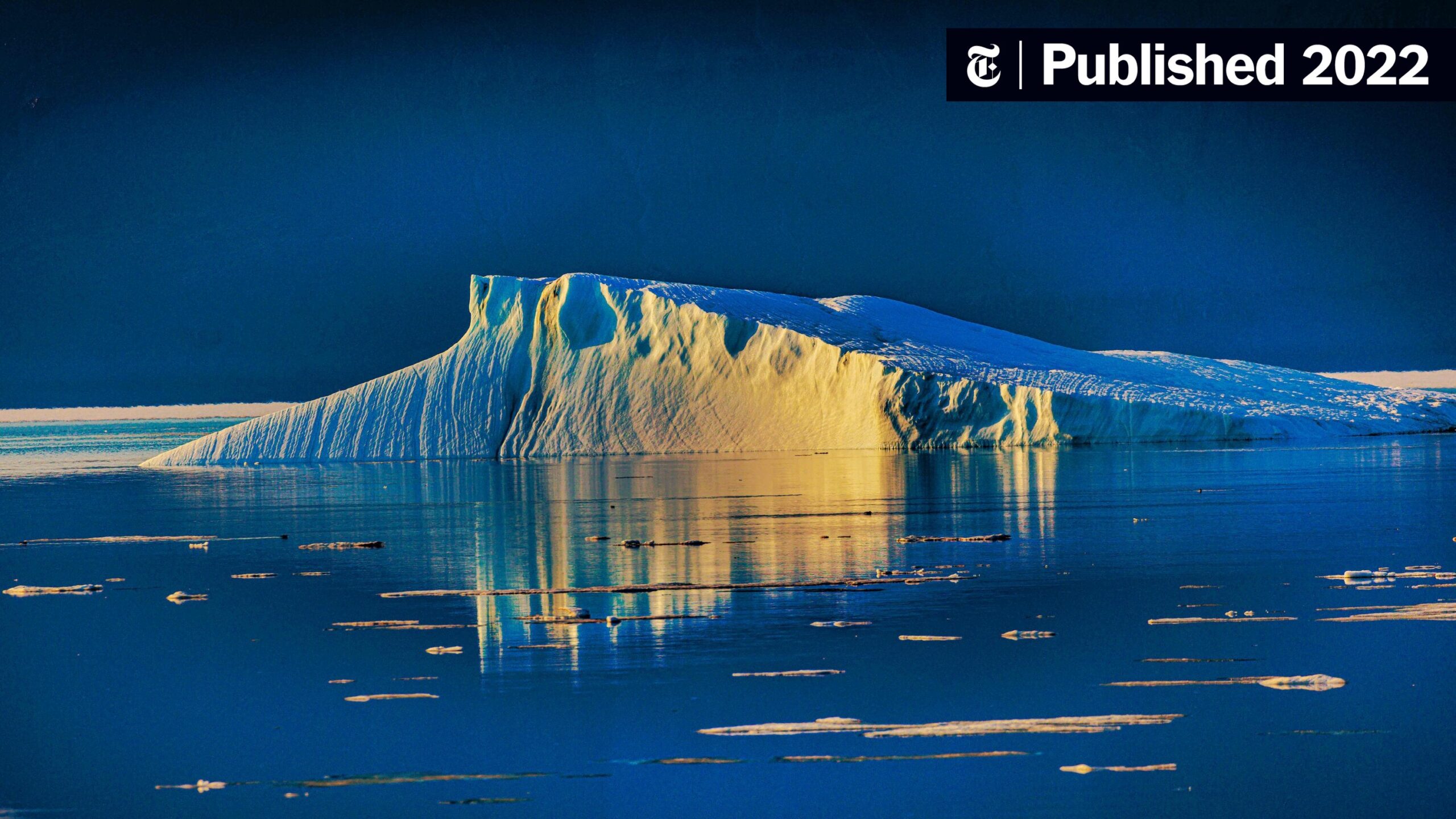
Sea levels are accelerating because the Greenland and Antarctic ice caps are melting faster, adding freshwater to the oceans and raising flood risk for coastal communities worldwide.
Quick Answer
Sea‑level rise occurs when land‑based ice melts or flows into the ocean, raising the average height of the world’s seas. Human‑generated greenhouse‑gas emissions warm the atmosphere and oceans, which speeds surface melt on Greenland and Antarctica and intensifies basal melt of marine‑terminating glaciers. The most recent satellite record (1993‑2022) shows a global mean increase of about 3.3 mm yr⁻¹, roughly double the 20th‑century average. The primary implication is heightened coastal flooding, while uncertainty remains around the exact magnitude of future rise because ice‑sheet dynamics are complex and depend on emissions pathways.
Key Takeaways
- Global mean sea level has risen ~20 cm since 1900, with the rate accelerating in the past three decades.
- Melting of the Greenland and Antarctic ice sheets now contributes more than 60 % of recent sea‑level rise.
- Thermal expansion of warming ocean water adds roughly one‑third of the observed rise.
- Higher seas increase the frequency and severity of coastal floods, threaten low‑lying cities, and stress ecosystems such as mangroves and coral reefs.
- Scientists are confident that human‑induced warming drives the acceleration, but future projections vary because of uncertainties in ice‑sheet behaviour.
What Is Sea Levels Are Rising Faster as Polar Ice Caps Continue to Melt?
The phrase describes a measurable, long‑term increase in the average height of the world’s oceans that results from accelerated loss of land‑based ice in the Earth’s polar regions. It differs from short‑term fluctuations caused by tides, storm surges, or seasonal thermal expansion because it reflects a sustained addition of freshwater to the ocean basins. Understanding this process is essential for coastal planning, ecosystem protection, and climate‑policy assessments.
How Does It Work?
1. Atmospheric Warming
Rising concentrations of carbon dioxide, methane and nitrous oxide trap infrared radiation, lifting global surface temperatures. The Intergovernmental Panel on Climate Change (IPCC) reports a mean increase of about 1.1 °C since pre‑industrial times (IPCC 2021).
2. Surface Melt on Ice Caps
Warmer air directly melts snow and ice on Greenland and Antarctica. Meltwater can percolate through crevasses, lubricating the ice‑sheet base and accelerating its flow toward the sea.
3. Ocean‑Induced Basal Melt
Warmer ocean currents erode the underside of marine‑terminating glaciers and ice shelves. Satellite and submarine observations show that basal melt rates have risen markedly over the past two decades, destabilising ice shelves that act as buttresses for inland ice.
4. Ice‑Sheet Discharge
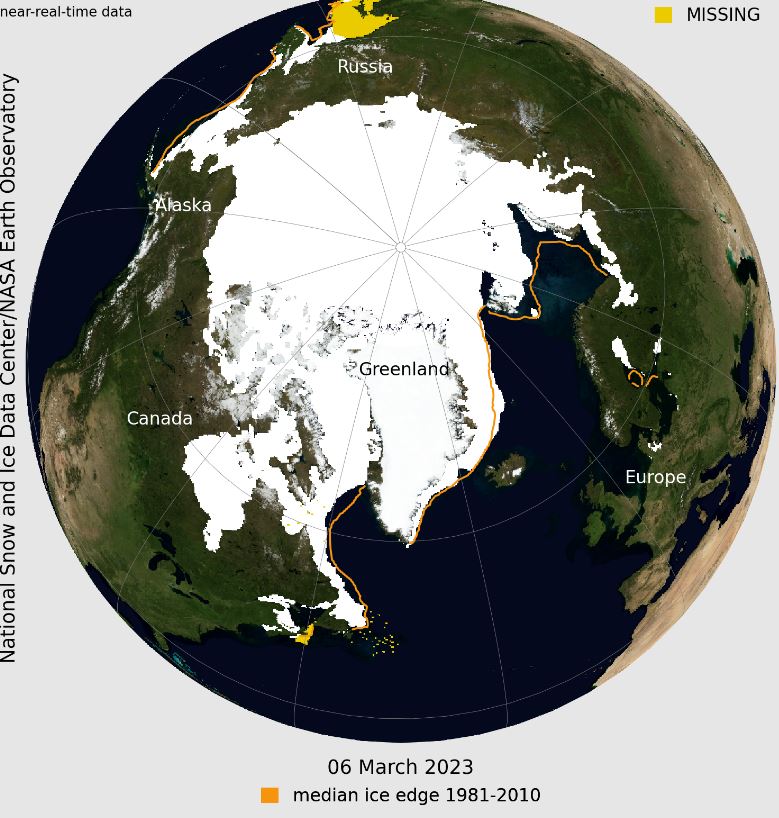
Both surface melt and basal melt increase the speed of ice streams. Between 2003 and 2019, the Greenland Ice Sheet lost an average of 280 gigatonnes yr⁻¹ (NASA GRACE), equivalent to ~0.8 mm yr⁻¹ of sea‑level rise. Antarctica contributed about 150 gigatonnes yr⁻¹ in the same period.
5. Thermal Expansion
As seawater warms, it expands. The IPCC attributes roughly 30 % of the observed sea‑level rise since 1993 to this physical expansion.
What Does the Evidence Show?
Long‑term tide‑gauge records, beginning in the 19th century, document a steady rise of ~1.7 mm yr⁻¹ up to the mid‑20th century. Satellite altimetry, available since 1992, reveals an accelerated rate of 3.3 mm yr⁻¹ (IPCC 2021). Independent gravimetric data from the GRACE mission quantify mass loss from Greenland and Antarctica, confirming that ice‑sheet melt now accounts for more than half of the total rise. Peer‑reviewed synthesis papers (e.g., Shepherd et al., 2020) and the IPCC Sixth Assessment Report converge on the conclusion that anthropogenic warming is the dominant driver of the acceleration.
Main Causes or Drivers
Direct Causes
- Increased atmospheric greenhouse‑gas concentrations leading to surface warming.
- Warmer ocean waters enhancing basal melt of marine‑terminating glaciers.
Underlying Drivers
- Fossil‑fuel combustion and deforestation that emit CO₂, CH₄, and N₂O.
- Feedbacks such as reduced albedo from diminishing snow cover, which amplifies regional warming.
Environmental and Human Impacts
Environmental Impacts
- Coastal erosion and loss of habitats such as salt‑marshes, mangroves, and nesting beaches.
- Increased salinity intrusion into freshwater aquifers, affecting wetlands and agricultural lands.
- Higher frequency of storm‑surge flooding that damages coral reefs and seagrass beds.
Human Health and Social Impacts
- Greater exposure to flood‑related injuries, water‑borne diseases, and mental‑health stressors.
- Potential displacement of up to 280 million people by 2050 under high‑emission scenarios (UN 2022).
- Loss of cultural heritage in low‑lying island nations and indigenous coastal communities.
Economic and Infrastructure Impacts
- Rising costs for flood defence, property damage, and higher insurance premiums.
- Threats to critical infrastructure such as ports, power plants, and transportation networks.
- Reduced tourism revenue from eroded beaches and damaged coastal attractions.
Regional Differences
Sea‑level rise is not uniform. Satellite data show that the western Pacific experiences rates up to 1 cm yr⁻¹ higher than the global mean because of ocean‑dynamic factors, while parts of the North Atlantic rise slightly slower. Low‑lying regions such as Bangladesh, the Nile Delta, and the Mekong Delta face compounded risk from both sea‑level rise and land subsidence, making impacts more severe than in higher‑elevation coastlines. Conversely, areas with significant glacial isostatic uplift, such as parts of Scandinavia, may experience slower relative sea‑level rise.
What Scientists Know With High Confidence
- Global mean sea level has risen about 20 cm since 1900, and the rate has increased in the past three decades.
- Human‑driven warming is the primary driver of accelerated polar ice‑sheet melt.
- Both Greenland and Antarctica are losing mass, contributing the majority of recent sea‑level rise.
- Thermal expansion of warming seawater adds a well‑quantified component to the rise.
What Remains Uncertain
The greatest uncertainty lies in the future dynamics of the interior of the West Antarctic Ice Sheet. Grounding‑line retreat could trigger rapid discharge, but model representations of ice‑shelf buttressing and sub‑glacial hydrology differ, leading to projected sea‑level rise ranges of 0.3–1.0 m by 2100 under Representative Concentration Pathways 2.6 to 8.5. Improved satellite observations, field campaigns, and high‑resolution modelling are needed to narrow these bounds.
Common Misconceptions
Misconception: Sea‑level rise is caused only by melting glaciers.
Reality: While glacier melt contributes, the dominant drivers are the massive Greenland and Antarctic ice sheets and thermal expansion of warming oceans.
Misconception: Sea‑level rise will be uniform everywhere.
Reality: Ocean dynamics, regional land uplift or subsidence, and gravitational effects cause spatial variations of several centimeters per year.
Misconception: Individual lifestyle changes can stop sea‑level rise.
Reality: Personal actions reduce emissions modestly, but large‑scale mitigation, infrastructure adaptation, and policy shifts are required to limit future rise.
Solutions and Limitations
Effective responses combine mitigation—reducing greenhouse‑gas emissions—with adaptation—protecting vulnerable coastlines. Mitigation strategies such as rapid decarbonisation of energy systems are scientifically robust; however, they face political and economic barriers. Adaptation measures like elevating buildings, restoring mangroves, and constructing surge barriers provide immediate protection but can be costly, require land, and may need to be relocated as sea levels continue to rise. Nature‑based solutions offer co‑benefits for biodiversity, yet their capacity is limited by available space and susceptibility to sea‑level rise itself.
What Individuals, Communities, and Governments Can Do
What Individuals Can Do
- Support policies and candidates that commit to net‑zero emissions by mid‑century.
- Reduce personal carbon footprints through public transit, home energy efficiency, and renewable‑energy adoption.
- Participate in local coastal‑restoration projects, such as mangrove planting.
What Communities and Organizations Can Do
- Develop and enforce zoning that restricts new development in high‑risk flood zones.
- Invest in green infrastructure—wetland buffers, permeable pavements, and early‑warning systems.
- Conduct community‑level risk assessments to prioritize adaptation investments.
What Governments Can Do
- Implement ambitious mitigation targets aligned with the Paris Agreement to limit warming to 1.5 °C.
- Allocate funding for large‑scale coastal protection, including sea walls and managed retreat where necessary.
- Integrate sea‑level projections into national planning, infrastructure design codes, and disaster‑risk reduction strategies.
Closing Synthesis
Accelerating sea‑level rise is a direct consequence of warming‑induced melt of the Greenland and Antarctic ice caps, a process confirmed by multiple, independent lines of evidence. The rise threatens coastal ecosystems, human health, and economies, with impacts varying by geography and socioeconomic capacity. Scientists have high confidence in the core mechanisms, while uncertainties persist around the future behaviour of the West Antarctic Ice Sheet. Addressing the challenge requires rapid mitigation to curb further warming and strategic adaptation to protect vulnerable communities and natural habitats.
Frequently Asked Questions
What causes sea levels to rise faster today?
Sea levels rise faster because human‑driven warming accelerates surface melt on Greenland and Antarctica and increases basal melt of marine‑terminating glaciers, adding more freshwater to the oceans.
How much has the global mean sea level increased since the 1990s?
Satellite altimetry shows a global mean increase of about 3.3 mm per year from 1993 to 2022, roughly double the average rate recorded for the 20th century.
Why is sea‑level rise not the same everywhere?
Regional variations arise from ocean‑dynamic factors, land uplift or subsidence, and gravitational effects, causing some areas to experience rates up to 1 cm yr⁻¹ higher than the global mean.
What are the main uncertainties in future sea‑level projections?
The biggest uncertainty is the response of the interior West Antarctic Ice Sheet, especially potential grounding‑line retreat, which leads to a wide projected rise range of 0.3–1.0 m by 2100.
What actions can individuals take to address sea‑level rise?
Individuals can support strong climate policies, reduce personal carbon footprints through efficient transport and energy use, and join local coastal‑restoration projects such as mangrove planting.




Leave a Comment