
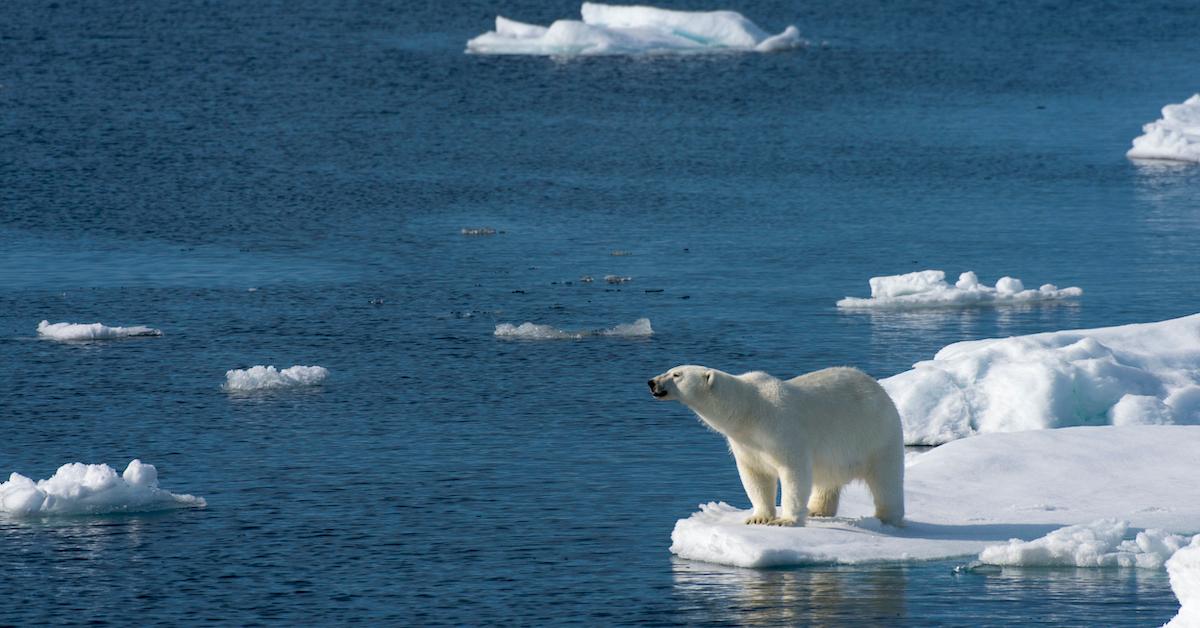
Arctic ice-free summers could become a recurring reality within decades, driven by amplified warming, with profound climate, ecological, and societal consequences.
\n\n
Quick Answer
\n
An “ice-free Arctic summer” is defined as a season when the Arctic Ocean’s sea-ice extent falls below 1 million km², effectively exposing most of the ocean surface. The primary mechanism is Arctic amplification: rising greenhouse-gas concentrations warm the region faster than the global average, melting sea ice and reducing the albedo that normally reflects solar radiation. Multiple lines of observation and model assessments indicate that, under current emission trajectories, the probability of ice-free summers exceeds 50 % by the 2040s, though exact timing carries uncertainty due to natural variability and future policy choices. The loss of sea ice accelerates warming, alters weather patterns far from the pole, and threatens Arctic ecosystems and Indigenous ways of life.
\n
\n\n
Key Takeaways
\n
- \n
- Arctic amplification makes the region warm about twice as fast as the global mean.
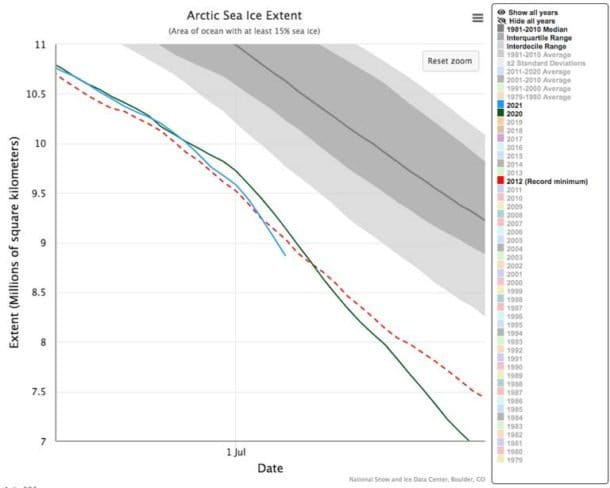
- Observations show a 13 % per decade decline in September sea-ice extent since 1979.
- High-confidence assessments project ice-free summers becoming likely in the 2030s–2050s under business-as-usual emissions.
- Reduced sea-ice albedo creates a positive feedback loop that intensifies regional and global warming.
- Impacts span ecosystems, Indigenous livelihoods, mid-latitude weather, and global sea-level rise.
- Mitigation, adaptation, and Indigenous-led stewardship are essential to limit the most severe outcomes.
\n
\n
\n
\n
\n
\n
\n
\n\n
What Is Arctic Ice-Free Summers: How Close Are We?
\n
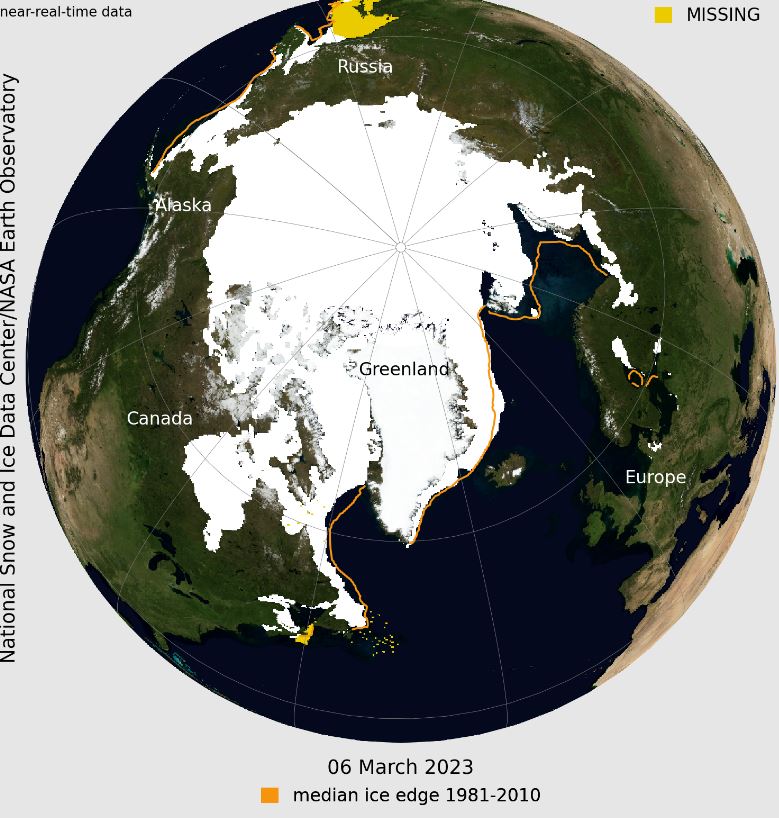
In climate science, an “ice-free Arctic summer” refers to a season when the sea-ice concentration drops below the 15 % threshold used by the National Snow and Ice Data Center, corresponding to an area smaller than 1 million km². This metric differs from “record low” years, which may still retain substantial ice cover. The concept matters because sea ice regulates Earth’s energy balance: bright ice reflects sunlight (high albedo), while open water absorbs heat (low albedo). When the Arctic loses this reflective shield, it contributes to further warming both locally and globally.
\n\n
How Does It Work?
\n
1. Greenhouse-gas-driven warming
\n
Increasing concentrations of CO₂, CH₄, and N₂O trap infrared radiation, raising atmospheric temperatures. The Arctic experiences amplified warming because of heat transport from lower latitudes, reduced heat loss from a thinner atmospheric column, and feedbacks such as water-vapor increase.
\n
2. Albedo feedback
\n
Sea ice has an albedo of roughly 0.6–0.8, reflecting most incoming solar radiation. When ice melts, darker ocean water (albedo ≈0.07) absorbs up to 90 % of that radiation, further heating the surface and accelerating melt.
\n
3. Ice-thickness reduction
\n
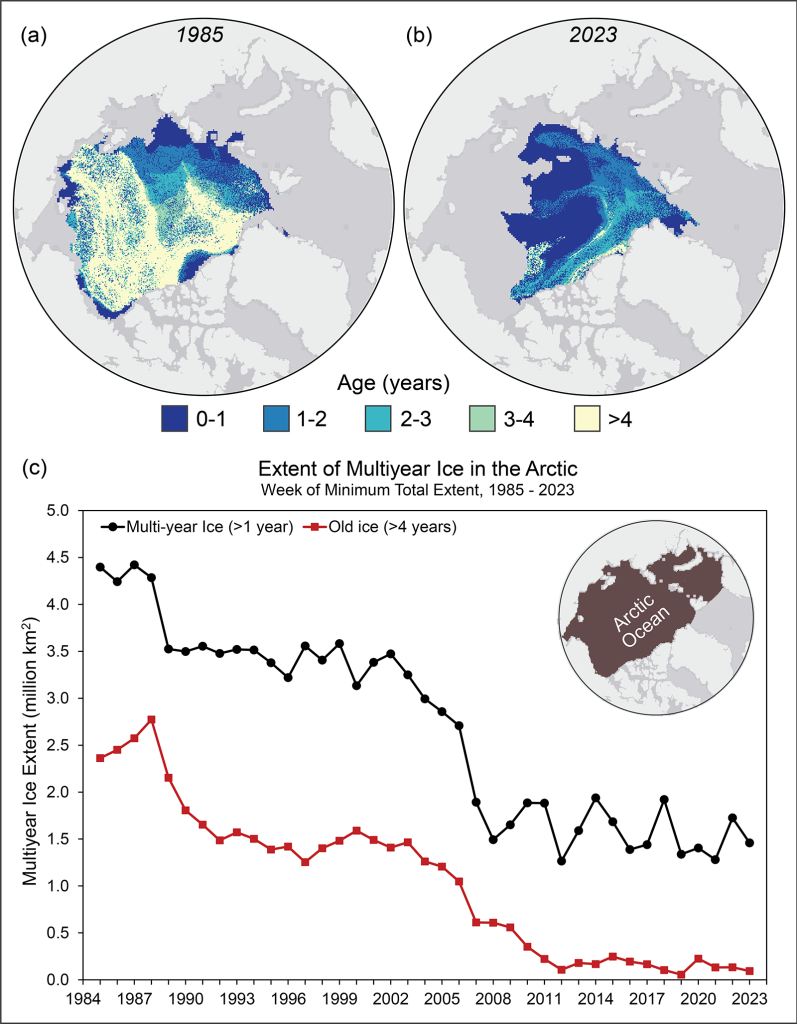
Warmer air and ocean waters thin multiyear ice, making it more vulnerable to summer melt. Thinner ice also fractures more easily, increasing the formation of melt ponds that lower albedo locally.
\n
4. Oceanic heat transport
\n
Warmer Atlantic and Pacific waters intrude into the Arctic via the Fram and Barents seas, delivering additional heat that melts sea ice from below.
\n
5. Positive feedback loops
\n
Reduced ice exposes more water, which stores heat that later releases during winter, delaying the formation of new ice and perpetuating a cycle of loss.
\n\n
What Does the Evidence Show?
\n
Long-term satellite records (NASA, NOAA) document a 13 % per decade decline in September sea-ice extent from 1979 to 2023. The Intergovernmental Panel on Climate Change (IPCC) Sixth Assessment Report (2021) states with high confidence that the Arctic has warmed at roughly twice the global rate and that ice-free summers are “likely” in the 2030s under the SSP5-8.5 (high-emissions) scenario. Model ensembles from the Coupled Model Intercomparison Project Phase 6 (CMIP6) reproduce the observed trend and project median sea-ice loss of 0.5 million km² per decade under continued emissions. Paleoclimate reconstructions indicate that the last truly ice-free summer occurred over 6,000 years ago, confirming the unprecedented nature of current changes.
\n\n
Main Causes or Drivers
\n
Direct human drivers
\n
- \n
- Burning of fossil fuels and deforestation, raising atmospheric greenhouse-gas concentrations.
- Black carbon deposition on snow and ice, which darkens surfaces and enhances melt.
\n
\n
\n
Natural amplifiers
\n
- \n
- Sea-surface temperature variability (e.g., Atlantic Multidecadal Oscillation) that can temporarily boost melt.
- Changes in atmospheric circulation that bring warm air masses into the Arctic.
\n
\n
\n\n
Environmental and Human Impacts
\n
Environmental Impacts
\n
- \n
- Loss of habitat for polar bears, seals, and ice-dependent algae, disrupting food webs.
- Accelerated permafrost thaw, releasing methane and carbon dioxide.
- Altered ocean stratification, affecting nutrient mixing and fisheries productivity.
\n
\n
\n
\n
Human Health and Social Impacts
\n
- \n
- Indigenous communities face reduced hunting grounds, threatening food security and cultural practices.
- Increased coastal erosion and flooding in Arctic settlements due to loss of sea-ice buffering.
\n
\n
\n
Economic and Infrastructure Impacts
\n
- \n
- New shipping routes (e.g., Northwest Passage) reduce travel time but raise risks of spills and require updated navigation protocols.
- Potential for oil and gas exploration in previously ice-covered waters, bringing both economic opportunity and environmental risk.
\n
\n
\n\n
Regional Differences
\n
The rate of sea-ice decline varies across the Arctic basin. The Barents Sea has experienced the greatest summer loss, driven by warm Atlantic inflow, while the central Arctic Basin shows slower but steady thinning. Indigenous groups in Alaska, Canada, Greenland, and Russia experience distinct challenges based on local species reliance and settlement locations. Mid-latitude regions, such as Europe and North America, feel indirect effects through altered jet-stream patterns, which can increase the frequency of extreme weather events.
\n\n
What Scientists Know With High Confidence
\n
- \n
- Arctic temperatures are rising at roughly twice the global average (Arctic amplification).
- Sea-ice extent has declined consistently since satellite monitoring began in 1979.
- Reduced sea-ice albedo creates a positive feedback that accelerates regional warming.
- Ice-free summers are projected to become likely before mid-century under high-emission pathways.
- Loss of sea ice threatens polar-dependent wildlife and Indigenous subsistence practices.
\n
\n
\n
\n
\n
\n
\n\n
What Remains Uncertain
\n
Key uncertainties include the precise timing of the first ice-free summer, which depends on natural variability such as decadal ocean cycles and the magnitude of future emissions. The strength of feedbacks—particularly methane release from permafrost and cloud-radiative effects—remains an active research area. Regional climate responses, such as the exact influence on North Atlantic Oscillation patterns, also carry uncertainty, limiting the ability to predict specific weather outcomes in temperate zones.
\n
\n\n
Common Misconceptions
\n
Misconception: An ice-free Arctic summer will happen tomorrow.
\n
Reality: While trends are clear, the exact year remains uncertain; most models place the first likely occurrence in the 2030s–2050s.
\n
Misconception: Sea-ice loss only affects polar bears.
\n
Reality: Ice decline impacts entire ecosystems, Indigenous livelihoods, global weather patterns, and economic activities such as shipping.
\n
Misconception: Reducing emissions now won’t change the outcome.
\n
Reality: Mitigation can delay or reduce the extent of ice-free conditions, limiting feedback intensity and giving societies more time to adapt.
\n
\n\n
Solutions and Limitations
\n
Mitigation strategies—rapid decarbonization, phasing out black-carbon emissions, and protecting carbon sinks—address the root cause of warming. Adaptation measures include strengthening Arctic infrastructure, supporting Indigenous governance, and developing early-warning systems for extreme weather linked to Arctic changes. Conservation actions, such as establishing marine protected areas, help preserve remaining habitats but cannot replace the climate-driven loss of ice. Each approach faces trade-offs: large-scale renewable deployment requires significant investment and grid upgrades; protected areas may limit economic opportunities for local communities; and geoengineering proposals remain experimental with unknown ecological side effects.
\n\n
What Individuals, Communities, and Governments Can Do
\n
What Individuals Can Do
\n
- \n
- Support policies that accelerate the transition to renewable energy.
- Reduce personal carbon footprints by using public transport, improving home energy efficiency, and choosing low-carbon diets.
- Amplify Indigenous voices through advocacy and education.
\n
\n
\n
\n
What Communities and Organizations Can Do
\n
- \n
- Develop climate-resilient infrastructure in northern settlements (e.g., elevated buildings, robust supply chains).
- Partner with Indigenous groups to co-manage resources and incorporate traditional knowledge into monitoring.
- Invest in local research and citizen-science programs that track sea-ice changes.
\n
\n
\n
\n
What Governments Can Do
\n
- \n
- Implement and strengthen nationally determined contributions (NDCs) aligned with the Paris Agreement’s 1.5 °C goal.
- Fund Arctic research, monitoring networks, and rapid-response emergency services.
- Regulate commercial activities in newly ice-free waters to prevent ecological damage.
\n
\n
\n
\n\n
Looking Ahead
\n
Arctic ice-free summers are not inevitable; they are a likely outcome of the current emissions trajectory but can be delayed through decisive climate action. High-confidence science shows the mechanisms, the accelerating feedbacks, and the broad impacts, while uncertainties highlight the need for better monitoring and refined models. By combining mitigation, adaptation, and Indigenous-led stewardship, societies can reduce the most severe risks and preserve the Arctic’s role as a regulator of Earth’s climate.
Frequently Asked Questions
What defines an "ice‑free Arctic summer"?
An ice‑free Arctic summer is defined as a season when sea‑ice concentration drops below the 15 % threshold, leaving less than about 1 million km² of ice, which is effectively minimal coverage across the Arctic Ocean.
How soon could the Arctic experience ice‑free conditions in summer?
Most climate models agree that under current high‑emission pathways, the probability of an ice‑free summer exceeds 50 % by the 2040s, with a likely range of the 2030s to 2050s, though exact timing remains uncertain.
Which feedback mechanisms accelerate Arctic ice loss?
Key feedbacks include the albedo effect—where open water absorbs more sunlight—and the release of heat from thinning ice and warming oceans, both of which amplify further melting.
How does Arctic sea‑ice decline affect weather in mid‑latitude regions?
Reduced Arctic ice alters the jet stream and the North Atlantic Oscillation, which can increase the frequency of extreme heat waves, cold snaps, and storm tracks across Europe and North America.
What actions can reduce the risk of an ice‑free Arctic summer?
Rapid greenhouse‑gas emissions cuts, phasing out black‑carbon sources, protecting carbon sinks, and supporting Indigenous-led adaptation and stewardship are the most effective ways to limit the likelihood and severity of ice‑free summers.




Leave a Comment