
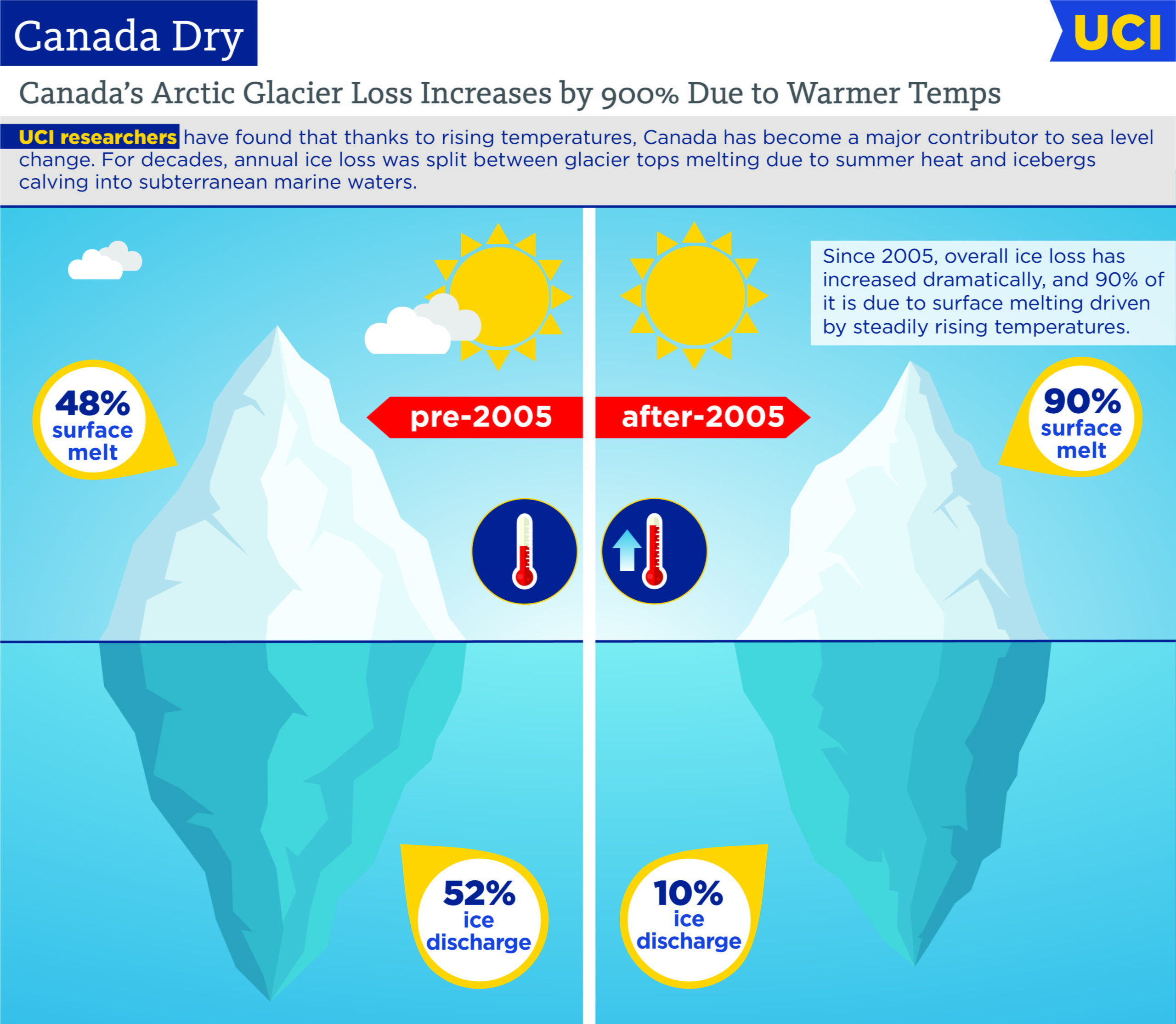
If every glacier on Earth melted, the resulting water would raise global sea level by about 70 meters, dramatically reshaping coastlines, ecosystems, and human societies.
Quick Answer
Glaciers store roughly 170,000 km³ of fresh water; converting that volume to the world’s ocean surface yields an estimated sea‑level rise of ~70 meters (≈230 feet). The process involves direct meltwater runoff into the ocean and a secondary contribution from thermal expansion as the added water warms. While the physical water‑budget relationship is well established, the complete melt would unfold over centuries to millennia, not within a single human generation. Even a fraction of this rise would inundate low‑lying islands, displace millions of people, and alter marine habitats worldwide.
Key Takeaways
- All glaciers together contain enough ice to raise sea level by ~70 m if fully melted.
- Glacier melt adds to sea‑level rise from thermal expansion and ice‑sheet loss.
- Coastal regions, especially small island states and river deltas, face the greatest exposure.
- High‑confidence findings include the water‑budget calculation and accelerating glacier mass loss observed by satellite gravimetry.
- Major uncertainties involve the timing of complete melt, regional feedbacks, and socioeconomic adaptation capacity.
What Is How Sea Levels Would Change If All Glaciers Melted?
The phrase describes a hypothetical scenario in which every glacier—mountain glaciers, ice caps, and smaller ice bodies outside the Greenland and Antarctic ice sheets—completely melts and releases its stored fresh water into the world’s oceans. This differs from sea‑level rise driven solely by the two major ice sheets, which hold far larger ice volumes. Understanding the glacier‑only contribution helps illustrate the magnitude of melt‑derived water and the long‑term risk to coastal systems, even though the full melt would take many centuries.
How Does It Work?
1. Glacier Melt Generates Freshwater Runoff
Glaciers lose mass through surface melting, sublimation, and calving. When meltwater reaches the sea, it adds directly to the global water budget. Because water is virtually incompressible, each cubic kilometre of glacier water raises sea level by about 0.00028 mm when spread over the 361 million km² ocean surface.
2. Thermal Expansion Amplifies the Rise
Warmer ocean water expands—a process known as steric sea‑level rise. The Intergovernmental Panel on Climate Change (IPCC AR6, 2021) attributes roughly one‑third of observed sea‑level rise since 1993 to this expansion. Meltwater also warms the upper ocean layers, enhancing the expansion effect.
3. Gravitational Fingerprints Redistribute Water
Large ice masses exert a gravitational pull on nearby ocean water. When they melt, the local gravity weakens, causing water to flow away from the melt source and accumulate elsewhere. This redistribution is captured in sea‑level fingerprint models and means that regions far from melting glaciers may experience slightly higher sea‑level rise than the global average.
4. Timescales Span Centuries to Millennia
Mountain glaciers respond within decades to centuries, whereas the largest ice caps may require several millennia to exhaust their ice under sustained warming. Consequently, the 70‑meter rise represents an ultimate potential, not an imminent outcome.
What Does the Evidence Show?
Multiple independent lines of evidence converge on the ~70‑meter estimate. The United Nations World Water Assessment (2022) calculated a total glacier volume of 170,000 km³, which translates directly to a 70‑meter sea‑level contribution when divided by the global ocean area. Satellite gravimetry from NASA/NOAA’s GRACE mission (2018‑2022) records an average glacier mass loss of ~300 Gt yr⁻¹, consistent with accelerating melt trends reported in peer‑reviewed literature. Paleoclimate reconstructions of the Last Interglacial indicate that natural glacier retreat of comparable magnitude coincided with sea levels 5–9 m higher than today, supporting the physical plausibility of large melt contributions.
Main Causes or Drivers
Direct Climate Forcing
Rising atmospheric temperatures increase surface melt. The IPCC attributes >90 % of observed glacier retreat since 1980 to anthropogenic greenhouse‑gas warming.
Feedback Mechanisms
Albedo reduction—darker ice exposed as snow melts—enhances solar absorption, accelerating melt. Meltwater that reaches glacier beds can lubricate sliding, increasing flow speed.
Regional Climate Variability
Monsoon intensification in the Himalayas, El Niño‑driven warming in the Andes, and Arctic amplification each modulate local melt rates, producing heterogeneous contributions across the globe.
Environmental and Human Impacts
Environmental Impacts
- Coastal habitat loss: Mangroves, salt‑marshes, and coral reefs would be submerged, reducing biodiversity and fisheries productivity.
- Ocean circulation changes: Large freshwater influx can weaken thermohaline circulation, potentially altering regional climate patterns.
- Freshwater resource shifts: Many mountain communities rely on seasonal glacier melt for irrigation; complete loss would eliminate this natural water buffer.
Human Health and Social Impacts
- Displacement: Low‑lying nations such as the Maldives and Bangladesh could see tens of millions of climate‑displaced persons.
- Food security: Salt‑water intrusion into fertile deltas would lower crop yields, heightening hunger risk.
- Public health: Flooding can spread water‑borne diseases and strain sanitation infrastructure.
Economic and Infrastructure Impacts
- Major coastal cities (e.g., New York, Shanghai, Lagos) would require multibillion‑dollar adaptation measures or face chronic flooding.
- Insurance markets would confront unprecedented loss ratios, potentially withdrawing coverage from high‑risk zones.
Regional Differences
Impact intensity varies with local topography and socioeconomic capacity. Small island developing states—such as Tuvalu and Kiribati—could become uninhabitable within centuries, while northern Canada may experience land emergence as ice retreats, partially offsetting local sea‑level rise. Densely populated river deltas—like the Nile, Mekong, and Ganges‑Brahmaputra—face amplified risk because subsidence adds to the relative sea‑level increase.
What Scientists Know With High Confidence
- The global water‑budget calculation linking glacier volume to a ~70 m sea‑level rise is robust, based on satellite and field measurements.
- Glacier mass loss is accelerating worldwide, driven primarily by anthropogenic warming.
- Thermal expansion of seawater will continue as long as ocean temperatures rise.
- Low‑lying coastal areas will experience the greatest relative sea‑level increase due to gravitational‑fingerprint effects.
What Remains Uncertain
Key uncertainties include the precise timeline for complete melt of the largest ice caps, the magnitude of feedbacks between meltwater and ocean circulation, and how regional socioeconomic factors will shape adaptive capacity. Data gaps in high‑latitude monitoring and limited understanding of sub‑glacial hydrology contribute to these uncertainties.
Common Misconceptions
Misconception: All sea‑level rise will happen within the next few decades.
Reality: Even under high‑emission scenarios, the full 70‑meter contribution from glaciers would unfold over centuries to millennia; current observations show a rise of about 0.2 m per decade from all sources combined.
Misconception: Only the Greenland and Antarctic ice sheets matter for sea‑level rise.
Reality: While the two ice sheets dominate long‑term projections, glaciers outside them collectively add a measurable ~70 m in the extreme melt scenario and already contribute ~0.3 mm yr⁻¹ to present‑day rise.
Misconception: Rising sea level is solely caused by melting ice.
Reality: Thermal expansion of warming seawater accounts for roughly one‑third of observed sea‑level rise; both processes act together.
Solutions and Limitations
Addressing glacier‑driven sea‑level rise requires both mitigation of greenhouse‑gas emissions and adaptation to inevitable changes.
- Mitigation: Rapid decarbonisation pathways that limit warming to 1.5 °C reduce future melt rates, but cannot reverse melt already underway.
- Adaptation: Coastal defenses such as sea walls or managed retreat protect infrastructure but are costly and may shift risk downstream.
- Nature‑Based Solutions: Restoring mangroves and wetlands buffers storm surge, yet they cannot compensate for several meters of sea‑level rise.
- Water Management: Diversifying water supplies in glacier‑dependent regions lessens vulnerability, but new infrastructure requires substantial investment.
What Individuals, Communities, and Governments Can Do
What Individuals Can Do
- Support policies that accelerate the transition to renewable energy.
- Reduce personal carbon footprints through energy efficiency, sustainable travel, and responsible consumption.
- Participate in local climate‑resilience planning, such as community flood‑mapping projects.
What Communities and Organizations Can Do
- Implement integrated watershed management to preserve upstream snow and ice storage.
- Invest in green infrastructure—restored wetlands, living shorelines—to provide flood mitigation.
- Develop relocation strategies for at‑risk neighborhoods before irreversible inundation occurs.
What Governments Can Do
- Adopt and enforce ambitious mitigation targets aligned with the Paris Agreement.
- Fund long‑term monitoring networks (satellite gravimetry, glacier inventories) to improve projections.
- Create financing mechanisms for climate‑resilient infrastructure in vulnerable coastal zones.
- Facilitate international cooperation for climate‑displaced populations.
Closing Synthesis
The complete melting of Earth’s glaciers would add roughly 70 meters to global sea level, reshaping coastlines, threatening billions of lives, and disrupting ecosystems. Robust evidence links glacier volume to this potential rise and documents accelerating loss, while uncertainties remain about timing and regional feedbacks. Limiting warming through rapid mitigation, combined with strategic adaptation—coastal defenses, nature‑based buffers, and proactive relocation—offers the most viable path to safeguard vulnerable societies and preserve natural systems.
Frequently Asked Questions
How much would sea level rise if all glaciers on Earth melted?
If all glaciers melted, the added water would raise global sea level by roughly 70 meters (about 230 feet), based on the total glacier volume of approximately 170,000 km³.
Why does glacier melt cause sea‑level rise beyond just adding water?
Glacier melt adds fresh water directly to the oceans, and the added water also warms, causing thermal expansion. Both processes together increase sea level.
What are the main uncertainties about the complete melt of glaciers?
Key uncertainties include how long the largest ice caps will take to melt, how meltwater will affect ocean circulation, and how regional socioeconomic factors will influence adaptation capacity.
Which regions would be most affected by a 70‑meter sea‑level rise?
Low‑lying island nations, densely populated river deltas such as the Nile, Mekong, and Ganges‑Brahmaputra, and coastal megacities would face the greatest exposure and potential displacement.
What actions can governments take to address glacier‑driven sea‑level rise?
Governments can adopt ambitious mitigation targets, fund long‑term monitoring (satellite gravimetry, glacier inventories), create financing for climate‑resilient coastal infrastructure, and coordinate international support for climate‑displaced populations.





Leave a Comment