
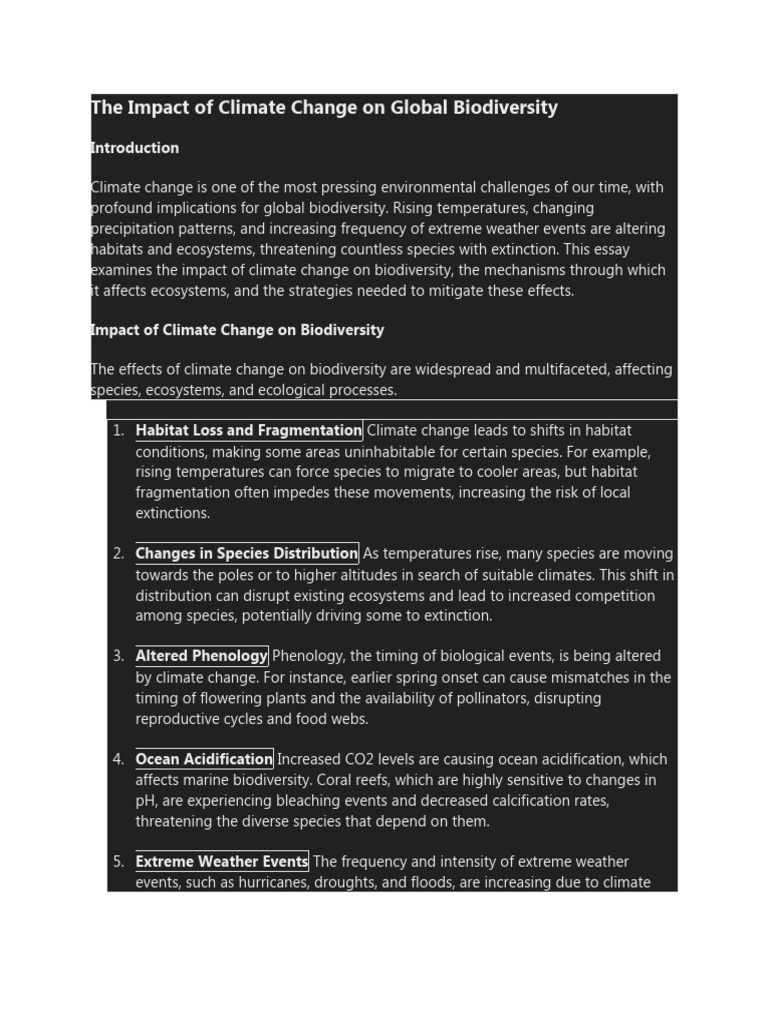
Global climate change disrupts biodiversity by altering habitats, shifting species’ life cycles, and intensifying stressors, threatening ecosystem health and human well‑being worldwide.
Quick Answer
Global climate change drives biodiversity loss by warming temperatures, changing precipitation patterns, and increasing ocean acidity, which together fragment habitats, force species to migrate or adjust phenology, and amplify existing pressures such as invasive species and pollution. The scientific consensus, reflected in IPCC assessment reports and peer‑reviewed studies, indicates that these shifts are already reducing genetic diversity and raising extinction risk for many taxa. While uncertainties remain about exact thresholds for collapse, the overarching conclusion is clear: without rapid mitigation of greenhouse‑gas emissions and targeted adaptation measures, ecosystem services that support food, water, and health security will be compromised.
Key Takeaways
- Rising temperatures and altered rainfall create ecological islands, fragmenting habitats and limiting species movement.
- Phenological mismatches—such as earlier bird migration before food peaks—reduce reproductive success across trophic levels.
- Ocean acidification weakens calcifying organisms, eroding coral reefs that underpin marine biodiversity.
- Invasive species thrive under new climate regimes, outcompeting native flora and fauna.
- Effective responses combine emissions reductions, protected‑area networks, and climate‑smart restoration, but must be scaled globally.
What Is How Global Climate Change Is Disrupting Biodiversity?
The phrase describes the suite of processes by which anthropogenic warming and associated climate shifts interfere with the variety of life—from genes to ecosystems—on Earth. It encompasses habitat loss, altered species interactions, and changes in ecosystem function that arise directly from climate drivers (temperature, precipitation, CO₂) and indirectly through secondary stressors (e.g., invasive species, disease). Unlike natural climate variability, the current change is rapid, human‑induced, and globally coordinated, making adaptation more difficult for many organisms.
How Does It Work?
1. Habitat Fragmentation
Warmer and drier conditions shrink suitable ranges for many species, turning continuous habitats into isolated patches. Forests retreat upslope, wetlands dry out, and coral reefs bleach, severing migration corridors and reducing gene flow.
2. Phenological Shifts
Temperature cues trigger earlier breeding, flowering, or migration. When these shifts are out of sync with food availability—such as insects emerging later than bird hatchlings—survival rates decline.
3. Ocean Acidification
About 30 % of anthropogenic CO₂ dissolves in seawater, lowering pH and reducing carbonate ion availability. Calcifying organisms (corals, mollusks, some plankton) struggle to build shells, weakening reef structures and the myriad species they support.
4. Invasion and Disease
Milder winters and altered precipitation enable non‑native species to establish in new regions, often outcompeting locals. Climate stress also weakens host immunity, facilitating pathogen spread.
5. Feedback Loops
Loss of forest cover reduces carbon sequestration, amplifying warming. Degraded reefs emit less dimethyl sulfide, a compound that can influence cloud formation and regional climate.
What Does the Evidence Show?
Long‑term monitoring by the World Meteorological Organization and national agencies documents average global surface temperature increases of ~1.1 °C since pre‑industrial times (IPCC AR6, 2021). Meta‑analyses of 1,500 phenological studies reveal that spring events now occur 2–3 days earlier per decade in temperate zones. Satellite observations confirm a 14 % decline in global coral cover between 2000 and 2020 (UNEP, 2022). Systematic reviews link increased invasive‑species richness to regions experiencing >0.5 °C warming (Ecology Letters, 2020). These independent lines of evidence converge on the conclusion that climate change is a primary driver of contemporary biodiversity loss.
Main Causes or Drivers
Direct Climate Forcings
Greenhouse‑gas emissions from fossil‑fuel combustion, cement production, and land‑use change raise atmospheric CO₂, methane, and nitrous oxide concentrations, trapping heat.
Secondary Environmental Stressors
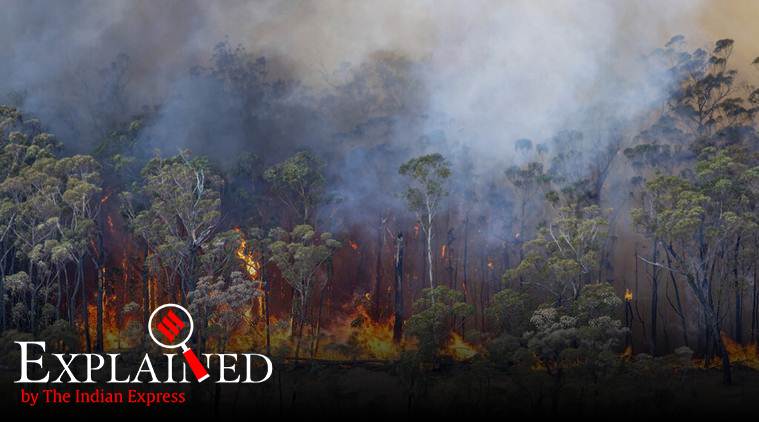
Warmer waters fuel harmful algal blooms; altered fire regimes increase habitat destruction; and intensified human land conversion interacts with climate impacts to exacerbate species declines.
Socio‑economic Drivers
Global trade accelerates species translocations, while inadequate conservation funding limits adaptive management capacity, especially in low‑income regions.
Environmental and Human Impacts
Environmental Impacts
- Loss of pollinator diversity threatens crop yields and wild plant reproduction.
- Reduced fishery productivity follows reef degradation and shifting marine food webs.
- Altered carbon storage in forests and soils can create positive feedback to climate warming.
Human Health and Social Impacts
- Declines in nutritional quality of staple crops linked to temperature stress affect food security.
- Communities dependent on fisheries experience income loss and cultural erosion.
- Increased exposure to vector‑borne diseases occurs where climate expands mosquito habitats.
Economic and Infrastructure Impacts
Projected losses in ecosystem services amount to US$ 2–4 trillion per year by 2050 under high‑emission scenarios (World Bank, 2021), affecting water regulation, flood protection, and tourism.
Regional Differences
Temperate forests in North America and Europe experience poleward species shifts of 50–100 km per decade, while tropical mountains in the Andes see upward migrations of 150 m per decade, limited by summit height. Island ecosystems such as the Hawaiian archipelago face disproportionate invasive‑species pressure because native species have evolved in isolation. In the Arctic, permafrost thaw reduces habitat for caribou and releases carbon, further amplifying global warming.
What Scientists Know With High Confidence
- Global average temperatures have risen by about 1.1 °C since the pre‑industrial era.
- Climate change is a leading driver of observed shifts in species’ geographic ranges and seasonal timing.
- Ocean acidification reduces calcification rates in corals and shell‑forming organisms.
- Habitat fragmentation caused by climate‑induced land‑cover change reduces genetic diversity.
- Mitigation of greenhouse‑gas emissions can slow the rate of biodiversity loss.
What Remains Uncertain
Key gaps include precise tipping points at which ecosystem collapse becomes irreversible, the combined effects of multiple stressors (e.g., heat plus pollution), and the capacity of many species to adapt genetically on decadal timescales. Limited long‑term monitoring in biodiverse regions such as the Congo Basin hampers robust global assessments. Improved remote‑sensing networks and citizen‑science programs could reduce these uncertainties.
Common Misconceptions
Misconception: Biodiversity loss is only a future problem.
Reality: Numerous species have already declined or gone extinct in the past few decades, as documented by the IUCN Red List, which now lists over 37 % of assessed species as threatened.
Misconception: Individual lifestyle changes alone can stop biodiversity loss.
Reality: Personal actions matter, but large‑scale emissions reductions, protected‑area expansion, and policy reforms are essential to address the systemic drivers of climate‑induced biodiversity change.
Misconception: All species will simply move to cooler areas.
Reality: Many organisms are limited by dispersal ability, habitat availability, or geographic barriers, making migration impossible for a substantial fraction of taxa.
Solutions and Limitations
Effective responses combine mitigation (reducing greenhouse‑gas emissions) with adaptation (enhancing ecosystem resilience). Expanding and connecting protected areas can facilitate species movement, yet requires land‑use trade‑offs and sustained funding. Climate‑smart agriculture reduces emissions and preserves pollinator habitats, but may face adoption barriers in low‑resource settings. Restoring mangroves sequesters carbon and buffers coastlines, yet restoration success depends on water‑quality conditions and community involvement. Each strategy offers benefits but also entails costs, governance challenges, and potential unintended impacts such as displacement of local livelihoods.
What Individuals, Communities, and Governments Can Do
What Individuals Can Do
- Support policies that price carbon and fund conservation.
- Choose low‑impact diets rich in plant‑based foods, reducing pressure on land use.
- Participate in citizen‑science monitoring programs for birds, insects, or phenology.
What Communities and Organizations Can Do
- Develop climate‑resilient land‑use plans that integrate green corridors.
- Implement native‑species planting and invasive‑species control projects.
- Invest in local renewable‑energy projects to cut emissions at the source.
What Governments Can Do
- Set ambitious, legally binding emissions‑reduction targets aligned with the Paris Agreement.
- Scale up funding for protected‑area networks and ensure ecological connectivity.
- Incorporate climate‑risk assessments into biodiversity monitoring and policy design.
Closing Synthesis
Global climate change reshapes the physical and chemical environment, fragmenting habitats, altering life‑cycle timing, and intensifying pressures such as ocean acidification and invasive species. Robust evidence from long‑term monitoring and synthesis studies confirms that these mechanisms are already driving biodiversity loss across biomes. While uncertainties remain about precise thresholds and synergistic effects, the high‑confidence findings underscore the urgency of combined mitigation and adaptation actions. By aligning emissions cuts with nature‑based solutions, societies can preserve the ecological threads that sustain both natural systems and human well‑being.
Frequently Asked Questions
What does the term ‘biodiversity disruption’ mean in the context of climate change?
Biodiversity disruption refers to the loss or alteration of species variety, genetic diversity, and ecosystem functions caused by climate‑driven changes such as habitat fragmentation, phenological mismatches, and ocean acidification.
How does climate change cause species to migrate or change their life cycles?
Rising temperatures shift the climatic zones where species can survive, prompting many to move poleward or to higher elevations. At the same time, warmer springs trigger earlier breeding or flowering, which can desynchronize interactions with food sources.
What evidence shows that coral reefs are declining because of ocean acidification?
Satellite and field surveys indicate a 14 % global loss of coral cover from 2000 to 2020, and laboratory studies confirm that reduced pH lowers calcification rates, making reefs more vulnerable to bleaching and erosion.
Why are invasive species more successful under a changing climate?
Milder winters and altered precipitation create conditions that favor non‑native species, allowing them to establish, outcompete locals, and spread more rapidly than under historical climate regimes.
What actions can governments take to protect biodiversity from climate impacts?
Governments can set legally binding emissions targets, expand and connect protected‑area networks, fund climate‑smart restoration, and integrate climate‑risk assessments into conservation planning to enhance ecosystem resilience.







Leave a Comment