
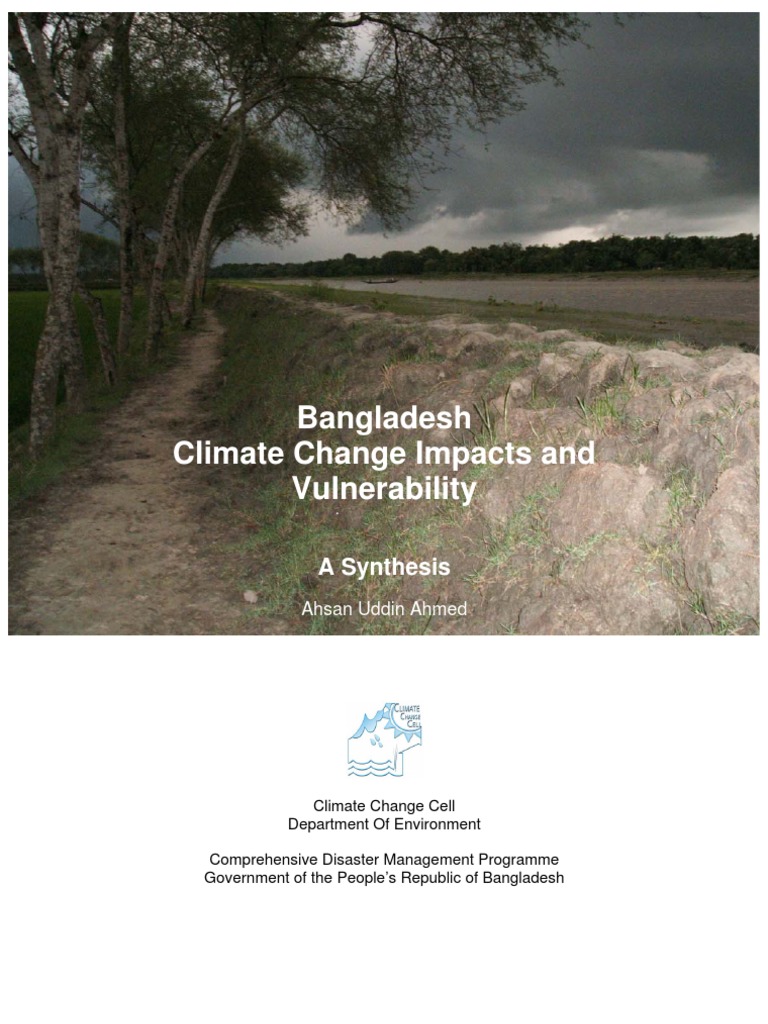
Bangladesh’s rapid economic growth, driven by garments, agriculture and services, is increasingly threatened by climate change, demanding urgent adaptation and sustainable policies.
Quick Answer
Bangladesh’s celebrated economic miracle—characterized by booming garment exports, rising agricultural yields and expanding services—rests on a low‑lying delta vulnerable to intensified floods, cyclones, sea‑level rise and salinisation. Scientific assessments show that climate‑driven hazards can erode productivity, displace millions and strain infrastructure, especially in coastal and riverine zones. While adaptation measures such as resilient infrastructure, climate‑smart agriculture and green manufacturing can reduce exposure, uncertainty remains about the speed of sea‑level rise and the effectiveness of large‑scale interventions.
Key Takeaways
- The garment sector supplies over 80% of Bangladesh’s export earnings but is exposed to water‑pollution and climate‑related supply disruptions.
- Rising sea levels and more intense monsoon floods threaten the fertile delta, jeopardising food security and livelihoods.
- Evidence from the IPCC, FAO and national monitoring confirms that climate impacts are already reducing agricultural yields in vulnerable districts.
- Investing in climate‑resilient infrastructure, early‑warning systems and sustainable production can safeguard growth, but financing gaps persist.
- Community‑driven adaptation, gender‑inclusive policies and international climate finance are essential for long‑term resilience.
What Is Bangladesh’s Economic Miracle Faces Growing Climate Risks?
The phrase describes the juxtaposition of Bangladesh’s impressive socioeconomic progress—averaging around 6% annual GDP growth over the past decade—and the escalating climate threats that could undermine that trajectory. The “miracle” refers to structural successes in ready‑made garments, rice and jute agriculture, remittances and a burgeoning service sector. “Growing climate risks” denotes the increasing frequency and severity of floods, cyclones, riverbank erosion and sea‑level rise that affect the same sectors driving growth.
How Does It Work?
1. Economic Drivers
- Garment manufacturing supplies 82% of export earnings, creating millions of jobs and generating foreign exchange.
- Agriculture, especially rice, jute and vegetable production, provides food security for a population of 170 million (World Bank, 2023).
- Remittances from overseas workers and a growing services sector add to household incomes.
2. Climate Exposure Pathways
- Monsoon floods: Heavy rainfall during June‑September overwhelms drainage, causing riverine flooding that damages crops and factories.
- Sea‑level rise: Global mean sea level has risen about 3 mm yr⁻¹ since 1993 (IPCC 2021); projections for 2100 suggest 0.5‑1 m rise under high‑emission scenarios, threatening low‑lying coastal districts.
- Salinisation: Intruding seawater degrades soil fertility and reduces freshwater availability for irrigation.
- Storm surges: More intense cyclones increase coastal erosion and damage to the Sundarbans, a natural barrier.
3. Feedback Loops
Reduced agricultural output can raise food prices, increasing poverty and limiting resources for adaptation. Conversely, loss of mangrove cover diminishes storm protection, amplifying flood damage—a reinforcing cycle.
What Does the Evidence Show?
Long‑term monitoring by Bangladesh’s Meteorological Department (1990‑2020) records a 15 % increase in extreme rainfall events. The Intergovernmental Panel on Climate Change (IPCC 2021) attributes higher flood risk in South Asia to warming‑driven precipitation changes. A systematic review of field trials (FAO, 2022) finds that climate‑smart rice varieties can offset up to 20 % of yield loss caused by salinity. Satellite observations (NASA, 2020) show a 30 % loss of mangrove canopy in the Sundarbans over the past two decades, reducing coastal protection capacity.
Main Causes or Drivers
Direct Climate Drivers
- Global greenhouse‑gas emissions leading to higher atmospheric temperatures.
- Ocean warming, which intensifies cyclonic activity in the Bay of Bengal.
Underlying Socio‑Economic Drivers
- Heavy reliance on low‑cost, water‑intensive garment production without comprehensive waste‑water treatment.
- Land‑use change: conversion of wetlands for agriculture reduces natural flood buffers.
- Rapid urbanisation increasing impermeable surfaces, exacerbating runoff.
Environmental and Human Impacts
Environmental Impacts
- Loss of mangrove ecosystems reduces biodiversity and carbon sequestration.
- Increased sedimentation and salinity alter riverine and coastal aquatic habitats.
- Water pollution from textile dye effluents threatens freshwater quality.
Human Health and Social Impacts
- Flood‑related displacement affected 4.2 million people in 2020 (UN DPPA, 2021).
- Heat stress and water‑borne diseases rise during prolonged inundation periods.
- Women, who dominate garment and agricultural labour, face heightened economic insecurity.
Economic and Infrastructure Impacts
- Each major flood event has cost Bangladesh roughly 0.5 % of its GDP in direct damages (World Bank, 2020).
- Disruption of garment supply chains leads to export losses estimated at $1 billion per severe cyclone (UNCTAD, 2022).
- Infrastructure damage to roads and bridges hampers market access for rural producers.
Regional Differences
Coastal districts such as Khulna and Satkhira experience the greatest salinity intrusion, while northern regions like Rangpur face drought stress linked to shifting monsoon patterns. Urban centres (Dhaka, Chittagong) confront flood‑induced drainage failures, whereas interior riverine zones contend with riverbank erosion. These variations reflect local topography, proximity to the Bay of Bengal and differing adaptive capacities.
What Scientists Know With High Confidence
- Global warming is causing more intense and frequent extreme precipitation events in South Asia (IPCC 2021).
- Sea‑level rise will inevitably increase the extent of coastal flooding in Bangladesh’s delta (IPCC 2021).
- Mangrove loss reduces natural storm‑surge protection and accelerates coastal erosion (NASA 2020).
- Climate‑smart agricultural practices can partially mitigate yield losses from salinity and heat stress (FAO 2022).
What Remains Uncertain
Key uncertainties include the precise rate of sea‑level rise at local scales, the socio‑economic effectiveness of large‑scale green‑manufacturing incentives, and the long‑term financial viability of climate‑resilient infrastructure under fluctuating political commitment. Improved regional tide‑gauge networks and longitudinal studies of adaptation outcomes would reduce these gaps.
Common Misconceptions
Misconception: Bangladesh’s growth will continue unaffected because it is a “low‑lying” country already used to floods.
Reality: While Bangladesh has adapted to seasonal flooding historically, climate‑induced changes—greater intensity, longer duration and higher sea levels—exceed traditional coping mechanisms and threaten core economic sectors.
Misconception: The garment industry’s success shields the country from climate impacts.
Reality: The sector’s reliance on water and energy makes it vulnerable to power outages, water scarcity and supply‑chain disruptions during extreme events.
Misconception: Planting trees alone can offset Bangladesh’s climate risk.
Reality: Reforestation helps, but without complementary flood‑defence infrastructure, water‑management reforms and climate‑smart agriculture, tree planting cannot fully protect against sea‑level rise and storm surges.
Solutions and Limitations
Effective responses combine adaptation, mitigation and systemic reforms.
- Infrastructure upgrades: Elevating roads, expanding drainage and strengthening embankments reduce flood exposure, but require substantial capital and long construction periods.
- Green manufacturing: Installing zero‑liquid‑discharge treatment in garment factories cuts water pollution; however, high upfront costs limit adoption among small‑scale producers.
- Climate‑smart agriculture: Salt‑tolerant rice varieties and alternate wetting‑and‑drying irrigation improve resilience, yet farmer training and seed distribution networks are uneven.
- Nature‑based solutions: Restoring the Sundarbans enhances storm protection and carbon storage; trade‑offs include potential land‑use conflicts with aquaculture.
- Financial mechanisms: Green bonds and climate adaptation funds mobilise resources, but market appetite and governance capacity affect disbursement efficiency.
What Individuals, Communities, and Governments Can Do
What Individuals Can Do
- Support brands that certify water‑safe manufacturing.
- Adopt water‑saving practices at home to reduce pressure on local supplies.
- Participate in community flood‑risk mapping and early‑warning drills.
What Communities and Organizations Can Do
- Form farmer cooperatives to share climate‑smart seeds and knowledge.
- Implement localized rainwater harvesting and flood‑resilient housing designs.
- Engage women’s groups in training on diversified livelihoods.
What Governments Can Do
- Integrate climate risk assessments into all development planning and budget allocations.
- Provide subsidies or low‑interest loans for green technologies in the garment sector.
- Scale up the National Adaptation Programme of Action (NAPA) with measurable targets.
- Strengthen enforcement of industrial effluent standards and promote renewable energy.
Synthesis
Bangladesh’s economic miracle is inseparable from its climate reality. Robust scientific evidence confirms that rising sea levels, intensified monsoon floods and ecosystem degradation pose tangible threats to the country’s key growth drivers. High‑confidence findings underline the urgency of climate‑smart policies, while uncertainties about the pace of environmental change highlight the need for flexible, long‑term planning. By coupling resilient infrastructure, sustainable industry practices and inclusive community action, Bangladesh can protect its development gains while navigating an increasingly volatile climate future.
Frequently Asked Questions
How does climate change specifically threaten Bangladesh’s garment industry?
Climate change can disrupt the garment sector by causing power outages, water shortages, and supply‑chain interruptions during extreme floods or heat waves, which affect production schedules and increase costs.
What are the most effective climate‑smart agricultural practices for Bangladesh?
Using salt‑tolerant rice varieties, adopting alternate wetting‑and‑drying irrigation, and implementing integrated pest management are proven to maintain yields under higher salinity and erratic rainfall.
Why is the Sundarbans important for Bangladesh’s climate resilience?
The Sundarbans’ mangrove forests act as a natural barrier that reduces storm‑surge energy, prevents coastal erosion, and provides habitat for fisheries, making it a key nature‑based defense.
What role does international climate finance play in Bangladesh’s adaptation efforts?
International funds such as green bonds and adaptation grants help bridge financing gaps for large‑scale infrastructure upgrades, renewable energy projects, and capacity‑building for climate‑smart technologies.
Can individual consumer choices impact Bangladesh’s climate risk?
Yes—supporting brands that practice water‑safe manufacturing and reducing personal water use can lower demand for polluted water, encouraging industry shifts toward greener production.






Leave a Comment