
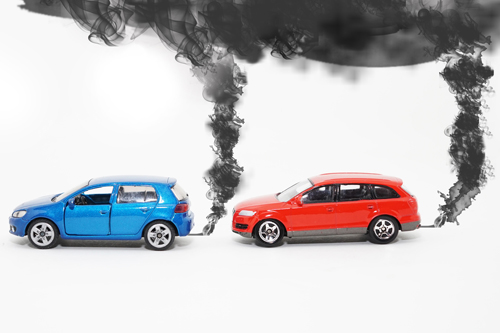
The carbon budget quantifies the total CO₂ that humanity can emit while still having a good chance of limiting global warming to 1.5°C, guiding policy, technology, and behavior toward a climate‑stable future.
Quick Answer
A carbon budget is the cumulative amount of carbon dioxide that can be released into the atmosphere while keeping the increase in global average temperature below a chosen limit, most often 1.5°C above pre‑industrial levels. It is derived by translating climate‑model simulations of temperature response into a finite quantity of CO₂ that the Earth system can absorb before crossing the threshold. The Intergovernmental Panel on Climate Change (IPCC) 2023 assessment estimates a remaining global carbon budget of roughly 400 GtCO₂ for a 50 % probability of staying under 1.5°C. Exceeding this budget raises the risk of severe climate impacts, but uncertainties in carbon‑cycle feedbacks mean the exact figure carries a moderate confidence interval.
Key Takeaways
- The remaining global carbon budget for a 1.5°C target is about 400 gigatonnes of CO₂, give or take 100 GtCO₂.
- Annual emissions of ~36 GtCO₂ (2022) consume roughly 9 % of that budget each year, leaving less than a decade at current rates.
- High‑confidence evidence shows that limiting warming requires rapid decarbonisation of energy, industry, and transport.
- Uncertainties remain around carbon‑cycle feedbacks, especially permafrost thaw and forest regrowth.
- Effective responses combine mitigation (renewables, efficiency), removal (afforestation, carbon capture), and equitable policy design.
What Is Carbon Budget Explained: How Much Can We Still Emit?
The term “carbon budget” refers to the total amount of carbon dioxide that can be emitted into the atmosphere while still giving humanity a reasonable chance of staying below a specific temperature ceiling, most commonly the 1.5°C or 2°C limits set in the Paris Agreement. It is expressed in gigatonnes of CO₂ (GtCO₂) and is calculated by adding historic emissions, current atmospheric concentrations, and the remaining “allowable” emissions that would not trigger the target temperature rise. The concept differs from short‑term emissions targets because it integrates the cumulative nature of greenhouse‑gas forcing and the delayed response of the climate system.
How Does It Work?
Step 1: Sources of CO₂
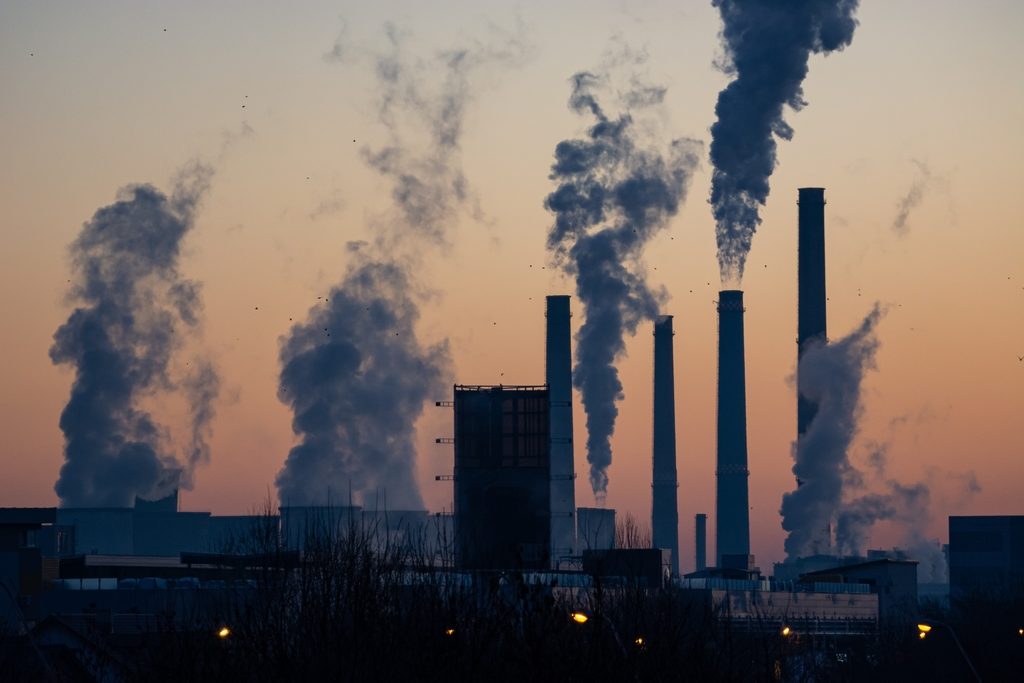
Human activities release CO₂ through fossil‑fuel combustion, cement production, and land‑use change. In 2022, global CO₂ emissions from energy and industry reached about 36 GtCO₂, according to the International Energy Agency.
Step 2: Sinks and Accumulation
Natural sinks – oceans and terrestrial vegetation – absorb roughly half of anthropogenic CO₂ each year. The remaining fraction stays in the atmosphere, raising the greenhouse‑gas concentration and, consequently, global temperature.
Step 3: Translating Temperature Limits into a Carbon Budget
Climate models simulate how much warming results from a given amount of CO₂. By fixing a temperature limit (e.g., 1.5°C), researchers back‑calculate the total amount of CO₂ that can be added before the modeled probability of exceeding that limit surpasses a chosen threshold (often 50 %). The IPCC’s 2023 Special Report on Global Warming of 1.5°C provides the most widely cited budget estimates.
What Does the Evidence Show?
Long‑term ice‑core records reveal a tight correlation between atmospheric CO₂ and global temperature over the past 800,000 years. Modern monitoring by NOAA and the World Meteorological Organization confirms that atmospheric CO₂ concentrations have risen from 280 ppm in pre‑industrial times to over 420 ppm in 2023. The IPCC’s assessment synthesises thousands of peer‑reviewed studies, concluding that a remaining budget of roughly 400 GtCO₂ is consistent with a 50 % chance of staying below 1.5°C, while a 2°C target would allow about 1,150 GtCO₂. These figures are based on model ensembles that incorporate a range of socioeconomic pathways and carbon‑cycle feedback assumptions.
Main Causes or Drivers
Direct Human Emissions
Coal, oil, and natural gas combustion account for about 75 % of global CO₂ emissions. Cement production contributes ~8 %, and land‑use change (deforestation, peatland loss) adds another ~6 %.
Economic and Energy System Drivers
Rapid economic growth in emerging economies, continued subsidies for fossil fuels, and slow adoption of low‑carbon technologies drive the upward trajectory of emissions. Energy demand for electricity, heat, and transport remains the primary lever for change.
Environmental and Human Impacts
Environmental Impacts
Exceeding the carbon budget accelerates sea‑level rise, intensifies heatwaves, and increases the frequency of extreme precipitation events. Ocean acidification, driven by higher CO₂ uptake, threatens coral reefs and marine food webs.
Human Health and Social Impacts
Higher temperatures raise heat‑related mortality, especially among the elderly and outdoor workers. Air‑quality degradation from fossil‑fuel combustion aggravates respiratory diseases. Climate‑driven disruptions to agriculture jeopardise food security for low‑income populations, amplifying existing inequities.
Regional Differences
High‑income regions such as the European Union and North America have per‑capita emissions exceeding 10 tCO₂ yr⁻¹, whereas many low‑income countries emit less than 2 tCO₂ yr⁻¹. Nevertheless, tropical regions experience disproportionate climate impacts (e.g., intensified monsoons in South Asia, droughts in sub‑Saharan Africa) because of geographic vulnerability and limited adaptive capacity. Monitoring networks in Europe provide dense atmospheric data, while data gaps remain larger in parts of Africa and the Pacific, affecting regional budget assessments.
What Scientists Know With High Confidence
- Global warming is primarily driven by anthropogenic CO₂ emissions.
- The relationship between cumulative CO₂ emissions and temperature rise is approximately linear.
- Current annual emissions are depleting the remaining 1.5°C carbon budget at a rate of about 9 % per year.
- Rapid, sustained reductions in fossil‑fuel use are essential to stay within the budget.
What Remains Uncertain
Key uncertainties centre on carbon‑cycle feedbacks such as permafrost carbon release, forest regrowth potential, and oceanic uptake efficiency. These feedbacks could shrink the remaining budget by up to 20 % under high‑emission scenarios. Additionally, socioeconomic pathways—especially future energy demand and policy choices—introduce variability that influences how quickly the budget will be exhausted.
Common Misconceptions
Misconception: The carbon budget is a fixed number that never changes.
Reality: The budget is updated as scientific understanding of climate sensitivity and carbon‑cycle feedbacks improves, and it varies with the chosen probability of success (e.g., 66 % vs 50 %).
Misconception: Individual lifestyle changes alone can keep us within the budget.
Reality: Personal actions matter but cannot offset the scale of systemic emissions without coordinated policy, industry transformation, and large‑scale renewable deployment.
Misconception: Planting trees instantly cancels out emitted CO₂.
Reality: Forests sequester carbon over decades; tree‑planting must be paired with emissions cuts to meaningfully contribute to the remaining budget.
Solutions and Limitations
Mitigation strategies include rapid expansion of renewable electricity, energy‑efficiency retrofits, electrification of transport, and phase‑out of coal. Carbon‑capture and storage (CCS) can remove CO₂ from point sources, yet current deployment is limited and costly. Nature‑based solutions—afforestation, reforestation, and soil carbon enhancement—provide additional sinks but are constrained by land availability and permanence concerns. Each approach carries trade‑offs: large‑scale renewable farms require land and mineral inputs; CCS needs secure storage sites; nature‑based methods may compete with food production.
What Individuals, Communities, and Governments Can Do
What Individuals Can Do
- Choose low‑carbon travel options (public transit, cycling, electric vehicles when feasible).
- Reduce household energy use through efficient appliances and insulation.
- Support policies and companies that commit to science‑based targets.
- Engage in local tree‑planting or soil‑health projects that complement broader mitigation.
What Communities and Organizations Can Do
- Develop renewable micro‑grids and community solar programs.
- Implement district‑wide energy‑efficiency standards for buildings.
- Adopt circular‑economy practices that lower material‑related emissions.
What Governments Can Do
- Set nationally determined contributions (NDCs) aligned with the remaining carbon budget.
- Introduce carbon pricing mechanisms that reflect the social cost of carbon.
- Invest in public transit, grid modernization, and research on low‑carbon technologies.
- Ensure a just transition by directing support to workers and communities dependent on fossil‑fuel industries.
Closing Synthesis
The carbon budget translates abstract temperature goals into a concrete accounting of allowable CO₂ emissions. Strong evidence links cumulative emissions to warming, and the remaining budget for a 1.5°C pathway is already being consumed at an alarming pace. While uncertainties around feedbacks persist, they do not overturn the central conclusion that rapid, systemic decarbonisation is essential. A portfolio of renewable energy, efficiency, carbon removal, and equitable policy offers the most credible path to stay within the budget, but each option carries limits that must be managed. Collective action—grounded in science and fairness—remains the only viable route to preserve the remaining carbon space for future generations.
Frequently Asked Questions
What is a carbon budget and why is it important?
A carbon budget is the total amount of carbon dioxide that can be emitted while keeping global warming below a chosen temperature limit, such as 1.5 °C. It translates abstract climate goals into a concrete emissions ceiling, guiding policy, technology, and behavior.
How much carbon dioxide can the world still emit to stay under 1.5 °C?
According to the IPCC 2023 assessment, the remaining global carbon budget for a 50 % chance of staying under 1.5 °C is about 400 gigatonnes of CO₂, give or take roughly 100 GtCO₂ depending on feedback assumptions.
What are the main sources that consume the carbon budget?
The primary sources are fossil‑fuel combustion for electricity, heat, and transport (≈75 % of emissions), cement production (≈8 %), and land‑use change such as deforestation (≈6 %). Together they drive the rapid depletion of the budget.
Why is there uncertainty about the exact size of the carbon budget?
Uncertainty stems from limited knowledge of carbon‑cycle feedbacks—like permafrost thaw releasing CO₂ and methane, forest regrowth rates, and ocean uptake efficiency. These processes could shrink the budget by up to 20 % under high‑emission scenarios.
What actions can individuals take that meaningfully contribute to staying within the carbon budget?
Individuals can lower personal emissions by using public transit or electric vehicles, improving home energy efficiency, supporting low‑carbon policies and companies, and participating in community tree‑planting or soil‑health projects that complement broader mitigation efforts.





Leave a Comment