
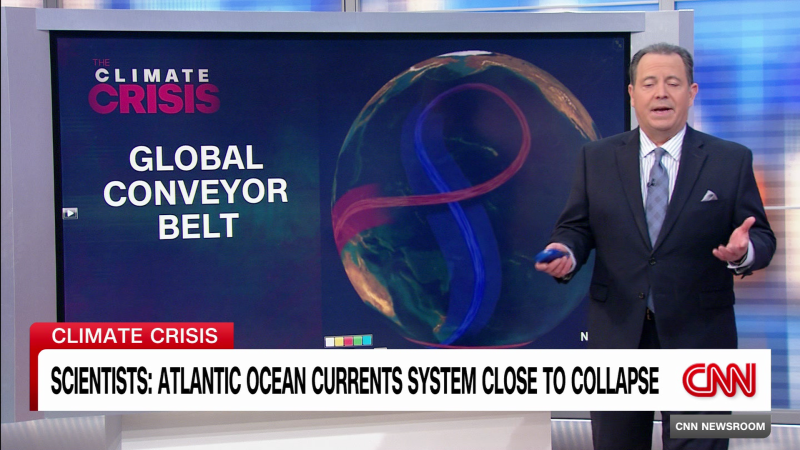
A new assessment shows that the Atlantic Meridional Overturning Circulation is weakening toward a possible irreversible tipping point, with far‑reaching climate and societal consequences.
\n\n
Quick Answer
\n
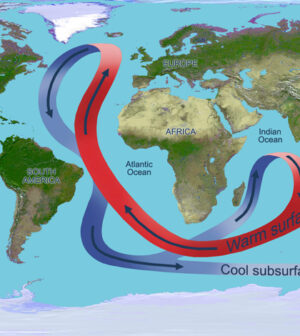
The Atlantic Meridional Overturning Circulation (AMOC) is a large‑scale ocean conveyor that moves warm, salty water northward and returns cold, dense water southward at depth. Recent observations and climate‑model studies indicate the AMOC has weakened by roughly 15 % since the mid‑20th century, and many experts consider it close to a stability threshold that could trigger a rapid slowdown or collapse. If such a tipping point is crossed, regional temperature patterns, precipitation, and extreme‑weather frequency could shift dramatically, especially across Europe, North America, and the tropical Atlantic. However, uncertainties remain about the exact threshold, timing, and the extent of downstream impacts.
\n
\n\n
Key Takeaways
\n
- \n
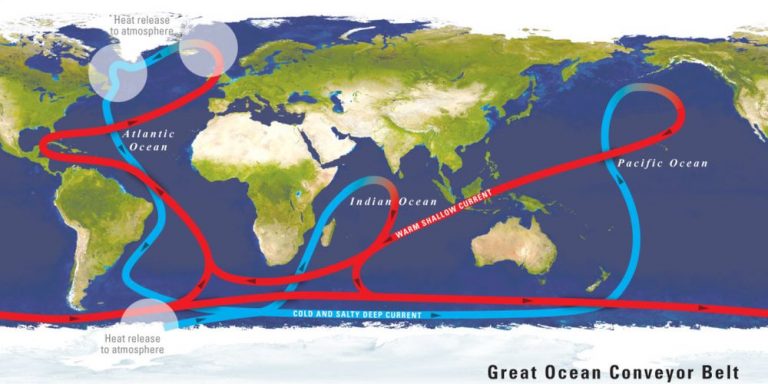
- The AMOC acts like a global heat‑transport belt, linking tropical warmth to northern climate.
- Long‑term monitoring (e.g., the RAPID array) shows a 15 % decline in AMOC strength since the 1950s.
- Freshwater influx from Greenland melt and Arctic precipitation reduces seawater density, the primary driver of the slowdown.
- A rapid AMOC weakening could bring colder winters to Europe, stronger storms in the Atlantic, and altered rainfall in the Amazon and Sahel.
- Mitigation of greenhouse‑gas emissions and protection of marine carbon sinks are the most effective long‑term safeguards.
\n
\n
\n
\n
\n
\n
\n\n
What Is Atlantic Ocean Circulation Near Irreversible Tipping Point Study Warns?
\n
The phrase refers to scientific assessments that the Atlantic Meridional Overturning Circulation—a system of surface and deep‑water flows in the Atlantic Ocean—is approaching a critical threshold beyond which it may shift to a markedly weaker state. This “tipping point” is not a single event but a point of non‑linear response: once certain freshwater and temperature conditions are met, feedbacks can accelerate the slowdown. The term differs from ordinary seasonal variability because it concerns a multi‑decadal to centennial change in the ocean’s ability to transport heat.
\n\n
How Does It Work?
\n
Physical Mechanism
\n
- \n
- Warm‑water formation. In the tropical Atlantic, wind‑driven currents carry warm, salty surface water northward.
- Cooling and densification. As the water reaches higher latitudes, it loses heat to the atmosphere. The loss of heat and increase in salinity make the water denser.
- Deep convection. When density exceeds that of the surrounding water, the water sinks near the Greenland‑Iceland–Scotland ridge, forming North Atlantic Deep Water (NADW).
- Southward return flow. The dense NADW spreads southward at depths of 2–4 km, completing the overturning loop.
\n
\n
\n
\n
\n
Key Feedbacks
\n
- \n
- Freshwater dilution. Meltwater from the Greenland Ice Sheet and increased precipitation add low‑salinity water, lowering density and inhibiting sinking.
- Atmospheric coupling. A weaker AMOC reduces northward heat transport, cooling the climate over the North Atlantic region, which can further alter wind patterns that drive the circulation.
- Carbon‑cycle interaction. Slower deep‑water formation reduces the ocean’s capacity to sequester atmospheric CO₂, creating a modest positive feedback on warming.
\n
\n
\n
\n\n
What Does the Evidence Show?
\n
Multiple, independent lines of evidence converge on a weakening AMOC:
\n
- \n
- Direct observations. The RAPID-MOCHA array, operating since 2004 at 26° N, records a mean transport of about 16 Sv (1 Sv = 10⁶ m³ s⁻¹) compared with 18 Sv in the 1950s, a decline of roughly 15 % (NOAA, 2022).
- Paleo‑reconstructions. Sediment cores and coral records indicate that during the last millennium the AMOC has experienced abrupt reductions of up to 30 % that lasted decades, suggesting the system can shift quickly under the right forcing (IPCC AR6, 2021).
- Climate‑model ensembles. Large‑ensemble simulations from CMIP6 show a consistent trend of decreasing overturning strength under Representative Concentration Pathway (RCP) 8.5, with a median projected loss of 20 % by 2100 (IPCC, 2021).
- Freshwater budget analysis. Satellite gravimetry (GRACE) and in‑situ measurements document an accelerating freshwater flux from Greenland of about 0.3 Sv per decade since 2000 (NASA, 2023).
\n
\n
\n
\n
\n
Collectively, these observations and models suggest the AMOC is operating at a lower average strength and is more susceptible to abrupt change.
\n\n
Main Causes or Drivers
\n
Human‑Induced Drivers
\n
- \n
- Rising global temperatures increase Arctic and Greenland ice melt, delivering freshwater to the North Atlantic.
- Enhanced atmospheric moisture transport leads to higher precipitation over the sub‑polar North Atlantic, further diluting salinity.
\n
\n
\n
Natural Drivers
\n
- \n
- Variability in the North Atlantic Oscillation (NAO) can modulate wind stress and heat loss, temporarily strengthening or weakening the overturning.
- Volcanic eruptions can cause short‑term cooling, affecting surface heat loss and deep convection.
\n
\n
\n\n
Environmental and Human Impacts
\n
Environmental Impacts
\n
- \n
- Temperature redistribution. A weakened AMOC would reduce northward heat transport, potentially cooling western Europe by 1–3 °C on decadal timescales.
- Storm intensity. Warmer sea‑surface temperatures in the tropical Atlantic could fuel more energetic hurricanes, while altered jet streams may increase the frequency of mid‑latitude storms.
- Ecosystem shifts. Changes in nutrient upwelling could affect fisheries in the North Atlantic and alter phytoplankton productivity, impacting the marine food web.
\n
\n
\n
\n
Human Health and Social Impacts
\n
- \n
- Colder winters in Europe could raise heating demand, increasing energy costs and exacerbating air‑quality issues from fossil‑fuel combustion.
- Altered rainfall patterns may intensify drought risk in the Sahel and Amazon, threatening food security for vulnerable populations.
- More intense Atlantic storms raise flood risk for coastal cities such as New York, Lisbon, and Dakar, with implications for infrastructure resilience.
\n
\n
\n
\n\n
Regional Differences
\n
Impact magnitude varies with geography:
\n
- \n
- Europe. Climate models project a mean winter temperature drop of 2 °C over the British Isles under a strong AMOC slowdown (IPCC, 2021).
- North America’s East Coast. Sea‑level rise could be amplified by up to 0.5 m locally due to reduced oceanic heat expansion.
- West Africa and the Sahel. Reduced Atlantic moisture transport may lower summer precipitation by 5–10 %.
- Amazon Basin. Decreased Atlantic moisture influx could lengthen the dry season, stressing forest ecosystems.
\n
\n
\n
\n
\n\n
What Scientists Know With High Confidence
\n
- \n
- The AMOC transports a substantial portion of the Earth’s heat from the tropics to the North Atlantic.
- Direct measurements over the past two decades show a statistically significant weakening of the overturning strength.
- Freshwater input from Greenland melt reduces seawater density and directly hampers deep convection.
- Climate‑model ensembles consistently project further weakening under high‑emission scenarios.
\n
\n
\n
\n
\n
\n\n
What Remains Uncertain
\n
Key unknowns include the precise threshold at which the AMOC could transition to a markedly weaker state, the timeline for such a transition, and the regional variability of climate impacts. Observational coverage is limited to a few latitudinal sections, leaving large gaps in the Atlantic’s deep‑water pathways. Model representation of small‑scale mixing processes also introduces uncertainty. Ongoing expansion of the RAPID array and increased satellite gravimetry will help narrow these gaps.
\n
\n\n
Common Misconceptions
\n
Misconception: The AMOC will definitely collapse within the next decade.
\n
Reality: While the system is weakening, most assessments place the probability of a rapid collapse within the 21st century at below 10 % under current emission trajectories. The timing and magnitude remain uncertain.
\n
Misconception: A weaker AMOC means the entire planet will become colder.
\n
Reality: The AMOC primarily redistributes heat; a slowdown would cool the North Atlantic region but could warm other areas, such as the tropical Atlantic, due to reduced heat export.
\n
Misconception: Only Europe will feel the effects.
\n
Reality: Impacts are global, influencing weather patterns, sea level, and ecosystems far beyond Europe, including North America, Africa, and the Amazon.
\n
\n\n
Solutions and Limitations
\n
Addressing AMOC weakening requires both mitigation of the root cause—greenhouse‑gas emissions—and adaptation to inevitable changes.
\n
- \n
- Emission reductions. Transitioning to net‑zero CO₂ by mid‑century limits further Greenland melt and stabilizes atmospheric temperatures. The limitation is the global coordination required and the time lag before climate benefits manifest.
- Freshwater management. Protecting Greenland’s ice sheet is not directly actionable, but limiting carbon emissions reduces the warming that drives melt.
- Marine protection. Expanding marine protected areas can preserve carbon‑sequestering ecosystems (e.g., kelp forests, seagrasses), providing modest buffering capacity. Trade‑offs include potential conflicts with fisheries.
- Infrastructure adaptation. Coastal defenses and resilient building codes can mitigate increased storm surge risk, though they do not address the underlying oceanic change.
\n
\n
\n
\n
\n\n
What Individuals, Communities, and Governments Can Do
\n
What Individuals Can Do
\n
- \n
- Support policies that aim for rapid decarbonization (e.g., voting, advocacy).
- Reduce personal carbon footprints by using public transport, improving home energy efficiency, and choosing low‑carbon diets.
- Participate in local coastal clean‑ups and support marine‑conservation NGOs.
\n
\n
\n
\n
What Communities and Organizations Can Do
\n
- \n
- Develop climate‑resilient land‑use plans that consider altered precipitation and flood risk.
- Invest in renewable energy projects and community micro‑grids to lower reliance on fossil fuels.
- Collaborate with scientists to install and maintain ocean‑monitoring equipment, expanding observational coverage.
\n
\n
\n
\n
What Governments Can Do
\n
- \n
- Implement and tighten emissions‑reduction targets consistent with the Paris Agreement’s 1.5 °C pathway.
- Fund long‑term ocean observation programs (e.g., expanding the RAPID array to additional latitudes).
- Integrate AMOC risk assessments into national climate‑adaptation strategies, especially for coastal infrastructure.
- Promote sustainable fisheries and protect carbon‑rich habitats through marine protected area networks.
\n
\n
\n
\n
\n\n
Synthesis
\n
The Atlantic Meridional Overturning Circulation is a cornerstone of the Earth’s climate system, and recent evidence shows it is weakening toward a potential tipping point. Strong confidence exists around the physical mechanisms and observed recent slowdown, while uncertainties remain about the exact threshold and timing of a rapid transition. The most reliable way to reduce the risk is rapid mitigation of greenhouse‑gas emissions, complemented by adaptive measures that protect vulnerable societies and ecosystems. Continued monitoring and international cooperation are essential to keep the AMOC—and the climate it supports—within a stable operating range.
Frequently Asked Questions
What is the Atlantic Meridional Overturning Circulation (AMOC)?
The AMOC is a large‑scale ocean conveyor that moves warm, salty water northward in the upper Atlantic and returns cold, dense water southward at depth, redistributing heat around the planet.
How have scientists measured the recent weakening of the AMOC?
Direct observations from the RAPID‑MOCHA array at 26° N, operating since 2004, show a drop from about 18 Sv in the 1950s to roughly 16 Sv today, indicating a 15 % weakening of the overturning strength.
Why does meltwater from Greenland affect the AMOC?
Greenland melt adds low‑salinity freshwater to the North Atlantic, reducing seawater density. Since dense water must sink to drive the AMOC, this dilution hampers deep convection and slows the circulation.
What climate impacts could result if the AMOC slows further?
A slower AMOC would likely cool western Europe by 1–3 °C, intensify Atlantic hurricanes, shift precipitation patterns in the Sahel and Amazon, and raise sea‑level rise locally along the U.S. East Coast.
What actions can help reduce the risk of an AMOC tipping point?
Rapid greenhouse‑gas emission cuts, protecting carbon‑sequestering marine habitats, expanding ocean monitoring networks, and strengthening climate‑adaptation plans for vulnerable regions are the most evidence‑based strategies.





Leave a Comment