
Scientists warn that by 2025 the world is on a trajectory toward higher temperatures, more extreme weather, and escalating impacts on ecosystems and human societies unless rapid mitigation and adaptation actions are taken.
Quick Answer
Climate change in 2025 refers to the observable and projected shifts in Earth’s climate system driven primarily by rising concentrations of greenhouse gases from human activities. The main mechanism is enhanced radiative forcing, which traps more heat in the atmosphere and oceans. Scientists are confident that global average surface temperature is on track to exceed 1.5 °C above pre‑industrial levels by the mid‑2020s, leading to more frequent heatwaves, stronger storms, sea‑level rise, and stress on food, water, and health systems. Uncertainty remains around the exact timing of regional thresholds and the magnitude of some feedbacks.
Key Takeaways
- Global mean temperature is projected to surpass the 1.5 °C threshold by 2025 under current emission pathways.
- Extreme weather events—heatwaves, heavy precipitation, and intense tropical cyclones—are becoming more common worldwide.
- Food security, water availability, and public health are increasingly vulnerable, especially in low‑income regions.
- High‑confidence findings include continued sea‑level rise and accelerating loss of Arctic sea ice.
- Key uncertainties involve the strength of carbon‑cycle feedbacks and regional climate sensitivity.
- Effective responses combine rapid emissions reductions, climate‑smart agriculture, resilient infrastructure, and equitable policies.
What Is Climate Change in 2025: What Scientists Are Warning Us About?
Climate change describes long‑term alterations in temperature, precipitation, wind patterns, and related variables across the globe. The year 2025 marks a critical midpoint in the 21st‑century trajectory because the Intergovernmental Panel on Climate Change (IPCC) Assessment Report 2023 indicates that, without additional mitigation, the world will likely exceed the 1.5 °C warming limit within the next few years. This warming is not a uniform increase; it manifests as shifts in seasonal cycles, more intense weather extremes, and transformations of ecosystems from coral reefs to boreal forests.
How Does It Work?
1. Greenhouse‑Gas Accumulation
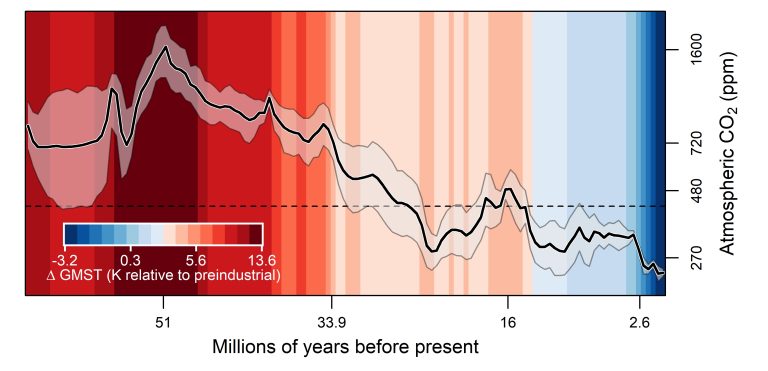
Burning coal, oil, and gas releases carbon dioxide (CO₂), methane (CH₄), and nitrous oxide (N₂O) into the atmosphere. These gases absorb infrared radiation that would otherwise escape to space, creating a heat‑trapping “blanket.” Atmospheric CO₂ concentrations measured by the Mauna Loa Observatory reached 421 ppm in 2022, a level unprecedented in at least 800,000 years (NOAA, 2023).
2. Radiative Forcing
Enhanced greenhouse‑gas concentrations generate a positive radiative forcing of roughly +2.5 W m⁻² relative to pre‑industrial conditions, according to the IPCC. This forcing drives the Earth’s energy imbalance, resulting in net heat gain by the climate system.
3. Feedback Loops
Warming triggers feedbacks that amplify or dampen the initial forcing. Notable positive feedbacks include: (a) reduced snow‑cover albedo, (b) increased water‑vapour concentrations, and (c) permafrost thaw releasing additional CH₄. These feedbacks are supported by satellite observations and Earth‑system models, though their exact strength remains a research focus.
4. Ocean Heat Uptake
Oceans absorb more than 90 % of excess heat, leading to thermal expansion and sea‑level rise. The global ocean heat content increased by 0.45 × 10²³ J per year between 2010 and 2020 (Argo program, 2021).
5. Cryosphere Melt
Higher temperatures melt glaciers, ice caps, and Arctic sea ice, contributing directly to sea‑level rise and reducing the Earth’s reflective surface. The Arctic sea‑ice extent in September 2022 was 2.5 million km², 40 % below the 1981‑2010 average (National Snow and Ice Data Center, 2023).
What Does the Evidence Show?
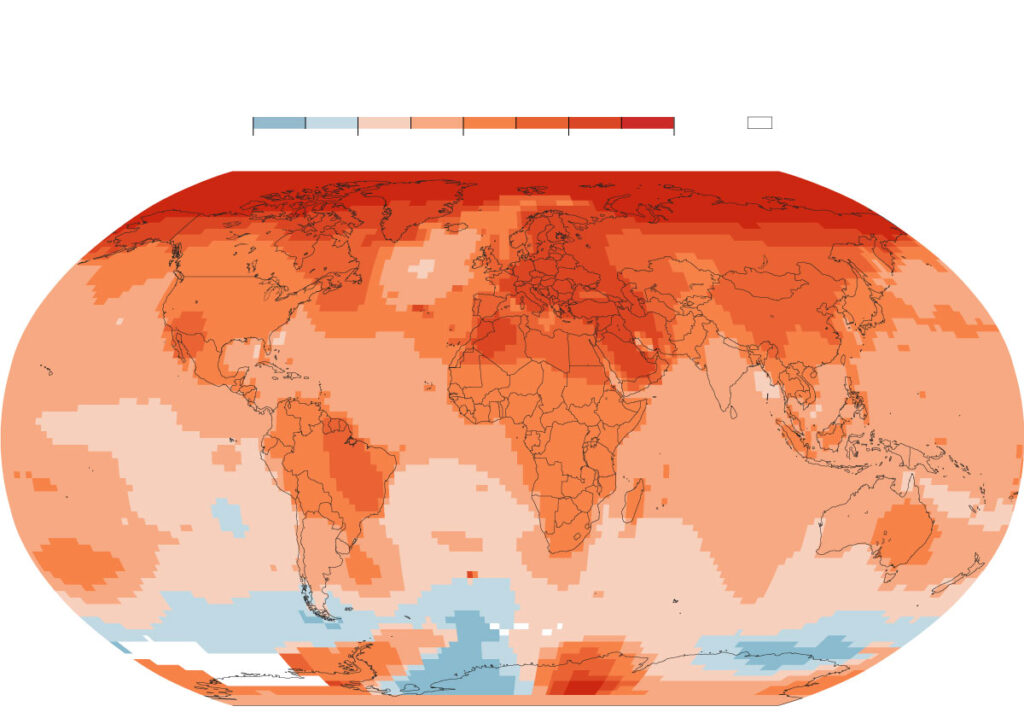
Multiple lines of evidence converge on the same conclusion: the climate system is warming rapidly and human activities are the dominant driver. Long‑term surface‑temperature records from the World Meteorological Organization show a global average increase of 1.2 °C since 1880. Instrumental and proxy data reveal consistent warming trends in the atmosphere, oceans, and land surfaces. Attribution studies published in peer‑reviewed journals (e.g., Nature Climate Change, 2022) assign more than 95 % of the observed warming since 1950 to anthropogenic greenhouse‑gas emissions. Sea‑level tide‑gauge and satellite altimetry data document a rise of about 3.4 mm yr⁻¹ over the past three decades.
Main Causes or Drivers
Fossil‑Fuel Combustion
Energy production accounts for roughly 73 % of global CO₂ emissions (International Energy Agency, 2023). Coal, oil, and natural gas combustion release the bulk of these gases.
Land‑Use Change
Deforestation and conversion of natural ecosystems to agriculture reduce the land carbon sink and emit CO₂. The Food and Agriculture Organization estimates that land‑use change contributed about 5 Gt CO₂ yr⁻¹ in 2022.
Industrial Processes
Cement production, steelmaking, and chemical manufacturing emit CO₂ and other gases directly, adding an estimated 2 Gt CO₂ yr⁻¹.
Positive Climate Feedbacks
Albedo loss from melting ice, increased water vapour, and thawing permafrost amplify warming, as discussed above.
Environmental and Human Impacts
Environmental Impacts
- Extreme Weather: The frequency of heatwaves exceeding 35 °C has doubled in many mid‑latitude regions since 2000 (World Meteorological Organization, 2023).
- Marine Ecosystems: Ocean acidification, driven by a 0.11 pH drop since pre‑industrial times, threatens coral reefs and shell‑forming organisms.
- Biodiversity Loss: The IPBES Global Assessment (2020) projects that up to 30 % of species could face elevated extinction risk by 2050 if warming exceeds 1.5 °C.
Human Health and Social Impacts
- Heat‑related mortality increases by 0.4 % per 0.1 °C rise in temperature, according to WHO (2022).
- Air‑quality degradation from higher ozone and particulate matter exacerbates respiratory diseases, especially in urban areas.
- Food‑insecurity risk rises as staple crop yields in the tropics could decline 10‑15 % per °C of warming (FAO, 2022).
Economic and Infrastructure Impacts
- Insurance losses from weather‑related disasters averaged US$90 billion per year globally between 2015‑2020 (Swiss Re Institute, 2021).
- Coastal infrastructure faces an estimated US$1 trillion in adaptation costs by 2050 (World Bank, 2022).
Regional Differences
Impacts are not uniform. In the Sahel, reduced rainfall combined with higher temperatures threatens agriculture and water security, while in the Arctic, rapid warming (up to 3 °C per decade) accelerates permafrost thaw and threatens Indigenous livelihoods. Tropical island nations such as the Maldives experience sea‑level rise that could submerge low‑lying areas within decades, whereas interior continental regions like Central Europe may see more intense summer heat but less immediate coastal flooding.
What Scientists Know With High Confidence
- Human‑generated greenhouse gases are the dominant cause of observed warming since the mid‑20th century.
- The global average temperature will exceed 1.5 °C above pre‑industrial levels within the next few years under current emission trajectories.
- Sea level will continue to rise due to thermal expansion and ice‑mass loss, with a best‑estimate increase of 0.3‑0.6 m by 2100.
- Extreme heat events and heavy precipitation are becoming more frequent and intense worldwide.
What Remains Uncertain
Key uncertainties revolve around the magnitude of carbon‑cycle feedbacks, especially permafrost methane release, and the regional climate sensitivity of monsoon systems. Model disagreements stem from different representations of cloud processes and aerosol interactions. These uncertainties affect projections of regional precipitation patterns and the exact timing of tipping points such as the collapse of the West Antarctic Ice Sheet.
Common Misconceptions
Misconception: Climate change is only about temperature.
Reality: While temperature rise is a central metric, climate change also alters precipitation, storm intensity, ocean chemistry, and ecosystem dynamics.
Misconception: Individual lifestyle changes alone can stop global warming.
Reality: Personal actions reduce exposure and can drive market demand, but systemic emissions cuts from energy, industry, and land‑use sectors are required to meet the 1.5 °C goal.
Misconception: The planet will adapt naturally without human help.
Reality: Ecosystems have limited adaptive capacity; rapid climate shifts outpace many species’ ability to migrate or evolve, necessitating human‑led conservation and restoration.
Solutions and Limitations
Mitigation strategies focus on reducing greenhouse‑gas emissions: rapid decarbonisation of power generation, electrification of transport, and phase‑out of coal. Renewable energy (solar, wind) now supplies about 30 % of global electricity (IEA, 2023), yet intermittency and grid integration require storage and transmission upgrades, which involve substantial capital costs.
Adaptation measures include climate‑smart agriculture (e.g., drought‑resistant crops), coastal defenses (e.g., seawalls, managed retreat), and early‑warning systems for heatwaves. These actions improve resilience but do not address the root cause of warming.
Nature‑based solutions such as restoring mangroves or peatlands sequester carbon and provide flood protection, but their effectiveness depends on proper site selection, long‑term management, and protection from land‑use change.
What Individuals, Communities, and Governments Can Do
What Individuals Can Do
- Reduce high‑carbon travel by opting for rail or virtual meetings when feasible.
- Improve home energy efficiency through insulation, LED lighting, and programmable thermostats.
- Support policies and companies that commit to science‑based emissions targets.
What Communities and Organizations Can Do
- Develop local climate‑action plans that prioritize vulnerable neighborhoods.
- Invest in green infrastructure such as urban trees, rain gardens, and heat‑resilient public spaces.
- Facilitate community‑owned renewable projects to keep benefits local.
What Governments Can Do
- Implement carbon pricing mechanisms that reflect the social cost of emissions.
- Scale up financing for climate‑resilient infrastructure, especially in low‑income regions.
- Enforce land‑use regulations that protect forests, wetlands, and peatlands.
- Support research and deployment of carbon‑capture, utilisation, and storage (CCUS) technologies, while ensuring robust monitoring.
Closing Synthesis
By 2025 the climate system is unequivocally moving toward higher temperatures, more extreme weather, and growing pressures on ecosystems and human societies. The strongest evidence links these changes to anthropogenic greenhouse‑gas emissions, with high confidence in warming trends, sea‑level rise, and intensified heat events. Uncertainties persist around feedback strength and regional climate responses, underscoring the need for improved monitoring. Mitigation, adaptation, and nature‑based solutions each address different facets of the challenge, but all require coordinated action at individual, community, and governmental levels. Prompt, equitable, and science‑informed decisions remain the most reliable path to limit future risks and safeguard the planet for coming generations.
Frequently Asked Questions
What is the main driver of climate change projected for 2025?
The main driver is the increase in atmospheric greenhouse gases, especially carbon dioxide from fossil‑fuel combustion, which enhances radiative forcing and traps additional heat in the Earth system.
How much has the global average temperature risen since pre‑industrial times?
According to the World Meteorological Organization, the global average surface temperature has risen about 1.2 °C since the pre‑industrial period of 1850‑1900.
Which regions are expected to experience the greatest sea‑level rise impacts by 2025?
Low‑lying coastal and island nations, such as the Maldives and Bangladesh, are most vulnerable because even modest sea‑level rise increases flooding, erosion, and salinization of freshwater resources.
What are high‑confidence findings about climate change for the mid‑2020s?
Scientists are highly confident that human‑generated greenhouse gases are the dominant cause of warming, that global temperatures will exceed 1.5 °C soon, and that extreme heat and heavy precipitation events are becoming more frequent.
What actions can individuals take to help mitigate climate change?
Individuals can lower high‑carbon travel, improve home energy efficiency, and support policies and companies that set science‑based emissions targets, thereby reducing personal carbon footprints and influencing broader market changes.




Leave a Comment