
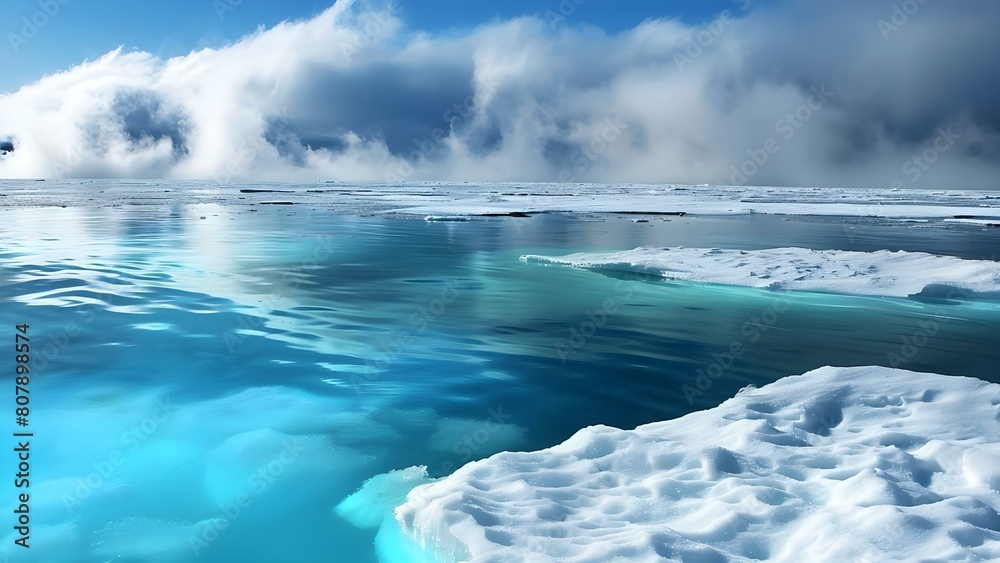
Arctic ice melt unlocks ancient carbon stored in permafrost and sediments, allowing microbial decay and chemical reactions that emit carbon dioxide, a process that amplifies global warming.
Quick Answer
When Arctic sea ice, glaciers, and permafrost thaw, carbon that has been locked in ice and frozen soils becomes exposed to air, water, and microbes. Microbial respiration and oxidation of organic matter release carbon dioxide (CO₂) back into the atmosphere. Multiple lines of observation—satellite albedo trends, permafrost monitoring, and greenhouse‑gas flux measurements—show that this release is already measurable and is expected to grow as warming continues. While the exact magnitude remains uncertain, the mechanism is well‑understood and contributes to a positive feedback loop that can accelerate climate change.
Key Takeaways
- Arctic ice melt exposes ancient organic carbon stored in permafrost and sediments.
- Microbial decomposition and chemical oxidation convert this carbon to CO₂.
- Release of CO₂ reduces the Arctic’s albedo, creating a reinforcing warming feedback.
- Observations from NASA, NOAA, and the IPCC confirm ongoing CO₂ emissions from thawing Arctic regions.
- Uncertainties remain about the total carbon pool size and future emission rates.
What Is How Arctic Ice Melt Releases CO₂ Into the Atmosphere?
The phrase describes the chain of physical, chemical, and biological processes that begin when Arctic ice—both sea ice and land‑based ice—shrinks and permafrost thaws, allowing carbon previously locked in frozen form to re‑enter the active carbon cycle as carbon dioxide. The scope includes the Arctic Ocean, Greenland ice sheet, Canadian and Siberian permafrost zones, and associated sedimentary deposits. It differs from methane release, which follows similar pathways but involves a different greenhouse gas. Understanding this process matters because CO₂ is the dominant long‑lived driver of global warming, and the Arctic stores an estimated 1,400 Gt of carbon in permafrost, comparable to the total amount already emitted by human activities.
How Does It Work?
1. Ice and Permafrost Thaw
Rising air and ocean temperatures reduce sea‑ice extent and melt glacier margins. On land, permafrost—soil that remains at or below 0 °C for at least two years—begins to thaw when surface temperatures exceed the freezing point for prolonged periods. Satellite records from 1979–2022 show a 13 % decline in summer sea‑ice extent (National Snow and Ice Data Center), while ground‑based networks report permafrost temperatures rising 0.3 °C per decade (NASA Permafrost Laboratory).
2. Exposure of Ancient Organic Matter
Frozen soils and sediments contain plant and microbial residues accumulated over thousands of years. When ice melts, these materials become wet and oxygen‑rich, creating conditions suitable for microbial metabolism.
3. Microbial Decomposition
Heat‑activated microbes oxidize the organic carbon, producing CO₂ (and some CH₄). Laboratory incubations of Siberian permafrost samples show CO₂ emission rates of 0.1–0.5 g C m⁻² day⁻¹ at 5 °C, rates that increase with temperature (IPCC AR6, 2021).
4. Chemical Oxidation of Sediments
In addition to biology, exposed mineral surfaces catalyze abiotic oxidation of organic carbon, especially in coastal sediments where wave action mixes oxygenated water into the substrate.
5. Albedo Feedback
Ice loss lowers surface albedo, causing more solar energy to be absorbed by darker water and land. The extra heat further accelerates thaw, creating a reinforcing loop that amplifies CO₂ release.
What Does the Evidence Show?
Long‑term monitoring by NOAA and the European Space Agency indicates a steady increase in atmospheric CO₂ concentrations that cannot be explained by fossil‑fuel emissions alone; isotopic signatures point to a growing contribution from terrestrial sources, including the Arctic. A 2020 systematic review of field flux measurements across the circumpolar north reported average CO₂ emissions of 0.3 Pg C yr⁻¹ from permafrost thaw, with high confidence that the trend is upward (Schuur et al., Nature Climate Change, 2020). Model simulations in the CMIP6 suite project that, under a high‑emissions pathway (SSP5‑8.5), Arctic permafrost could release up to 200 Gt C as CO₂ by 2100, a range reflecting uncertainties in carbon pool size and microbial response.
Main Causes or Drivers
Direct Causes
- Rising atmospheric greenhouse‑gas concentrations that increase regional temperatures.
- Oceanic heat transport that thins sea‑ice from below.
Underlying Drivers
- Global fossil‑fuel combustion and land‑use change, which set the baseline warming trend.
- Arctic amplification: the region warms about twice as fast as the global average due to feedbacks such as albedo loss.
Contributing Factors
- Changes in snow cover that affect insulation of permafrost.
- Increasing precipitation that introduces moisture, accelerating thaw depth.
Environmental and Human Impacts
Environmental Impacts
CO₂ released from the Arctic adds to the global greenhouse‑gas budget, extending atmospheric residence time beyond a century. This contributes to sea‑level rise through thermal expansion and further ice loss. In marine systems, reduced sea‑ice cover alters phytoplankton productivity, potentially lowering the ocean’s capacity to sequester CO₂.
Human Health and Social Impacts
Indigenous communities that rely on hunting and fishing face food‑security challenges as species distributions shift. Infrastructure built on permafrost—roads, pipelines, housing—experiences ground instability, increasing maintenance costs and safety risks.
Economic and Infrastructure Impacts
Cost estimates for permafrost‑related damage in Alaska and northern Canada range from $1 bn to $5 bn per decade (U.S. Geological Survey, 2021), highlighting the growing economic burden of thaw‑induced subsidence.
Regional Differences
While the overall mechanism is consistent, the magnitude of CO₂ release varies. Siberian permafrost, covering ~2 million km², holds the largest carbon stock and shows the highest observed fluxes. In contrast, the Greenland Ice Sheet releases relatively little CO₂ directly, but meltwater runoff can transport carbon to the ocean where it may be respired. Canadian Arctic regions exhibit slower warming trends, resulting in modest current emissions but high future risk.
What Scientists Know With High Confidence
- Arctic warming is occurring at roughly twice the global average rate.
- Permafrost and ice contain large stores of ancient organic carbon.
- Thawing exposes this carbon to microbial and chemical oxidation, producing CO₂.
- Albedo loss from ice melt creates a positive feedback that accelerates regional warming.
What Remains Uncertain
Key uncertainties include the total size of the vulnerable carbon pool, especially in deep permafrost layers, and the exact temperature sensitivity of microbial respiration under field conditions. Model projections differ because of varying assumptions about soil moisture dynamics and vegetation shifts. Improved in‑situ flux networks and remote‑sensing of soil temperature are needed to narrow these gaps.
Common Misconceptions
Misconception: Only methane is released from thawing Arctic soils.
Reality: Both methane and carbon dioxide are emitted, but CO₂ dominates the carbon budget because aerobic decomposition is more widespread than the anaerobic conditions that produce methane.
Misconception: Ice melt directly releases CO₂ without any biological activity.
Reality: The primary pathway is microbial respiration; physical oxidation plays a secondary role. Without microbes, the carbon would remain largely inert.
Misconception: The amount of CO₂ released is negligible compared to fossil‑fuel emissions.
Reality: Current estimates suggest Arctic permafrost contributes ~0.3 Pg C yr⁻¹, a small fraction of annual anthropogenic emissions (~10 Pg C yr⁻¹), but the contribution is growing and adds a long‑term source that persists for centuries.
Solutions and Limitations
Mitigation strategies focus on reducing global greenhouse‑gas emissions to limit further warming, thereby slowing permafrost thaw. Adaptation includes reinforcing infrastructure, monitoring ground stability, and supporting Indigenous livelihoods. Nature‑based approaches such as restoring tundra vegetation can increase surface albedo and insulate permafrost, yet their effectiveness is site‑specific and may be limited by changing climate conditions. Carbon‑capture technologies could offset some emissions, but they do not address the underlying feedback loop and are currently expensive at scale.
What Individuals, Communities, and Governments Can Do
What Individuals Can Do
- Support policies that aim for net‑zero emissions by reducing personal carbon footprints (e.g., energy efficiency, low‑carbon travel).
- Donate to or volunteer with organizations that assist Arctic Indigenous communities in climate adaptation.
What Communities and Organizations Can Do
- Implement local monitoring programs for permafrost temperature and greenhouse‑gas fluxes.
- Develop land‑use plans that preserve tundra vegetation and avoid activities that accelerate soil disturbance.
What Governments Can Do
- Enact and strengthen emissions‑reduction targets consistent with the Paris Agreement to limit Arctic warming.
- Fund research infrastructure such as the International Permafrost Network and remote‑sensing initiatives.
- Incorporate permafrost risk assessments into infrastructure planning and climate‑resilience budgeting.
Synthesis
Arctic ice melt unlocks ancient carbon stores, allowing microbial and chemical processes to emit CO₂, which in turn reinforces warming through albedo loss and atmospheric feedbacks. High‑confidence evidence confirms the mechanisms and the accelerating trend, while uncertainties remain about the total carbon pool and future flux rates. Reducing global emissions, bolstering monitoring, and investing in adaptation are the most evidence‑based pathways to limit this feedback and protect both Arctic ecosystems and the broader climate system.
Frequently Asked Questions
How does melting Arctic ice lead to carbon dioxide emissions?
When Arctic ice and permafrost thaw, organic carbon that was frozen becomes accessible to microbes and chemical reactions, which oxidize it and release CO₂ into the atmosphere.
What amount of carbon is stored in Arctic permafrost?
Scientific assessments estimate that Arctic permafrost contains roughly 1,400 gigatonnes of carbon, comparable to the total carbon emitted by human activities to date.
Is methane the main greenhouse gas released from thawing Arctic soils?
No, carbon dioxide is the dominant greenhouse gas released from thawing Arctic soils; methane is emitted under anaerobic conditions but represents a smaller portion of the total carbon flux.
What are the biggest uncertainties about future CO₂ releases from the Arctic?
Key uncertainties include the exact size of deep‑permafrost carbon pools, how soil moisture will evolve, and the temperature sensitivity of microbial respiration, all of which affect projection accuracy.
How can governments help reduce CO₂ emissions from Arctic ice melt?
Governments can adopt stringent net‑zero emission targets, fund permafrost monitoring networks, and integrate permafrost risk into infrastructure planning to limit warming and associated carbon release.





Leave a Comment