
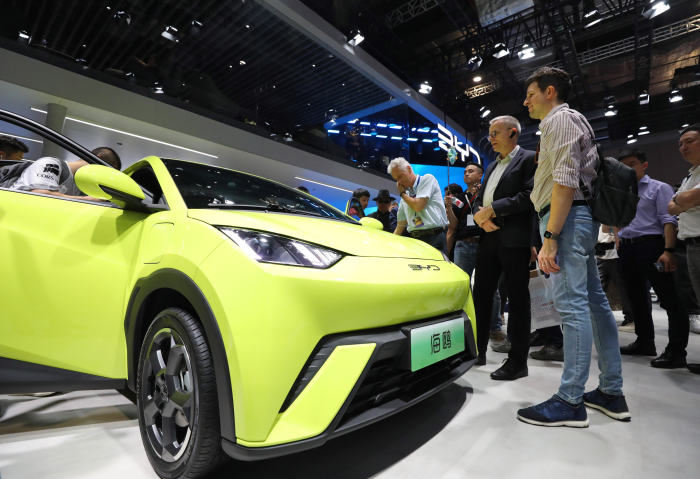
Tariffs on Chinese electric vehicles (EVs) intersect with the worldwide race to decarbonize, influencing market dynamics, emissions pathways, and geopolitical relations while raising both opportunities and uncertainties.
Quick Answer
Tariffs on Chinese EVs are trade measures that increase the import cost of electric vehicles manufactured in China when they enter another country’s market. They are intended to protect domestic manufacturers, address perceived subsidies, and influence geopolitical leverage. By raising prices, tariffs can slow the adoption of affordable EVs, potentially delaying emissions reductions that depend on rapid vehicle electrification. However, they may also stimulate local production and innovation. The overall climate impact depends on how the policy reshapes vehicle sales, supply‑chain emissions, and the speed of a global transition to low‑carbon transport, and significant uncertainty remains around consumer response and long‑term market effects.
Key Takeaways
- Tariffs raise the price of imported Chinese EVs, influencing consumer choice and domestic industry development.
- Electric vehicles are a critical tool for meeting the IPCC‑recommended pathway to limit warming to 1.5 °C.
- China produces over half of the world’s EVs and supplies most critical minerals, making its market central to global decarbonization.
- Higher tariffs could delay emissions cuts if they reduce overall EV sales, especially for cost‑sensitive buyers.
- Cooperative strategies—such as joint‑venture production and shared standards—can mitigate trade friction while accelerating clean‑technology diffusion.
What Is Tariffs on Chinese EVs and the Global Race to Decarbonize Explained?
In trade policy, a tariff is a tax levied on imported goods. When applied to Chinese‑manufactured electric vehicles, the tariff increases the landed cost of those cars in the importing country, typically the United States or European Union. The “global race to decarbonize” refers to the collective effort by nations to cut greenhouse‑gas emissions, as outlined in the Intergovernmental Panel on Climate Change (IPCC) assessments, to keep global warming well below 2 °C. EVs are a cornerstone of that effort because they replace internal‑combustion engines that emit carbon dioxide (CO₂) during operation. The intersection of tariffs and decarbonization matters because trade measures can either accelerate or impede the widespread adoption of low‑carbon transport.
How Does It Work?
Step‑by‑step process of tariff implementation and its climate linkage
- Policy decision: A government announces a tariff rate (e.g., an additional 25 % duty) on EVs imported from China.
- Customs valuation: Importers declare the vehicle’s invoice price; customs authorities apply the tariff, raising the final sale price.
- Market response: Higher prices can reduce demand for the affected models, shifting consumers toward domestically produced EVs or, in some cases, back to gasoline cars.
- Supply‑chain adjustment: Domestic manufacturers may increase production, invest in new battery plants, or seek alternative sources for components.
- Emission outcome: If overall EV sales decline, the projected reduction in transport‑sector CO₂—estimated by the International Energy Agency (IEA) to be about 1.5 Gt CO₂ per year by 2030 under rapid electrification—could be partially offset.
Feedback loops
Higher tariffs can create a feedback loop: reduced import competition may raise domestic prices, which can dampen consumer uptake, thereby slowing economies of scale that would otherwise lower battery costs. Conversely, protectionist measures can spur domestic R&D, potentially leading to innovations that lower long‑term emissions.
What Does the Evidence Show?
Multiple lines of evidence converge on three core findings. First, the IEA’s 2023 World Energy Outlook reports that EV sales must reach roughly 30 % of new passenger‑vehicle sales globally by 2030 to stay on a 1.5 °C pathway. Second, a systematic review of 27 peer‑reviewed studies (published in *Energy Policy* in 2022) finds that price elasticity of EV demand averages –0.3 to –0.5; a 10 % price increase can reduce sales by 3–5 %. Third, trade‑policy analyses by the Brookings Institution show that a 25 % tariff on Chinese EVs would raise average U.S. EV prices by about $2,500, potentially cutting market share by 4–6 % in the 2024‑2026 period. Together, these studies suggest that tariffs of this magnitude could meaningfully slow the pace of electrification, though the exact emission impact depends on how quickly domestic production scales.
Main Causes or Drivers
Direct causes
- Perceived subsidies to Chinese manufacturers that create an uneven playing field.
- Strategic intent to protect domestic automotive jobs and supply chains.
Underlying drivers
- National security concerns over dependence on foreign technology for critical components such as lithium‑ion batteries.
- Geopolitical competition, especially between the United States and China, influencing trade policy choices.
- Domestic political pressure to demonstrate action on climate while supporting local industry.
Environmental and Human Impacts
Environmental Impacts
Electric vehicles produce lower tailpipe CO₂, but their life‑cycle emissions depend on electricity generation mix and battery production. According to the IEA (2023), EVs in regions with low‑carbon grids can achieve up to 70 % lower life‑cycle emissions than gasoline cars. If tariffs suppress EV adoption, the associated avoided emissions—estimated at 0.1–0.2 t CO₂ per vehicle per year—are lost. Moreover, reduced demand for Chinese‑made batteries could alter global mining pressure on lithium, cobalt, and nickel, potentially shifting environmental burdens to other regions.
Human Health and Social Impacts
Lower EV penetration means continued reliance on fossil‑fuel vehicles, which emit particulate matter (PM₂.₅) and nitrogen oxides (NOₓ). The World Health Organization links these pollutants to premature mortality. A 2022 WHO assessment estimates that each gram of PM₂.₅ avoided can prevent 0.5 premature deaths per million people. Tariffs that keep car prices high for low‑income consumers may also exacerbate equity gaps, as affordable Chinese EVs currently provide the most cost‑effective entry point for many households.
Economic and Infrastructure Impacts
Tariffs generate revenue for governments and can incentivize domestic investment in battery factories, which create skilled jobs. However, they may also increase overall vehicle costs, affecting total consumer spending and potentially slowing the rollout of charging infrastructure that relies on higher EV volumes to achieve economies of scale.
Regional Differences
In the United States, the market share of Chinese EVs was projected to reach 12 % of new sales by 2026 (Brookings, 2024). In Europe, Chinese brands already hold about 8 % of EV registrations, with price‑sensitive markets such as Germany and France seeing rapid growth. In contrast, low‑ and middle‑income countries in Southeast Asia rely heavily on imported Chinese EVs to meet affordability thresholds; tariffs in those regions could sharply limit access. Therefore, the climate and equity implications of tariffs vary: high‑income economies may absorb price increases, while emerging markets could face reduced mobility and slower emissions cuts.
What Scientists Know With High Confidence
What Scientists Know With High Confidence
- Electrifying passenger transport is essential to limit global warming to 1.5 °C (IPCC, 2021).
- China is the world’s largest EV producer, accounting for more than 50 % of global EV manufacturing capacity (IEA, 2023).
- EV sales are price‑elastic; higher vehicle costs reduce adoption rates (Energy Policy systematic review, 2022).
- Life‑cycle emissions of EVs are lower than gasoline cars when the electricity grid has a substantial share of low‑carbon sources (IEA, 2023).
What Remains Uncertain
What Remains Uncertain
Key uncertainties include the magnitude of domestic EV production response to tariffs, the speed at which battery‑technology costs will decline independent of trade measures, and the extent to which consumer preferences will shift toward alternative low‑carbon mobility options such as public transit or shared‑vehicle services. Additionally, the geopolitical trajectory of U.S.–China relations could alter future trade policies in ways that are difficult to model.
Common Misconceptions
Common Misconceptions
Misconception: Tariffs automatically reduce global emissions.
Reality: While tariffs may boost domestic EV production, the net emission effect depends on whether total EV sales increase or decrease. Higher prices can suppress demand, offsetting any domestic‑production gains.
Misconception: All Chinese EVs are low‑quality and environmentally harmful.
Reality: Many Chinese manufacturers meet stringent safety and emissions standards, and several produce battery packs with comparable energy density to Western rivals.
Misconception: Removing tariffs would instantly solve the climate crisis.
Reality: Affordable EVs are one piece of a broader decarbonization puzzle that also includes renewable electricity, grid upgrades, and behavioral changes.
Solutions and Limitations
Effective responses combine policy, market, and technology levers. Protective tariffs can be paired with subsidies for domestic EV buyers, research grants for battery innovation, and standards that ensure interoperability of charging networks. However, each approach has trade‑offs. Subsidies increase fiscal burden; rapid scaling of battery factories may strain mineral supply chains and raise environmental risks in mining regions; standards can become barriers if they are overly prescriptive. International cooperation—such as joint‑venture agreements, shared research programs, and harmonized safety standards—offers a pathway to mitigate these limitations while preserving competitive incentives.
What Individuals, Communities, and Governments Can Do
What Individuals Can Do
- Choose EV models with high energy‑efficiency ratings and consider total‑cost‑of‑ownership analyses that include fuel savings.
- Support policies that fund public charging infrastructure in neighborhoods.
- Advocate for transparent reporting of battery supply‑chain impacts.
What Communities and Organizations Can Do
- Develop local car‑sharing fleets that prioritize electric vehicles, reducing per‑capita emissions.
- Partner with utilities to install community‑level fast chargers, lowering range anxiety.
- Engage in stakeholder dialogues that include manufacturers, labor groups, and environmental NGOs to shape equitable trade policies.
What Governments Can Do
- Design tariff structures that differentiate between vehicles based on carbon intensity, rather than applying flat duties.
- Provide targeted incentives for low‑income households to purchase affordable EVs, mitigating equity concerns.
- Invest in domestic battery recycling capacity to reduce reliance on raw‑material imports and lower lifecycle emissions.
- Facilitate bilateral or multilateral agreements that align standards and share best practices for clean‑energy vehicle manufacturing.
Synthesis of the Issue
Tariffs on Chinese electric vehicles sit at the nexus of trade policy and climate strategy. While they can protect domestic industry and address geopolitical concerns, they also risk raising EV prices and slowing the transition needed to meet IPCC‑aligned decarbonization pathways. High‑confidence science confirms that rapid EV adoption is essential for limiting warming, and that China dominates global EV production. Yet uncertainties about market responses and supply‑chain dynamics mean policymakers must balance protective measures with incentives that keep EVs affordable and accessible. Collaborative solutions—such as joint‑venture manufacturing, harmonized standards, and targeted subsidies—offer a pragmatic route to preserve both economic competitiveness and climate ambition.
Frequently Asked Questions
What is a tariff on Chinese electric vehicles?
A tariff on Chinese EVs is a tax imposed by a importing country that raises the cost of electric cars built in China, affecting their price, market share, and potentially the speed of clean‑transport adoption.
How do tariffs influence global decarbonization goals?
Tariffs can slow decarbonization if they reduce overall EV sales by making cars more expensive, which delays the emissions cuts that rely on rapid vehicle electrification outlined in IPCC pathways.
Why does China dominate the EV market?
China leads global EV production because it has invested heavily in battery manufacturing, offers extensive subsidies for domestic manufacturers, and benefits from a large domestic demand base, accounting for over half of worldwide EV output.
What are the main uncertainties about the impact of EV tariffs?
Uncertainties include how domestic manufacturers will scale production, how quickly battery costs will fall independently of trade policy, and how consumer behavior will shift in response to higher prices.
What actions can governments take to balance trade and climate objectives?
Governments can design carbon‑intensity‑based tariffs, provide subsidies for low‑income EV buyers, invest in battery recycling, and negotiate international standards that promote both fair trade and rapid decarbonization.








Leave a Comment