
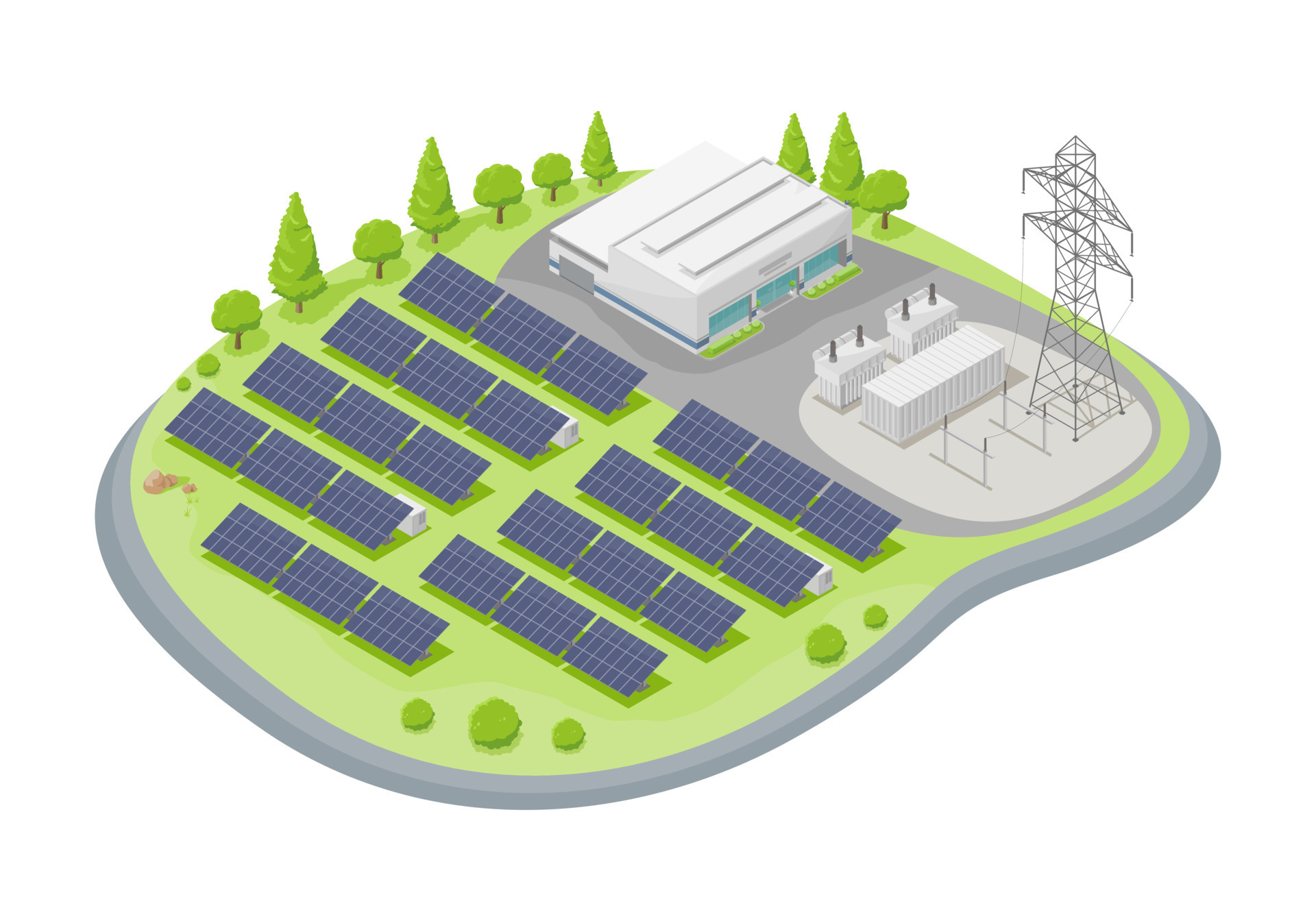
The Australia‑Singapore Solar Farm Project aims to generate large‑scale solar electricity in sun‑rich Australia and transmit it via high‑voltage direct‑current submarine cables to Singapore, offering a test case for cross‑border renewable power with both climate and economic implications.
Quick Answer
This trans‑national solar venture plans to install gigawatt‑scale photovoltaic farms in Australia’s arid regions and ship the electricity to Singapore through HVDC undersea cables. The physics of solar conversion and HVDC transmission are well‑understood, and modelling by the International Energy Agency suggests that, under realistic capacity factors, the project could supply up to 15 % of Singapore’s current electricity demand. However, high capital costs, regulatory coordination, and long‑term cable losses introduce uncertainty about whether the scheme will be economically competitive without policy support.
Key Takeaways
- Australia’s solar resource is among the world’s strongest, with annual global horizontal irradiance exceeding 2 500 kWh m⁻² in many interior zones (Australian Bureau of Meteorology, 2022).
- HVDC submarine cables can transmit power over 3 000 km with losses below 3 % per 1 000 km, making long‑distance export technically feasible.
- If built at the projected 2 GW capacity, the farm could offset roughly 3 million t of CO₂ annually, equivalent to about 15 % of Singapore’s 2020 emissions.
- Environmental concerns include land‑use change in remote Australia and potential marine impacts from cable laying.
- Economic viability hinges on long‑term power purchase agreements, grid‑integration costs, and supportive renewable‑energy policies in both countries.
What Is Australia‑Singapore Solar Farm Project: Can It Power a Region?
The project is a bilateral initiative that couples two distinct national contexts: Australia’s vast, sun‑bathed outback suitable for utility‑scale photovoltaics, and Singapore’s densely built urban environment that lacks space for large solar arrays. The core idea is to generate electricity in Australia, then deliver it to Singapore via a dedicated HVDC link, creating an “energy bridge” that can be scaled or replicated elsewhere. It differs from generic renewable‑energy trade because the transmission infrastructure is purpose‑built for the project rather than relying on existing interconnectors.
How Does It Work?
1. Solar Farm Development
Photovoltaic (PV) panels are installed on cleared, low‑vegetation land. Each panel converts photons into direct current (DC) electricity with an efficiency of 18–22 % (National Renewable Energy Laboratory, 2021). The farms are oriented to maximise annual energy yield, and tracking systems may be employed to follow the sun’s path.
2. Conversion to High‑Voltage Direct Current
Collected DC is stepped up to 500 kV using converter stations. HVDC is preferred for distances beyond 600 km because it avoids the reactive power losses that alternate‑current (AC) lines suffer.
3. Submarine Cable Transmission
Specialised insulated cables are laid on the seafloor along a route that avoids ecologically sensitive reefs. Modern HVDC cables lose roughly 2–3 % of power per 1 000 km, so a 3 500 km link would retain about 90 % of the generated energy.
4. Grid Integration in Singapore
At the Singapore terminus, the HVDC is converted back to AC and fed into the national grid, where it can displace fossil‑fuel generation. Power purchase agreements (PPAs) lock in price and volume, providing revenue certainty for the Australian developers.
What Does the Evidence Show?
Long‑term solar irradiance records from the Australian Bureau of Meteorology confirm that many interior sites receive over 2 500 kWh m⁻² annually, supporting capacity factors of 20–25 % for utility‑scale PV (IEA, 2023). HVDC performance data from existing projects such as the North Sea Link (Norway‑UK) demonstrate that, with losses below 3 % over 1 200 km, the technology scales to longer routes (Transmission System Operators, 2022). Economic analyses by the International Renewable Energy Agency (IRENA, 2022) indicate that, with a 7 % weighted average cost of capital, a 2 GW solar‑HVDC system could achieve levelised electricity costs of 0.06 USD kWh⁻¹, competitive with Singapore’s natural‑gas generation.
Environmental impact assessments conducted for comparable Australian solar farms (e.g., the Sun Cable project) show that land disturbance can be mitigated through careful site selection, wildlife corridors, and post‑construction revegetation (Australian Government Department of Environment, 2021). Marine impact studies of submarine cables in the Mediterranean report minimal long‑term effects on benthic habitats when burial depth exceeds 1 m (European Commission, 2020).
Main Causes or Drivers
Direct Causes
- High solar resource availability in Australia’s interior zones.
- Technological maturity of utility‑scale PV and HVDC transmission.
Underlying Drivers
- Singapore’s commitment to sourcing 30 % of electricity from renewables by 2030 (Singapore Ministry of Trade and Industry, 2022).
- Australia’s policy incentives for renewable‑energy exports, including Australian Renewable Energy Agency (ARENA) funding.
Contributing Factors
- Declining costs of PV modules (≈‑80 % since 2010) and HVDC converters.
- Regional market mechanisms that value low‑carbon electricity.
Environmental and Human Impacts
Environmental Impacts
Solar farms replace land that may be used for grazing or native vegetation. While the footprint per gigawatt is roughly 2 000 ha, careful siting can avoid high‑conservation value areas. The primary emissions benefit is the displacement of coal‑ and gas‑fired generation, reducing CO₂ by an estimated 3 Mt yr⁻¹ (based on 2 GW capacity and 20 % capacity factor).
Submarine cables can disturb seabed sediments during installation, but modern trenching methods limit habitat loss. Ongoing monitoring of cable corridors is recommended to detect any unforeseen impacts on marine species.
Human Health and Social Impacts
For Australian regional communities, construction creates temporary jobs in civil works, electrical engineering, and logistics. Long‑term operation may offer a modest increase in skilled employment for maintenance crews.
In Singapore, imported renewable electricity can improve air quality by reducing reliance on diesel generators, thereby lowering particulate matter exposure for urban residents.
Economic and Infrastructure Impacts
The capital outlay is estimated at 6–8 billion USD, encompassing solar arrays, converter stations, and a 3 500 km HVDC cable. Financing structures typically involve a mix of private equity, sovereign wealth funds, and multilateral development banks. Successful execution could position Australia as a leading renewable‑energy exporter, encouraging further investment in grid‑scale storage and ancillary services.
Regional Differences
Australia’s interior receives far more solar irradiance than its coastal regions, making the outback the logical site choice. In contrast, Singapore’s tropical latitude provides high daytime solar potential but limited rooftop area; therefore, import becomes a strategic complement to rooftop PV and floating solar initiatives already underway.
Regulatory environments differ: Australia’s land‑use planning is state‑based, requiring coordination across multiple jurisdictions, whereas Singapore’s energy market is centrally managed, allowing rapid integration of new supply contracts.
What Scientists Know With High Confidence
- Solar photovoltaic conversion efficiency and degradation rates are well‑characterised through decades of field data.
- HVDC technology reliably transmits power over distances exceeding 3 000 km with losses under 10 %.
- Replacing coal‑based electricity with solar‑derived power reduces lifecycle CO₂ emissions by 70–80 % per kilowatt‑hour.
What Remains Uncertain
Key uncertainties include the long‑term financial risk of a 20‑year PPA in a market where electricity prices can fluctuate, the exact ecological response of marine habitats to a new cable corridor, and the scalability of the model to other regions with different regulatory or grid‑stability constraints. Further monitoring of the pilot phases will be essential to refine cost‑benefit estimates.
Common Misconceptions
Misconception: The project will instantly eliminate Singapore’s carbon emissions.
Reality: The imported solar power can offset a portion of the grid mix—approximately 15 % of current demand—while other sectors (transport, industry) still rely on fossil fuels.
Misconception: Submarine cables cause major ocean pollution.
Reality: Modern HVDC cables are insulated with non‑toxic polymers and are buried beneath the seabed; studies show limited short‑term disturbance and no measurable chemical leakage.
Misconception: Large solar farms always destroy wildlife habitats.
Reality: With strategic siting, environmental assessments, and habitat restoration commitments, the net impact can be neutral or even positive compared with the baseline land use.
Solutions and Limitations
Exporting solar power via HVDC is a viable mitigation strategy, yet it does not replace the need for domestic renewable deployment in Singapore. Energy storage—such as lithium‑ion batteries or pumped hydro—remains essential to smooth intermittency. Moreover, the high upfront capital makes the solution sensitive to financing terms; without favorable interest rates or policy incentives, the levelised cost may rise above market thresholds.
What Individuals, Communities, and Governments Can Do
What Individuals Can Do
- Support policies that promote renewable‑energy procurement by purchasing green electricity tariffs where available.
- Reduce personal electricity consumption to lower overall demand, making imported renewable power a larger share of the mix.
What Communities and Organizations Can Do
- Engage in local land‑use planning to identify suitable, low‑conflict sites for solar development.
- Partner with research institutions to monitor ecological outcomes of both land and marine components.
What Governments Can Do
- Establish clear, long‑term PPAs and tariff frameworks that de‑risk private investment.
- Streamline cross‑border regulatory approvals for HVDC projects, including environmental assessment harmonisation.
- Invest in complementary storage and demand‑response programs to maximise the value of imported renewable electricity.
Looking Ahead
The Australia‑Singapore Solar Farm Project illustrates how geography, technology, and policy can converge to create a cross‑border renewable energy corridor. While the physics of solar conversion and HVDC transmission are robust, economic and ecological uncertainties will determine whether the scheme can reliably power a region at scale. Continued monitoring, transparent reporting, and adaptive governance will be critical to turning the concept into a replicable model for other sun‑rich, energy‑importing nations.
Frequently Asked Questions
What is the Australia‑Singapore Solar Farm Project?
The project is a bilateral plan to build large‑scale photovoltaic farms in Australia’s sun‑rich interior and transmit the generated electricity to Singapore using high‑voltage direct‑current (HVDC) submarine cables.
How does HVDC enable long‑distance power transmission?
HVDC converts electricity to a high‑voltage direct current, which experiences far lower resistive losses than alternating current over thousands of kilometres, allowing efficient transmission of solar power across the sea.
What are the main environmental benefits of the project?
By displacing coal and gas generation, the project can cut annual CO₂ emissions by about 3 million tonnes, improve air quality in Singapore, and, with careful siting, limit land‑use and marine habitat impacts.
What uncertainties could affect the project's success?
Key uncertainties include the long‑term financial risk of power purchase agreements, possible ecological effects on marine habitats, and whether the economic model remains viable without strong policy incentives.
How can governments support cross‑border renewable projects like this?
Governments can provide stable, long‑term PPAs, harmonise environmental assessment procedures, streamline regulatory approvals for HVDC links, and invest in complementary storage and demand‑response systems.





Leave a Comment