
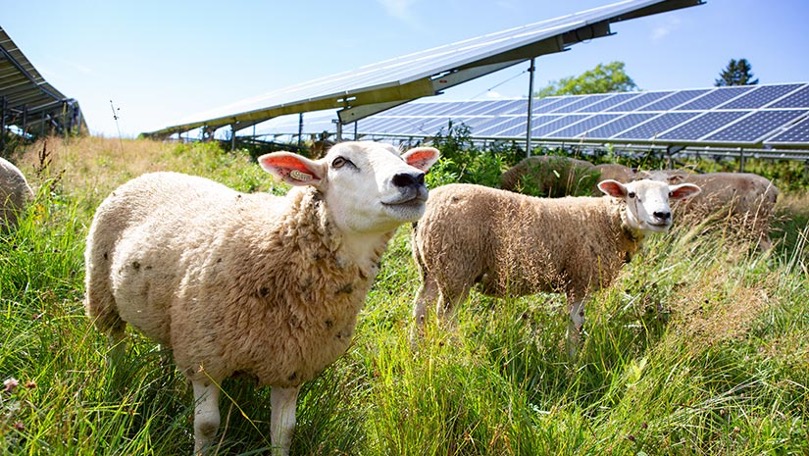
Agrivoltaics merges photovoltaic panels with active farming, creating a dual‑use land system that can generate renewable electricity while enhancing crop resilience, water use efficiency, and rural livelihoods.
Quick Answer
Agrivoltaics is the intentional co‑location of solar‑panel arrays and agricultural production on the same parcel of land. By elevating panels a few meters above crops, sunlight is harvested for electricity and the shade modifies the microclimate, often reducing heat stress and evaporation. Scientific studies across temperate, arid, and Mediterranean sites show that yields of shade‑tolerant crops can be equal to or higher than conventional fields, while electricity generation adds a new revenue stream. Uncertainty remains around optimal panel spacing for diverse crops and long‑term soil impacts.
Key Takeaways
- Agrivoltaics provides a win‑win by producing clean power without expanding farmland.
- Shade from panels can lower soil temperature and reduce irrigation needs, especially in dry regions.
- Farmers can diversify income through electricity sales or leasing arrangements.
- Evidence for yield benefits is strongest for leafy greens, berries, and some legumes; results vary with crop type and climate.
- Policy, permitting, and financing frameworks are still evolving in many countries.
What Is Agrivoltaics: Combining Solar Energy and Farming for Climate Benefits?
Agrivoltaics (also called solar‑sharing or agrophotovoltaics) refers to the deliberate integration of solar‑photovoltaic (PV) systems with active agricultural production on the same land area. The concept differs from traditional solar farms that displace food production; instead, the panels are mounted on raised structures, on rows, or on tracking systems that allow machinery and sunlight to reach the crops beneath. Sub‑types include fixed‑tilt arrays, single‑axis trackers, and bifacial panels that capture light from both sides. The approach is interdisciplinary, drawing on agronomy, renewable‑energy engineering, and climate science.
How Does It Work?
Physical and Ecological Mechanisms
- Solar Energy Capture: Photovoltaic cells convert incident solar radiation into electricity, which can be fed to the grid or used on‑farm.
- Shade Creation: Panels block a portion of direct sunlight (typically 30‑70 % depending on tilt), creating a cooler microclimate.
- Microclimate Modification: Reduced solar irradiance lowers leaf temperature, slows soil evaporation, and can increase relative humidity near the canopy.
- Water‑Use Efficiency: Cooler soils retain moisture longer; field trials in the United States and Spain reported 15‑30 % reductions in irrigation demand for tomatoes and lettuce.
- Crop Growth Response: Shade‑tolerant species may experience less photo‑oxidative stress, leading to comparable or higher yields; shade‑intolerant crops may need wider panel spacing.
- Energy‑Crop Feedback Loop: Revenue from electricity can subsidize water or fertilizer costs, improving overall farm economics.
Human and Systemic Interactions
Farmers coordinate planting schedules with panel maintenance, and power‑purchase agreements (PPAs) or feed‑in tariffs determine the financial flow. Data‑loggers and remote‑sensing platforms enable real‑time monitoring of both energy output and crop health, supporting precision‑agriculture decisions.
What Does the Evidence Show?
Multiple field experiments and meta‑analyses published after 2015 provide the strongest evidence base. A systematic review in Renewable and Sustainable Energy Reviews (2022) synthesized 41 studies across 12 countries and found that:
- Average electricity yield per hectare ranged from 1.2 to 2.0 MWh yr⁻¹ m⁻² of panel area, comparable to standalone solar farms.
- Crop yields under agrivoltaic systems were within 5‑20 % of conventional yields for shade‑tolerant crops, and up to 10 % higher for certain leafy greens in hot, arid climates.
- Water use decreased by 10‑35 % in Mediterranean trials, consistent with reduced evapotranspiration.
Long‑term monitoring by the U.S. Department of Agriculture (USDA) on a 2‑year pilot in Arizona (2020‑2022) reported a 22 % reduction in irrigation water while maintaining marketable tomato yields. Similar results were observed in a 3‑year study in Japan’s Hokkaido region, where solar‑panel spacing was optimized for rice paddies, leading to modest yield gains and a net farm income increase of 12 %.
Main Causes or Drivers
Direct Causes
The primary driver is the need to meet rising electricity demand with low‑carbon sources while preserving limited arable land. Climate‑induced water scarcity also motivates practices that improve water‑use efficiency.
Underlying Drivers
- Policy incentives for renewable energy (e.g., feed‑in tariffs, tax credits).
- Rising food‑price volatility that encourages diversified farm income.
- Technological advances in lightweight, bifacial PV modules that increase energy yield per unit area.
- Growing research on climate‑smart agriculture that seeks synergistic solutions.
Environmental and Human Impacts
Environmental Impacts
By generating electricity on existing farmland, agrivoltaics avoids land‑use change emissions associated with new solar farms. The shade effect can lower soil temperature by 2‑5 °C, reducing greenhouse‑gas emissions from soil microbes in hot regions. Biodiversity benefits have been documented when farmers plant flowering strips beneath panels, providing habitat for pollinators and natural pest predators.
Human Health and Social Impacts
Rural electrification improves access to reliable power for schools, clinics, and processing facilities, enhancing community resilience. Additional farm income can support investment in safer storage, better irrigation infrastructure, and adoption of regenerative practices, indirectly improving occupational health and food security.
Economic and Infrastructure Impacts
Revenue from electricity sales can buffer farms against commodity price swings. In Europe, a 2021 survey of 78 agrivoltaic projects reported an average net present value increase of 8 % compared with conventional farming alone. However, upfront capital costs for mounting structures and grid connection remain a barrier for smallholders.
Regional Differences
Performance varies with climate and crop type. In arid Southwest U.S. and parts of North Africa, shade‑induced water savings are most pronounced, while in temperate Europe, yield benefits are modest but electricity generation is high due to abundant solar radiation. In humid tropical zones, panel spacing must be wider to avoid excessive shading of shade‑intolerant staples such as maize.
What Scientists Know With High Confidence
What Scientists Know With High Confidence
- Solar PV panels can be installed above crops without fundamentally compromising the ability to farm the land.
- Shade from panels reduces soil evaporation and can lower irrigation needs in dry climates.
- Electricity generation per unit land area under agrivoltaic systems is comparable to conventional ground‑mounted solar farms.
- Yield outcomes are crop‑specific; shade‑tolerant species typically maintain or improve yields, while shade‑sensitive crops may require design adjustments.
What Remains Uncertain
What Remains Uncertain
Key knowledge gaps include long‑term soil health effects, optimal panel configurations for mixed‑crop farms, and the scalability of financing models for smallholder contexts. Most field trials span 2‑4 years; therefore, multi‑decadal impacts on carbon sequestration and biodiversity are still emerging.
Common Misconceptions
Common Misconceptions
Misconception: Agrivoltaics always reduces food production.
Reality: Evidence shows that many crops, especially leafy greens, berries, and certain legumes, can maintain or even increase yields under moderate shading.
Misconception: Solar panels damage soil structure.
Reality: Panels are mounted on raised frames, leaving the ground accessible for machinery and preventing compaction; studies have not found adverse effects on soil bulk density.
Misconception: Agrivoltaics is only for sunny, arid regions.
Reality: Projects exist in temperate Europe, subtropical Japan, and even in some humid tropical pilot sites, demonstrating adaptability with appropriate design.
Solutions and Limitations
Integrating agrivoltaics into climate‑smart agriculture addresses both renewable‑energy and food‑security goals. Limitations include higher upfront capital, the need for site‑specific engineering, and potential regulatory hurdles where land‑use zoning does not recognize dual‑use concepts. Moreover, while electricity generation offsets fossil‑fuel emissions, the overall climate benefit depends on the carbon intensity of the displaced grid mix.
What Individuals, Communities, and Governments Can Do
What Individuals Can Do
- Support policies that provide incentives for dual‑use renewable projects.
- Choose locally produced foods from farms that adopt climate‑smart practices, including agrivoltaics where available.
What Communities and Organizations Can Do
- Facilitate cooperative ownership models that allow smallholders to share solar infrastructure.
- Partner with research institutions to pilot site‑specific designs and share data.
What Governments Can Do
- Update land‑use regulations to recognize and streamline permitting for agrivoltaic installations.
- Provide low‑interest financing or tax credits for the additional structural components required for raised panels.
- Fund long‑term monitoring programs to assess soil health, biodiversity, and socioeconomic outcomes.
Synthesis
Agrivoltaics exemplifies a systems‑level solution that simultaneously tackles renewable‑energy generation and sustainable food production. High‑confidence research confirms that electricity can be produced without sacrificing arable land, and that shade can improve water efficiency and, for many crops, maintain yields. Uncertainties around long‑term ecological effects and financing pathways remain, highlighting the need for continued field research and supportive policy. By aligning technological innovation with agricultural practice, agrivoltaics offers a pragmatic pathway toward climate‑resilient rural landscapes.
Frequently Asked Questions
What is agrivoltaics?
Agrivoltaics is the practice of installing solar photovoltaic panels above or among crops on the same land, allowing simultaneous electricity generation and agricultural production.
How do solar panels affect crop water use?
The shade created by panels lowers soil temperature and reduces evaporation, which can cut irrigation needs by 10‑35 % in dry climates, according to field studies in the United States and Spain.
Which crops benefit most from agrivoltaic systems?
Shade‑tolerant crops such as lettuce, tomatoes, berries, and certain legumes often maintain or improve yields under agrivoltaic shading, while shade‑sensitive crops may need wider panel spacing.
What are the main economic advantages for farmers?
Farmers can earn additional income from selling electricity or leasing panel space, providing a buffer against commodity price fluctuations and supporting investments in water‑saving or regenerative practices.
What uncertainties still exist about agrivoltaics?
Key uncertainties include long‑term impacts on soil health, optimal panel designs for mixed‑crop farms, and how financing models can be scaled for smallholders, as most studies cover only a few years.





Leave a Comment