
Africa’s abundant sunlight, growing energy needs, and expanding investment are positioning the continent to become the world’s next major hub for solar energy demand.
Quick Answer
Africa possesses some of the highest solar irradiance levels on the planet, with many regions receiving 2,000–2,500 kWh/m² annually. Coupled with chronic electricity shortages and falling solar‑panel costs, the continent offers a practical pathway to large‑scale photovoltaic deployment. Evidence from the International Renewable Energy Agency (IRENA) and the International Energy Agency (IEA) shows rapid capacity growth, while uncertainties remain around financing, grid integration, and political stability.
Key Takeaways
- Africa receives among the highest solar irradiance globally, making solar power technically feasible across most of the continent.
- Solar PV capacity grew from roughly 5 GW in 2020 to an expected >30 GW by 2030 under current policy trends.
- Energy access gaps, job creation potential, and climate‑resilience benefits drive policy interest.
- Key barriers include financing gaps, grid‑infrastructure deficits, and variable regulatory environments.
- Strategic solutions involve regional power‑pooling, storage technologies, and capacity‑building for local workforces.
What Is Africa Set to Become the Next Global Hub for Solar Energy Demand?
The phrase refers to Africa’s emerging role as a primary market and production centre for solar electricity. It encompasses utility‑scale solar farms, distributed rooftop installations, and emerging solar‑manufacturing activities that together could satisfy a substantial share of global solar demand. Unlike isolated projects, the “hub” concept emphasizes interconnected regional grids, cross‑border power trade, and a growing domestic supply chain. Recognising this trend matters because it links climate mitigation, energy security, and socioeconomic development across a continent that still lacks reliable electricity for many of its citizens.
How Does It Work?
Physical Process
Photovoltaic (PV) cells convert sunlight directly into electricity through the photovoltaic effect. In high‑irradiance zones—such as the Sahel, the Horn of Africa, and Southern Africa—panels can achieve capacity factors of 20‑25 %, far above the global average of about 15 %.
System Integration
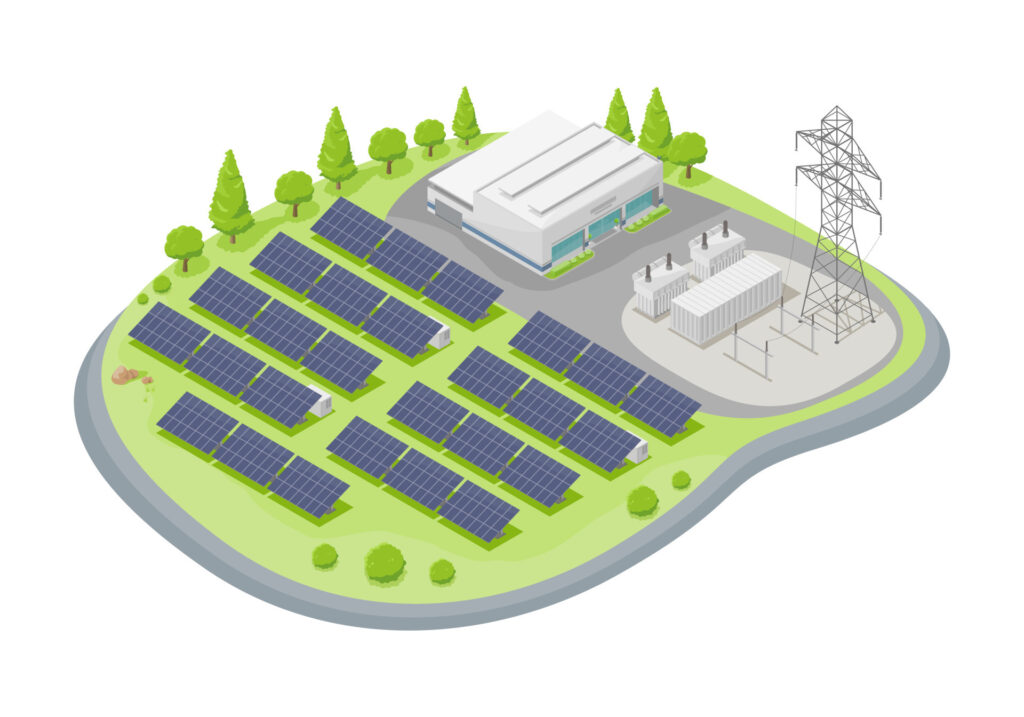
- Solar farms generate DC electricity that inverters convert to AC.
- The AC power feeds into national transmission networks or, where grids are weak, into micro‑grids.
- Battery storage or hybrid systems smooth out diurnal variability, enabling supply after sunset.
- Regional interconnections (e.g., the West African Power Pool) allow excess generation in one country to be exported to neighbours.
Economic Mechanism
Lower capital costs—approximately $0.6 USD per watt for utility‑scale PV in 2023 according to the IEA—combined with declining balance‑of‑system expenses make solar competitive with diesel generators and, increasingly, with coal‑based power. Private investors, development banks, and sovereign wealth funds finance projects, while power purchase agreements (PPAs) provide revenue certainty.
What Does the Evidence Show?
Long‑term satellite observations confirm that Africa enjoys the world’s second‑highest average solar irradiance after the Middle East. IRENA’s 2023 Renewable Capacity Statistics report documents a ten‑fold increase in installed solar PV capacity across the continent between 2010 and 2022. Scenario modelling by the International Energy Agency (IEA) indicates that, if current policies are strengthened, solar could supply up to 40 % of Africa’s electricity mix by 2040, reducing CO₂ emissions by an estimated 350 Mt CO₂e per year.
Main Causes or Drivers
Direct Causes
- High solar resource availability (2,000–2,500 kWh/m² per year).
- Rapid decline in PV module prices—over 80 % drop since 2010.
- Escalating electricity demand driven by urbanisation and industrialisation.
Underlying Drivers
- International climate finance mechanisms (e.g., Green Climate Fund) that earmark funds for renewable projects.
- Policy reforms such as feed‑in tariffs, net‑metering, and renewable‑energy targets adopted by countries like South Africa, Kenya, and Morocco.
- Regional integration initiatives that lower transaction costs for cross‑border power trade.
Amplifying Factors
- Growing private‑sector interest, exemplified by large‑scale projects financed by European Development Finance Institutions.
- Technological advances in battery storage, with costs falling below $120 kWh by 2023 (IEA).
Environmental and Human Impacts
Environmental Impacts
Solar PV produces electricity with near‑zero operational emissions, directly offsetting fossil‑fuel generation. Life‑cycle assessments (e.g., a 2021 study by the European Commission) show that solar’s greenhouse‑gas emissions are roughly 20 g CO₂e/kWh, an order of magnitude lower than coal. Land‑use considerations are mitigated by locating farms on marginal or desert lands, though careful siting is required to avoid sensitive ecosystems.
Human Health and Social Impacts
Improved electricity access reduces reliance on kerosene lamps and diesel generators, decreasing indoor air pollution and associated respiratory illnesses. The World Bank estimates that each megawatt of solar capacity can create 5–7 direct jobs during construction and 1–2 permanent positions for operation and maintenance, fostering local employment, especially for youth and women.
Economic and Infrastructure Impacts
Reliable power lowers production costs for manufacturing, agriculture, and services, supporting GDP growth. Moreover, solar‑powered micro‑grids enable off‑grid communities to run refrigeration for vaccines, digital education tools, and small‑scale enterprises, directly enhancing livelihoods.
Regional Differences
North Africa (e.g., Morocco’s Noor complex) benefits from proximity to European markets and established transmission links, while Sub‑Saharan nations often face weaker grids and limited financing capacity. East Africa’s high‑growth economies, such as Kenya, have embraced hybrid solar‑wind projects, whereas Southern Africa’s abundant solar‑ready land is offset by legacy coal infrastructure that slows policy shifts. These patterns illustrate that while the solar resource is continent‑wide, implementation pathways vary according to economic, political, and infrastructural contexts.
What Scientists Know With High Confidence
- Solar irradiance across most of Africa exceeds 2,000 kWh/m² per year, providing a robust physical basis for PV deployment.
- Photovoltaic technology converts sunlight to electricity with well‑understood efficiencies and predictable performance degradation (~0.5 % per year).
- Deploying solar reduces lifecycle CO₂ emissions by >90 % compared with coal‑based electricity.
- Energy access gaps remain large: the International Energy Agency reported that in 2022, 600 million people in Africa lacked access to electricity.
What Remains Uncertain
Key uncertainties involve the speed and reliability of financing flows, especially from private investors wary of policy volatility. Grid‑integration studies show mixed outcomes: some regions can absorb large solar influxes without stability issues, while others may require substantial transmission upgrades and advanced storage solutions. Finally, the social acceptance of large‑scale solar farms—particularly concerning land rights and community benefit sharing—remains under‑researched, limiting the predictability of project timelines.
Common Misconceptions
Misconception: Africa’s sunshine guarantees cheap electricity for all.
Reality: While solar resource is abundant, electricity costs also depend on financing, grid infrastructure, and local policy frameworks. In remote areas without transmission, additional storage or micro‑grid investments are needed, which can raise overall costs.
Misconception: Solar panels have a large environmental footprint in Africa.
Reality: Life‑cycle analyses show that the carbon footprint of solar PV is low, and responsible siting can minimise land‑use conflicts. Recycling programmes for end‑of‑life panels are still developing but are less impactful than the emissions avoided.
Misconception: Solar can replace all fossil‑fuel generation immediately.
Reality: Solar is intermittent; without adequate storage or complementary generation, it cannot alone meet baseload demand. A balanced energy mix, including wind, hydro, and emerging storage, is required for a reliable power system.
Solutions and Limitations
Key response strategies include:
- Policy incentives: Feed‑in tariffs and renewable‑energy quotas stimulate investment but can strain public budgets if set too high.
- Regional power pools: Enable excess solar to be exported, yet require harmonised regulations and substantial transmission upgrades.
- Battery storage: Lowers intermittency but remains costly; economies of scale are needed to achieve price parity.
- Local manufacturing: Builds supply‑chain resilience and creates jobs, but initial capital expenditures and skill gaps can delay implementation.
- Capacity‑building programs: Train technicians and engineers; however, retaining skilled workers in rural areas can be challenging.
Each solution carries trade‑offs: financial, technical, and social. No single approach can fully resolve the multifaceted barriers.
What Individuals, Communities, and Governments Can Do
What Individuals Can Do
- Adopt rooftop solar where feasible and participate in community‑owned solar schemes.
- Support policies that promote renewable energy through voting, advocacy, or public comment periods.
- Conserve electricity to reduce overall demand, making solar integration easier.
What Communities and Organizations Can Do
- Form cooperatives to aggregate demand and attract investment for mini‑grids.
- Engage in land‑use planning that balances solar development with agriculture and conservation.
- Partner with technical NGOs to provide training in solar installation and maintenance.
What Governments Can Do
- Establish clear, long‑term renewable‑energy targets and transparent procurement processes.
- Invest in grid reinforcement and cross‑border interconnections to absorb variable solar output.
- Leverage international climate finance while ensuring local ownership and benefit‑sharing.
- Implement standards for panel recycling and end‑of‑life management.
Synthesis of the Solar Transition in Africa
In summary, Africa’s high solar irradiance, growing electricity demand, and falling technology costs create a solid foundation for the continent to become a global solar hub. Robust evidence confirms the technical viability and climate benefits, while uncertainties linger around financing, grid capacity, and social acceptance. By combining policy incentives, regional cooperation, storage solutions, and capacity‑building, Africa can harness its sunlight to drive sustainable development, create jobs, and contribute meaningfully to global climate mitigation.
Frequently Asked Questions
What makes Africa suitable for large‑scale solar energy development?
Africa receives some of the highest solar irradiance on Earth—typically 2,000–2,500 kWh per square metre per year—providing a strong physical basis for photovoltaic power. Combined with rapidly falling solar‑panel costs and large unmet electricity demand, the continent offers both technical feasibility and economic incentive for large‑scale solar projects.
How much solar capacity does Africa currently have and what are the growth projections?
According to the International Renewable Energy Agency, Africa’s cumulative solar photovoltaic capacity was about 5 GW in 2020. Under current policy trends, the International Energy Agency projects the continent could exceed 30 GW of solar capacity by 2030, potentially supplying up to 40 % of its electricity mix by 2040.
What are the main challenges to turning Africa into a global solar hub?
Key challenges include securing long‑term financing, upgrading weak transmission networks, harmonising regulations across borders, and ensuring land‑use planning respects local communities and ecosystems. Political instability in some regions and limited local technical expertise also slow project implementation.
How can solar energy help improve energy access and economic development in African countries?
Solar power provides reliable, low‑emission electricity that can replace diesel generators and kerosene lamps, improving health and productivity. Reliable power lowers operating costs for businesses, supports new industries, and creates jobs in installation, operation, and maintenance, especially for youth and women in rural areas.
What actions can individuals and governments take to support Africa’s solar transition?
Individuals can install rooftop panels, join community solar schemes, and advocate for renewable policies. Governments can set clear renewable‑energy targets, invest in grid upgrades, create transparent procurement processes, and leverage international climate finance while ensuring local ownership and benefit‑sharing.






Leave a Comment