
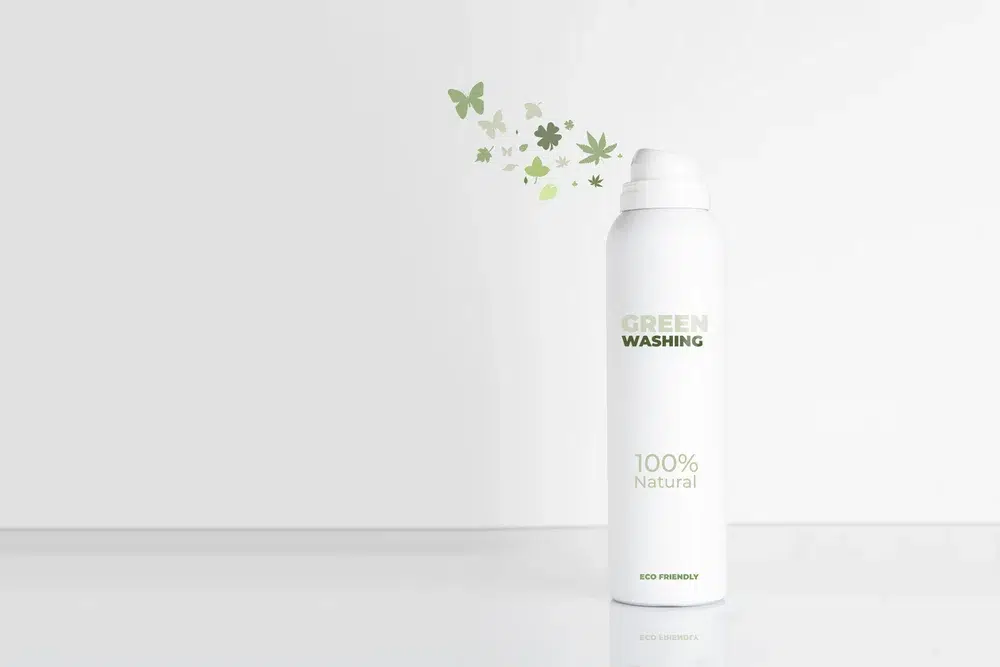
The EU’s new Greenwashing Directive mandates uniform, evidence‑based environmental claims, forcing companies to prove sustainability statements and offering consumers reliable information while reducing deceptive marketing.
Quick Answer
The EU Greenwashing Directive, adopted in 2023 and entering force in 2024, creates a single set of rules for all member states that require businesses to substantiate any environmental claim with verifiable data. It covers product labels, advertising, and digital content, and it introduces penalties for false or misleading statements. The directive aims to protect consumers, level the market, and encourage genuine sustainability. While enforcement mechanisms are still being detailed, the core requirement—evidence‑backed claims—remains clear, though some flexibility exists for emerging technologies and limited data.
Key Takeaways
- All EU companies must provide documented proof for any environmental claim made in marketing or on packaging.
- The directive harmonises standards across the 27 member states, eliminating national loopholes.
- Non‑compliance can lead to fines up to 5% of annual turnover and reputational damage.
- Evidence requirements apply to product‑level claims, corporate sustainability reports, and social‑media messaging.
- Companies can turn compliance into a competitive advantage by integrating transparent sustainability practices.
What Is EU’s New Greenwashing Directive: What Companies Need to Know?
The EU Greenwashing Directive (officially the “Directive on Unfair Commercial Practices relating to Environmental Claims”) establishes a legal framework that defines what constitutes a legitimate environmental claim and sets out the evidence that must back it. The scope includes any statement—text, logo, colour, or imagery—that suggests a product, service, or corporate activity reduces environmental harm. It applies to all sectors, from consumer goods to heavy industry, and extends to online advertising, influencer posts, and corporate sustainability communication. Unlike voluntary certifications, the directive is mandatory and enforceable, aiming to curb the rapid rise of misleading “green” messaging that erodes consumer trust.
How Does It Work?
Step‑by‑step compliance process
- Identify claims. Companies must inventory every environmental statement used in marketing, packaging, and corporate communications.
- Gather evidence. For each claim, firms must collect primary data (e.g., life‑cycle assessments, carbon accounting reports) or third‑party verification that meets the standards outlined in the annex of the directive.
- Conduct a conformity assessment. An internal or external auditor checks that the evidence matches the claim and that the methodology follows recognized standards such as ISO 14021 or the European Commission’s Green Claims Handbook (2023).
- Document and label. Companies publish the supporting documentation in a publicly accessible format (e.g., a sustainability page) and include a concise “evidence statement” on product labels where appropriate.
- Monitor and update. Evidence must be refreshed at least every three years or when a significant change in the product’s life‑cycle occurs.
- Enforcement. National market surveillance authorities can request documentation, conduct spot checks, and impose fines for non‑compliance.
Key mechanisms
The directive relies on three mechanisms: (1) a clear definition of “environmentally friendly” claims, (2) a mandatory evidence‑based substantiation requirement, and (3) a harmonised enforcement network across the EU. By linking claims to verifiable data, the rule creates a feedback loop that encourages firms to improve actual performance rather than merely marketing it.
What Does the Evidence Show?
Multiple independent assessments confirm that misleading environmental claims distort consumer choices and delay genuine sustainability transitions. A 2022 systematic review by the European Environment Agency found that up to 40% of “green” product labels in the EU lacked verifiable evidence, leading to consumer mistrust (EEA, 2022). Similarly, the European Commission’s 2023 impact analysis reported that harmonised standards improve market transparency and reduce the prevalence of false claims by an estimated 25% within two years of implementation.
Main Causes or Drivers
Direct causes
- Competitive pressure to appear sustainable without incurring the cost of real environmental improvement.
- Fragmented national regulations that previously allowed divergent interpretations of “green” claims.
Underlying drivers
- Growing consumer demand for eco‑friendly products, measured at 68% of EU shoppers in a 2021 Eurostat survey.
- Insufficient standardisation of life‑cycle assessment methods, which makes it easy to cherry‑pick favourable data.
- Rapid expansion of digital marketing platforms where short, vague statements can spread unchecked.
Environmental and Human Impacts
Environmental Impacts
When companies exaggerate sustainability, resources are allocated to ineffective products, slowing the transition to low‑carbon technologies. For example, the European Commission estimates that false “recycled content” claims can delay the market uptake of genuinely recycled plastics by up to 5% per year, extending the lifespan of virgin‑polymer production and its associated CO₂ emissions (EU, 2023).
Human Health and Social Impacts
Misleading claims can also affect public health. Products marketed as “chemical‑free” may still contain hazardous substances, leading consumers to forgo protective measures. A 2021 study by the European Food Safety Authority linked such misinformation to increased exposure to allergens in household cleaning products.
Economic and Infrastructure Impacts
Businesses that rely on deceptive claims risk costly recalls and legal penalties. Moreover, investors may redirect capital away from firms with poor transparency, influencing the broader EU green‑finance market.
Regional Differences
Implementation capacity varies across the EU. Northern and Western member states, with more mature environmental reporting systems, are expected to achieve full compliance within 12 months. In contrast, some Eastern and Southern economies may need additional technical assistance, extending their compliance timeline to 24 months (European Commission, 2024).
What Scientists Know With High Confidence
What Scientists Know With High Confidence
- Transparent, evidence‑based environmental claims improve consumer trust and drive market shift toward truly sustainable products.
- Standardised life‑cycle assessment methods provide a reliable basis for comparing environmental performance across products.
- Regulatory harmonisation reduces the opportunity for “greenwashing” loopholes.
What Remains Uncertain
What Remains Uncertain
Key uncertainties include the long‑term effectiveness of the directive in changing corporate behaviour, especially for multinational firms operating outside the EU, and the adequacy of current data‑collection tools for emerging technologies such as bio‑based plastics. Ongoing monitoring by the European Commission will be needed to assess whether compliance translates into measurable reductions in carbon footprints.
Common Misconceptions
Common Misconceptions
Misconception: The directive only applies to product labels.
Reality: It covers all commercial communications, including corporate sustainability reports, advertising, and influencer content.
Misconception: Small businesses are exempt.
Reality: The rules apply to any entity making environmental claims in the EU market, regardless of size, though proportional enforcement may be considered.
Misconception: A single certification seal guarantees compliance.
Reality: Companies must still retain the underlying data that supports the seal; a seal alone does not satisfy the evidence requirement.
Solutions and Limitations
Solutions and Limitations
- Standardised certification schemes. Provide clear benchmarks but can be costly for SMEs and may not cover all product categories.
- Enhanced third‑party verification. Improves credibility; however, verifier capacity is limited and may create bottlenecks.
- Digital traceability tools (blockchain, QR codes). Offer transparency but require substantial upfront investment and data integrity safeguards.
- Corporate sustainability reporting. Aligns with the directive but can become a “checkbox” exercise without genuine performance improvement.
What Individuals, Communities, and Governments Can Do
What Individuals, Communities, and Governments Can Do
What Individuals Can Do
Check the evidence statement on product pages, ask retailers for the underlying data, and favour brands that publish transparent life‑cycle assessments. Consumers can also report suspicious claims to national consumer protection agencies.
What Communities and Organizations Can Do
Local chambers of commerce can host workshops on the directive’s requirements, and NGOs can develop independent verification services for small enterprises.
What Governments Can Do
Member‑state authorities should allocate resources for market‑surveillance teams, provide technical assistance to SMEs, and harmonise national databases of verified claims.
What Businesses and Industries Can Do
Invest in robust data‑collection systems, adopt recognised standards (e.g., ISO 14021), and embed sustainability metrics into product development cycles rather than treating them as after‑thought marketing add‑ons.
Closing Synthesis
The EU’s Greenwashing Directive creates a clear, evidence‑based rulebook that forces companies to back every environmental claim with verifiable data, thereby protecting consumers and encouraging real sustainability progress. While high‑confidence research shows that transparent claims boost market trust, uncertainties remain about long‑term behavioural change and the capacity of verification services. By aligning compliance with genuine environmental performance, firms can turn regulation into a strategic advantage, and the broader market can move toward a more trustworthy, low‑carbon future.
Frequently Asked Questions
What is the EU Greenwashing Directive?
The EU Greenwashing Directive is a 2023 EU law that requires any company marketing an environmental claim in the EU to back that claim with verifiable, documented evidence, covering product labels, advertising, and digital content.
Which types of marketing communications are covered by the directive?
All commercial communications that suggest environmental benefits are covered, including product packaging, corporate sustainability reports, online ads, influencer posts, and any visual or textual claim about reduced environmental impact.
What are the main penalties for non‑compliance?
Member‑state authorities can impose fines of up to 5% of a company’s annual turnover, order product recalls, and require corrective advertising, alongside reputational damage from public enforcement actions.
How can small businesses meet the evidence requirement without excessive cost?
Small firms can use simplified life‑cycle assessment tools, collaborate with industry‑wide verification schemes, and publish concise evidence statements that reference publicly available data, reducing the need for expensive bespoke studies.
Will the directive affect companies outside the EU?
The directive applies to any product or service marketed to EU consumers, so non‑EU companies must comply if they sell or advertise within the EU, although enforcement is primarily carried out by national authorities.










Leave a Comment