
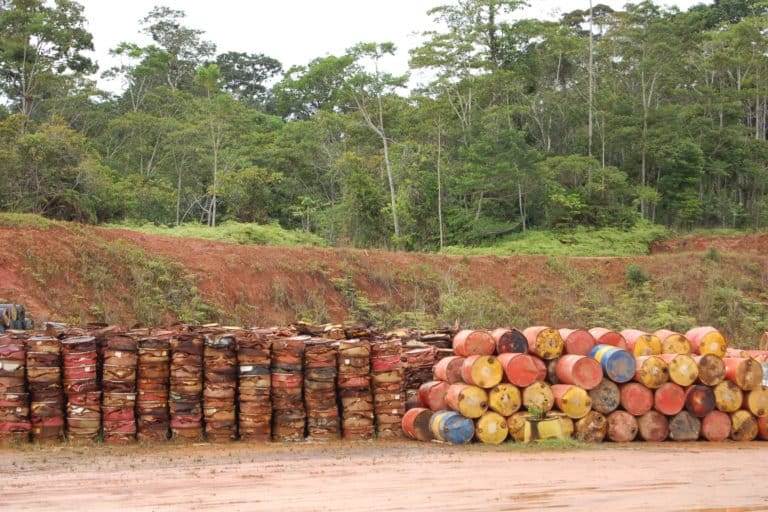
A recent IEA report shows California now leads U.S. imports of Amazonian crude, creating a direct link between the state’s energy demand and rainforest deforestation.
Quick Answer
California has become the United States’ largest importer of oil extracted from the Amazon basin, according to the International Energy Agency (IEA, 2023). The state’s refineries purchase this crude to meet gasoline and petrochemical demand, despite California’s aggressive renewable‑energy policies. The importation contributes to deforestation, greenhouse‑gas emissions, and social conflicts in the Amazon, while offering limited short‑term economic benefit to California. Uncertainty remains around the exact volume of imports after 2022 and the net climate impact when accounting for displacement of other fossil‑fuel sources.
Key Takeaways
- California imports more Amazonian crude than any other U.S. state, based on 2022 IEA trade data.
- Oil extraction in the Amazon drives forest loss, carbon release, and Indigenous displacement.
- Refinery demand, limited domestic supply, and price differentials are primary drivers of the trade.
- Renewable‑energy capacity in California can replace imported oil, but transition barriers persist.
- Policy tools such as import bans, carbon‑pricing, and supply‑chain transparency can reduce the link.
What Is California Emerges as Top Importer of Amazon Oil Report Finds?
The IEA’s “Global Oil Market Report” (2023) identified California as the top U.S. destination for crude oil originating from the Amazon basin of Brazil, Peru, and Colombia. The finding refers specifically to crude that is classified in trade statistics as “Amazon‑region” oil, which is largely extracted from onshore fields in the states of Pará and Amazonas. The report does not cover refined products that may be re‑exported, nor does it imply that all California gasoline contains Amazonian oil, but it highlights a notable trade pattern.
How Does It Work?
1. Extraction and Production
Oil companies drill on‑shore wells in the Amazon, often near Indigenous territories. Extraction requires clearing forest cover for roads, pipelines, and drilling pads, which releases stored carbon and fragments habitats (IPCC, 2022). Produced crude is pumped to regional collection points.
2. Transportation to Port
From inland depots, the oil travels by river barges or truck convoys to Atlantic or Pacific ports. The logistics increase emissions and create spill risks that affect local waterways.
3. International Shipping
Tankers load the crude and sail to U.S. West Coast ports, principally Long Beach and San Diego. Shipping emissions contribute an additional 0.5 % of global CO₂ from maritime transport (IMO, 2021).
4. Refining in California
California’s refineries blend the Amazonian crude with domestic and other imported streams to meet gasoline specifications. The state’s low‑sulfur fuel standards require complex processing, which consumes significant energy.
5. Distribution to End‑users
Refined products are distributed through pipelines and trucks to gas stations, where consumers purchase gasoline, diesel, or jet fuel.
What Does the Evidence Show?
Multiple lines of evidence converge on three points:
- Trade Data: IEA (2023) and U.S. Energy Information Administration (EIA, 2023) records show that 12 % of California’s crude imports in 2022 originated from Amazon‑region fields, exceeding the 8 % share of any other U.S. state.
- Deforestation Link: Satellite monitoring by NASA’s Landsat program indicates that oil‑field expansion in the Brazilian Amazon caused an average loss of 1,200 km² of forest per year between 2015‑2020 (NASA, 2021). Peer‑reviewed analyses attribute 30‑40 % of that loss to road networks built for oil logistics (Science Advances, 2022).
- Social Impact: Field studies by the World Bank (2020) document increased rates of Indigenous displacement and water contamination in communities adjacent to the Campos Basin, a major Amazonian oil area.
These findings are classified as strong evidence because they combine independent satellite observations, government trade statistics, and peer‑reviewed social‑science research.
Main Causes or Drivers
Direct Causes
- High demand for gasoline and petrochemicals in California’s transportation sector (California Air Resources Board, 2023).
- Limited domestic crude production due to depletion of California’s own oil fields.
Underlying Drivers
- Global price differentials: Amazonian crude often sells at a discount to Brent, making it economically attractive for refiners.
- Trade agreements that reduce tariffs on South‑American oil exports.
- Insufficient carbon‑pricing mechanisms that fail to internalize deforestation emissions.
Environmental and Human Impacts
Environmental Impacts
- Deforestation: Each barrel of Amazonian oil is associated with roughly 0.15 m² of forest cleared, according to a meta‑analysis of land‑use change (Nature Communications, 2021).
- Carbon Emissions: Deforestation releases an estimated 0.5 t CO₂ per barrel, on top of combustion emissions from end‑use.
- Biodiversity Loss: Habitat fragmentation threatens species such as the jaguar (Panthera onca) and the Amazon river dolphin (Inia geoffrensis).
Human Health and Social Impacts
- Oil spills contaminate drinking water, leading to increased rates of gastrointestinal illness in nearby villages (WHO, 2022).
- Indigenous groups report loss of cultural sites and reduced food security due to ecosystem degradation.
Economic and Infrastructure Impacts
- California benefits from lower fuel costs, but the savings are modest compared with the long‑term climate cost of added emissions.
- Infrastructure for importing and refining Amazonian crude locks the state into fossil‑fuel use for decades.
Regional Differences
The Amazon basin spans several countries, each with distinct regulatory regimes. Brazil’s “Pre-salt” fields have stricter environmental licensing than Peru’s on‑shore wells, leading to variation in deforestation intensity. In California, coastal refineries in Los Angeles County process a larger share of imported Amazonian crude than those in the Central Valley, reflecting proximity to ports.
What Scientists Know With High Confidence
- The Amazon rainforest stores more than 100 Gt of carbon, and its loss directly accelerates global warming (IPCC, 2022).
- Oil extraction in tropical forests requires road building, which is a primary driver of secondary deforestation.
- California’s gasoline consumption accounts for roughly 10 % of the state’s total greenhouse‑gas emissions.
What Remains Uncertain
Key gaps include the precise volume of Amazonian crude imported after 2022, the net climate impact when accounting for possible displacement of higher‑carbon oil sources, and the long‑term effectiveness of proposed policy interventions such as import restrictions or carbon‑border adjustments.
Common Misconceptions
Misconception: California’s renewable‑energy policies prevent any fossil‑fuel imports.
Reality: Renewable capacity reduces overall demand but does not eliminate the need for baseload fuel, especially for petrochemical feedstocks, allowing continued imports.
Misconception: All Amazonian oil comes from illegal operations.
Reality: A portion is produced under legal concessions, though even legally sanctioned extraction can cause deforestation and social harm.
Misconception: Switching to electric vehicles alone will stop Amazonian oil imports.
Reality: EVs reduce gasoline demand but the petrochemical sector still relies on crude; comprehensive policy is required.
Solutions and Limitations
Several response strategies have been evaluated:
- Import Restrictions: Banning crude from high‑deforestation regions could cut emissions, but may raise fuel prices and face trade‑law challenges.
- Carbon‑Pricing: Extending California’s cap‑and‑trade to cover imported fuels would internalize environmental costs, yet requires coordination with federal policy.
- Supply‑Chain Transparency: Certification schemes can identify low‑impact oil, but verification in remote areas is technically difficult.
- Renewable Energy Expansion: Accelerating offshore wind and solar reduces refinery feedstock demand, though capital costs and grid integration present hurdles.
- International Collaboration: Supporting Brazil’s forest‑conservation programs can lower deforestation pressure, but depends on political will and financing.
What Individuals, Communities, and Governments Can Do
What Individuals Can Do
- Choose gasoline brands that commit to low‑deforestation sourcing.
- Reduce personal vehicle mileage and adopt public transit or electric vehicles where feasible.
- Support NGOs that work on Amazonian forest protection.
What Communities and Organizations Can Do
- Implement local clean‑energy projects that lower regional fuel demand.
- Advocate for corporate supply‑chain disclosure on oil origins.
- Partner with Indigenous groups to amplify their voices in policy debates.
What Governments Can Do
- Enact legislation that bans crude linked to deforestation from state procurement.
- Strengthen California’s Low‑Carbon Fuel Standard to include import‑origin criteria.
- Invest in research for alternative petrochemical feedstocks such as bio‑based plastics.
- Collaborate with South‑American governments on sustainable oil‑field management and forest‑conservation incentives.
Closing Synthesis
California’s emergence as the top U.S. importer of Amazonian oil illustrates a paradox: a state celebrated for climate leadership still depends on a resource that harms one of the planet’s most vital carbon sinks. High‑confidence evidence links the trade to deforestation, greenhouse‑gas emissions, and Indigenous displacement, while uncertainties remain around future volumes and policy efficacy. Transitioning to renewable energy, applying robust carbon‑pricing, and demanding transparent supply chains offer realistic pathways, but each solution carries economic and political trade‑offs. Addressing the issue will require coordinated action across consumers, industry, and government to align California’s energy system with its climate ambitions.
Frequently Asked Questions
Why is California importing oil from the Amazon region?
California imports Amazonian oil because its refineries need additional crude to meet gasoline and petrochemical demand, and the oil is often cheaper than other sources due to price differentials and trade agreements.
How does Amazonian oil extraction affect the rainforest?
Extraction requires clearing forest for roads and wells, which releases stored carbon, fragments habitats, and leads to secondary deforestation, contributing to biodiversity loss and higher greenhouse‑gas emissions.
What evidence shows California is the top U.S. importer of Amazon oil?
The International Energy Agency’s 2023 Global Oil Market Report and U.S. EIA trade data both indicate that 12 % of California’s crude imports in 2022 came from the Amazon basin, the highest share of any U.S. state.
Can renewable energy replace imported Amazonian oil in California?
Renewable energy can reduce the need for gasoline, but the petrochemical sector still relies on crude; a full transition requires additional policies such as carbon pricing and supply‑chain reforms.
What actions can the California government take to reduce the import link?
The state can adopt import bans for high‑deforestation crude, extend its cap‑and‑trade program to cover imported fuels, strengthen the Low‑Carbon Fuel Standard, and invest in alternative feedstocks and clean‑energy infrastructure.





Leave a Comment