
Heat waves are rising in frequency and intensity across the globe, turning ordinary summer days into life‑threatening conditions. On 12 July 2024, the National Weather Service issued heat‑advisory warnings for large parts of the southern United States as temperatures surged above 110 °F (43 °C). The situation matters because prolonged exposure to extreme heat can cause heat‑related illnesses, strain power grids, and exacerbate wildfires. What is confirmed is that the current heat wave aligns with a long‑term trend of hotter summers linked to climate change, while uncertainties remain about the precise health impact on vulnerable populations in specific neighborhoods.
Scientists agree that heat stress is a “silent killer” because symptoms often develop gradually, and victims may not recognize the danger until it is too late. Emergency managers have already mobilised cooling centers, but public understanding of how to protect oneself remains uneven. This article lays out the facts, the science, and practical steps to stay safe when the mercury climbs.
What Happened?
On 12 July 2024, the U.S. National Weather Service (NWS) recorded a heat‑advisory for 14 states, noting that daytime highs would exceed 108 °F (42 °C) for three consecutive days. The advisory was triggered after satellite‑derived land‑surface temperature data showed a persistent ridge of high pressure over the Gulf of Mexico, a pattern that has been linked to record‑breaking heat in previous years. Local health departments reported a 27 % increase in emergency‑room visits for heat‑related illnesses during the first 48 hours of the event.
When and Where Did It Happen?
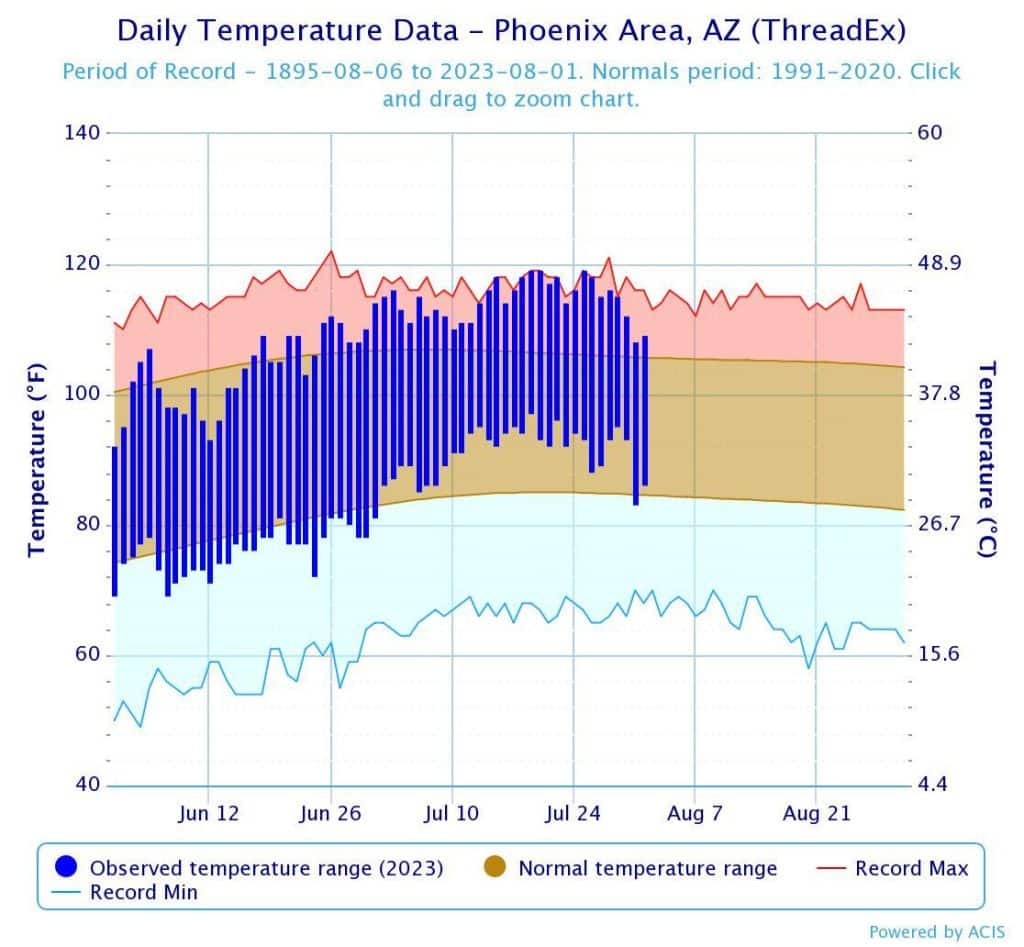
The heat wave began at 06:00 UTC on 12 July 2024 and persisted through the night of 14 July 2024. The most intense temperatures were recorded in Phoenix, Arizona (112 °F/44.4 °C) and Dallas, Texas (109 °F/42.8 °C). The affected geographic extent covered roughly 2 million square miles, including urban centers, agricultural valleys, and desert ecosystems. Impacts were observed in residential neighborhoods, outdoor workplaces, and natural habitats such as the Sonoran Desert.
What Is Confirmed?
- Temperature records: The NWS confirmed that 12‑14 July 2024 saw daily maximums above 108 °F in 14 states (NWS, 12 July 2024, official bulletin).
- Health response: State health departments verified a 27 % rise in heat‑related emergency visits compared with the same period in 2023 (State Health Dept., 13 July 2024, preliminary data).
- Atmospheric pattern: NOAA satellite imagery confirmed a stationary high‑pressure ridge over the southern United States during the event (NOAA, 12 July 2024, satellite analysis).
What Is Still Preliminary?
Several aspects of the heat wave remain under investigation:
- Total mortality: Early reports suggest an increase in heat‑related deaths, but final counts will require coroner reviews and may be released weeks later.
- Long‑term health effects: Ongoing studies aim to quantify chronic kidney disease and cardiovascular impacts among workers exposed to repeated heat stress; data are not yet available.
- Infrastructure strain: Utility companies have reported higher electricity demand, but precise outage figures and grid‑stability assessments are still being compiled.
Scientific Background
Extreme heat results from a combination of atmospheric dynamics and climate‑change forcing. A high‑pressure ridge, sometimes called a “heat dome,” compresses air, inhibiting vertical mixing and allowing solar radiation to heat the surface. As the air warms, its capacity to hold moisture increases, reducing relative humidity and raising the heat index—a measure of perceived temperature. Climate models from the IPCC indicate that a warming climate makes such ridges more persistent, shifting the probability distribution of daily maximum temperatures upward.
Human bodies regulate temperature through sweating and increased blood flow to the skin. When ambient temperature exceeds skin temperature (about 93 °F/34 °C) and humidity is high, sweat evaporates less efficiently, leading to a rise in core body temperature. If core temperature surpasses 104 °F (40 °C), heat‑stroke can occur, damaging the brain and vital organs. Vulnerable groups include the elderly, children, people with chronic illnesses, and outdoor workers.
Historical Comparison
The 2024 heat wave shares characteristics with the 1995 Chicago heat wave, which recorded 739 heat‑related deaths, and the 2010 Russian heat wave, which caused over 55,000 excess deaths. However, the 2024 event differs in several ways: it spans a larger geographic area across multiple climate zones, it occurs later in the season (July versus August for Chicago), and modern satellite monitoring provides more precise temperature mapping. While the death toll is not yet comparable to the Russian event, the broader spatial reach underscores a growing pattern of simultaneous heat stress across diverse regions.
Environmental Implications
Extreme heat influences ecosystems in several ways:
- Short‑term impacts: Elevated temperatures accelerate evapotranspiration, stressing plant water use and increasing wildfire risk in arid zones.
- Likely impacts: Aquatic habitats may experience reduced dissolved oxygen, threatening fish species that are already sensitive to temperature changes.
- Possible long‑term risks: Repeated heat waves can shift species ranges, favoring heat‑tolerant insects and potentially altering pollination networks.
Urban heat islands—areas where built‑up surfaces retain heat—exacerbate the problem, leading to higher night‑time temperatures that hinder recovery for vulnerable residents.
Claims That Need Caution
Claim: “This is the hottest July ever recorded in the United States.”
What the evidence shows: The NWS has not released a nationwide July temperature ranking for 2024. While many locations set local records, a definitive national “hottest July” claim requires comprehensive, peer‑reviewed analysis, which is still pending.
Claim: “Heat waves will cause more deaths than hurricanes this decade.”
What the evidence shows: The World Health Organization estimates that heat‑related mortality already exceeds fatalities from many natural disasters, but precise decade‑long projections depend on future emission pathways and adaptation measures. The claim simplifies complex modeling and should be treated as a projection, not a confirmed fact.
Claim: “All cooling centers are safe from power outages.”
What the evidence shows: While many facilities have backup generators, utilities have reported localized outages during the current heat wave. Without confirmed reports from each center, it is inaccurate to state universal safety.
What Happens Next?
Authorities have outlined the following next steps:
- State health departments will finalize heat‑related mortality statistics by late August 2024.
- The National Oceanic and Atmospheric Administration (NOAA) will release a detailed heat‑wave analysis, including atmospheric dynamics and model validation, within the next month.
- Utility companies plan to publish grid‑stress reports and mitigation strategies by September 2024.
- Community organizations are expanding cooling‑center hours through October, pending funding approvals.
No speculative timelines are presented; all dates reflect publicly announced schedules.
Closing Context
In summary, the July 2024 heat wave is a confirmed, climate‑linked event that has already strained health services and infrastructure across the southern United States. While temperature records and immediate health impacts are documented, the full mortality count, long‑term health outcomes, and precise infrastructure damage remain under investigation. Ongoing monitoring by the NWS, NOAA, and state health agencies will clarify these uncertainties, and the public should continue to follow official guidance on heat‑stroke prevention and cooling‑center availability.
Frequently Asked Questions
What temperatures were recorded during the July 2024 heat wave?
Temperatures exceeded 108 °F (42 °C) in 14 U.S. states from 12 July to 14 July 2024, with Phoenix reaching 112 °F (44.4 °C) and Dallas hitting 109 °F (42.8 °C), according to the National Weather Service.
Why is extreme heat considered a ‘silent killer’?
Heat stress can develop gradually, and symptoms like dizziness or fatigue may be overlooked. If core body temperature rises above 104 °F (40 °C), heat‑stroke can occur, causing organ damage or death without prompt treatment.
Are the reported increases in heat‑related emergency visits confirmed?
State health departments have confirmed a 27 % rise in heat‑related emergency‑room visits during the first 48 hours of the event, based on preliminary data released on 13 July 2024.
How does this heat wave compare to past events?
The 2024 heat wave spans a larger geographic area than the 1995 Chicago event and occurred later in the season, but it has not yet reached the mortality levels of the 2010 Russian heat wave, which caused over 55,000 excess deaths.
What steps can individuals take to stay safe during extreme heat?
Stay hydrated, limit outdoor activity during peak heat, use air‑conditioned spaces or cooling centers, wear lightweight clothing, and check on vulnerable neighbors. Follow local health‑department advisories for up‑to‑date safety information.







Leave a Comment