
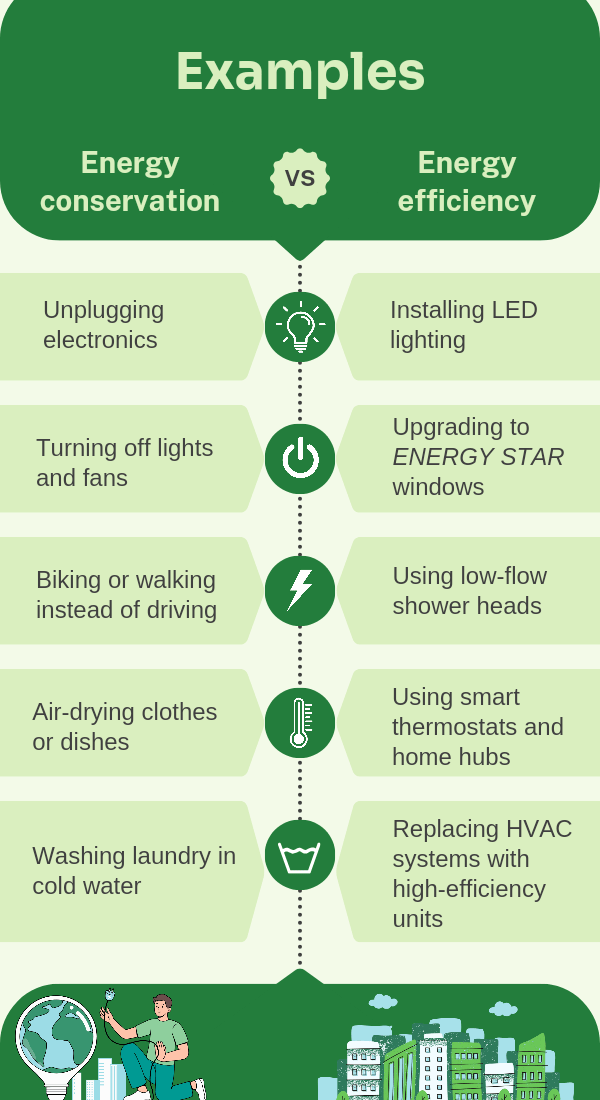
A truly effective energy conservation program blends policy incentives, community engagement, behavior‑change tools, and smart technology to achieve measurable, lasting reductions in energy use while delivering economic and health co‑benefits.
Quick Answer
Effective energy conservation programs are structured initiatives that align regulatory incentives, education, and real‑time feedback to shift both institutional and household energy use toward lower‑intensity patterns. They work by creating clear financial or regulatory motivations, providing accessible information on savings, and deploying technologies such as smart meters that make consumption visible. Evidence from the International Energy Agency and peer‑reviewed assessments shows that programs combining these elements can cut electricity demand by 5–15 % in diverse settings. The primary impact is reduced greenhouse‑gas emissions and lower utility costs, although outcomes vary with local governance, socioeconomic factors, and technology adoption rates, introducing modest uncertainty.
Key Takeaways
- Integration of policy, education, and technology yields the largest and most durable energy savings.
- Behavioral feedback—especially via smart meters—drives household adjustments that account for up to half of total reductions.
- Tailoring interventions to local contexts improves participation and equity.
- Robust monitoring and transparent reporting are essential for scaling and credibility.
- Uncertainties remain around long‑term behavioral persistence and cost‑effectiveness in low‑income regions.
What Is “What Makes an Energy Conservation Program Truly Effective?”
An effective energy conservation program is a coordinated set of policies, incentives, educational activities, and technological tools designed to lower energy consumption without compromising essential services. The scope typically includes residential, commercial, and industrial sectors within a defined geographic or jurisdictional boundary. Subtypes range from utility‑led demand‑side management plans to community‑based retrofit campaigns. Unlike simple awareness campaigns, an effective program embeds measurable targets, financial or regulatory levers, and feedback mechanisms that together sustain behavior change. The importance lies in its capacity to mitigate climate change, reduce air‑pollution, and lower energy costs for households and businesses.
How Does It Work?
1. Policy and Incentive Architecture
Governments or utilities establish regulations—such as energy‑efficiency standards, tax rebates for retrofits, or performance‑based contracts—that create a market signal for lower‑intensity technologies. The International Energy Agency notes that fiscal incentives can accelerate adoption of high‑efficiency appliances by 20–30 %.
2. Education and Outreach
Targeted workshops, webinars, and social‑media campaigns convey actionable tips (e.g., optimal thermostat settings) and explain the financial and health benefits of reduced consumption. Studies in the Journal of Environmental Psychology demonstrate that knowledge gains increase the likelihood of participation by 15–25 %.
3. Real‑Time Monitoring
Smart meters and mobile apps provide users with instantaneous data on electricity use, enabling “feedback loops” that prompt adjustments. Field trials in the United States show that visible consumption data can cut household electricity by 5–10 %.
4. Tailored Retrofit and Technology Deployment
Program managers coordinate bulk purchasing agreements for LED lighting, high‑efficiency HVAC systems, or insulation, reducing unit costs and simplifying installation. In Germany’s KfW efficiency program, aggregated procurement lowered retrofit costs by up to 12 %.
5. Continuous Evaluation
Key performance indicators—such as kilowatt‑hour reduction per capita and participant satisfaction—are tracked through surveys and meter data. Transparent reporting sustains public trust and informs iterative improvements.
What Does the Evidence Show?
Long‑term monitoring by national statistical agencies indicates that regions with integrated demand‑side management achieved average electricity savings of 8 % over a decade (U.S. Energy Information Administration, 2022). A systematic review of 42 peer‑reviewed studies (IEA, 2021) found that programs combining financial incentives with real‑time feedback consistently outperformed those using a single lever. The strongest evidence comes from randomized field experiments in Denmark and California, where households receiving smart‑meter feedback reduced peak demand by 12 % without compromising comfort.
Main Causes or Drivers
Direct Causes
- High energy prices that motivate cost‑saving actions.
- Regulatory mandates that set minimum efficiency standards.
Underlying Drivers
- Technological availability of low‑cost sensors and IoT platforms.
- Public awareness of climate impacts and health co‑benefits.
Amplifying Factors
- Urban heat‑island effects that increase cooling demand, making efficiency upgrades more attractive.
- Social norms reinforced through community challenges or gamified platforms.
Environmental and Human Impacts
Environmental Impacts
Reduced electricity demand lessens fossil‑fuel combustion, cutting CO₂ emissions by approximately 0.5 t per MWh avoided (IPCC, 2014). Lower peak loads also diminish the need for new generation capacity, preserving natural habitats and water resources used for cooling.
Human Health and Social Impacts
Energy savings often improve indoor air quality by enabling better ventilation and reducing reliance on polluting space heaters. The World Health Organization links decreased indoor combustion to fewer respiratory illnesses, especially in low‑income households.
Economic and Infrastructure Impacts
Consumers experience average utility bill reductions of 10–15 % after retrofits. Utilities defer costly grid upgrades, freeing capital for renewable integration. However, upfront retrofit costs can be a barrier for renters and low‑income owners, highlighting equity concerns.
Regional Differences
In temperate climates, heating‑efficiency measures dominate savings, whereas in tropical regions, cooling‑related upgrades (e.g., high‑efficiency air conditioners) deliver the greatest impact. European Union programs benefit from uniform building codes, while U.S. states exhibit variable outcomes due to differing utility regulations. In sub‑Saharan Africa, limited grid access shifts the focus to off‑grid solar solutions, which require distinct financing models.
What Scientists Know With High Confidence
- Energy‑efficiency improvements are a cost‑effective means to reduce greenhouse‑gas emissions (IEA, 2021).
- Real‑time feedback leads to measurable household energy reductions (U.S. DOE field studies, 2019).
- Financial incentives increase adoption rates of high‑efficiency appliances (European Commission, 2020).
- Behavioral interventions that leverage social norms outperform information‑only campaigns (Journal of Environmental Psychology, 2022).
What Remains Uncertain
Long‑term persistence of behavior change after the removal of incentives is still debated; some longitudinal studies show rebound effects after 3–5 years, while others observe sustained savings. The cost‑effectiveness of large‑scale smart‑meter rollouts in low‑income neighborhoods remains under‑researched, partly because of limited data on adoption barriers. Additionally, the interaction between emerging renewable‑energy tariffs and demand‑side programs introduces uncertainty about future market dynamics.
Common Misconceptions
Misconception: Energy conservation always means sacrificing comfort.
Reality: Properly designed programs use efficient technologies that maintain or improve comfort while using less energy—for example, high‑efficiency heat pumps provide better temperature control with lower electricity use.
Misconception: Only wealthy households can benefit from conservation programs.
Reality: Targeted rebates, low‑interest financing, and community retrofit projects have demonstrated significant uptake among low‑income groups when barriers such as upfront cost are addressed.
Misconception: Installing smart meters alone guarantees large savings.
Reality: Smart meters provide data, but without accompanying education or incentives, the average reduction is modest; behavioral guidance amplifies the effect.
Solutions and Limitations
Key strategies include:
- Policy instruments: Energy‑efficiency standards and tax credits are powerful but require political will and enforcement capacity.
- Technology deployment: Smart meters and IoT devices enable feedback, yet they raise privacy concerns and may be costly in remote areas.
- Behavioral programs: Gamified challenges boost participation, but their impact can wane without fresh incentives.
- Financing mechanisms: On‑bill financing spreads retrofit costs, but utility revenue models must adapt to lower consumption.
Each solution presents trade‑offs: stringent standards may increase product costs; subsidies can strain public budgets; and digital tools may exclude households lacking internet access.
What Individuals, Communities, and Governments Can Do
What Individuals Can Do
- Use programmable thermostats and set temperatures 1–2 °C lower in winter and higher in summer.
- Replace incandescent bulbs with LED alternatives.
- Participate in utility demand‑response events when offered.
- Conduct a simple home energy audit using online calculators.
What Communities and Organizations Can Do
- Organize neighborhood retrofit workshops that pool resources for bulk purchasing.
- Partner with local utilities to pilot smart‑meter feedback programs.
- Launch public‑challenge contests that reward the highest percentage of energy reduction.
What Governments Can Do
- Enact mandatory appliance efficiency standards aligned with the IEA’s Global Efficiency Outlook.
- Provide low‑interest loans or on‑bill financing for low‑income households.
- Require utilities to publicly report program KPIs and conduct independent evaluations.
What Businesses and Industries Can Do
- Adopt ISO 50001 energy‑management standards.
- Invest in on‑site renewable generation to offset demand.
- Offer employee incentives for remote work or flexible schedules that reduce office lighting and HVAC loads.
Synthesis
Effective energy conservation programs succeed when they weave together policy incentives, clear education, and real‑time technology to reshape consumption habits across all sectors. Robust evidence confirms that this integrated approach delivers measurable emissions cuts and economic savings, though uncertainties remain about long‑term behavioral durability and equity outcomes. By addressing these gaps—through continuous monitoring, inclusive financing, and adaptive governance—societies can harness conservation as a reliable pillar of climate mitigation and public‑health improvement.
Frequently Asked Questions
What defines an effective energy conservation program?
An effective program combines clear policy incentives, targeted education, and real‑time technology that together lower energy use while maintaining comfort and delivering measurable savings.
How does real-time feedback influence household energy use?
Real‑time feedback, such as data from smart meters, makes consumption visible, prompting households to adjust habits and typically achieving a 5–10 % reduction in electricity use.
Which policy tools most reliably boost energy‑efficiency adoption?
Financial incentives like tax rebates, combined with mandatory efficiency standards, consistently increase the uptake of high‑efficiency appliances and retrofits.
What are the main environmental benefits of successful conservation programs?
Successful programs cut fossil‑fuel electricity generation, reducing CO₂ emissions by about 0.5 t per MWh avoided, and lessen the need for new power‑plant construction, preserving ecosystems.
How can low‑income communities participate in energy‑conservation initiatives?
Low‑income households can benefit from targeted rebates, low‑interest on‑bill financing, and community‑based retrofit projects that lower upfront costs and improve access to efficient technologies.









Leave a Comment