

Bitcoin mining’s high electricity use links it directly to greenhouse‑gas emissions, and recent scientific assessments show both the scale of its climate impact and emerging pathways for mitigation.
Quick Answer
Bitcoin mining is the process of solving cryptographic puzzles with specialized computers to validate transactions and create new coins. The work consumes large amounts of electricity, much of which currently comes from fossil‑fuel power plants. Peer‑reviewed life‑cycle analyses and the International Energy Agency’s (IEA) 2023 report conclude that the network’s annual electricity demand is about 100 terawatt‑hours, producing roughly 50–60 million tonnes of CO₂‑equivalent each year—comparable to the emissions of the global beef industry. While renewable‑energy integration is growing, uncertainty remains about future energy mixes and the effectiveness of policy interventions.
Key Takeaways
- The Bitcoin network consumes ~100 TWh of electricity per year, based on IEA 2023 data.
- Carbon emissions from mining are estimated at 50–60 Mt CO₂e annually, similar to major agricultural sectors.
- Geographic concentration in coal‑rich regions amplifies the climate impact, but a shift toward renewables is observable.
- High‑confidence findings confirm the link between mining electricity use and global warming potential.
- Key uncertainties include future energy sourcing, the pace of technology efficiency gains, and regional regulatory responses.
What Is Bitcoin Mining and Climate Change: What the Latest Studies Reveal?
Bitcoin mining refers to the computational work that secures the decentralized ledger and introduces new tokens. Miners operate hardware—most commonly application‑specific integrated circuits (ASICs)—that repeatedly hash transaction data until a target value is met. The process consumes electricity, and the source of that electricity determines the associated greenhouse‑gas (GHG) emissions. Climate change relevance arises because the global electricity sector accounts for about 73 % of total CO₂ emissions (IEA 2022), so large‑scale, fossil‑fuel‑based mining adds directly to atmospheric carbon.
How Does It Work?
Step‑by‑step mining cycle
- Transactions are broadcast to the Bitcoin network.
- Miners collect pending transactions into a candidate block.
- Each miner runs the SHA‑256 hash algorithm on the block header, adding a variable nonce.
- The first miner to produce a hash lower than the network‑wide difficulty target shares the block.
- The new block is added to the blockchain, and the miner receives a block reward plus transaction fees.
Energy flow and emissions
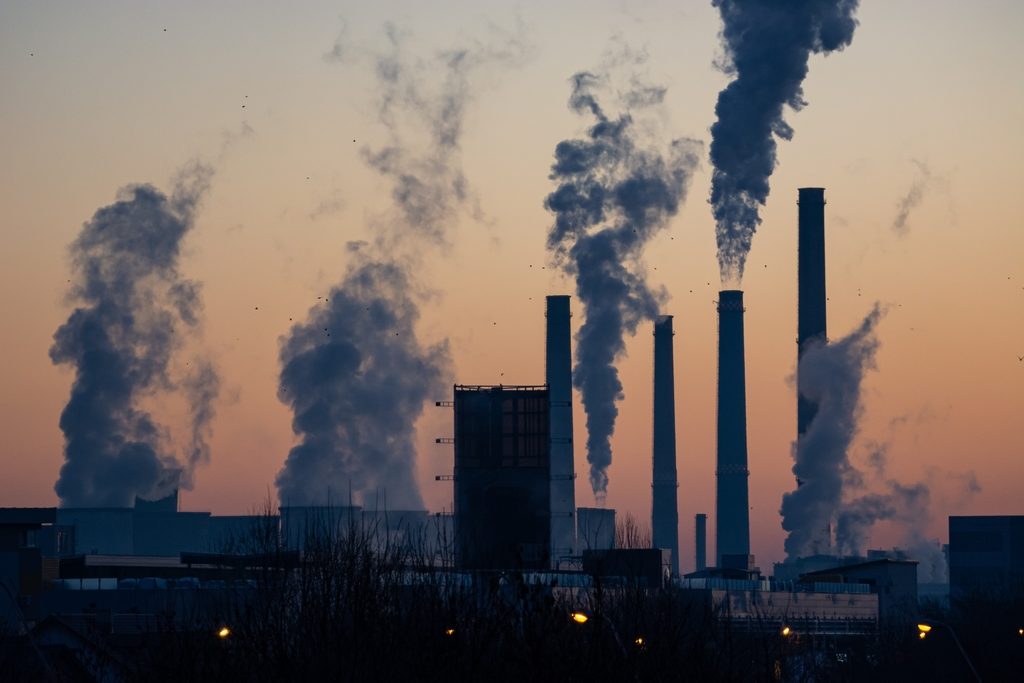
Each hash attempt requires electrical power. The total energy demand equals the sum of all miners’ power draws, which is driven by three factors: hardware efficiency (hashes per joule), network difficulty (which adjusts roughly every two weeks), and the price of electricity in the miner’s location. When electricity is generated from coal or natural gas, the associated CO₂ emissions are high; when sourced from wind, solar, or hydro, emissions are substantially lower.
What Does the Evidence Show?
Multiple lines of evidence converge on a consistent picture of Bitcoin’s climate impact. The Cambridge Bitcoin Electricity Consumption Index (CBECI) provides continuous estimates of global electricity use, calibrated with hardware efficiency data and network hash rate. Independent life‑cycle assessments published in *Nature Energy* (2023) and *Energy Policy* (2022) use measured power consumption of ASIC models to calculate emissions, reporting a median intensity of 0.5 kg CO₂e per kWh when the global mix is applied. The IEA’s 2023 “Global Energy Review” cites the same range and highlights that mining accounts for roughly 0.1 % of total global electricity demand, a share that is growing as the network’s hash rate increases.
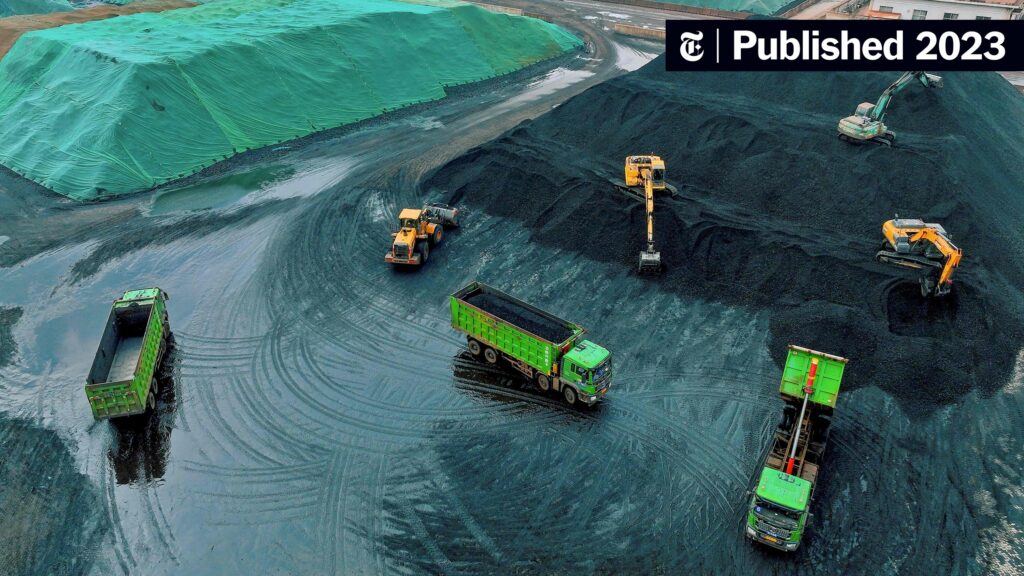
Regional studies in the United States (University of Texas, 2022) and China (Tsinghua University, 2021) show that mining clusters often align with cheap, coal‑heavy grids, raising local emission factors to above 1 kg CO₂e per kWh. Conversely, emerging operations in Iceland, Norway, and Texas (where wind power is abundant) demonstrate lower intensity, sometimes below 0.2 kg CO₂e per kWh.
Main Causes or Drivers
Direct causes
- Proof‑of‑Work consensus mechanism that requires computational work.
- Competitive mining incentives that push operators toward the lowest‑cost electricity, often fossil‑fuel sources.
Underlying drivers
- Market price of Bitcoin, which determines profitability and thus mining scale.
- Geopolitical subsidies or tax structures that make coal or natural gas cheaper in certain regions.
- Hardware development cycles that improve hash‑per‑watt efficiency, yet are offset by increasing network difficulty.
Environmental and Human Impacts
Environmental Impacts
Carbon emissions from mining contribute to global warming potential, adding approximately 0.1 % to annual anthropogenic CO₂ emissions. In regions where mining displaces renewable projects, there can be indirect land‑use impacts and reduced air quality due to higher particulate emissions from coal combustion.
Human Health and Social Impacts
Communities near coal‑heavy mining hubs experience higher exposure to sulfur dioxide and nitrogen oxides, pollutants linked to respiratory illness. Economic benefits—such as job creation and tax revenue—are often uneven, favoring owners of capital equipment over local labor.
Energy‑intensive mining can also strain local grids, leading to higher electricity prices for residential consumers, a concern highlighted in a 2022 report by the U.S. Energy Information Administration.
Regional Differences
In North America, especially the U.S. Southwest, miners increasingly pair operations with solar farms, reducing carbon intensity to under 0.3 kg CO₂e/kWh (U.S. Department of Energy, 2023). In contrast, Inner Mongolia’s coal‑dominated grid yields intensities above 1.2 kg CO₂e/kWh (Tsinghua University, 2021). European miners benefit from higher renewable shares; a 2022 European Commission analysis found average intensities of 0.4 kg CO₂e/kWh for mining activities within the EU.
What Scientists Know With High Confidence
What Scientists Know With High Confidence
- The proof‑of‑work consensus mechanism requires substantial electricity proportional to the network’s hash rate.
- Global Bitcoin mining electricity consumption is on the order of 100 TWh per year (IEA 2023, CBECI).
- When powered by the current global electricity mix, mining emits roughly 50–60 Mt CO₂e annually.
- Renewable‑energy integration can lower per‑kWh emissions, and several miners have demonstrably operated on >70 % renewable power.
What Remains Uncertain
What Remains Uncertain
Key uncertainties include the future trajectory of the Bitcoin price, which influences mining expansion; the speed at which newer, more efficient ASICs replace older hardware; and the effectiveness of emerging regulations that limit carbon‑intensive mining. Additionally, data gaps persist in regions with limited monitoring, making precise intensity estimates difficult for some jurisdictions.
Common Misconceptions
Common Misconceptions
Misconception: Bitcoin mining uses more electricity than all of Europe.
Reality: Current estimates place global Bitcoin consumption at about 100 TWh, while the European Union’s total electricity use is roughly 3,300 TWh per year (Eurostat 2022). Bitcoin’s share is therefore less than 3 % of EU consumption.
Misconception: All Bitcoin mining is powered by coal.
Reality: Studies show a mixed energy mix. While coal dominates in some Chinese provinces, miners in Iceland, Norway, and parts of the United States rely primarily on hydro, geothermal, or wind power, resulting in lower carbon intensity.
Misconception: Switching to proof‑of‑stake would instantly eliminate Bitcoin’s climate impact.
Reality: Proof‑of‑stake removes the computational work, but the transition would require a hard fork and widespread adoption, processes that involve technical, economic, and governance challenges. Thus, the climate benefit remains speculative.
Solutions and Limitations
Several strategies aim to reduce Bitcoin’s climate footprint:
- Renewable‑energy procurement: Direct power purchase agreements (PPAs) let miners lock in clean electricity. Limitations include capital costs, grid connection constraints, and the need for consistent power availability.
- Improved hardware efficiency: New ASIC generations achieve up to 30 % more hashes per joule. However, efficiency gains can be offset by higher network difficulty—a phenomenon known as the “law of diminishing returns.”
- Policy and carbon‑pricing mechanisms: Carbon taxes or emissions caps can internalize environmental costs. Effectiveness depends on enforcement and the ability to prevent mining relocation to low‑regulation jurisdictions.
- Geographic diversification: Encouraging mining in regions with abundant renewables spreads demand and reduces reliance on fossil fuels. Trade‑offs involve transmission losses and potential ecological impacts of large‑scale renewable farms.
What Individuals, Communities, and Governments Can Do
What Individuals Can Do
Consumers can influence demand by preferring cryptocurrencies that use lower‑energy consensus mechanisms, supporting wallets that disclose mining provenance, and advocating for transparent reporting of mining carbon footprints.
What Communities and Organizations Can Do
Local governments and NGOs can develop zoning policies that prioritize renewable‑powered mining, facilitate community‑owned renewable projects, and provide data platforms that track regional mining emissions.
What Governments Can Do
National authorities can implement clear carbon‑pricing schemes, require emissions reporting for large‑scale mining operations, and invest in grid upgrades that enable greater renewable integration. International coordination through bodies such as the International Renewable Energy Agency (IRENA) can help set standards and share best practices.
What Businesses and Industries Can Do
Mining firms can adopt transparent sustainability metrics, pursue PPAs with verified renewable generators, and participate in industry coalitions that set voluntary emission reduction targets.
Synthesis
The scientific consensus, based on assessments from the IEA, peer‑reviewed life‑cycle studies, and continuous monitoring by the Cambridge Centre for Alternative Finance, confirms that Bitcoin mining’s electricity demand translates into a measurable carbon footprint comparable to major agricultural sectors. While renewable‑energy adoption and hardware efficiency improvements offer credible pathways to mitigation, uncertainties around market dynamics, regulatory effectiveness, and regional energy mixes mean that the future climate impact of Bitcoin remains an open question. A coordinated approach—combining policy, technology, and community action—offers the most realistic route to aligning the digital currency’s growth with global climate goals.
Frequently Asked Questions
What is Bitcoin mining and why does it affect climate change?
Bitcoin mining is the computational process that validates transactions and creates new coins using proof‑of‑work. It requires large amounts of electricity, and when that electricity comes from fossil‑fuel power plants it releases greenhouse gases, adding to global warming.
How much electricity does the Bitcoin network use each year?
According to the International Energy Agency’s 2023 review, the Bitcoin network consumes about 100 terawatt‑hours of electricity annually, which is comparable to the yearly electricity use of a small country.
Are there regions where Bitcoin mining is powered mainly by renewable energy?
Yes. Studies show that miners in Iceland, Norway, and parts of the United States often use hydro, geothermal, or wind power, resulting in carbon intensities below 0.3 kg CO₂e per kWh.
What are the main uncertainties about Bitcoin’s future climate impact?
Key uncertainties include future Bitcoin prices, the speed of adoption of more efficient ASIC hardware, how quickly miners will shift to renewables, and the effectiveness of emerging carbon‑pricing or regulatory policies.
What actions can governments take to reduce Bitcoin mining emissions?
Governments can introduce carbon‑pricing, require emissions reporting for large mining operations, create zoning rules that favor renewable‑powered mining, and invest in grid upgrades that increase renewable integration.






Leave a Comment