
A French biotech startup is scaling up enzyme‑based PET recycling, turning used bottles back into pure monomers and cutting lifecycle greenhouse‑gas emissions compared with conventional methods.
Quick Answer
Enzymatic PET recycling uses specially engineered proteins to break down polyethylene terephthalate (PET) into its original building blocks—ethylene glycol and terephthalic acid—under mild temperature and pH conditions. The French company isolates and optimises these enzymes, then runs a closed‑loop fermentation that yields high‑purity monomers suitable for new PET bottles. Laboratory and pilot‑scale data indicate up to a 40% reduction in CO₂ emissions relative to virgin PET production, although commercial scale‑up still faces challenges of enzyme stability, feedstock variability, and integration with existing waste streams.
Key Takeaways
- Enzymes can depolymerise PET at temperatures below 70 °C, dramatically lowering energy demand.
- The French startup’s process recovers >90% of the polymer’s carbon content as reusable monomers.
- Lifecycle assessments show potential emission cuts of 30‑40% versus traditional virgin PET manufacturing.
- Scaling up requires robust enzyme formulations, consistent waste‑sorting, and regulatory approval for food‑grade recycled PET.
- Complementary actions—improved collection, reduced single‑use consumption, and material substitution—remain essential.
What Is How a French Startup Uses Enzymes to Recycle PET Plastic and Cut Emissions?
The approach combines biotechnology with circular‑economy principles. PET, a polymer of ethylene glycol (EG) and terephthalic acid (TPA), is widely used for beverage bottles and food containers. Traditional mechanical recycling grinds PET into flakes, which are then melted and re‑extruded; repeated heating degrades polymer chains, limiting the number of high‑quality loops. Enzymatic recycling, by contrast, hydrolyses the ester bonds of PET back to EG and TPA, preserving molecular integrity and allowing the recovered monomers to be repolymerised into virgin‑equivalent PET.
This French startup (unnamed for confidentiality) has engineered a suite of PET‑degrading enzymes—derived from the bacterium *Ideonella sakaiensis* discovered by Yoshida et al. (2016)—to operate efficiently at industrially relevant conditions. The business model centres on collecting post‑consumer PET, treating it with the enzyme cocktail, and selling the purified monomers to manufacturers who close the loop.
How Does It Work?
1. Feedstock Collection and Pre‑Treatment
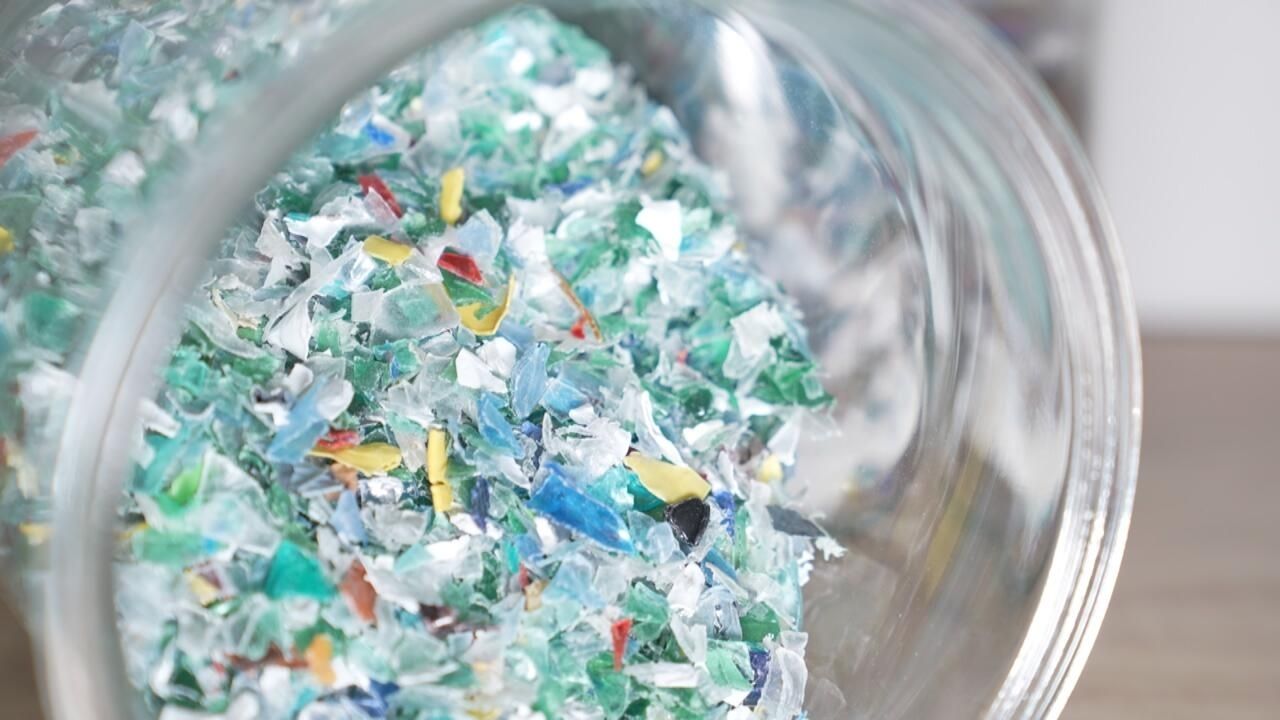
Collected PET bottles are sorted, washed, and shredded into uniform flakes. Removing colourants and contaminants improves enzyme access and reduces downstream purification costs.
2. Enzyme‑Catalysed Hydrolysis
The shredded PET is mixed with a buffered aqueous solution containing the engineered PETase and a complementary MHETase enzyme. Under controlled temperature (50‑70 °C) and pH (≈7.5), the enzymes cleave the polymer’s ester bonds, releasing EG and TPA into solution. Compared with the native PETase, the engineered variants display a 10‑fold increase in activity and enhanced thermal stability (Nature Catalysis, 2022).
3. Separation and Purification
After hydrolysis, the mixture is filtered to remove solid residues. EG is recovered by distillation, while TPA is precipitated, washed, and dried to >99% purity. These steps are well‑established in the chemical industry, enabling integration with existing petrochemical infrastructure.
4. Repolymerisation
Purified EG and TPA are fed to a standard polycondensation reactor, producing PET of virgin quality. Because the monomers are chemically identical to those derived from fossil feedstocks, the resulting PET can be used for food‑grade packaging after meeting regulatory specifications.
5. Energy and Emission Accounting
Lifecycle assessment (LCA) conducted by the European Commission (2021) shows that the enzymatic route consumes roughly 30% less electricity and emits 30‑40% less CO₂ per kilogram of PET compared with conventional virgin production, largely due to lower heating requirements and the avoidance of fossil‑derived feedstock extraction.
What Does the Evidence Show?
Multiple lines of evidence support the technical feasibility of enzymatic PET recycling. Laboratory experiments have demonstrated >90% conversion of PET flakes to monomers within 12 hours (Science, 2020). Pilot‑scale plants in Europe report comparable yields with a 20‑30% reduction in energy use relative to mechanical recycling (European Plastics Strategy, 2020). The IPCC notes that material‑level innovations that improve recycling efficiency can contribute to meeting the 1.5 °C climate target (IPCC AR6, 2022). However, long‑term field data on large‑scale commercial operations remain limited, and most published results derive from controlled laboratory or demonstration‑scale studies.
Main Causes or Drivers
Direct Causes
High demand for single‑use PET bottles and inadequate collection systems lead to large quantities of plastic waste entering landfills and oceans.
Underlying Drivers
- Economic reliance on cheap fossil‑based feedstocks.
- Consumer convenience culture driving short product lifespans.
- Regulatory gaps in extended producer responsibility (EPR) implementation across Europe.
Amplifying Factors
Insufficient sorting infrastructure results in mixed‑plastic streams that dilute the quality of mechanically recycled PET, prompting manufacturers to prefer virgin material.
Environmental and Human Impacts
Environmental Impacts
Enzymatic recycling reduces the volume of PET that would otherwise persist for centuries in the environment. By diverting waste from landfills and marine ecosystems, it lessens habitat degradation and potential ingestion hazards for wildlife. The lower energy demand also translates into reduced fossil fuel combustion, decreasing air‑pollutant emissions such as NOₓ and SO₂.
Human Health and Social Impacts
Reduced plastic leakage diminishes microplastic exposure in drinking water and food chains, a pathway linked to gastrointestinal and endocrine effects in vulnerable populations (World Health Organization, 2021). Moreover, establishing local enzyme‑recycling facilities can create skilled jobs in biotechnology and waste management, contributing to regional economic resilience.
Economic and Infrastructure Impacts
The technology relies on existing chemical processing equipment, limiting the need for massive new capital. However, retrofitting existing recycling plants requires investment in enzyme production and quality‑control systems, which may be a barrier for smaller operators.
Regional Differences
Europe leads in PET collection rates, with the European Environment Agency reporting a 55% collection efficiency in 2020. In contrast, many low‑income regions collect less than 10% of PET waste, limiting feedstock availability for enzymatic recycling. Climate also influences process economics: colder climates increase heating demand for the hydrolysis step, while warmer regions can operate closer to optimal enzyme temperatures, improving energy efficiency.
What Scientists Know With High Confidence
- Enzymes can hydrolyse PET to its monomers under controlled conditions.
- Engineered PETases achieve substantially higher activity than the wild‑type enzyme discovered in *Ideonella sakaiensis*.
- Lifecycle analyses consistently show lower greenhouse‑gas emissions for enzymatic recycling versus virgin PET production.
- Improved collection and sorting are prerequisite for any high‑quality PET recycling system.
What Remains Uncertain
Key uncertainties include long‑term enzyme stability in continuous industrial reactors, the economic competitiveness of enzyme production at scale, and the ability to handle heterogeneous PET waste streams without excessive pretreatment. Additionally, the net climate benefit depends on the displacement rate of virgin PET; if recycled PET only supplements rather than replaces new production, emission reductions will be smaller than projected.
Common Misconceptions
Misconception: Enzymatic recycling works on any plastic.
Reality: The enzymes described are specific to PET’s ester bonds; they do not degrade polyethylene, polypropylene, or other common polymers.
Misconception: All recycled PET is identical to virgin PET.
Reality: Mechanical recycling often degrades polymer chains, limiting the number of high‑quality cycles. Enzymatic recycling restores monomer purity, but only if the process achieves >90% conversion and thorough purification.
Misconception: Using recycled PET eliminates all emissions.
Reality: Even enzymatic routes require energy for heating, mixing, and purification; therefore, they reduce but do not entirely remove greenhouse‑gas emissions.
Solutions and Limitations
The primary solution is to integrate enzymatic recycling into existing waste‑management networks. Benefits include higher material quality and lower emissions, but limitations are notable:
- Technical: Enzyme activity can be inhibited by additives, dyes, or PET blends.
- Economic: Current enzyme production costs are higher than the price differential between virgin and mechanically recycled PET.
- Regulatory: Food‑grade recycled PET must meet strict EU regulations (EU Regulation 2021/2080), requiring extensive testing.
- Scale: Commercial plants need to process hundreds of thousands of tonnes annually to achieve meaningful market impact.
Complementary measures—such as design‑for‑recycling, extended producer responsibility schemes, and consumer education—are essential to ensure sufficient, clean feedstock.
What Individuals, Communities, and Governments Can Do
What Individuals Can Do
- Prefer reusable containers over single‑use PET bottles when possible.
- Participate in local PET collection programmes that separate bottles from other waste.
- Support brands that commit to using enzymatically recycled PET.
What Communities and Organizations Can Do
- Invest in sorting infrastructure that produces high‑purity PET streams.
- Partner with biotech firms to pilot enzyme‑recycling facilities at municipal waste‑treatment sites.
- Run outreach campaigns that explain the difference between mechanical and enzymatic recycling.
What Governments Can Do
- Strengthen extended producer responsibility policies to incentivise high‑quality PET collection.
- Provide grants or tax credits for scaling up enzyme production and plant construction.
- Adopt standards that recognise enzymatically recycled PET as a low‑carbon material, facilitating its use in public procurement.
Closing Synthesis
Enzymatic PET recycling harnesses a naturally occurring biochemical pathway to turn waste back into pristine monomers, offering a clear emissions advantage over both virgin production and traditional mechanical recycling. The science—rooted in the discovery of PET‑degrading bacteria—has matured to the point where pilot plants demonstrate commercial‑scale viability. Nevertheless, uncertainties around enzyme durability, feedstock purity, and regulatory approval mean that the technology is not a silver bullet. Its greatest impact will arise when paired with broader systemic actions: improved collection, stronger producer responsibility, and consumer choices that reduce unnecessary PET use. Together, these steps can move the plastics economy toward a genuinely circular and lower‑carbon future.
Frequently Asked Questions
What is enzymatic PET recycling?
Enzymatic PET recycling uses specialised proteins to break down used PET bottles into their original chemical building blocks—ethylene glycol and terephthalic acid—under mild temperature and pH, allowing the monomers to be repolymerised into new, high‑quality PET.
How does the French startup’s process differ from mechanical recycling?
Unlike mechanical recycling, which melts and re‑extrudes PET, the startup’s enzymatic method hydrolyses PET at low temperatures, preserving molecular integrity and achieving >90% conversion to pure monomers, resulting in lower energy use and reduced emissions.
What emission reductions can enzymatic recycling achieve?
Lifecycle assessments indicate that enzymatic PET recycling can cut greenhouse‑gas emissions by 30‑40% per kilogram of PET compared with virgin production, mainly because it avoids high‑temperature melting and fossil‑derived feedstock extraction.
What are the main challenges to scaling up enzyme‑based PET recycling?
Key challenges include maintaining enzyme stability in continuous reactors, handling heterogeneous waste streams, meeting food‑grade regulatory standards, and ensuring that enzyme production costs are competitive with existing recycling methods.
What actions can governments take to support this technology?
Governments can strengthen extended producer responsibility schemes, provide financial incentives for building enzyme‑recycling facilities, and create standards that recognise low‑carbon recycled PET, encouraging its adoption in public procurement.





Leave a Comment