
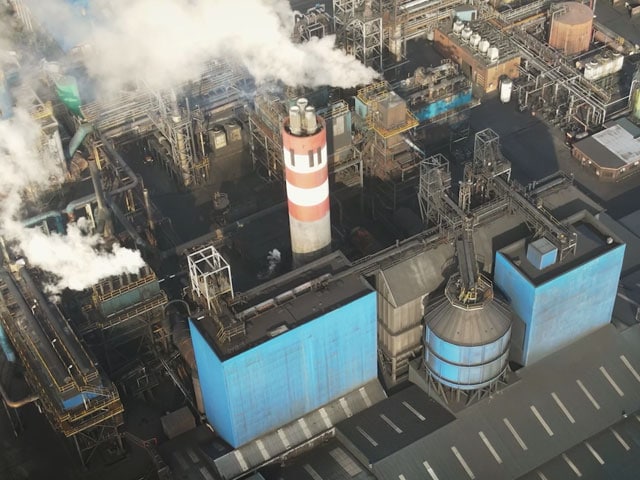
The full range of global climate change encompasses long‑term shifts in temperature, precipitation, ocean chemistry and extreme events driven largely by human‑generated greenhouse gases, with profound but regionally varied impacts on ecosystems and societies.
Quick Answer
Global climate change refers to persistent alterations in Earth’s climate system—including rising average temperatures, changing precipitation patterns, ocean acidification and more frequent extreme weather—primarily caused by the accumulation of carbon dioxide, methane and nitrous oxide from fossil‑fuel combustion, deforestation and industrial processes. The Intergovernmental Panel on Climate Change (IPCC) reports strong consensus that these changes are already affecting natural and human systems worldwide, although the precise magnitude of future impacts depends on socioeconomic pathways and mitigation efforts.
Key Takeaways
- Human activities have increased atmospheric CO₂ by about 50 % since pre‑industrial times, driving a measurable warming trend.
- Climate change manifests as warming, ocean acidification, more intense extreme events and biodiversity loss.
- Evidence from multiple independent sources—instrumental records, satellite monitoring and paleoclimate reconstructions—confirms a human fingerprint.
- Impacts differ by region: low‑lying coasts face sea‑level rise, while arid zones experience heightened drought risk.
- Mitigation (emission cuts) and adaptation (resilience building) are both essential; no single solution suffices.
What Is The Full Range of Global Climate Change Explained?
Climate change is a broad term that captures any long‑term shift in the statistical properties of the climate system, such as mean temperature, precipitation frequency, or storm intensity. It includes both natural variability (e.g., volcanic eruptions, solar cycles) and anthropogenic forcing, the latter now dominating the signal. Sub‑categories commonly discussed are:
- Global warming – the rise in average surface temperature.
- Ocean acidification – the decrease in seawater pH due to CO₂ absorption.
- Extreme weather events – increased frequency and severity of heatwaves, hurricanes, floods and droughts.
- Biodiversity loss – species range shifts, extinctions and ecosystem disruption.
Understanding the full range is crucial because each facet interacts with the others, creating feedback loops that can amplify or dampen overall change.
How Does It Work?
Physical and Chemical Processes
- Solar radiation reaches Earth’s surface; some is reflected, some absorbed.
- Greenhouse gases (GHGs) such as CO₂, CH₄ and N₂O absorb outgoing infrared radiation, trapping heat—a process known as the greenhouse effect.
- Human activities add extra GHGs, raising atmospheric concentrations and enhancing the greenhouse effect.
- In the oceans, dissolved CO₂ reacts with water to form carbonic acid, lowering pH (acidification).
Biological and Ecological Interactions
Warmer temperatures shift species’ phenology (timing of life‑cycle events) and geographic ranges. Vegetation alters carbon uptake, while permafrost thaw releases additional methane, creating a positive feedback loop.
Human‑System Feedbacks
Land‑use change (deforestation, agriculture) reduces carbon sinks and releases stored carbon. Energy demand for cooling or heating influences emissions, creating a socio‑technical feedback cycle.
What Does the Evidence Show?
Multiple lines of evidence converge on a consistent picture:
- Instrumental records show global mean surface temperature increased by about 1.1 °C from 1850 to 2023 (NASA GISS, 2024).
- Satellite observations confirm a rise in tropospheric warming and a decrease in Arctic sea‑ice extent of roughly 13 % per decade since 1979 (NOAA, 2023).
- Ocean chemistry data indicate a 0.1 pH unit decline since the industrial era, representing a 30 % increase in acidity (IPCC, 2021).
- Attribution studies using climate models attribute >95 % of the observed warming since 1950 to anthropogenic GHGs (IPCC, 2021).
- Paleoclimate proxies (ice cores, tree rings) show that current CO₂ levels (~420 ppm in 2023) exceed any value in the past 800,000 years.
These observations are corroborated by peer‑reviewed systematic reviews and the IPCC’s Assessment Reports, which represent the highest confidence tier.
Main Causes or Drivers
Direct Causes
- Combustion of coal, oil and gas for electricity, transport and industry – the largest source of CO₂.
- Agricultural practices that emit methane from livestock and rice paddies, and nitrous oxide from synthetic fertilizers.
- Land‑use change, especially deforestation, that reduces carbon sequestration and releases stored carbon.
Underlying Drivers
- Economic growth models reliant on fossil‑fuel energy.
- Population increase and urbanisation that raise energy demand.
- Policy frameworks that have historically subsidised carbon‑intensive activities.
Environmental and Human Impacts
Environmental Impacts
- Melting glaciers and polar ice sheets contribute to sea‑level rise, currently measured at about 3.4 mm per year (Satellite altimetry, 2022).
- Coral reef bleaching events have increased in frequency, threatening reef‑dependent species.
- Shifts in biome boundaries—for example, boreal forests encroaching on tundra—alter ecosystem services.
Human Health and Social Impacts
- Heatwaves raise mortality risk, especially among the elderly; a 2022 WHO analysis links >250,000 additional deaths per year to climate‑related heat stress.
- Changes in vector‑borne disease patterns (e.g., expanding range of Aedes mosquitoes) increase risk of dengue and Zika.
- Food security is threatened by reduced crop yields in low‑latitude regions; the IPCC notes a potential 10–20 % yield decline for wheat under high‑emission scenarios.
Economic and Infrastructure Impacts
- Storm‑related damages in the United States exceeded $400 billion over the past decade (NOAA, 2023).
- Coastal infrastructure faces heightened flood risk; adaptation costs for low‑lying cities are projected at $1 trillion by 2050 under moderate scenarios.
Regional Differences
Climate change does not affect all regions equally. In the Arctic, warming rates are roughly twice the global average, accelerating ice loss and permafrost thaw. Sub‑Saharan Africa experiences intensified droughts, reducing water availability for agriculture. Small island developing states confront sea‑level rise that threatens entire nations, while temperate Europe sees longer growing seasons but also increased flood frequency. These patterns arise from latitude, local land‑cover, socioeconomic capacity and existing climate variability.
What Scientists Know With High Confidence
- The atmosphere is warming due to increased concentrations of well‑mixed greenhouse gases.
- Human activities are the dominant cause of observed warming since the mid‑20th century.
- Sea level is rising because of thermal expansion and melting land ice.
- Extreme heat events and heavy precipitation are becoming more frequent in most regions.
What Remains Uncertain
Key uncertainties include the exact magnitude of climate sensitivity (the temperature response to a doubling of CO₂), the rate of permafrost carbon release, and the regional precipitation response in the tropics. These gaps stem from limited observational networks, complex feedbacks in Earth system models, and variability in socioeconomic pathways that influence future emissions.
Common Misconceptions
Misconception: Climate change is just about hotter summers.
Reality: While temperature rise is a central component, climate change also involves altered precipitation, ocean chemistry, sea‑level rise and increased frequency of extreme events.
Misconception: Individual recycling can solve climate change.
Reality: Recycling reduces waste but contributes a relatively small share of total GHG emissions; systemic changes in energy, industry and land use are required for meaningful mitigation.
Misconception: The climate has always changed, so current changes are natural.
Reality: Natural climate variability occurs, but the rapid warming observed since the 1950s exceeds what can be explained by natural factors alone, as demonstrated by attribution studies.
Solutions and Limitations
Effective responses combine mitigation, adaptation and conservation:
- Renewable energy deployment can cut CO₂ emissions, yet intermittency requires grid upgrades and storage solutions.
- Energy efficiency in buildings and transport offers low‑cost emissions reductions, but implementation depends on policy incentives.
- Reforestation and afforestation increase carbon sinks, though land‑competition and permanence concerns limit their net benefit.
- Carbon‑capture and storage (CCS) can remove emissions from point sources, yet high costs and limited deployment hinder large‑scale impact.
- Adaptation measures—such as flood defenses, drought‑resilient crops and early‑warning systems—reduce vulnerability but do not address the root cause of warming.
What Individuals, Communities, and Governments Can Do
What Individuals Can Do
- Choose low‑carbon transportation options (public transit, cycling, electric vehicles) where feasible.
- Improve home energy efficiency (insulation, efficient appliances).
- Support policies and candidates that prioritize climate action.
What Communities and Organizations Can Do
- Develop local climate‑resilience plans that address heat stress, flood risk and water management.
- Invest in renewable micro‑grids and community solar projects.
- Adopt sustainable procurement standards that favour low‑emission suppliers.
What Governments Can Do
- Implement carbon pricing mechanisms that internalise the social cost of emissions.
- Set ambitious, legally binding emissions targets aligned with the Paris Agreement’s 1.5 °C pathway.
- Fund research, monitoring networks and capacity‑building in vulnerable regions.
- Regulate land‑use change, protect existing forests and promote climate‑smart agriculture.
Synthesis
The full range of global climate change is a scientifically robust concept that links human‑driven greenhouse‑gas emissions to a suite of physical, ecological and societal transformations. High‑confidence findings confirm warming, sea‑level rise and more extreme weather, while uncertainties remain around feedback strength and regional precipitation shifts. Mitigation, adaptation and nature‑based solutions each play essential roles, but must be pursued together with attention to equity, cost and feasibility. By understanding the mechanisms, evidence and practical actions, societies can make informed decisions that reduce risk and safeguard the planet for future generations.
Frequently Asked Questions
What exactly does the term “global climate change” include?
Global climate change encompasses long‑term shifts in temperature, precipitation, ocean chemistry and the frequency of extreme weather events, all driven largely by increased greenhouse gases from human activities.
How do scientists know that recent warming is caused by humans?
Attribution studies using climate models show that more than 95 % of the warming observed since the 1950s aligns with greenhouse‑gas emissions, a conclusion supported by multiple lines of evidence such as instrumental records, satellite data and paleoclimate reconstructions.
What are the main ways climate change affects people?
Impacts include higher heat‑related mortality, expanded zones for vector‑borne diseases, reduced crop yields in vulnerable regions, increased flood and storm damage, and heightened risks for coastal communities due to sea‑level rise.
Why do impacts differ between regions?
Regional differences arise from latitude, local geography, existing climate patterns, socioeconomic capacity and land‑use practices, leading to faster warming in the Arctic, intensified droughts in arid zones and sea‑level threats for low‑lying islands.
What actions can individuals realistically take?
Individuals can lower their carbon footprint by using low‑carbon transportation, improving home energy efficiency, and supporting climate‑positive policies, while recognizing that broader systemic change is also essential.










Leave a Comment