
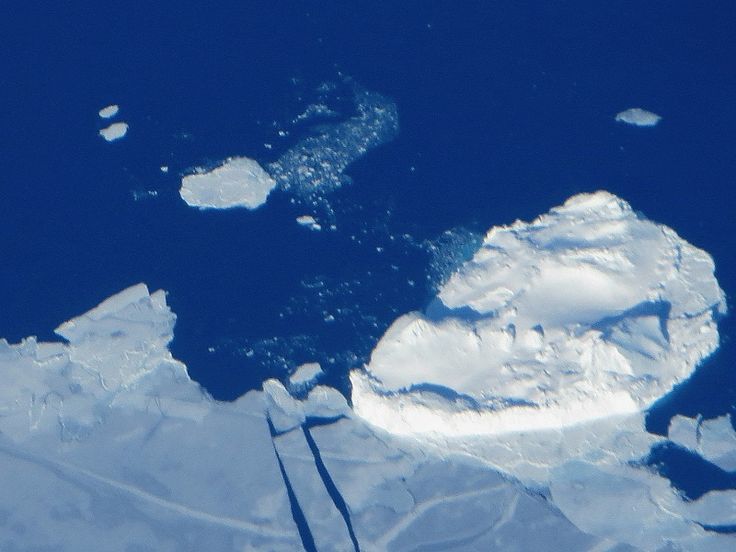
Sea level rise, driven by ocean warming and ice melt, is projected to reshape coastlines, ecosystems, and human settlements over the next century, with significant but uncertain impacts.
Quick Answer
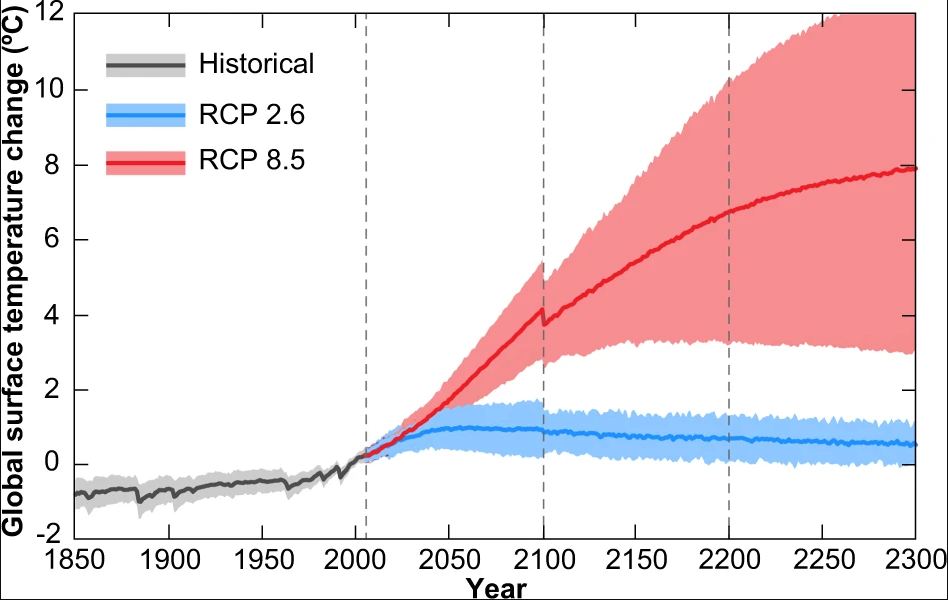
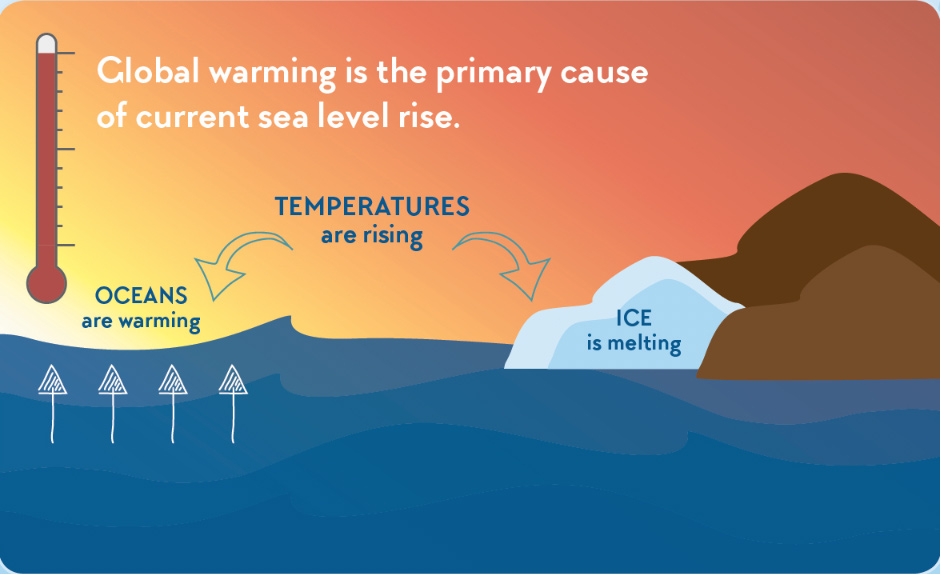
Sea level rise refers to the long‑term increase in the average height of the world’s oceans. It occurs mainly because seawater expands as it warms (thermal expansion) and because melting glaciers and ice sheets add fresh water to the oceans. The Intergovernmental Panel on Climate Change (IPCC) assesses that, under a high‑emissions pathway, global mean sea level could rise 0.6 to 1.1 meters by 2100, while a low‑emissions pathway yields 0.3 to 0.6 meters. The most immediate implication is heightened flood risk for low‑lying coastal areas, though exact outcomes vary by region and depend on future greenhouse‑gas emissions.
Key Takeaways
- Thermal expansion and ice‑sheet melt together drive sea level rise.
- IPCC projections for 2100 range from 0.3 to 1.1 meters, depending on emissions.
- Coastal ecosystems such as mangroves and coral reefs are highly vulnerable.
- Hundreds of millions of people could face displacement, with disproportionate impacts on low‑income nations.
- Adaptation options include nature‑based solutions, managed retreat, and resilient infrastructure, each with trade‑offs.
What Is Sea Level Rise Over the Next 100 Years?
Sea level rise describes the persistent increase in the average height of the ocean surface relative to land. It is measured relative to a fixed geodetic datum and expressed in centimeters or meters. The term differs from short‑term fluctuations such as tides or storm surges, which are temporary water level changes. Over a centennial timescale, the focus is on the net, long‑term trend caused by climate‑driven processes.
How Does It Work?
1. Thermal Expansion
When the ocean absorbs excess heat from the atmosphere, water molecules move farther apart, causing the water column to expand. This process accounts for roughly 30–50% of observed sea level rise since the mid‑20th century (IPCC AR6, 2021).
2. Ice‑Sheet and Glacier Melt
Melting of the Greenland and Antarctic ice sheets, as well as mountain glaciers, adds freshwater to the ocean. Satellite gravimetry (e.g., NASA’s GRACE mission) shows that ice‑sheet mass loss accelerated from about 150 Gt yr⁻¹ in the 2000s to over 400 Gt yr⁻¹ by 2020.
3. Land‑Water Storage Changes
Human activities such as groundwater extraction and reservoir impoundment modify the amount of water stored on land. Net groundwater depletion contributes roughly 0.2 mm yr⁻¹ to sea level rise, a small but measurable component.
What Does the Evidence Show?
Multiple, independent lines of evidence converge on a clear upward trend:
- Instrumental records: Tide‑gauge networks indicate a global mean rise of about 1.8 mm yr⁻¹ since 1900 (NOAA, 2022).
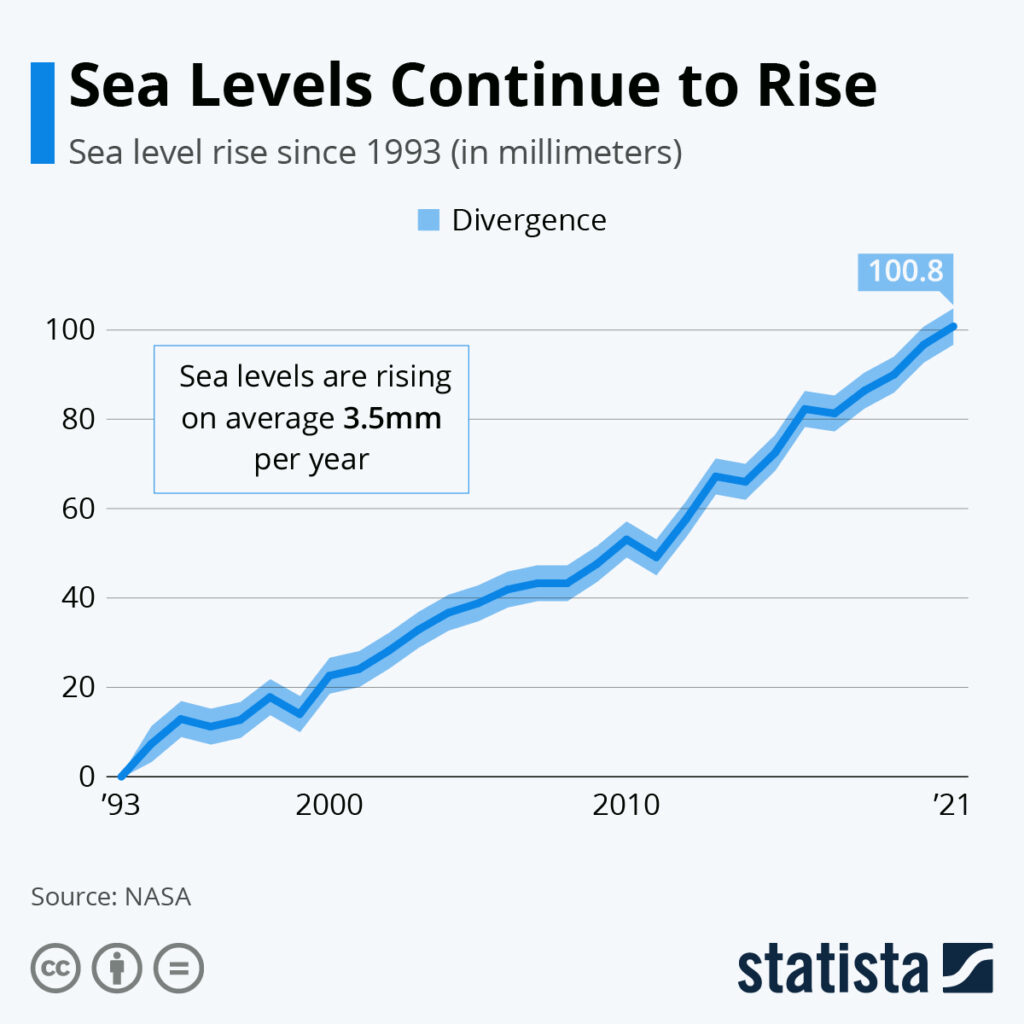
- Satellite altimetry: Since 1993, satellite measurements record an average increase of 3.3 mm yr⁻¹, reflecting both thermal expansion and ice melt.
- Paleo‑sea‑level reconstructions: Geological markers (e.g., coral terraces) confirm that the 20th‑century rise is unprecedented in the past 2,000 years.
- Model‑data comparisons: Climate‑system models that incorporate observed warming reproduce the measured sea‑level trend, strengthening confidence in the physical mechanisms.
Main Causes or Drivers
Direct Causes
- Increased ocean heat content (thermal expansion).
- Mass loss from Greenland, Antarctica, and mountain glaciers.
Underlying Drivers
- Rising atmospheric greenhouse‑gas concentrations, primarily CO₂, CH₄, and N₂O.
- Feedbacks such as ice‑albedo loss, which accelerates melt.
- Land‑use changes that affect runoff and groundwater extraction.
Environmental and Human Impacts
Environmental Impacts
Coastal habitats experience salt‑water intrusion, erosion, and habitat loss. Mangrove forests may retreat inland if space allows, but many are blocked by development, leading to biodiversity declines. Coral reefs suffer from both sea‑level rise and ocean warming, reducing their capacity to buffer wave energy.
Human Health and Social Impacts
Inundation increases exposure to water‑borne pathogens, especially after storm events. Displacement can trigger mental‑health stressors, loss of cultural heritage, and heightened social tension in receiving communities.
Economic and Infrastructure Impacts
Property values in flood‑prone zones decline, insurance premiums rise, and public budgets face rising costs for flood defenses. Ports, power plants, and wastewater treatment facilities located near sea level are at risk of chronic flooding.
Regional Differences
Sea‑level change is not uniform. Factors such as ocean currents, land uplift/subsidence, and regional climate patterns create variability:
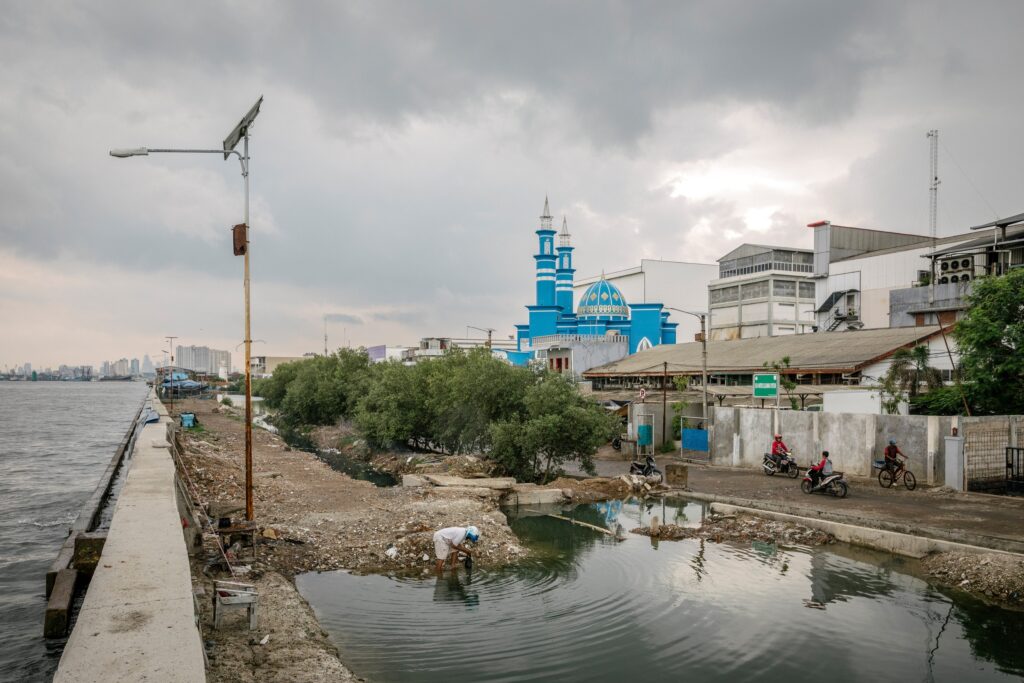
- South‑East Asia: Low‑lying deltas (e.g., Mekong, Ganges‑Brahmaputra) experience combined sea‑level rise and land subsidence, leading to rapid shoreline retreat.
- United States Gulf Coast: Moderate sea‑level rise (≈3 mm yr⁻¹) is amplified by land subsidence, raising flood risk for cities like New Orleans.
- Western Europe: Relative sea‑level rise is lower (~1.5 mm yr⁻¹) because of post‑glacial rebound, yet dense coastal populations remain vulnerable.
- Antarctic Peninsula: Local sea level may fall due to ice‑sheet growth, illustrating that global averages mask regional nuances.
What Scientists Know With High Confidence
What Scientists Know With High Confidence
- Global mean sea level has risen by about 20 cm since 1900.
- Thermal expansion and ice‑sheet melt are the dominant contributors.
- Future sea‑level rise is virtually certain under continued greenhouse‑gas emissions.
- Coastal flooding frequency will increase even under modest rise scenarios.
What Remains Uncertain
What Remains Uncertain
Key uncertainties center on the behavior of the Antarctic ice sheet, especially the potential for rapid ice‑shelf collapse, which could add several meters to sea level over centuries. The magnitude of regional land‑movement (subsidence or uplift) also introduces variability in local sea‑level projections. Finally, socio‑economic pathways that determine future emissions remain a major source of scenario spread.
Common Misconceptions
Common Misconceptions
Misconception: Sea level rise is only a future problem.
Reality: Sea level has already risen measurably in the past century, and many coastal communities are experiencing increased flooding today.
Misconception: All sea‑level rise is caused by melting ice.
Reality: Thermal expansion accounts for roughly one‑third to one‑half of observed rise; ice melt provides the remainder.
Misconception: Sea‑level rise affects every coastline equally.
Reality: Local factors such as land subsidence, ocean currents, and gravitational effects create significant regional differences.
Solutions and Limitations
Responses fall into three broad categories:
- Mitigation: Reducing greenhouse‑gas emissions limits the magnitude of future rise. The limitation is that mitigation alone cannot reverse already committed sea‑level change.
- Adaptation: Building seawalls, elevating structures, and implementing managed retreat protect communities. High costs, land‑use conflicts, and potential ecological impacts constrain these measures.
- Nature‑Based Solutions: Restoring mangroves, wetlands, and oyster reefs provides flood attenuation while supporting biodiversity. Success depends on adequate space and water‑quality conditions.
What Individuals, Communities, and Governments Can Do
What Individuals Can Do
- Support policies that aim for net‑zero emissions.
- Participate in local coastal‑restoration projects.
- Reduce personal carbon footprints through energy efficiency and sustainable transport.
What Communities and Organizations Can Do
- Incorporate sea‑level projections into land‑use planning and zoning.
- Invest in green infrastructure such as living shorelines.
- Develop community‑based evacuation and relocation plans.
What Governments Can Do
- Set ambitious emissions‑reduction targets aligned with the Paris Agreement.
- Fund large‑scale coastal monitoring networks to improve local projections.
- Provide financial assistance and legal frameworks for managed retreat where protection is untenable.
Closing Synthesis
Sea level rise over the next 100 years is a scientifically robust phenomenon driven by ocean warming and ice melt. Evidence from tide‑gauges, satellites, and climate models converges on a projected rise of 0.3–1.1 meters by 2100, with regional variability shaped by local land movement and ocean dynamics. High‑confidence findings underscore the inevitability of increased coastal flooding, while uncertainties remain around Antarctic dynamics and socio‑economic pathways. Effective responses combine emissions mitigation, resilient adaptation, and nature‑based protection, each with clear trade‑offs. By aligning policy, community action, and individual choices, societies can reduce exposure and safeguard both natural and human systems for the coming century.
Frequently Asked Questions
What is the primary cause of sea level rise?
Sea level rise is primarily caused by two processes: thermal expansion of seawater as it warms and the addition of meltwater from glaciers and ice sheets.
How much could global sea level rise by 2100?
According to the IPCC, under a high‑emissions scenario global mean sea level could increase 0.6 to 1.1 meters by 2100, while a low‑emissions pathway suggests 0.3 to 0.6 meters.
Which regions are most vulnerable to sea level rise?
Low‑lying deltas in South‑East Asia, the U.S. Gulf Coast, and densely populated coastal zones in Western Europe face heightened vulnerability due to a combination of sea‑level rise and land subsidence.
What are nature‑based solutions for sea level rise?
Nature‑based solutions include restoring mangroves, wetlands, and oyster reefs, which absorb wave energy, reduce erosion, and provide habitat while also storing carbon.
Can individuals help mitigate sea level rise?
Individuals can support climate policies, reduce personal carbon emissions, and engage in local coastal restoration projects, contributing to broader mitigation and adaptation efforts.




Leave a Comment