
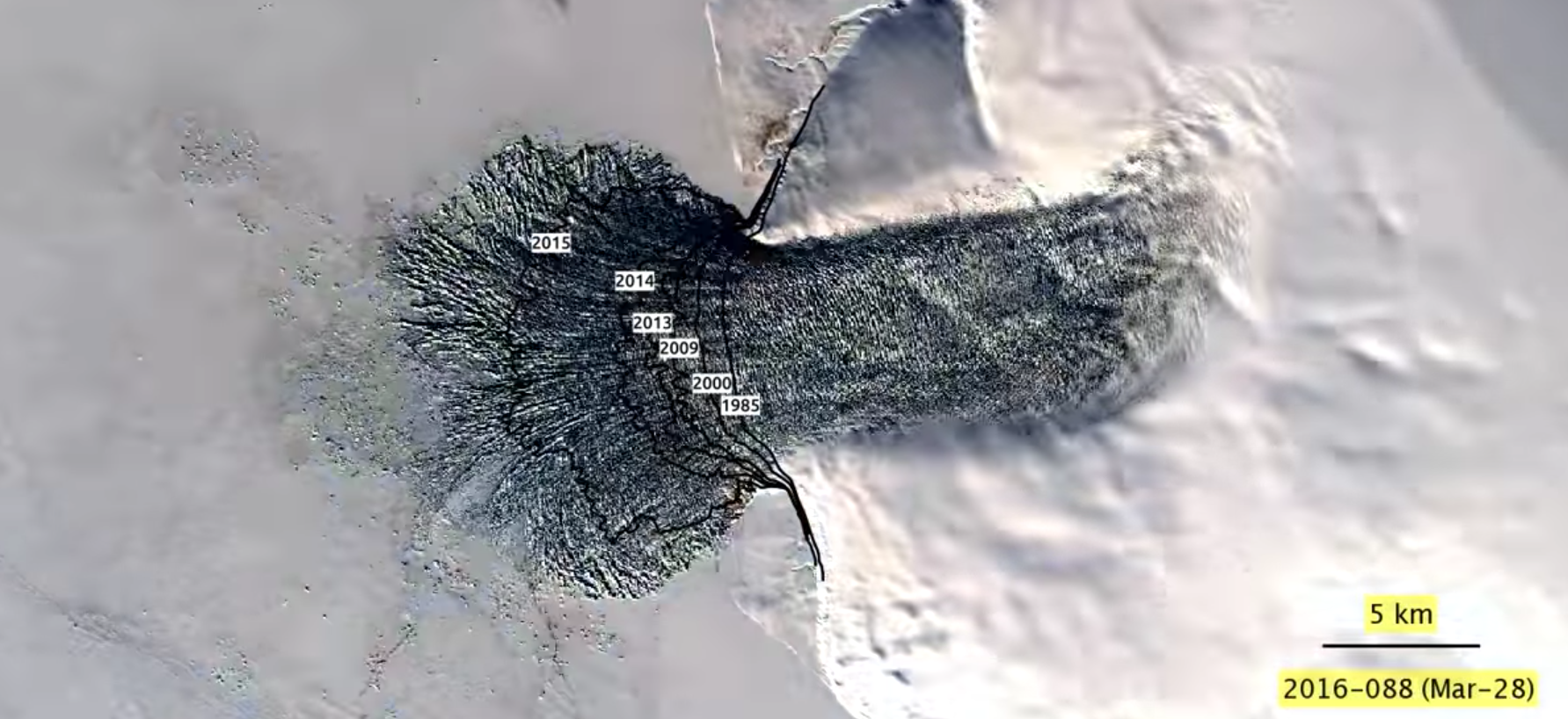
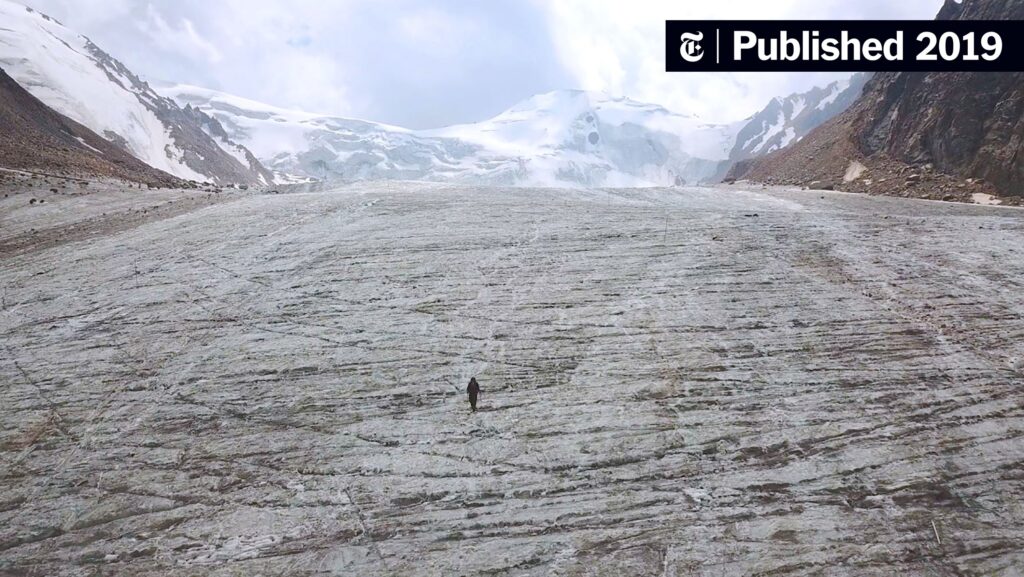
Walking up a glacier feels like moving backward in time because each step takes you onto ice that formed years, decades, or even centuries earlier, a pattern that reveals the glacier’s internal history and the climate signals trapped within.
Quick Answer
Glacier ice gets older as you walk uphill because snow that falls at higher elevations is buried first, then compressed into firn and eventually dense glacial ice; each successive layer represents an earlier period of snowfall. The main mechanism is the vertical accumulation‑compression sequence that stores chronological layers, much like tree rings. Scientists use these layers to reconstruct past temperature, precipitation, and atmospheric composition. While the basic process is well‑understood, precise dating of very old ice can be limited by melt, deformation, and the availability of reference chronologies.
Key Takeaways
- Glacier ice is built from successive layers of snow that become progressively denser with depth.
- Older ice resides higher on the glacier because it was buried earlier and has experienced more compression.
- Each layer records atmospheric gases, isotopes, and particles, providing a climate archive spanning centuries to millennia.
- High‑confidence evidence comes from ice‑core analysis, borehole measurements, and long‑term mass‑balance monitoring.
- Uncertainties remain in dating very deep ice and predicting how rapid warming will alter future stratigraphy.
What Is How Ice Gets Older as You Walk Up a Glacier?
The phrase describes the vertical age gradient that naturally develops in a glacier. A glacier is a flowing river of ice that originates from accumulated snowfall. Over time, the lower‑density snow transforms into firn (granular ice) and then into dense, bubble‑poor glacial ice. Because snowfall accumulates at the surface, the deepest, oldest ice lies near the glacier’s head (the highest point), while the youngest ice is found near the terminus where melt and ablation dominate. This gradient is not a visual illusion; it reflects real temporal differences measured in years to thousands of years.
How Does It Work?
1. Snow Accumulation at the Surface
Each winter, fresh snow adds a new layer to the glacier’s surface. The amount of snowfall varies with altitude, prevailing winds, and regional climate. High‑altitude zones typically receive less dense, wind‑packed snow that can be quickly buried.
2. Compaction to Firn
As new snow piles on top, the weight of overlying layers compresses the lower snow. Air pockets shrink from about 90 % of the volume in fresh snow to roughly 15 % after a few years, forming firn. This stage can last from a few seasons to several decades, depending on temperature and accumulation rate (NOAA, 2022).
3. Transformation to Glacial Ice
Continued pressure forces ice crystals to recrystallize, eliminating most remaining air bubbles and increasing density to 0.917 g cm⁻³. The process, known as densification, can take 30–100 years in temperate glaciers and up to several centuries in polar settings (IPCC, 2021).
4. Vertical Age Gradient Formation
Because the newest snow always sits on top, the oldest ice ends up at the highest elevations where it was first buried. As the glacier flows downhill, the ice deforms and stretches, but the chronological order of layers is largely preserved, allowing scientists to read the “timeline” from bottom to top.
5. Preservation of Climate Signals
During each year of burial, atmospheric gases dissolve into the snow, isotopic ratios of oxygen‑18 and deuterium record temperature, and dust or volcanic ash layers mark specific events. Once the snow becomes ice, these proxies are locked in place, creating a continuous record.
What Does the Evidence Show?
Ice‑core studies from Antarctica, Greenland, and high‑altitude mountain glaciers consistently reveal layered structures that match known climate events such as the Little Ice Age and major volcanic eruptions. For example, the Greenland Ice Sheet Project 2 (GISP2) core, drilled to 3,053 m depth, shows annual layers that can be counted back to 110 kyr before present (EPICA, 2004). Borehole temperature measurements confirm that deeper ice is colder and older, matching predictions from physical densification models (USGS, 2019). Long‑term mass‑balance records from the European Alps demonstrate that accumulation at the upper reaches preserves older ice while lower zones experience rapid turnover (EISM, 2020). Together, these independent lines of observation give strong confidence in the age‑gradient concept.
Main Causes or Drivers
Natural Drivers
- Seasonal snowfall patterns controlled by atmospheric circulation.
- Temperature regimes that dictate the rate of snow metamorphism and melt.
- Solar radiation influencing surface albedo and melt timing.
Human Influences
- Anthropogenic warming accelerates melt at glacier termini, exposing younger ice more quickly.
- Changes in precipitation due to climate change can alter accumulation rates, reshaping the vertical age profile.
- Airborne pollutants (e.g., black carbon) can darken the surface, increasing melt and affecting the preservation of older layers.
Environmental and Human Impacts
Environmental Impacts
Older ice stores ancient atmospheric gases, so its loss reduces the scientific record of past climate variability. Meltwater from younger ice contributes to seasonal river flow, while melt from older ice can alter downstream water chemistry with trapped nutrients or contaminants.
Human Health and Social Impacts
Communities that rely on glacier melt for drinking water or irrigation may experience reduced supply as older ice disappears faster than it can be replenished. Moreover, the loss of climate archives hampers our ability to predict future changes, indirectly affecting adaptation planning.
Regional Differences
In polar regions such as Antarctica, the accumulation zone is extensive and the age gradient can span several hundred thousand years. In contrast, temperate mountain glaciers (e.g., the European Alps) have thinner accumulation zones, so the oldest ice may be only a few thousand years old. Tropical glaciers like those on Kilimanjaro exhibit rapid turnover because high temperatures limit the depth of firn, making the age gradient much steeper and the oldest ice relatively young.
What Scientists Know With High Confidence
- The densification of snow to firn and then to glacial ice follows well‑characterized physical laws of pressure, temperature, and grain growth.
- Each vertical layer in a glacier corresponds to a specific time period of snowfall, allowing chronological reconstruction.
- Ice‑core records reliably capture past atmospheric composition, temperature proxies, and major volcanic events.
- Mass‑balance monitoring shows that accumulation at higher elevations preserves older ice, while lower zones experience rapid renewal.
What Remains Uncertain
Key uncertainties include the exact rate of ice deformation in deep, polythermal glaciers, which can blur layer boundaries; the completeness of the climate signal in regions with high melt‑refreeze cycles; and how rapidly accelerating warming will alter accumulation patterns, potentially truncating the age record in vulnerable glaciers.
Common Misconceptions
Misconception: The oldest ice is always at the very top of a glacier.
Reality: While age generally increases with elevation, flow dynamics can fold or overturn layers, especially in fast‑moving or heavily crevassed glaciers.
Misconception: All glacier ice is the same age.
Reality: A glacier contains a continuous spectrum of ages, from fresh snow at the surface to ice that may be thousands of years old at the head.
Misconception: Melting only removes young ice.
Reality: Increased melt can reach deep into the accumulation zone, exposing and losing older ice that would otherwise remain preserved for centuries.
Solutions and Limitations
Preserving glacier archives primarily involves limiting global warming to keep accumulation zones intact. The Paris Agreement’s goal of limiting warming to 1.5 °C reduces the risk of rapid ice loss, but implementation varies by country. Local actions, such as reducing black‑carbon emissions that accelerate melt, can provide modest benefits. However, no single mitigation measure can fully protect all glaciers; even with strong climate policies, some loss is inevitable due to inertia in the climate system.
What Individuals, Communities, and Governments Can Do
What Individuals Can Do
- Support organizations that fund glacier monitoring and climate research.
- Reduce personal carbon footprints by choosing low‑emission transportation and energy sources.
- Advocate for policies that limit black‑carbon and other short‑lived climate pollutants.
What Communities and Organizations Can Do
- Implement watershed protection plans that safeguard meltwater supplies.
- Participate in citizen‑science programs that record snow depth and melt timing.
- Develop tourism guidelines that minimize surface disturbance on vulnerable glaciers.
What Governments Can Do
- Enforce emissions reductions consistent with the IPCC 1.5 °C pathway.
- Invest in long‑term glacier monitoring networks, such as the World Glacier Monitoring Service.
- Integrate glacier melt projections into water‑resource planning for downstream communities.
Closing Synthesis
The upward aging of glacier ice is a direct consequence of layered snowfall, compression, and flow, creating a natural archive of Earth’s climate history. High‑confidence research confirms the mechanisms and the value of these records, while uncertainties lie in the details of deep‑ice deformation and future warming impacts. Protecting glaciers requires both global climate action and targeted regional strategies. By understanding how each step up a glacier moves us back in time, we gain insight into past climate variability and a clearer sense of urgency for preserving these frozen libraries for future generations.
Frequently Asked Questions
What does it mean when ice gets older as you walk up a glacier?
It means that the ice near the top of a glacier was formed earlier in time than the ice near the bottom, because each new snowfall is buried by later snow, creating a vertical age gradient that records decades to millennia of climate history.
How do scientists determine the age of glacier ice?
Scientists use several methods, including counting annual layers in ice cores, measuring isotopic ratios of oxygen and hydrogen, analyzing trapped gases, and applying densification models that relate depth to age based on known accumulation rates.
Can glacier ice records tell us about past climate?
Yes. Ice cores preserve atmospheric gases, dust, volcanic ash, and isotopic signatures that correspond to temperature, precipitation, and major events, allowing reconstruction of climate conditions over the past hundreds of thousands of years.
Why are older ice layers at higher elevations more at risk from climate change?
Warmer temperatures increase melt rates, allowing meltwater to reach deeper into the accumulation zone. This can expose and erode older ice that would otherwise stay frozen for centuries, reducing the amount of preserved climate information.
What actions can help preserve glacier ice archives?
Reducing greenhouse‑gas emissions to limit warming, cutting black‑carbon pollutants that accelerate melt, supporting glacier monitoring programs, and integrating glacier melt projections into water‑resource planning are all evidence‑based steps that can help protect these natural climate archives.




Leave a Comment