
Glaciers move as massive, slow‑flowing rivers of ice, driven by gravity, internal deformation, and basal sliding, reshaping landscapes and influencing sea level.
Quick Answer
Glacier movement is the gradual downslope flow of compacted snow‑to‑ice masses, primarily caused by the force of gravity acting on their enormous weight. The ice deforms internally (plastic flow) and slides over its bed when meltwater creates a lubricating layer (basal sliding). Together these mechanisms allow glaciers to advance or retreat at rates from a few centimeters to several meters per day. The movement carves valleys, feeds rivers, and contributes to sea‑level change. While the basic physics are well established, the exact speed of any individual glacier can vary with temperature, bed conditions, and climate trends, introducing moderate uncertainty in future projections.
Key Takeaways
- Glaciers flow like very slow rivers, driven by gravity, internal crystal deformation, and basal sliding.
- Basal sliding requires meltwater at the ice‑bed interface, which acts as a lubricant.
- Internal deformation occurs because ice behaves as a viscous material under pressure.
- Glacier motion reshapes terrain, creates fjords, and affects sea‑level rise.
- Climate warming accelerates meltwater production, often increasing glacier speed, but the response differs by region and bedrock conditions.
What Is How Do Glaciers Move? The Slow Power of Flowing Ice?
A glacier is a persistent body of dense ice formed from accumulated snowfall that, over decades to millennia, compresses into ice and begins to flow under its own weight. Unlike a static ice sheet, a glacier behaves as a dynamic system, moving continuously across valleys, slopes, or continental interiors. The term specifically refers to the physical processes that cause this ice to shift, not to the broader concepts of glacier formation or melt. Understanding glacier motion is essential because it links climate variability, landscape evolution, freshwater resources, and sea‑level change.
How Does It Work?
1. Gravitational Driving Stress
Gravity pulls the glacier mass downslope, generating a driving stress that increases with ice thickness and slope steepness. This stress is the primary engine that initiates motion.
2. Internal Deformation (Plastic Flow)
Ice crystals within the glacier rearrange and slide past one another when subjected to stress, a process described by Glen’s Flow Law. At depths where temperatures approach the pressure‑melting point (often below –10 °C), ice behaves like a very viscous fluid, allowing the interior to deform and flow.
3. Basal Sliding
When the pressure of the overlying ice raises the temperature at the base to the melting point, a thin film of water forms. This water reduces friction, enabling the glacier to glide over bedrock or sediment. The presence of subglacial sediments can further enhance sliding.
4. Subglacial and Supraglacial Processes
Seasonal meltwater streams can transport sediment, creating channels that affect sliding rates. Surface meltwater can percolate down through crevasses, refreezing and influencing basal lubrication.
What Does the Evidence Show?
Long‑term monitoring networks, such as the World Glacier Monitoring Service (WGMS), record surface velocities for thousands of glaciers worldwide. Satellite radar (e.g., Sentinel‑1) and laser altimetry have confirmed that many temperate glaciers accelerate during warm periods, consistent with increased basal meltwater. Laboratory experiments on ice deformation support Glen’s Flow Law, providing a quantitative basis for internal plastic flow. Field studies in Antarctica and Greenland show that both basal sliding and internal deformation contribute to overall motion, with the relative importance varying by thermal regime and bed conditions. These independent lines of evidence converge on a robust understanding of glacier dynamics.
Main Causes or Drivers
Direct Causes
- Gravitational driving stress from ice thickness and slope.
- Temperature‑dependent ice softness allowing internal deformation.
- Presence of meltwater at the glacier base that enables sliding.
Underlying Drivers
- Regional climate patterns that control snowfall accumulation and surface melt.
- Geothermal heat flux influencing basal temperatures.
- Bedrock geology and sediment cover that affect friction and water drainage.
Environmental and Human Impacts
Environmental Impacts
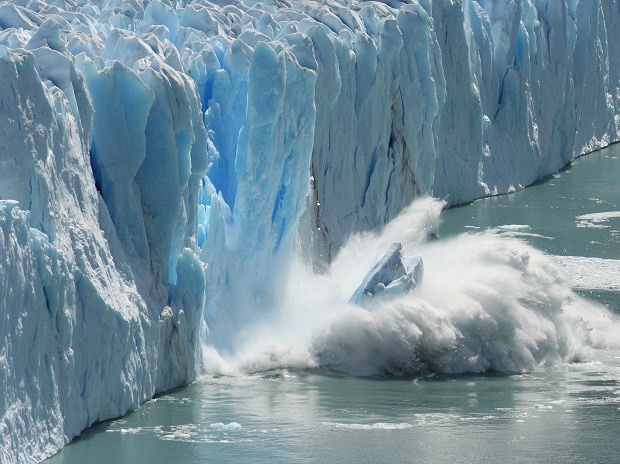
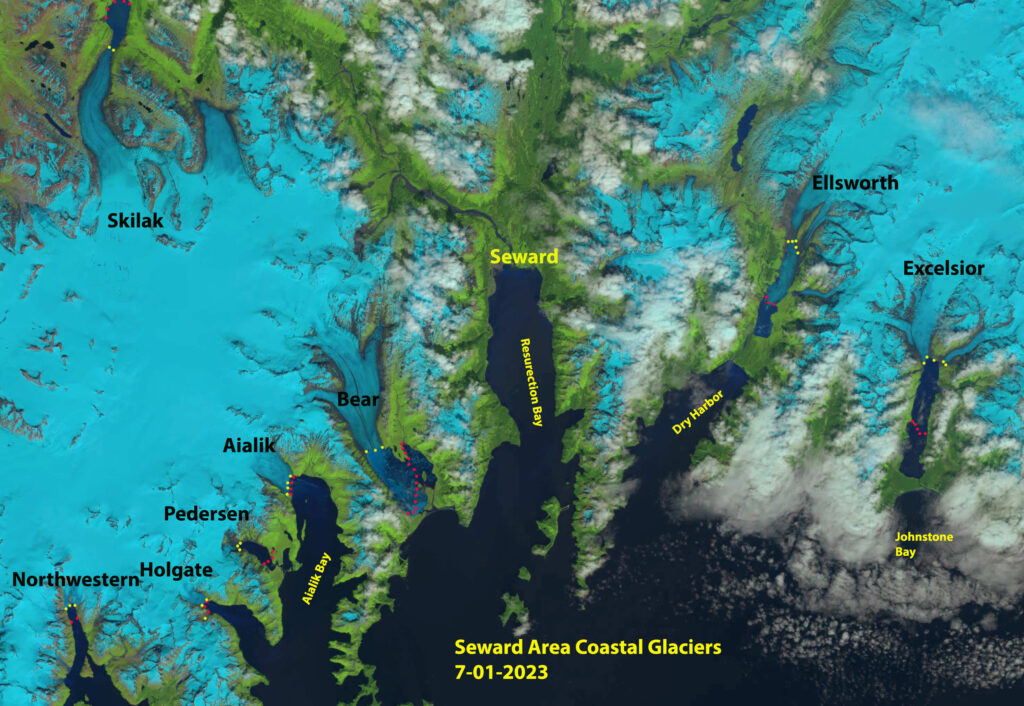
Glacier motion erodes rock, deepening valleys and forming characteristic U‑shaped glacial troughs. When glaciers retreat, they leave behind moraines, outwash plains, and proglacial lakes, which can alter hydrology and sediment transport. Accelerated ice flow contributes to sea‑level rise; the IPCC (2021) attributes roughly 0.7 mm yr⁻¹ of recent sea‑level rise to glacier melt.
Human Health and Social Impacts
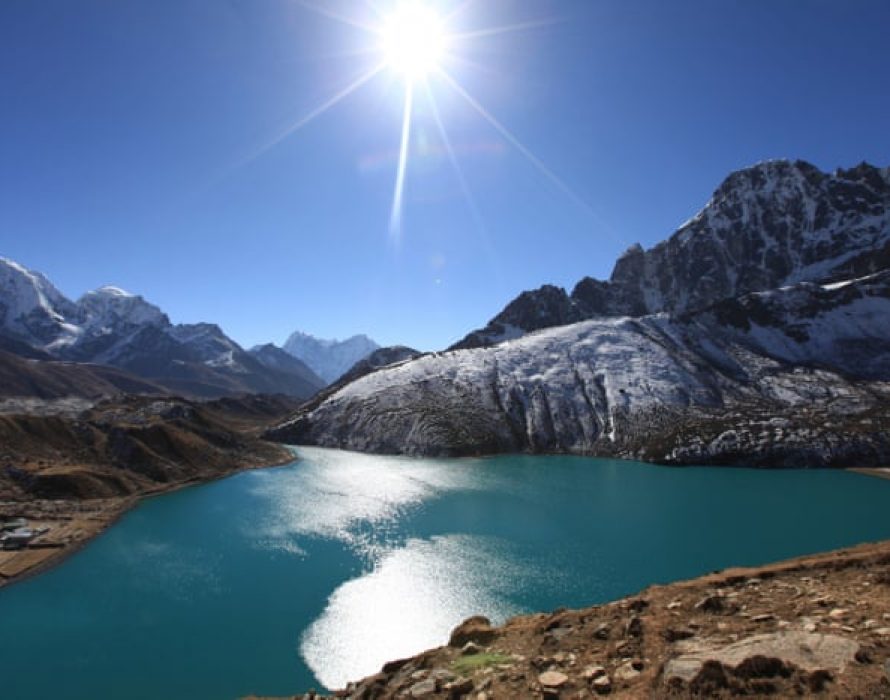
Glacial meltwater supplies freshwater to millions of people in mountain regions. Changes in glacier flow can affect the timing and magnitude of river discharge, influencing agriculture, hydropower, and drinking water availability. Sudden lake outburst floods from proglacial lakes pose a risk to downstream communities.
Economic and Infrastructure Impacts
Infrastructure built on unstable moraines or near rapidly retreating glaciers may face increased landslide or flood hazards. Tourism economies that rely on iconic glaciers can suffer as ice loss diminishes aesthetic and recreational value.
Regional Differences
In the Himalayas, high snowfall combined with steep topography yields fast‑moving, temperate glaciers that respond quickly to monsoon variability. In contrast, many Antarctic ice streams are cold‑based, moving primarily by internal deformation with limited basal sliding. Greenland’s outlet glaciers exhibit mixed behavior, with some accelerating dramatically due to ocean‑driven basal melt. These regional patterns reflect differences in climate, bed conditions, and geothermal heat.
What Scientists Know With High Confidence
- Glacier motion is driven by gravity, internal deformation, and basal sliding.
- Warmer surface temperatures increase meltwater production, often enhancing basal sliding.
- Glacier retreat contributes measurably to global sea‑level rise.
- Long‑term satellite observations reliably capture changes in glacier velocity.
What Remains Uncertain
Key uncertainties include the precise quantification of basal water pressure in remote glaciers, the interaction between subglacial sediments and slip rates, and how future warming scenarios will alter the balance between accumulation and ablation in complex mountain basins. Improved subglacial monitoring and high‑resolution modelling are needed to reduce these gaps.
Common Misconceptions
Misconception: Glaciers slide like a solid block.
Reality: Glaciers deform internally and only slide where meltwater lubricates the base; most of the motion is distributed through plastic flow.
Misconception: All glaciers retreat at the same rate.
Reality: Retreat speed varies widely with local climate, bedrock characteristics, and glacier geometry; some even advance despite global warming.
Misconception: Glacier movement is too slow to matter.
Reality: Even centimeter‑per‑day motion reshapes valleys over centuries and contributes to sea‑level rise on a global scale.
Solutions and Limitations
Mitigating glacier loss requires limiting global temperature rise, as outlined in the Paris Agreement, to reduce meltwater production and preserve accumulation zones. Adaptation measures include developing early‑warning systems for glacial lake outburst floods, mapping unstable slopes, and diversifying water supplies in glacier‑fed basins. However, mitigation alone cannot halt glacial retreat that has already been set in motion; adaptation must address irreversible changes while mitigation slows further loss.
What Individuals, Communities, and Governments Can Do
What Individuals Can Do
- Support policies that aim for net‑zero greenhouse‑gas emissions.
- Reduce personal carbon footprints through energy efficiency, sustainable transport, and responsible consumption.
- Participate in citizen‑science programs that monitor local glacier changes.
What Communities and Organizations Can Do
- Invest in water‑resource planning that accounts for declining glacier melt.
- Implement early‑warning and evacuation plans for glacial lake outburst floods.
- Promote eco‑tourism that funds glacier monitoring and education.
What Governments Can Do
- Enforce emissions reductions consistent with IPCC pathways to limit warming.
- Fund long‑term glaciological research and remote‑sensing infrastructure.
- Integrate glacier‑change scenarios into climate‑adaptation strategies for agriculture, hydropower, and disaster risk reduction.
Closing Synthesis
Glaciers move because gravity pulls their massive ice masses downslope, while the ice itself deforms and slides over a thin water film at the base. Robust observations and experiments confirm these mechanisms, and they explain how glaciers shape landscapes and contribute to sea‑level rise. Although the fundamental physics are well understood, uncertainties remain about subglacial conditions and future regional responses. Effective action combines ambitious emissions mitigation with targeted adaptation to protect water resources, reduce flood risk, and preserve the cultural and ecological values of these ancient rivers of ice.
Frequently Asked Questions
What causes glaciers to move?
Glaciers move because gravity pulls the massive ice downslope, while internal crystal deformation (plastic flow) and basal sliding over meltwater lubricate the base, allowing the ice to flow.
How fast can a glacier flow?
Glacier speeds vary widely; some move only a few centimeters per day, while fast‑flowing temperate glaciers can advance several meters per day, depending on slope, temperature, and basal conditions.
What evidence supports our understanding of glacier dynamics?
Long‑term monitoring by WGMS, satellite radar observations, laboratory studies of ice deformation, and field measurements of basal water all converge to confirm the roles of gravity, plastic flow, and sliding.
Why does glacier movement matter for sea level?
When glaciers lose ice mass faster than they gain it, the meltwater adds to the oceans; the IPCC estimates glacier melt contributes about 0.7 mm per year to global sea‑level rise.
What can communities do to adapt to changing glacier flow?
Communities can develop early‑warning systems for glacial lake outburst floods, diversify water supplies, and incorporate glacier‑change scenarios into land‑use and disaster‑risk planning.




Leave a Comment