
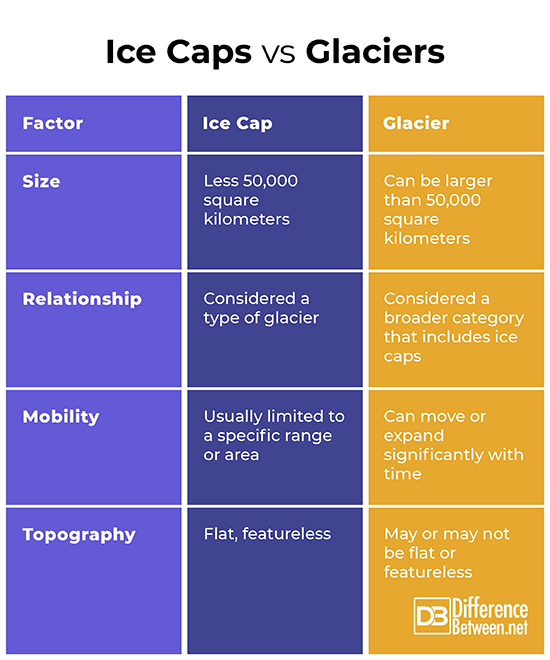
Glaciers and ice caps are distinct types of perennial ice, differing in size, shape, and dynamics, and both play crucial roles in the Earth’s water balance and climate system.
Quick Answer
Glaciers are river‑like masses of ice that flow down valleys or spread across mountainous terrain, while ice caps are dome‑shaped ice bodies that blanket a land surface less than 50,000 km². Both form from accumulated snow that compresses into ice, but glaciers are confined by topography and exhibit measurable flow, whereas ice caps spread outward from a central high point and behave more like a static ice sheet. Their melt contributes to sea‑level rise and supplies freshwater to downstream communities. Uncertainty remains about the precise timing of future mass loss because regional climate projections and ice‑dynamic feedbacks vary.
Key Takeaways
- Glaciers are elongated, flow‑active ice bodies confined by valleys; ice caps are dome‑shaped, relatively stationary ice masses covering broader areas.
- Both store the majority of the planet’s freshwater—about 69 % of global land ice.
- Warming temperatures are the primary driver of accelerated melt and retreat for both types.
- Glacial melt fuels rivers that support agriculture, drinking water, and hydropower, especially in mountainous regions.
- Ice‑cap loss directly raises global sea level and can alter regional climate patterns.
- High‑confidence findings include the overall decline of glacier volume since the mid‑20th century.
- Key uncertainties involve future ice‑dynamic responses and regional precipitation changes.
What Is Glaciers and Ice Caps: What’s the Difference??
Glaciers are large, persistent bodies of ice that originate in high‑altitude or high‑latitude zones where snowfall exceeds melting over many years. They flow under their own weight, often carving U‑shaped valleys, fjords, and moraines. Ice caps, by contrast, are smaller than continental ice sheets but larger than individual glaciers. They have a rounded, dome‑like geometry, covering terrain up to 50,000 km² and spreading outward from a central summit. Both are components of the cryosphere, but they differ in scale, shape, and dynamics. Understanding these distinctions matters because each influences sea level, freshwater availability, and regional climate in unique ways.
How Does It Work?
Formation of Glaciers
- Snowfall accumulates in a cold‑climate basin.
- Repeated snowfall compresses lower layers, expelling air and turning snow into firn.
- Further compression over decades creates dense glacial ice (≈0.9 g cm⁻³).
- Gravity drives the ice to deform and slide downhill, a process called glacial flow.
Formation of Ice Caps
- Snow accumulation occurs over a relatively flat or gently sloping region.
- Like glaciers, snow compacts into ice, but the lack of steep topography limits directed flow.
- Ice thickens centrally and spreads radially, forming a dome shape.
- Surface meltwater may percolate down, refreezing and contributing to internal mass balance.
Mass Balance and Flow
Both glaciers and ice caps maintain a mass balance that is the difference between accumulation (snowfall) and ablation (melting, sublimation, calving). Positive balance leads to growth; negative balance drives retreat. Glaciers exhibit measurable flow rates—often centimeters to meters per day—while ice caps move more slowly, with surface velocities typically measured in meters per year.
What Does the Evidence Show?
Long‑term monitoring by the World Glacier Monitoring Service (WGMS) indicates that global glacier volume has declined by roughly 30 % since 1961 (IPCC AR6, 2021). Satellite altimetry (e.g., NASA’s ICESat‑2) confirms that many ice caps, such as those on Svalbard and the Canadian Arctic Archipelago, have thinned at rates of 0.5–1.5 m per decade. Ice‑core records from both glaciers and ice caps preserve atmospheric gases, providing high‑resolution climate archives that corroborate instrumental temperature trends. Model intercomparisons (e.g., CMIP6) consistently project accelerated mass loss under warming scenarios, reinforcing observational findings.
Main Causes or Drivers
Direct Climate Forcing
Rising air temperatures increase surface melt and reduce snowfall, directly lowering mass balance. The IPCC attributes more than 90 % of observed glacier retreat since 1990 to anthropogenic warming.
Precipitation Changes
Shifts in regional precipitation patterns can either offset or amplify melt. In some maritime mountain ranges, increased winter precipitation has partially mitigated loss, but overall trends remain negative.
Feedback Mechanisms
Albedo feedback—where exposed darker surfaces absorb more solar radiation—accelerates melt. Additionally, meltwater can lubricate glacier beds, enhancing flow speed.
Environmental and Human Impacts
Environmental Impacts
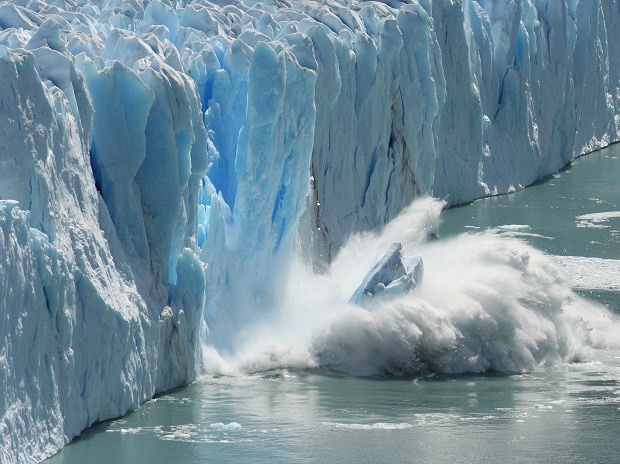
- Sea‑level rise: Combined melt from glaciers and ice caps contributes about 0.5 mm yr⁻¹ to global sea level, accounting for roughly one‑third of recent rise (IPCC AR6, 2021).
- Hydrological changes: Reduced glacial runoff alters river discharge patterns, affecting downstream ecosystems and sediment transport.
- Habitat loss: Ice‑cap recession diminishes breeding grounds for polar species such as seals and certain seabirds.
Human Health and Social Impacts
- Water security: Communities in the Himalayas, Andes, and Andes rely on glacial melt for drinking water and irrigation; declining glaciers threaten these supplies.
- Livelihoods: Tourism tied to iconic glaciers (e.g., Patagonia, the Alps) faces economic risk as ice retreats.
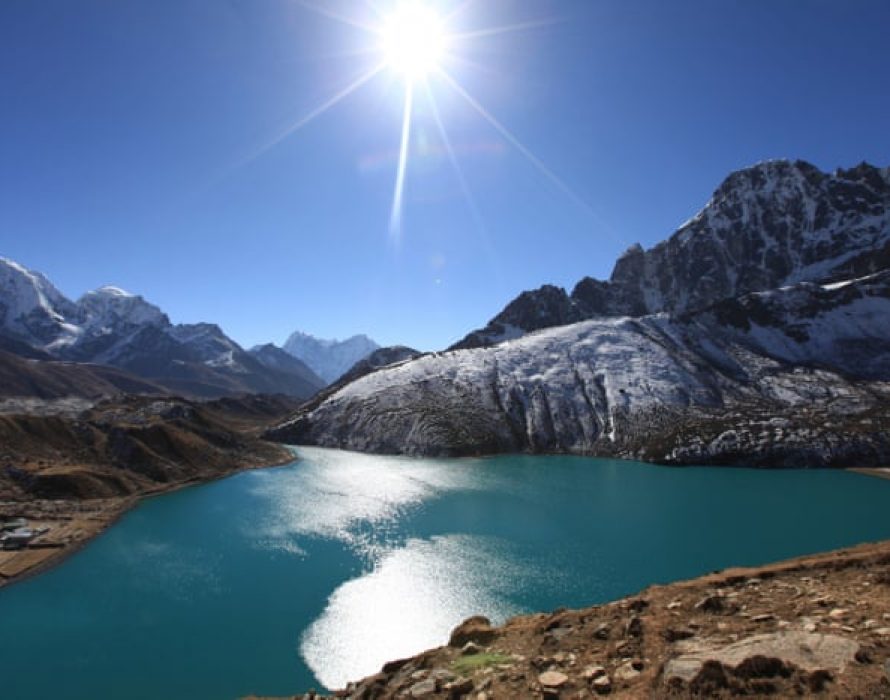
- Disaster risk: Rapid glacier melt can trigger glacial lake outburst floods (GLOFs), endangering downstream populations.
Economic and Infrastructure Impacts
- Hydropower: Many mountain nations generate electricity from glacial meltwater; reduced flow can lower generation capacity.
- Coastal adaptation costs rise as sea level climbs due to ice‑cap melt.
Regional Differences
In the High Andes, glaciers have receded up to 60 % of their area since the 1990s, directly affecting water supplies for over 30 % of the population. In contrast, the Antarctic ice caps (e.g., the East Antarctic dome) have shown modest thickening in some locales, reflecting regional climate variability. Arctic ice caps such as those on Greenland’s periphery are losing mass rapidly, contributing significantly to global sea‑level rise. These variations illustrate that local temperature trends, precipitation regimes, and topography dictate the pace of change.
What Scientists Know With High Confidence
- Global glacier volume has been decreasing continuously since the mid‑20th century.
- Warming temperatures are the dominant driver of observed glacier and ice‑cap retreat.
- Both glaciers and ice caps store the vast majority of the planet’s freshwater.
- Melting ice contributes measurably to global sea‑level rise.
What Remains Uncertain
Key uncertainties include the rate at which ice dynamics will accelerate under extreme warming, the future patterns of precipitation in mountainous regions, and the potential for rapid, nonlinear collapse of smaller ice caps. Limited in‑situ observations in remote Arctic and Antarctic locations constrain model validation, meaning projected sea‑level contributions retain a range of possible outcomes.
Common Misconceptions
Misconception: All ice caps are the same as Antarctica’s ice sheet.
Reality: Ice caps are much smaller (under 50,000 km²) and behave differently from the massive, continent‑spanning Antarctic ice sheet, which has distinct dynamics and a far larger impact on sea level.
Misconception: Glaciers only exist in polar regions.
Reality: Glaciers are found worldwide, from the tropical Andes to the European Alps, wherever snowfall exceeds melt over long periods.
Misconception: Ice melt instantly raises sea level worldwide.
Reality: Meltwater first enters local rivers and groundwater systems; only after it reaches the oceans does it contribute to sea‑level rise, a process that can span years to decades.
Solutions and Limitations
Mitigation strategies focus on limiting global warming through rapid decarbonization, which reduces the primary driver of ice loss. Adaptation includes expanding water‑storage infrastructure in glacier‑dependent regions and improving early‑warning systems for GLOFs. Conservation actions such as protected area designation help preserve the ecosystems surrounding ice caps. However, mitigation alone cannot reverse past melt, and adaptation measures require substantial investment and local capacity. Trade‑offs include potential ecological impacts of large reservoirs and the socioeconomic challenges of relocating communities.
What Individuals, Communities, and Governments Can Do
What Individuals Can Do
- Support policies that accelerate the transition to renewable energy.
- Reduce personal carbon footprints through energy efficiency and sustainable travel.
- Donate to or volunteer with organizations monitoring glacier health.
What Communities and Organizations Can Do
- Develop integrated water‑resource plans that account for declining glacial input.
- Invest in community‑based early‑warning systems for glacial lake outburst floods.
- Promote ecotourism that funds glacier conservation while minimizing environmental impact.
What Governments Can Do
- Implement and strengthen nationally determined contributions (NDCs) under the Paris Agreement to limit warming below 2 °C.
- Fund long‑term glaciological monitoring networks (e.g., satellite and ground‑based observations).
- Incorporate glacier‑melt projections into national water‑security and disaster‑risk strategies.
Closing Synthesis
Glaciers and ice caps, though both composed of ancient snow, differ in scale, shape, and movement, leading to distinct roles in the Earth system. Robust evidence shows they are shrinking primarily because of anthropogenic warming, with consequential impacts on sea level, freshwater availability, and ecosystems. While scientists are confident about the overall trend, uncertainties remain regarding future dynamics and regional precipitation changes. Effective responses combine aggressive climate mitigation, targeted adaptation, and sustained monitoring, recognizing that individual actions complement—but do not replace—systemic policy and infrastructure shifts.
Frequently Asked Questions
What is the main difference between a glacier and an ice cap?
A glacier is a long, flowing river of ice confined by valleys, while an ice cap is a dome‑shaped, relatively stationary ice mass covering a broader area under 50,000 km².
How do glaciers and ice caps form?
Both start with persistent snowfall that compresses into firn and then dense ice; glaciers flow downhill due to gravity, whereas ice caps spread outward from a central high point because the terrain is flatter.
Why are glaciers important for human societies?
Glaciers release meltwater that supplies drinking water, irrigation, and hydropower for millions of people, especially in mountainous regions such as the Himalayas, Andes, and Alps.
What evidence shows that glaciers are retreating worldwide?
Long‑term records from the World Glacier Monitoring Service indicate a roughly 30 % loss in global glacier volume since 1961, and satellite data confirm widespread thinning of ice caps in the Arctic.
Can individual actions help protect glaciers and ice caps?
Individual actions like reducing carbon footprints, supporting clean‑energy policies, and contributing to monitoring projects can add pressure for systemic change, though large‑scale mitigation and adaptation are essential.




Leave a Comment