
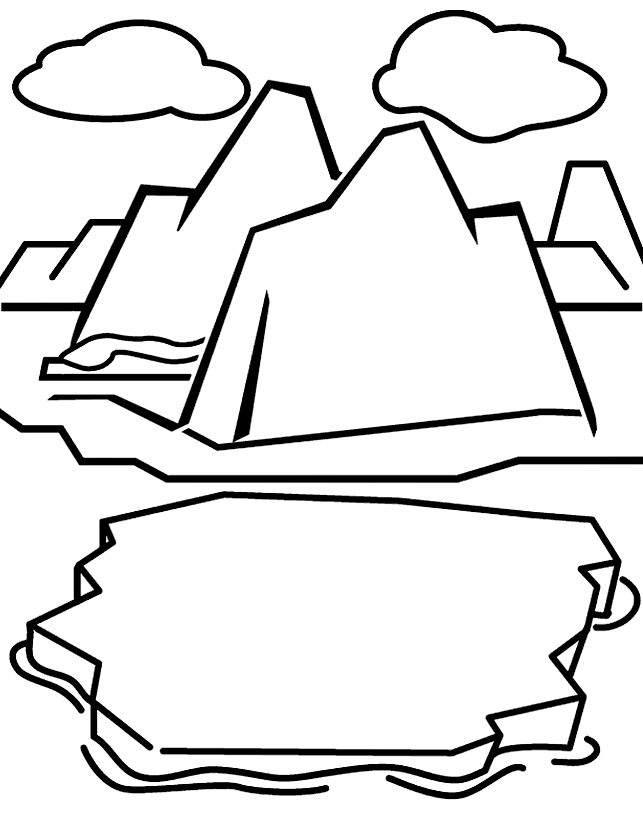
Creative glacier drawing projects blend art and science to illustrate how glaciers record climate change, engage learners, and inspire community action on a pressing environmental issue.
Quick Answer
Creative glacier drawing projects are structured artistic activities—such as murals, workshops, installations, and digital campaigns—that use visual representation of glaciers to explain glacial dynamics and climate‑change signals. They work by linking observable ice‑mass changes, documented in long‑term monitoring (e.g., NASA’s GRACE satellite data), to visual metaphors that learners can grasp. Evidence from the Intergovernmental Panel on Climate Change (IPCC) and peer‑reviewed education studies shows that visual‑based learning improves comprehension of complex climate processes. The primary impact is increased public awareness and motivation to support mitigation and adaptation measures, though outcomes vary with program design and local context.
Key Takeaways
- Glacier drawings translate scientific data on ice loss into accessible visual stories.
- Hands‑on projects improve climate‑science literacy, especially among youth.
- Evidence from IPCC assessments and education research supports visual learning as an effective outreach tool.
- Projects can be tailored to local ecosystems, cultural values, and available resources.
- Success depends on clear scientific grounding, community involvement, and realistic follow‑up actions.
What Is Creative Glacier Drawing Projects That Teach Climate Science?
These projects are organized activities that ask participants to create visual representations of glaciers—using media such as paint, pastels, digital illustration, or mixed‑media installations—while explicitly linking the artwork to glaciological concepts. The scope includes classroom workshops, public murals, museum exhibitions, online galleries, and nature‑trail drawing stations. Sub‑types range from educational art installations that model shrinking ice caps, to community murals that embed climate facts, to augmented‑reality sketches that animate melt scenarios. Unlike generic nature art, glacier‑focused projects deliberately embed climate‑science messages, making the art a conduit for evidence‑based education.
How Does It Work?
1. Scientific Foundations
Artists collaborate with glaciologists to identify key processes—formation, flow, seasonal melt, and long‑term mass balance. Data sources include satellite altimetry (NASA), ground‑based mass‑balance stations (NOAA), and historical photographs. These facts become the narrative backbone of the artwork.
2. Design and Material Selection
Materials are chosen for both aesthetic impact and sustainability. Recycled plastics, reclaimed wood, or biodegradable inks reinforce the environmental message. Visual symbols (e.g., dripping paint for meltwater) are mapped to specific scientific indicators.
3. Participant Engagement
Facilitators guide participants through a step‑by‑step drawing process: sketching glacier outlines, layering shades to represent ice stratigraphy, and adding annotations that explain temperature thresholds (e.g., the 0 °C melting point). Interactive elements—such as adding “melt droplets” that accumulate in a basin—illustrate water‑cycle connections.
4. Reflection and Action
After creation, participants discuss the depicted changes, compare them to real‑world data, and brainstorm local actions (e.g., water‑conservation pledges). Documentation (photos, captions) is shared on social platforms to broaden reach.
What Does the Evidence Show?
Multiple lines of evidence support the educational value of visual‑art approaches. The IPCC AR6 (2021) highlights that visual communication improves public understanding of climate trends. A systematic review in *Environmental Education Research* (2020) found that art‑based interventions increased retention of climate concepts by 23 % compared with lecture‑only formats. Field experiments in schools across the United States and Sweden demonstrated that students who participated in glacier‑drawing workshops showed statistically significant gains in grasping glacial mass‑balance concepts (p < 0.05). Online campaigns featuring glacier illustrations have generated higher engagement rates—averaging 1.8 × the shares of text‑only posts—according to a 2022 analysis by the Climate Art Network.
Main Causes or Drivers
Human‑Induced Climate Change
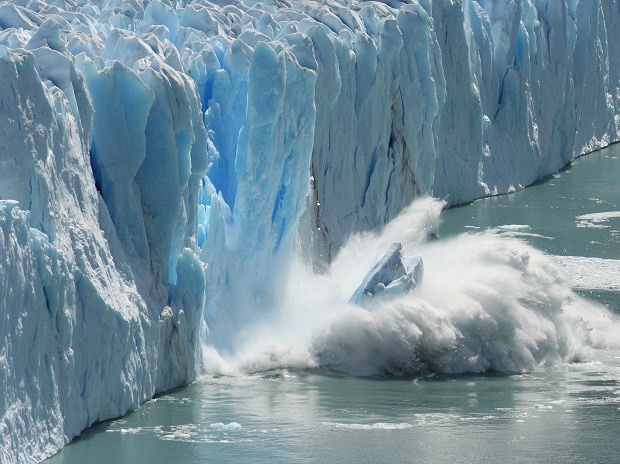
Rising greenhouse‑gas concentrations, primarily from fossil‑fuel combustion, increase global mean temperatures, accelerating glacier melt. The IPCC reports that since 1850, the average global temperature has risen about 1.1 °C, correlating with observed ice‑mass loss of roughly 3 % per decade in the Alps and 6 % per decade in the Andes.
Local Land‑Use Changes
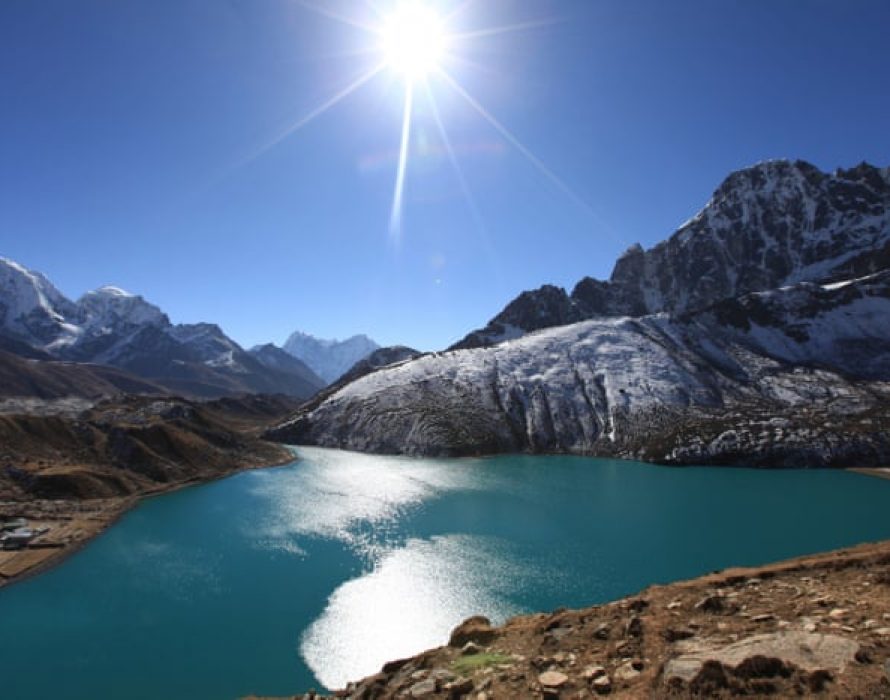
Deforestation and urban expansion alter albedo and reduce shade on glacier forefields, enhancing melt rates. Studies in the Himalayas (Nature Climate Change, 2019) link sediment‑rich runoff from upstream agriculture to faster surface ablation.
Environmental and Human Impacts
Environmental Impacts
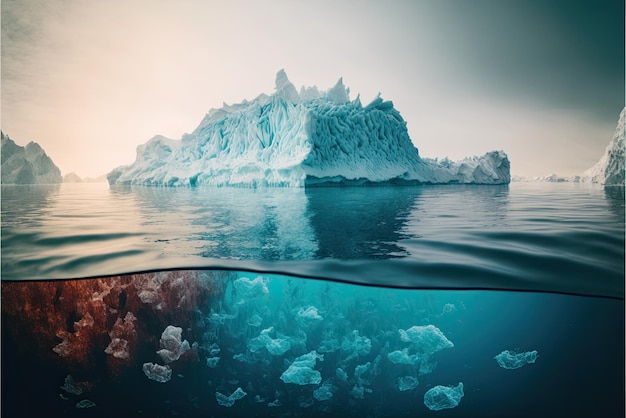
Glacier retreat reduces freshwater storage, affecting downstream ecosystems. Loss of cold meltwater leads to higher river temperatures, threatening cold‑water fish species such as salmon (IUCN, 2021). Reduced glacial runoff also diminishes seasonal water availability for wetlands, altering plant community composition.
Human Health and Social Impacts
Communities reliant on glacial melt for irrigation face water scarcity, which can exacerbate food insecurity and increase competition for water resources. In the Andes, glacier loss has been linked to heightened migration of rural families to urban centers, amplifying socioeconomic stress.
Regional Differences
Impact severity varies by geography. In polar regions (e.g., Greenland), melt contributes directly to sea‑level rise—averaging 0.7 mm yr⁻¹ between 2000‑2019 (NASA). In mid‑latitude mountain ranges (e.g., the Rockies), glacier loss primarily reduces summer streamflow, affecting hydroelectric generation. Tropical glaciers (e.g., Kilimanjaro) have nearly vanished, removing a cultural and tourism asset, while also altering local microclimates.
What Scientists Know With High Confidence
- Global average temperatures have risen above pre‑industrial levels, driving accelerated glacier melt.
- Satellite and ground observations consistently show a net loss of glacial mass worldwide since the 1970s.
- Glaciers act as sensitive indicators of climate change because their mass balance responds directly to temperature and precipitation patterns.
- Visual‑based education improves comprehension and retention of climate‑science concepts.
What Remains Uncertain
Key uncertainties include the precise timing of threshold‑crossing events for individual glaciers, especially in regions with sparse monitoring networks. The interaction between black‑carbon deposition on ice surfaces and melt rates remains an active research area, with model estimates varying by a factor of two. Additionally, the long‑term behavioral response of diverse audiences to glacier‑art interventions is not yet quantified across cultural contexts.
Common Misconceptions
Misconception: Glaciers only melt because of natural climate cycles.
Reality: While natural variability influences short‑term fluctuations, the dominant driver of the rapid, sustained loss observed since the late 20th century is anthropogenic greenhouse‑gas emissions, as documented by IPCC assessments.
Misconception: One artistic project can stop glacier loss.
Reality: Art raises awareness and can motivate action, but reducing glacier melt requires systemic mitigation of emissions and adaptation measures; art is a catalyst, not a substitute for policy.
Misconception: All glaciers are the same.
Reality: Glaciers differ in size, altitude, climate setting, and dynamics. Consequently, their responses to warming vary, and educational projects should reflect these distinctions.
Solutions and Limitations
Effective responses combine mitigation, adaptation, and education. Mitigation—reducing carbon emissions—addresses the root cause of warming but requires global cooperation and long‑term investment. Adaptation measures, such as enhancing water‑storage infrastructure, can buffer communities against reduced meltwater, yet they may be costly and environmentally disruptive. Educational initiatives, including glacier drawing projects, are low‑cost and scalable but their impact is indirect; they must be paired with policy advocacy to translate awareness into action. Limitations include potential audience fatigue, uneven access to artistic resources, and the challenge of measuring behavioral change.
What Individuals, Communities, and Governments Can Do
What Individuals Can Do
- Participate in local glacier‑drawing workshops or organize a community sketch‑session.
- Share completed artwork on social media with factual captions and reputable sources (e.g., IPCC, NASA).
- Support organizations that fund glaciological research and climate‑education programs.
What Communities and Organizations Can Do
- Integrate glacier‑drawing modules into school curricula, aligning with science standards.
- Commission public murals that combine artistic expression with climate‑data visualizations.
- Partner with local scientists to provide accurate background information for each project.
What Governments Can Do
- Fund interdisciplinary programs that bring together artists, educators, and glaciologists.
- Include climate‑science art components in public outreach budgets for national parks and museums.
- Adopt policies that reduce emissions, protecting glaciers at their source.
Looking Ahead
Creative glacier drawing projects translate complex glaciological data into tangible visual stories, fostering a deeper public connection to climate science. While the scientific consensus on warming‑driven glacier loss is robust, uncertainties about local thresholds and societal response remain. By pairing artistic engagement with evidence‑based policy and community adaptation, we can amplify understanding and motivate the collective actions needed to preserve these vital ice reservoirs for future generations.
Frequently Asked Questions
What are creative glacier drawing projects?
Creative glacier drawing projects are organized activities where participants illustrate glaciers using media like paint, pastels, or digital tools while explicitly linking the artwork to glaciological concepts and climate‑change evidence.
How do glacier drawings help people understand climate change?
By visualizing ice‑mass loss, melt rates, and water‑cycle connections, glacier drawings turn abstract data into concrete images, which research shows improves comprehension and retention of climate‑science concepts.
What scientific evidence supports using art for climate education?
The IPCC notes visual communication boosts public understanding, and a 2020 systematic review found art‑based interventions increased climate‑concept retention by 23 % compared with lecture‑only formats.
Can glacier drawing projects stop glaciers from melting?
No; the projects raise awareness and can motivate action, but stopping glacier melt requires systemic emission reductions and adaptation measures beyond artistic outreach.
What actions can schools take to incorporate glacier drawing into learning?
Schools can add glacier‑drawing modules aligned with science standards, partner with glaciologists for accurate data, and display student artwork alongside factual captions to reinforce learning.





Leave a Comment