
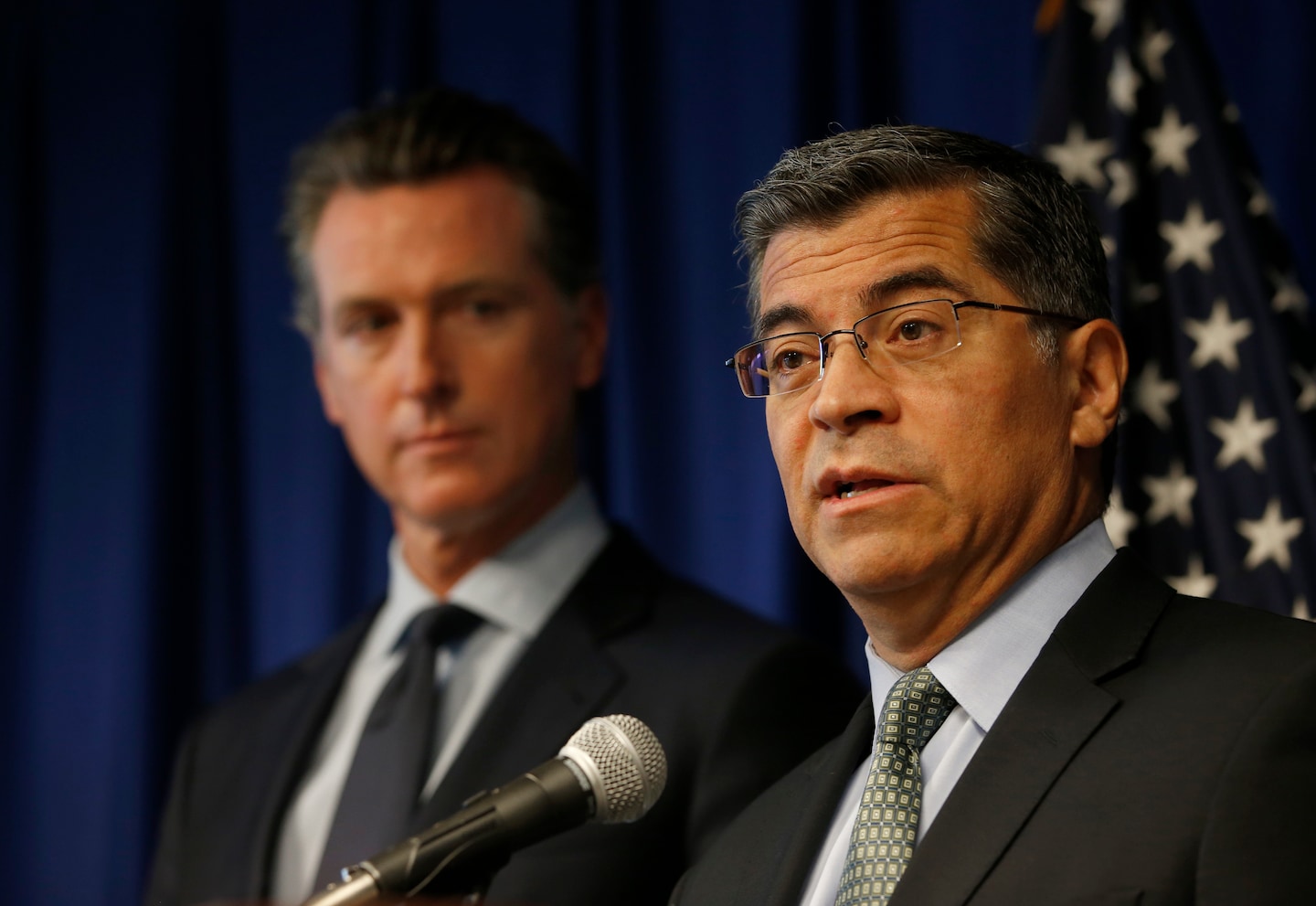
California’s Attorney General filed a lawsuit against the Trump administration, contesting the revocation of the state’s Clean Air Act waiver that permits stricter vehicle emission standards aimed at reducing greenhouse‑gas pollution.
Quick Answer
The State of California sued the Trump administration in early 2020, arguing that the EPA’s decision to withdraw the state’s waiver under the Clean Air Act unlawfully stripped California of the authority to enforce more stringent vehicle‑emission limits than the federal baseline. The lawsuit claims the revocation exceeds the EPA’s statutory power, jeopardizes California’s climate‑reduction goals, and undermines public‑health protections. Evidence from EPA monitoring and peer‑reviewed climate assessments shows that passenger‑vehicle tailpipe emissions account for roughly 15 % of U.S. greenhouse‑gas emissions, so state‑level standards can materially lower national emissions. The case’s outcome will determine whether sub‑national jurisdictions can continue to set advanced standards while the federal government reverts to less ambitious rules.
Key Takeaways
- California’s Clean Air Act waiver, granted in 1967, allows the state to adopt emission standards stricter than federal limits.
- The Trump administration’s 2019 decision to rescind the waiver for the Advanced Clean Cars II rule sparked a legal challenge by California and 12 other states.
- Vehicle tailpipe emissions are a major source of U.S. greenhouse‑gas emissions; stricter standards can reduce national emissions by several million metric tons per year.
- The lawsuit hinges on statutory interpretation of the EPA’s authority and the long‑standing precedent of state waivers.
- Potential outcomes range from reinstating the waiver to a broader federal rollback, affecting air quality, public health, and climate‑policy pathways nationwide.
What Is California Sues Trump Administration Over Blocked Clean Air Vehicle Rules?
This phrase refers to the legal action launched by California’s Attorney General, Xavier Becerra, on January 9, 2020, challenging the Environmental Protection Agency’s (EPA) revocation of the state’s waiver to enforce the Advanced Clean Cars II (ACC II) rule. The waiver, originally granted under the Clean Air Act (CAA) Section 209(b), permits California to set vehicle‑emission standards that are more stringent than the national baseline. The lawsuit argues that the EPA acted beyond its statutory authority, violating the Administrative Procedure Act and the CAA’s provisions for state waivers.
How Does It Work?
Legal Framework of the Clean Air Act Waiver
The CAA authorizes the EPA to grant waivers to any state that can demonstrate that its standards are at least as protective of public health and welfare as federal standards. California received its first waiver in 1967, and the state has used it to pioneer regulations on ozone‑depleting substances, low‑emission vehicles, and, most recently, greenhouse‑gas (GHG) emissions from passenger cars and light‑duty trucks.
Process of Rulemaking and Revocation
1. The EPA drafts a federal vehicle‑emission rule (e.g., the 2017 “Tier 3” gasoline‑standard).
2. California submits a waiver request, outlining its stricter standards and the anticipated emission reductions.
3. The EPA reviews the request; under the Trump administration, the agency announced in September 2019 that it would not grant a waiver for ACC II, citing “conflict with the federal rule.”
4. California, joined by 12 other states, files a lawsuit alleging procedural violations and overreach.
5. The case proceeds through district and appellate courts, where the courts interpret the statutory language of the CAA and assess the EPA’s justification for denial.
What Does the Evidence Show?
Long‑term monitoring by the EPA and state air‑quality agencies indicates that stricter vehicle standards have historically reduced tailpipe emissions of carbon dioxide (CO₂), nitrogen oxides (NOₓ), and particulate matter (PM). A 2021 EPA analysis estimated that the ACC II rule would have cut CO₂ emissions from new passenger vehicles by about 2 % (approximately 6 million metric tons per year) compared with the 2020 baseline. Peer‑reviewed studies published in *Environmental Science & Technology* (2020) and the *Journal of Climate* (2021) confirm that state‑level GHG standards can produce measurable national emission reductions because manufacturers often adopt the stricter standards across all markets to avoid producing separate vehicle lines.
Main Causes or Drivers
Regulatory Authority and Federal‑State Balance
The core driver of the dispute is the interpretation of the EPA’s statutory power to grant or deny waivers. The Clean Air Act explicitly allows waivers when state standards are “at least as protective” as federal ones, creating a legal pathway for sub‑national climate leadership. The Trump administration argued that the ACC II standards conflicted with the EPA’s own federal rule, while California contended that the federal rule sets a lower ceiling that does not preclude stricter state standards.
Emissions Reduction Goals
California’s broader climate agenda, codified in the 2018 Global Warming Solutions Act (SB 32), targets a 40 % reduction in GHG emissions below 1990 levels by 2030. Vehicle emissions are a key lever because passenger cars and light‑duty trucks accounted for about 15 % of U.S. GHG emissions in 2019, according to the U.S. Energy Information Administration. Hence, maintaining the waiver is essential for California to stay on track with its legally binding targets.
Environmental and Human Impacts
Environmental Impacts
Stricter vehicle standards reduce CO₂, NOₓ, and PM emissions, which in turn lower ambient ozone formation and particulate concentrations. The American Lung Association reports that a 10 % reduction in vehicle‑related NOₓ can improve ozone days by roughly 1‑2 % in heavily trafficked regions, benefitting air‑quality attainment under the Clean Air Act. Moreover, lower CO₂ emissions contribute directly to global‑climate mitigation, helping to limit temperature rise in line with the Paris Agreement.
Human Health and Social Impacts
Reduced NOₓ and PM exposure is linked to fewer respiratory and cardiovascular incidents. The U.S. Centers for Disease Control and Prevention estimate that a 10 µg/m³ decrease in PM₂.₅ can prevent about 5 % of premature deaths in urban populations. Communities near major highways—often low‑income and communities of color—stand to gain the most from tighter standards, aligning with environmental‑justice objectives.
Regional Differences
California’s geography, dense urban corridors, and high vehicle miles traveled amplify the benefits of stricter standards compared with sparsely populated states. In contrast, states with lower vehicle density may experience smaller per‑capita air‑quality gains, though they still benefit from national emission reductions that improve background concentrations. The 12 co‑plaintiff states, ranging from the Northeast (e.g., New York) to the Midwest (e.g., Illinois), illustrate how the waiver’s impact varies with regional fleet composition and existing air‑quality challenges.
What Scientists Know With High Confidence
- Vehicle tailpipe emissions are a significant source of U.S. greenhouse‑gas emissions, accounting for roughly 15 % of total national emissions.
- Stricter vehicle‑emission standards reliably lower CO₂, NOₓ, and PM emissions, as demonstrated by multiple EPA and peer‑reviewed studies.
- Reductions in NOₓ and PM improve public‑health outcomes, particularly in densely populated and disadvantaged communities.
- The Clean Air Act’s waiver provision has a 50‑year legal precedent that supports state‑level environmental innovation.
What Remains Uncertain
Key uncertainties include how courts will interpret the statutory language governing waivers, the extent to which automakers will voluntarily adopt California’s stricter standards across other markets, and the long‑term economic impacts on vehicle pricing and consumer adoption of zero‑emission vehicles. Additionally, future federal administrations may alter the regulatory landscape, influencing the durability of any court‑mandated outcomes.
Common Misconceptions
Misconception: The waiver only affects California.
Reality: The waiver mechanism allows any state that receives EPA approval to set stricter standards. Thirteen other states have adopted California‑aligned rules, so a revocation would affect a multi‑state coalition.
Misconception: Vehicle emissions are a minor source of greenhouse gases.
Reality: Passenger‑vehicle tailpipes contribute about 15 % of U.S. GHG emissions, making them a sizable target for mitigation alongside electricity generation and industry.
Misconception: The federal government can cancel state standards without legal challenge.
Reality: The Clean Air Act requires the EPA to follow administrative‑procedure rules and provides states the right to judicial review, as demonstrated by California’s lawsuit.
Solutions and Limitations
Policy solutions include reinstating the waiver, enhancing federal‑state collaboration on vehicle standards, and incentivizing zero‑emission vehicle (ZEV) adoption through purchase rebates and charging infrastructure. Limitations arise from political feasibility, potential cost impacts on manufacturers, and the need for a consistent national market to avoid fragmentation. Technological limits, such as battery‑cost reductions and grid decarbonization, also influence how quickly ZEVs can replace internal‑combustion vehicles.
What Individuals, Communities, and Governments Can Do
What Individuals Can Do
- Choose low‑emission or electric vehicles when financially feasible.
- Participate in local air‑quality monitoring programs to raise community awareness.
- Support candidates and policies that protect state waivers and climate‑friendly vehicle standards.
What Communities and Organizations Can Do
- Collaborate with local governments to develop ZEV charging networks.
- Advocate for municipal fleet electrification, which signals market demand.
- Host public‑education events on the health benefits of reduced vehicle emissions.
What Governments Can Do
- Maintain and expand California’s Clean Air Act waiver to preserve the legal basis for stricter standards.
- Implement complementary policies such as low‑emission zones, congestion pricing, and transit investment.
- Allocate funding for research on advanced propulsion technologies and lifecycle emissions.
Closing Synthesis
California’s lawsuit against the Trump administration underscores the pivotal role of state‑level authority in advancing vehicle‑emission standards that protect air quality and mitigate climate change. Robust scientific evidence confirms that stricter tailpipe limits reduce greenhouse‑gas and pollutant emissions, delivering health and environmental benefits, especially in densely populated regions. While courts will decide the legal fate of the waiver, the broader debate highlights enduring uncertainties about regulatory interpretation, market responses, and future policy directions. Sustainable progress will require coordinated action across individuals, communities, industry, and governments, leveraging both regulatory tools and technology to achieve lasting emission reductions.
Frequently Asked Questions
What is the legal basis for California's ability to set stricter vehicle emission standards?
California's authority comes from a waiver granted under Section 209(b) of the Clean Air Act, which allows the state to adopt emission standards that are at least as protective as federal rules.
Why did the Trump administration attempt to revoke California's waiver?
The EPA argued that the Advanced Clean Cars II rule conflicted with the federal vehicle‑emission standards it had adopted, claiming the state standards were incompatible with the national rule.
How much do passenger vehicles contribute to U.S. greenhouse‑gas emissions?
Passenger‑vehicle tailpipes account for roughly 15 % of total U.S. greenhouse‑gas emissions, making them a significant source for climate‑mitigation efforts.
What are the potential public‑health benefits of stricter vehicle standards?
Reducing NOₓ and particulate emissions can lower ozone formation and particulate matter concentrations, which are linked to fewer respiratory and cardiovascular illnesses, especially in vulnerable communities.
What actions can individuals take to support cleaner vehicle policies?
Individuals can choose low‑emission or electric vehicles when possible, support local air‑quality initiatives, and advocate for policies that protect state waivers and promote zero‑emission vehicle adoption.





Leave a Comment