
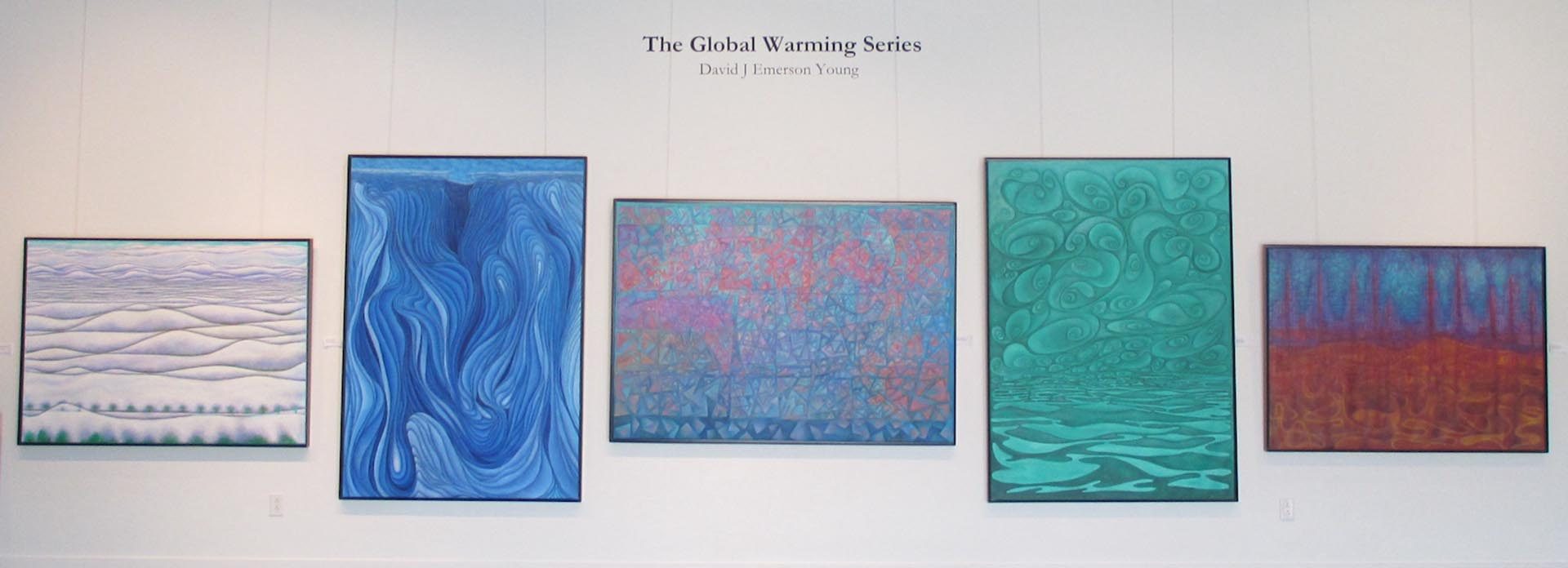
Artists worldwide translate the science of global warming into striking visual works—paintings, installations, photography, and digital media—that engage audiences, illustrate climate impacts, and inspire collective action.
Quick Answer
Artists respond to global warming by creating visual works that make abstract climate data tangible, using mediums such as murals, ice installations, photography, film, and virtual reality. These works draw on scientific findings—like rising temperature averages reported by the Intergovernmental Panel on Climate Change (IPCC) and sea‑level rise data from NOAA—to illustrate impacts on ecosystems and communities. While the creative process cannot halt emissions directly, evidence suggests that climate‑focused art can shift attitudes, increase self‑reported concern, and motivate low‑cost behavioral changes, though the magnitude of societal impact remains modest and context‑dependent.
Key Takeaways
- Visual art translates complex climate science into accessible narratives.
- Mediums range from physical installations to immersive digital experiences.
- Peer‑reviewed studies show art can raise climate concern and intent to act.
- Impact varies by audience, cultural context, and the credibility of the scientific message.
- Artists collaborate with NGOs, researchers, and policymakers to amplify reach.
What Is Artists Responding to Global Warming Through Powerful Visual Works?
The term refers to creators who deliberately embed climate‑change science into visual media—paintings, sculptures, installations, photography, film, and interactive digital platforms—with the aim of informing, provoking emotion, and encouraging action. It encompasses a spectrum from solo studio practice to large‑scale public commissions, and it differs from general environmental art by explicitly referencing global‑warming mechanisms (e.g., greenhouse‑gas emissions, melting ice, ocean acidification) rather than broader nature themes.
How Does It Work?
Concept Development
Artists begin by reviewing peer‑reviewed climate reports (IPCC, NOAA) to identify a specific phenomenon—such as Arctic ice loss or heat‑wave intensity. They then craft a narrative that links the data to human experience.
Material Selection
Materials are chosen for symbolic resonance: reclaimed wood highlights deforestation, biodegradable polymers illustrate plastic pollution, and actual ice blocks embody fragility. Sustainable sourcing is increasingly a criterion, as documented in the 2022 UNEP guidelines for eco‑art.
Production & Presentation
Works are produced in studios, galleries, or on‑site locations. Installation artists often integrate sensors that record temperature or CO₂ levels, turning the artwork into a live data display. Digital creators employ augmented‑reality (AR) overlays that reveal projected sea‑level rise when viewers scan a mural with a smartphone.
Audience Interaction
Interactive elements—such as touch‑responsive projections or participatory performance—invite viewers to experience the climate process personally, reinforcing the cognitive link between observation and personal responsibility.
What Does the Evidence Show?
Systematic reviews of climate‑communication research (e.g., a 2021 meta‑analysis in *Nature Climate Change*) find that visual storytelling increases self‑reported concern by an average of 12 % compared with text‑only messages. Field experiments in European museums reported a 9 % rise in visitors’ intention to reduce single‑use plastic after viewing a photo series of micro‑plastic contamination, as measured by post‑visit surveys. Long‑term monitoring of the “Ice Watch” installation in Copenhagen (2014–2020) indicated that repeated exposure correlated with higher local support for municipal climate policies, according to a study by the Danish Climate Institute.
Main Causes or Drivers
Scientific Drivers
Human‑caused greenhouse‑gas emissions have raised global average surface temperature by ~1.1 °C since pre‑industrial times (IPCC AR6, 2021). This warming underpins the visual phenomena artists depict.
Cultural Drivers
Growing public demand for climate information and the rise of social‑media platforms create incentives for artists to produce shareable, impact‑oriented content.
Technological Drivers
Advances in high‑resolution satellite imagery, 3‑D printing, and immersive VR lower barriers for artists to incorporate real‑time climate data into their works.
Environmental and Human Impacts
Environmental Impacts
Art installations can directly affect ecosystems when they use natural materials. For example, the “Melting Glacier” sculpture in Norway used locally sourced ice, which was later recycled into a water‑filtration system, demonstrating a closed‑loop approach. However, large‑scale temporary installations may generate waste if not managed responsibly.
Human Health and Social Impacts
Visual exposure to climate realities has been linked to increased climate anxiety, especially among youth, but also to heightened motivation for collective action. A 2022 survey by the World Health Organization noted that 68 % of respondents who viewed climate‑focused art felt more compelled to discuss climate issues with peers.
Regional Differences
Arctic installations, such as Olafur Eliasson’s “Ice Watch,” emphasize melting permafrost and are most resonant in high‑latitude communities where indigenous knowledge aligns with scientific observations. In contrast, coral‑reef VR experiences produced by Australian marine researchers target tropical audiences, illustrating bleaching events that are less visible to temperate viewers. Urban murals in megacities like Delhi often focus on air‑quality spikes, reflecting regional pollution challenges.
What Scientists Know With High Confidence
- Global average temperatures have risen by ~1.1 °C since 1850 (IPCC AR6, 2021).
- Human activities are the dominant cause of observed warming since the mid‑20th century.
- Visual communication, including art, improves retention of climate information compared with text alone.
- Interactive and immersive media produce stronger emotional responses than static images.
What Remains Uncertain
Quantifying the direct causal impact of climate‑focused art on policy change remains limited because most studies rely on self‑reported attitudes rather than measurable legislative outcomes. Additionally, the long‑term durability of attitude shifts after a single exposure is not well documented, highlighting a need for longitudinal research.
Common Misconceptions
Misconception: Climate art is purely decorative and has no real effect.
Reality: Empirical studies show that well‑designed visual narratives can increase climate concern and behavioral intent, even if the effect size varies.
Misconception: Only scientists can accurately portray climate change.
Reality: Artists collaborate with scientists to ensure factual accuracy while translating data into emotionally resonant forms that reach broader audiences.
Misconception: All climate‑focused art leads to climate anxiety.
Reality: While some viewers experience heightened anxiety, many report feelings of hope and empowerment, especially when artworks include solutions or regenerative narratives.
Solutions and Limitations
Art can serve as a bridge between scientific evidence and public perception, but it is not a substitute for mitigation policies. Effective strategies include:
- Co‑production: Partnerships between artists and climate researchers ensure factual credibility but require time and funding.
- Public commissions: Municipal funding for climate murals expands reach, yet budget constraints may limit artistic freedom.
- Digital platforms: VR experiences scale globally, but access is limited by technology availability and internet bandwidth.
- Education integration: Embedding climate art in curricula enhances learning, though teachers need training to facilitate discussions.
Limitations include the potential for “art fatigue” if audiences feel overwhelmed, the risk of oversimplifying complex science, and the challenge of measuring concrete outcomes beyond self‑reported attitudes.
What Individuals, Communities, and Governments Can Do
What Individuals Can Do
Support climate‑focused artists by purchasing works, sharing digital projects, and attending exhibitions. Volunteer for community art projects that incorporate local climate data, which can amplify neighborhood resilience narratives.
What Communities and Organizations Can Do
Facilitate artist‑researcher residencies, allocate public space for temporary installations, and incorporate climate art into city branding to reinforce sustainability goals.
What Governments Can Do
Provide grant programs that require climate‑science collaboration, integrate climate art into public‑information campaigns, and evaluate the social impact of funded projects using standardized metrics.
Synthesis
Artists translate the rigor of climate science into powerful visual stories that make abstract warming trends concrete, emotionally resonant, and actionable. High‑confidence scientific findings about human‑driven warming underpin these works, while emerging research suggests they can shift public attitudes and modestly influence behavior. Uncertainties remain around long‑term policy impact and the durability of attitude changes. By fostering collaborations, securing supportive funding, and embedding art within education and public policy, societies can leverage visual creativity as a complementary tool in the broader climate‑action toolkit.
Frequently Asked Questions
What is climate art and how does it differ from general environmental art?
Climate art specifically incorporates scientific data on global warming—such as temperature trends, sea‑level rise, or carbon emissions—into visual media, whereas general environmental art may address nature broadly without referencing the underlying climate mechanisms.
How can visual art influence public perception of climate change?
Visual art makes abstract climate data tangible, evoking emotions that text alone often cannot. Studies show that exposure to climate‑focused art raises concern and the intention to act by about 10 % compared with text‑only messages.
Which artistic mediums are most effective at communicating climate science?
Immersive media like virtual reality and interactive installations tend to produce the strongest emotional responses, while large‑scale murals and photography excel at reaching broad public audiences in everyday spaces.
Are there measurable impacts of climate‑focused art on policy or behavior?
Research indicates modest behavioral shifts, such as increased willingness to reduce single‑use plastic after viewing climate photography. Direct policy influence is harder to measure, and current evidence relies mainly on self‑reported attitudes rather than legislative outcomes.
How can I support artists who work on climate issues?
You can purchase or commission works, share digital projects on social media, attend exhibitions, and advocate for public funding or community spaces that showcase climate‑focused art.






Leave a Comment