
Climate change and global warming are often used interchangeably, yet they describe distinct aspects of Earth’s evolving climate system. This article compares the two concepts across definition, scope, impacts, and policy relevance, helping readers decide which term better frames their environmental goals. By examining emissions, land use, reliability, cost, resource needs, and broader environmental effects, we reveal that each term serves a different purpose, and the optimal choice depends on context.
Quick Verdict
Global warming is the more precise label when the focus is on temperature rise and carbon‑centric mitigation, while climate change offers a broader lens that captures shifting precipitation, extreme events, and ecosystem responses. For emission‑reduction strategies, global warming provides clearer targets; for holistic adaptation planning, climate change is the preferred framework. The trade‑off lies between specificity and comprehensiveness, and no single term wins universally.
Comparison Table
| Criterion | Global Warming | Climate Change | Key Consideration |
|---|---|---|---|
| Definition Scope | Increase in average surface temperature | Long‑term changes in temperature, precipitation, wind, and other climate variables | Warming is a subset of broader climate change |
| Primary Driver Emphasis | Greenhouse‑gas concentrations, especially CO₂ | Greenhouse gases plus land‑use change, aerosols, and natural variability | Climate change includes non‑thermal drivers |
| Typical Metrics | Global mean temperature anomaly (°C) | Temperature, precipitation patterns, sea‑level rise, extreme‑event frequency | Climate change requires multidimensional indicators |
| Policy Focus | Carbon‑budgeting, emission caps | Adaptation planning, resilience building, sectoral impacts | Mitigation vs. adaptation emphasis differs |
| Public Perception | Simple, temperature‑focused narrative | Complex, includes extreme weather and ecosystem shifts | Clarity vs. comprehensiveness trade‑off |
Emissions
Both terms originate from the same greenhouse‑gas drivers, but the way emissions are framed differs. Global warming discussions typically cite direct CO₂ emissions from fossil‑fuel combustion as the primary metric. Climate‑change narratives broaden the accounting to include methane released from agriculture, nitrous oxide from fertilizer use, and indirect emissions tied to land‑use change. Lifecycle assessments therefore show a higher total greenhouse‑gas footprint when the climate‑change scope is applied, reflecting embodied emissions in infrastructure, supply chains, and ecosystem feedbacks.
Land Use
When evaluating land‑use implications, global warming focuses on carbon‑intensive activities such as coal mining, oil extraction, and deforestation that directly add CO₂ to the atmosphere. Climate change expands the view to encompass land‑use changes that alter albedo, water cycles, and biodiversity—e.g., conversion of wetlands that affect methane emissions, or urban sprawl that intensifies heat‑island effects. Consequently, climate‑change assessments typically report larger total land‑area impacts because they account for both emission sources and the land required for adaptation measures such as flood defenses.
Reliability
Reliability is not a direct attribute of the terminology itself, but the framing influences policy reliability. Global‑warming‑centric policies, like carbon pricing, rely on measurable temperature targets and can be evaluated with clear scientific baselines, offering high predictability. Climate‑change‑oriented strategies, which incorporate a suite of variables, may face greater uncertainty in forecasting specific outcomes, reducing short‑term reliability but enhancing long‑term resilience by addressing multiple risk vectors.
Cost
Cost comparisons hinge on the scope of interventions. Mitigation actions derived from a global‑warming focus—such as renewable‑energy deployment or carbon capture—are often quantified in terms of upfront capital cost per tonne of CO₂ avoided. Climate‑change mitigation plus adaptation budgets, however, must also cover infrastructure upgrades, ecosystem restoration, and disaster‑risk reduction, increasing total lifecycle cost. Nonetheless, integrating adaptation can lower future losses, potentially offsetting higher initial expenditures.
Resource Requirements
Targeting global warming primarily draws on energy‑related resources: renewable‑energy materials, low‑carbon fuels, and carbon‑capture technologies. Climate‑change approaches demand broader resource inputs, including water for ecosystem restoration, critical minerals for resilient infrastructure, and skilled labor for community‑based adaptation projects. Resource scarcity therefore appears more pronounced under a climate‑change framework, especially for minerals concentrated in limited geographic regions.
Environmental Impacts
Both perspectives recognize greenhouse‑gas emissions as the central environmental concern, yet climate change adds layers such as altered precipitation patterns leading to water stress, increased ocean acidification, and biodiversity loss. Focusing solely on global warming may understate these secondary impacts, while climate‑change framing captures the full suite of ecological disturbances, including habitat fragmentation from new infrastructure and noise or visual impacts of large‑scale adaptation works.
Best Use Cases
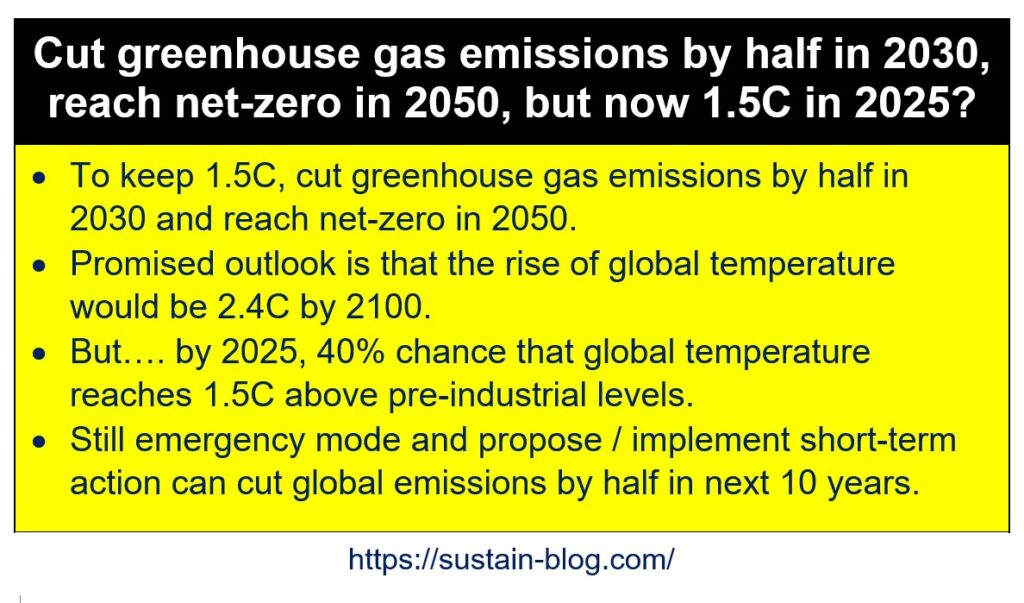
Global warming is best suited for contexts where carbon‑budgeting, emissions trading, or temperature‑targeted agreements (e.g., the Paris Agreement’s 1.5 °C goal) are the primary drivers. Climate change is more appropriate for regional planning that must address sea‑level rise, shifting agricultural zones, or increased frequency of extreme weather events. For example, a coastal city planning flood defenses would benefit from a climate‑change lens, while a national government designing a carbon‑tax scheme would focus on global warming.
Limitations
Global warming’s narrow temperature focus can overlook crucial non‑thermal impacts, leading to under‑preparedness for floods, droughts, or ecosystem shifts. Climate change’s breadth introduces complexity, making it harder to set clear, measurable targets and increasing the risk of policy dilution. Both frameworks suffer from data uncertainties in emission inventories and climate projections, and both can be constrained by political resistance and funding gaps.
Final Decision Framework
- Choose Global Warming when: the objective is to set quantitative carbon‑reduction targets, implement market‑based mechanisms, or communicate a single, easily understood metric.
- Choose Climate Change when: planning for long‑term adaptation, assessing multi‑sectoral risks, or integrating biodiversity and water‑security considerations.
- Consider a combined approach when: both mitigation and adaptation are required, such as national climate‑action plans that include emission cuts and resilience investments.
- Verify locally: examine regional emission sources, climate projections, and resource availability to determine which framing aligns with local policy goals.
Conclusion
Global warming provides a clear, temperature‑centric pathway for carbon mitigation, while climate change offers a comprehensive view that incorporates adaptation and ecosystem impacts. The central trade‑off is between specificity and breadth. For carbon‑focused policies, global warming is the stronger guide; for resilience‑oriented planning, climate change is more useful. The greatest uncertainty remains the accuracy of regional climate projections, which can shift the balance between the two frameworks.
Frequently Asked Questions
Which term is more useful for setting carbon‑reduction targets?
Global warming is more useful for carbon‑reduction targets because it concentrates on temperature rise driven directly by CO₂ emissions, allowing clear, quantifiable goals such as a 1.5 °C limit.
Which concept captures broader environmental impacts like sea‑level rise and biodiversity loss?
Climate change captures broader impacts because it includes changes in precipitation, sea‑level rise, extreme weather, and ecosystem responses, going beyond temperature alone.
Does focusing on global warming underestimate land‑use implications?
Yes, focusing only on global warming tends to underestimate land‑use implications, as it typically counts only carbon‑intensive activities, whereas climate‑change assessments also consider land‑use changes that affect albedo, water cycles, and habitats.
Which framework tends to involve higher overall costs?
The climate‑change framework generally involves higher overall costs because it adds adaptation measures, ecosystem restoration, and infrastructure upgrades to the mitigation expenses counted under global warming.
When should a combined approach be used?
A combined approach is advisable when both mitigation and adaptation are needed, such as national climate‑action plans that aim to cut emissions while also building resilience to rising sea levels and extreme weather.





Leave a Comment