
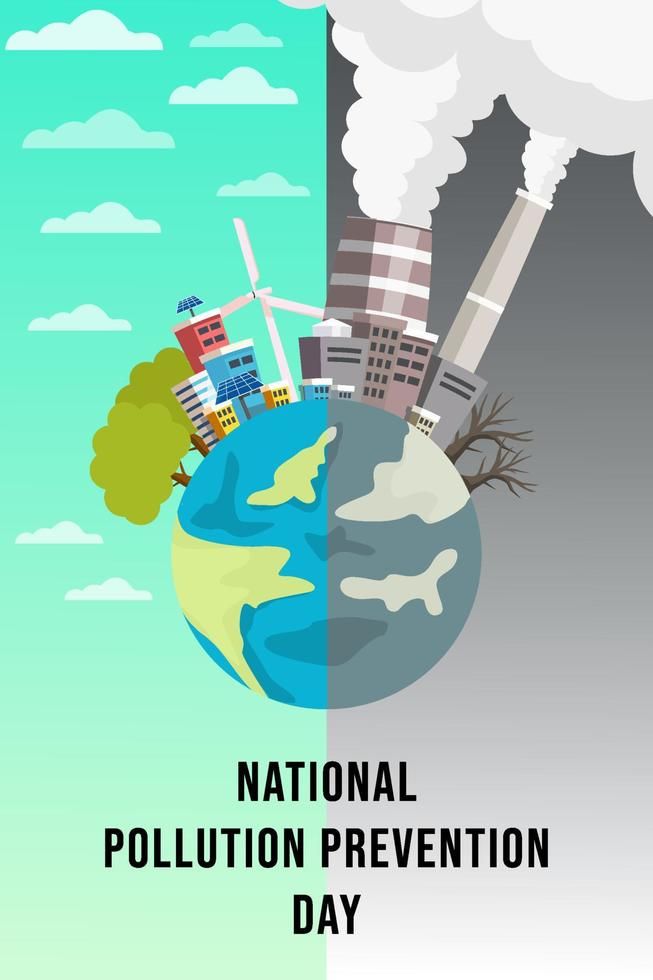
Air pollution prevention relies on climate‑smart strategies—renewable energy, clean transport, stricter regulations, and community action—to cut harmful emissions, protect health, and build resilient ecosystems.
Quick Answer
Air pollution prevention means applying evidence‑based, climate‑smart measures that reduce the release of particulate matter, nitrogen oxides, ozone precursors, and volatile organic compounds. By shifting to renewable electricity, electrified transport, enforcing emission standards, and empowering local monitoring, societies can lower ambient concentrations of pollutants that cause respiratory and cardiovascular disease. While uncertainties remain about the exact pace of technology adoption and regional implementation, the consensus among major assessments is that these actions will substantially improve air quality and public health.
Key Takeaways
- Renewable energy and electrified transport are the most effective levers for cutting emissions at source.
- Stringent industrial emission standards, backed by monitoring, drive measurable air‑quality improvements.
- Urban green infrastructure (trees, green roofs) provides co‑benefits of pollutant capture and heat mitigation.
- Community‑based sensor networks increase transparency and empower local advocacy.
- Equitable policies are essential because low‑income and minority groups face higher exposure.
What Is Air Pollution Prevention: Climate‑Smart Solutions That Work?
Air pollution prevention encompasses policies, technologies, and behaviors that stop harmful pollutants from entering the atmosphere in the first place. “Climate‑smart” emphasizes solutions that simultaneously address greenhouse‑gas emissions, aligning air‑quality goals with climate mitigation. The scope includes energy generation, transportation, industry, agriculture, and urban design, but excludes downstream remediation such as indoor air filters, which treat exposure rather than prevent emissions.
How Does It Work?
1. Decarbonising Energy Supply
Solar photovoltaic panels and wind turbines convert sunlight or wind into electricity without combustion, eliminating the primary source of sulfur dioxide (SO₂) and fine particulate matter (PM₂.5) from coal‑fired power plants. Grid‑scale storage and demand‑response technologies ensure reliability, allowing displaced fossil generation to be replaced without gaps.
2. Electrifying Mobility
Electric buses, trucks, and passenger cars replace internal‑combustion engines that emit nitrogen oxides (NOₓ) and volatile organic compounds (VOCs). When charged from clean grids, the lifecycle emissions drop dramatically, reducing both local ozone formation and global warming potential.
3. Strengthening Emission Standards
Regulatory caps on stack emissions for power plants, cement kilns, and metal smelters force the adoption of best‑available control technologies (e.g., selective catalytic reduction for NOₓ, electrostatic precipitators for PM). Compliance monitoring, often via continuous emission monitoring systems (CEMS), ensures accountability.
4. Enhancing Urban Green Infrastructure
Trees and vegetation intercept airborne particles, absorb NO₂, and release oxygen. Green roofs and street trees also mitigate the urban heat island effect, which can exacerbate ozone formation.
5. Enabling Community Monitoring
Low‑cost sensors placed by citizens create hyper‑local data streams that reveal pollution hotspots, inform targeted interventions, and increase public pressure for cleaner policies.
What Does the Evidence Show?
Long‑term monitoring by the World Health Organization (WHO) indicates that cities adopting renewable energy mixes have seen average PM₂.5 reductions of 10‑15 % over the past two decades. A 2022 systematic review of electric‑bus pilots in Europe and Asia reported NOₓ declines of 30‑45 % relative to diesel fleets. The Intergovernmental Panel on Climate Change (IPCC) 2021 assessment links stringent industrial standards to a 25 % drop in SO₂ emissions globally since 2000. Field studies in New York City demonstrate that street‑level tree canopies can remove up to 0.5 µg m⁻³ of PM₂.5 per 100 m of canopy width. Together, these lines of evidence support the conclusion that climate‑smart interventions produce measurable air‑quality benefits.
Main Causes or Drivers
Direct Sources
- Combustion of coal, oil, and natural gas for electricity and heat.
- Internal‑combustion vehicle exhaust.
- Industrial processes such as cement production and metal refining.
- Agricultural activities that release ammonia (NH₃) and methane (CH₄) precursors.
Underlying Drivers
- Urbanisation and rising energy demand.
- Inadequate regulatory enforcement.
- Economic incentives that favour fossil‑fuel subsidies.
- Lack of affordable clean‑technology alternatives in low‑income regions.
Environmental and Human Impacts
Environmental Impacts
Elevated PM₂.5 and ozone damage vegetation, reduce crop yields, and accelerate ecosystem acidification. Acid rain, driven by SO₂ and NOₓ, harms freshwater bodies and soils, impairing biodiversity. Climate‑active pollutants also contribute to radiative forcing, linking air quality to global warming.
Human Health and Social Impacts
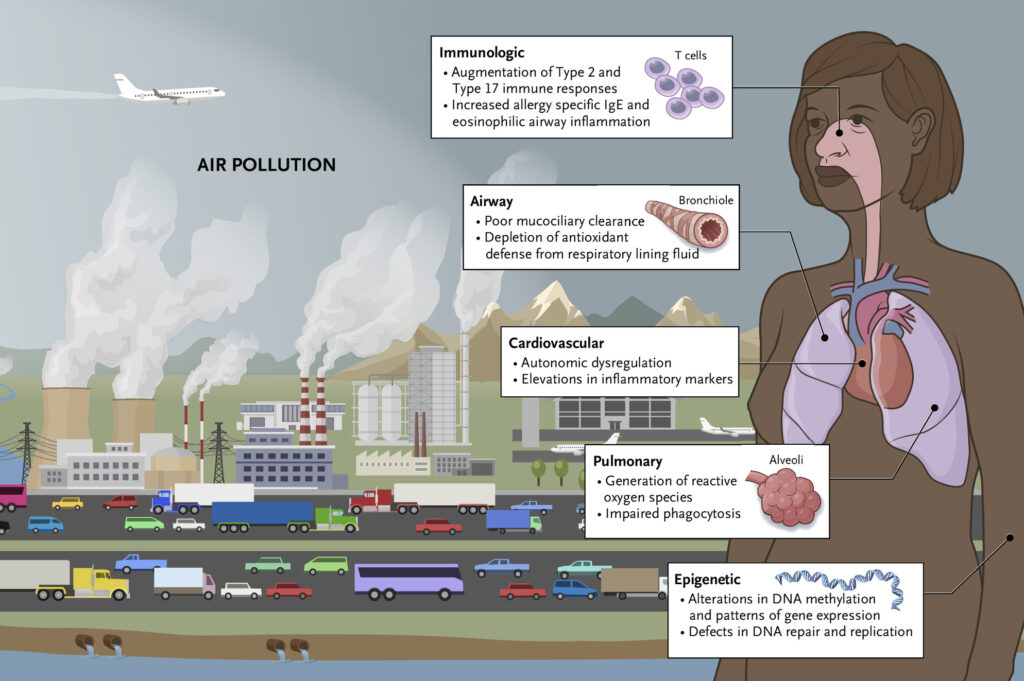
Exposure to fine particles and NO₂ is associated with increased rates of asthma, chronic obstructive pulmonary disease, and ischemic heart disease, according to WHO’s Global Burden of Disease estimates (2021). Children, the elderly, and outdoor workers experience the greatest risk. Poor air quality also reduces labour productivity and imposes economic costs estimated at 2‑5 % of GDP in heavily polluted regions.
Economic and Infrastructure Impacts
Air‑quality violations can trigger costly fines, necessitate retrofits, and depress tourism. Conversely, investments in clean energy generate jobs; the International Renewable Energy Agency (IRENA) reported 12 million renewable‑energy jobs worldwide in 2020.
Regional Differences
In South‑East Asia, rapid industrialisation and limited vehicle emission standards lead to some of the highest ambient PM₂.5 levels (>80 µg m⁻³) recorded by the WHO. European Union cities, benefitting from the Ambient Air Quality Directive, typically stay below 25 µg m⁻³. In the United States, the Clean Air Act has driven a 40 % decline in SO₂ emissions since the 1990s, yet wildfire smoke increasingly contributes to seasonal PM spikes in the Western states. These patterns illustrate how governance, economic structure, and climate interact to shape local air‑quality outcomes.
What Scientists Know With High Confidence
- Combustion of fossil fuels is the dominant source of PM₂.5, NOₓ, SO₂, and VOCs in most urban areas.
- Renewable electricity and electrified transport substantially lower emissions when the electricity grid is low‑carbon.
- Stringent, enforceable emission standards produce rapid, measurable improvements in ambient air quality.
- Children, the elderly, and people with pre‑existing cardiovascular or respiratory conditions are disproportionately vulnerable to air‑pollution health effects.
What Remains Uncertain
Key gaps include the long‑term health impacts of ultrafine particles (<0.1 µm) that are not regularly monitored, and the effectiveness of emerging low‑cost sensor networks in influencing policy. Additionally, the interaction between climate‑change‑driven wildfires and urban air quality is still being quantified, especially for future emission scenarios.
Common Misconceptions
Misconception: “Tree planting alone can solve urban air‑pollution problems.”
Reality: Trees provide measurable pollutant capture, but their impact is limited to specific locations and cannot replace source‑level emission reductions.
Misconception: “Electric vehicles emit no pollutants.”
Reality: EVs produce zero tailpipe emissions, yet upstream emissions depend on the electricity mix; clean grids are essential for full climate‑smart benefits.
Misconception: “Air‑quality regulations hurt the economy.”
Reality: While compliance costs exist, numerous studies (e.g., EPA’s Benefits and Costs of the Clean Air Act) show net economic gains from reduced healthcare costs and increased worker productivity.
Solutions and Limitations
Effective responses fall into three categories:
- Prevention: Renewable energy, electrified transport, and strict industrial standards directly cut emissions. Limitations include high upfront capital costs and the need for grid modernization.
- Mitigation: Urban greening and demand‑side management lower exposure but cannot offset major source emissions.
- Monitoring & Governance: Continuous emission monitoring, public sensor networks, and transparent reporting enable enforcement. Challenges involve data quality assurance and ensuring equitable access to monitoring tools.
What Individuals, Communities, and Governments Can Do
What Individuals Can Do
- Choose public transit, car‑pooling, or electric vehicles when feasible.
- Reduce home energy use—upgrade insulation, install efficient appliances, and switch to green electricity tariffs.
- Support local air‑quality monitoring projects by hosting sensors or sharing data.
- Advocate for clean‑energy policies through voting, petitions, or community meetings.
What Communities and Organizations Can Do
- Develop bike lanes and pedestrian‑friendly streets to lower vehicle traffic.
- Implement tree‑planting programs targeting high‑traffic corridors.
- Partner with universities or NGOs to run citizen‑science air‑monitoring campaigns.
- Adopt green procurement standards that favour low‑emission suppliers.
What Governments Can Do
- Set and enforce ambitious emission limits for power plants, industry, and vehicles, aligned with WHO guidelines.
- Provide incentives—tax credits, subsidies, or low‑interest loans—for renewable‑energy installations and electric‑vehicle purchases.
- Invest in grid infrastructure to accommodate variable renewable generation.
- Mandate public reporting of real‑time air‑quality data and ensure vulnerable communities receive targeted mitigation resources.
Looking Ahead
Air‑pollution prevention that is climate‑smart rests on a clear scientific foundation: cutting fossil‑fuel combustion, electrifying transport, enforcing robust standards, and empowering communities with data. While uncertainties remain—particularly around emerging pollutants and climate‑fire interactions—the weight of evidence confirms that coordinated action will yield cleaner air, healthier populations, and a more resilient planet.
Frequently Asked Questions
What is meant by air‑pollution prevention?
Air‑pollution prevention refers to actions that stop harmful pollutants from being released into the atmosphere, such as using renewable energy, electrifying transport, and enforcing emission standards.
How do electric vehicles improve air quality?
Electric vehicles produce zero tailpipe emissions, reducing nitrogen oxides and particulate matter in cities; their full benefit depends on the electricity grid being low‑carbon.
Which pollutants are most harmful to human health?
Fine particulate matter (PM2.5) and nitrogen dioxide (NO2) are strongly linked to respiratory diseases, heart disease, and premature death, especially in children, the elderly, and outdoor workers.
What role do trees play in reducing air pollution?
Trees capture airborne particles and absorb nitrogen dioxide, providing localized air‑quality improvements, but they cannot replace source‑level emission cuts.
What actions can local governments take to improve air quality?
Local governments can set stricter emission limits, incentivize renewable energy and electric vehicles, expand bike lanes, and support community air‑monitoring programs to target high‑pollution areas.








Leave a Comment