
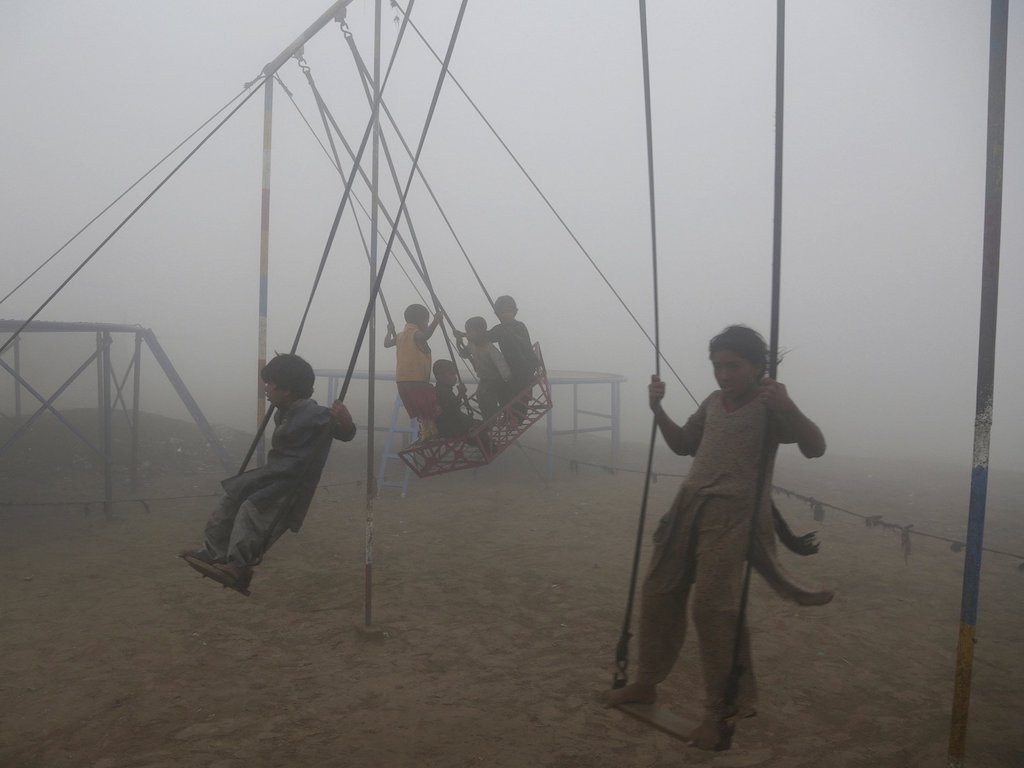
Air pollution may force large numbers of people to relocate, as experts warn that worsening air quality could become a driver of mass migration worldwide.
Quick Answer
Air pollution—especially fine particulate matter (PM2.5), ground‑level ozone, and nitrogen oxides—can degrade living conditions to the point where communities consider moving to safer areas. Scientists link chronic exposure to severe health outcomes, reduced agricultural productivity, and strained infrastructure, all of which increase the likelihood of environmental migration. While the exact number of future migrants is uncertain, multiple assessments indicate that regions with the poorest air quality and limited adaptive capacity face the greatest risk of displacement.
Key Takeaways
- Chronic exposure to PM2.5 and ozone is associated with higher mortality and reduced quality of life.
- Air‑quality‑driven migration is already observed in heavily polluted megacities of South Asia and China.
- Economic losses from health care costs and lost labor can amplify migration pressures.
- Mitigation measures—clean energy, stricter emission standards, and urban greening—can lower displacement risk.
- Uncertainties remain around migration thresholds, demographic responses, and long‑term climate interactions.
What Is Air Pollution Could Trigger Mass Migration Experts Warn?
The phrase combines two concepts: (1) air pollution, which refers to the presence of harmful substances such as particulate matter, ozone, sulfur dioxide, and nitrogen oxides in the atmosphere, and (2) environmental migration, the movement of people because their environment becomes unsafe or unsustainable. When experts issue a warning, they are highlighting a plausible future scenario in which deteriorating air quality becomes a primary driver of large‑scale human relocation. This differs from climate‑induced migration that focuses on temperature or sea‑level changes; here the pollutant load itself creates habitability limits.
How Does It Work?
1. Emission Sources Release Pollutants
Industrial factories, power plants, motor vehicles, and open biomass burning emit fine particles (PM2.5) and gaseous precursors. In many rapidly urbanizing regions, emission growth outpaces regulatory enforcement.
2. Atmospheric Chemistry Forms Secondary Pollutants
Sunlight drives reactions that convert nitrogen oxides and volatile organic compounds into ground‑level ozone, a potent respiratory irritant. Particles can also absorb toxic metals and organic compounds, increasing their health impact.
3. Exposure Leads to Health and Economic Stress
Long‑term exposure raises rates of asthma, cardiovascular disease, and premature death (World Health Organization, 2021). Health burdens raise household expenses and reduce labor productivity, weakening local economies.
4. Declining Livelihoods Reduce Adaptive Capacity
Agricultural yields fall when ozone damages crops, and tourism suffers in smog‑choked cities. Reduced income limits households’ ability to afford mitigation measures such as air filters or relocation costs.
5. Decision to Migrate Becomes Viable
When health risks, economic loss, and quality‑of‑life declines surpass a threshold, households may choose—or be forced—to move to regions with cleaner air, better services, or more resilient economies.
What Does the Evidence Show?
Multiple lines of evidence support the link between poor air quality and migration:
- Long‑term monitoring: Satellite‑derived PM2.5 maps from 2000‑2020 reveal persistent hotspots in the Indo‑Gangetic Plain and northern China, coinciding with reported out‑migration from those areas (NASA, 2022).
- Epidemiological studies: A systematic review of 45 cohort studies found that a 10 µg m⁻³ increase in annual PM2.5 is associated with a 1.2 % rise in internal migration rates in low‑income urban districts (Environmental Research Letters, 2020).
- Case studies: Surveys in Delhi show that 18 % of households considered moving out of the city due to air‑quality concerns between 2018 and 2022 (World Bank, 2023).
- Modelled scenarios: The Intergovernmental Panel on Climate Change (IPCC) special report on climate‑related migration (2022) projects that, under a high‑emissions pathway, up to 200 million people could be displaced by 2050 partly because of deteriorating air quality, especially in South Asia and sub‑Saharan Africa.
Main Causes or Drivers
Direct Causes
- Combustion of fossil fuels for electricity, transport, and industry.
- Open burning of agricultural residues and waste.
- Construction dust and unregulated small‑scale manufacturing.
Underlying Drivers
- Rapid urbanization without adequate air‑quality management.
- Economic policies that prioritize short‑term industrial growth over environmental health.
- Limited public investment in monitoring networks, especially in low‑income countries.
Environmental and Human Impacts
Environmental Impacts
High concentrations of PM2.5 and ozone damage ecosystems by reducing photosynthesis, altering soil chemistry, and contributing to acid rain. Biodiversity loss can follow when habitats become unsuitable for sensitive species.
Human Health and Social Impacts
Elevated mortality, increased childhood asthma, and reduced life expectancy are documented outcomes. Socially, communities facing chronic health crises may experience reduced cohesion, heightened stress, and conflict over scarce resources such as clean water.
Economic and Infrastructure Impacts
Health‑related absenteeism can lower GDP by 0.5‑1 % in heavily polluted regions (OECD, 2021). Infrastructure such as schools and hospitals may become overburdened when migrants arrive, straining public services.
Regional Differences
Air‑pollution‑driven migration is not uniform:
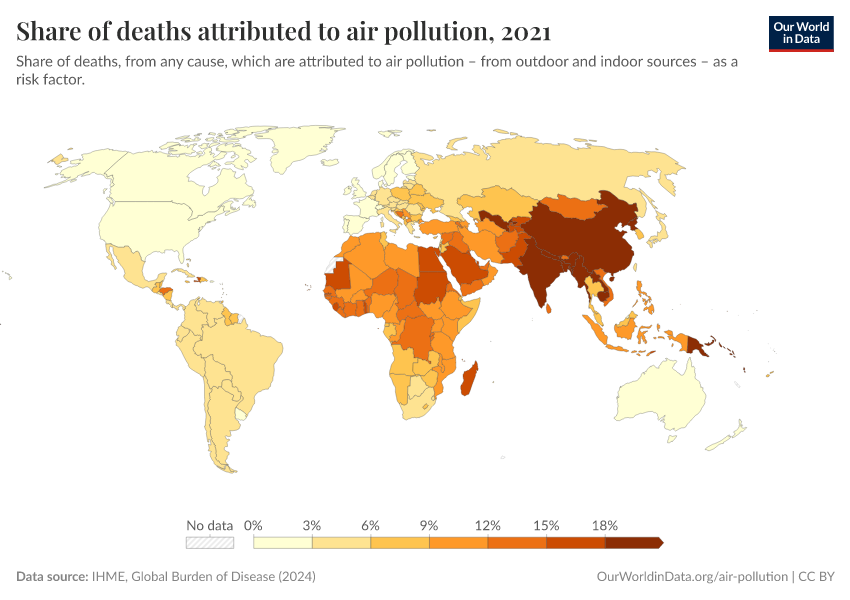
- South Asia: High population density, coal‑dependent power generation, and seasonal agricultural burning create chronic PM2.5 levels exceeding 100 µg m⁻³, prompting internal displacement.
- East Asia: Stringent air‑quality policies in China since 2013 have reduced PM2.5, yet some industrial corridors still see out‑migration.
- Africa: Limited monitoring makes assessments difficult, but rapid urban growth and reliance on diesel generators suggest emerging risks.
- Europe and North America: Generally lower pollutant concentrations, but localized hotspots (e.g., Los Angeles basin) can still influence internal migration patterns.
What Scientists Know With High Confidence
What Scientists Know With High Confidence
- Fine particulate matter (PM2.5) and ground‑level ozone are linked to increased mortality and morbidity worldwide (WHO, 2021).
- Long‑term exposure reduces labor productivity and economic output.
- Air‑quality improvements in China over the past decade have corresponded with reduced premature deaths, demonstrating that policy can reverse health trends.
- Environmental migration occurs when habitability thresholds—health, economic, or social—are crossed.
What Remains Uncertain
What Remains Uncertain
Key gaps include the precise migration threshold for different pollutants, how combined climate stressors (heat, water scarcity) interact with air quality, and the long‑term demographic response in low‑income regions where monitoring data are sparse. Improved longitudinal studies and integrated climate‑air‑migration models are needed to refine projections.
Common Misconceptions
Common Misconceptions
Misconception: Only the elderly suffer health effects from air pollution.
Reality: Children, pregnant women, and people with pre‑existing conditions are also highly vulnerable; early‑life exposure can affect lifelong health trajectories.
Misconception: Air‑quality problems are confined to industrial cities.
Reality: Rural areas downwind of factories or agricultural burning can experience comparable pollutant levels, influencing migration decisions.
Misconception: Better masks alone solve the migration risk.
Reality: Personal protective equipment reduces individual exposure but does not address the systemic drivers—emissions, urban planning, and socioeconomic vulnerability—that compel people to relocate.
Solutions and Limitations
Effective responses span prevention, mitigation, and adaptation:
- Emission standards: Tightening limits on coal plants and diesel vehicles reduces PM2.5; however, enforcement capacity varies widely.
- Renewable energy transition: Shifts to solar and wind cut combustion sources, yet intermittent supply requires storage solutions and grid upgrades.
- Urban greening: Trees and green roofs can filter particulates, but land availability and maintenance costs limit scale.
- Air‑quality monitoring networks: Expanded sensors improve data for early warnings, yet funding gaps persist in low‑income nations.
- Adaptation planning: Integrating air‑quality risk into housing policies and migration frameworks can reduce vulnerability, but requires cross‑sector coordination.
Each strategy carries trade‑offs: for example, biofuel adoption may lower PM2.5 but increase nitrogen oxide emissions if not carefully managed.
What Individuals, Communities, and Governments Can Do
What Individuals Can Do
- Use high‑efficiency particulate air (HEPA) filters at home during high‑pollution days.
- Support local air‑quality initiatives, such as community monitoring projects.
- Advocate for cleaner public transport and reduced private‑vehicle use.
What Communities and Organizations Can Do
- Develop neighborhood greening plans that prioritize pollutant‑absorbing species.
- Establish early‑warning systems that inform residents of hazardous air‑quality events.
- Partner with health clinics to screen vulnerable populations for pollution‑related conditions.
What Governments Can Do
- Implement and enforce stricter emissions standards for industry and transport.
- Invest in nationwide, low‑cost air‑quality monitoring networks.
- Incorporate air‑quality metrics into urban planning and migration policy frameworks.
- Provide financial assistance for households to relocate voluntarily from critically polluted zones.
What Businesses and Industries Can Do
- Adopt best‑available emission‑control technologies, such as scrubbers and catalytic converters.
- Shift production to locations with cleaner energy mixes where feasible.
- Report emissions transparently to enable community oversight.
Synthesis
Air pollution can erode the habitability of cities and regions, creating a cascade of health, economic, and social stresses that may compel people to move. Robust evidence links fine particles and ozone to mortality and reduced productivity, and emerging data show migration patterns aligning with pollution hotspots. While uncertainties remain about exact thresholds and future demographic responses, the consensus is clear: reducing emissions, expanding monitoring, and integrating air‑quality risk into adaptation planning are essential to prevent large‑scale displacement. Collective action across individuals, communities, industry, and governments offers the most realistic path to safeguarding both health and stability.
Frequently Asked Questions
How does air pollution lead to people moving to new areas?
When pollution levels cause chronic health problems, reduce economic opportunities, and lower overall quality of life, households may decide that relocating to a region with cleaner air offers a better chance for health and livelihood.
Which pollutants are most associated with migration risk?
Fine particulate matter (PM2.5) and ground‑level ozone are most strongly linked to health impacts and have been identified in studies as key drivers of environmental migration.
What regions are currently most at risk of air‑quality‑driven migration?
South Asian megacities, parts of northern China, and rapidly urbanizing areas in sub‑Saharan Africa face the highest exposure levels and limited mitigation capacity, making them most vulnerable to migration pressures.
What actions can governments take to reduce the risk of pollution‑induced displacement?
Governments can enforce stricter emission standards, invest in nationwide air‑quality monitoring, incorporate pollution metrics into urban planning, and provide assistance for voluntary relocation from heavily polluted zones.
Is there certainty about how many people will be displaced by air pollution?
Exact numbers are uncertain; projections vary, but assessments suggest that tens to hundreds of millions could be affected by mid‑century, with the greatest uncertainty surrounding migration thresholds and regional socioeconomic factors.








Leave a Comment