
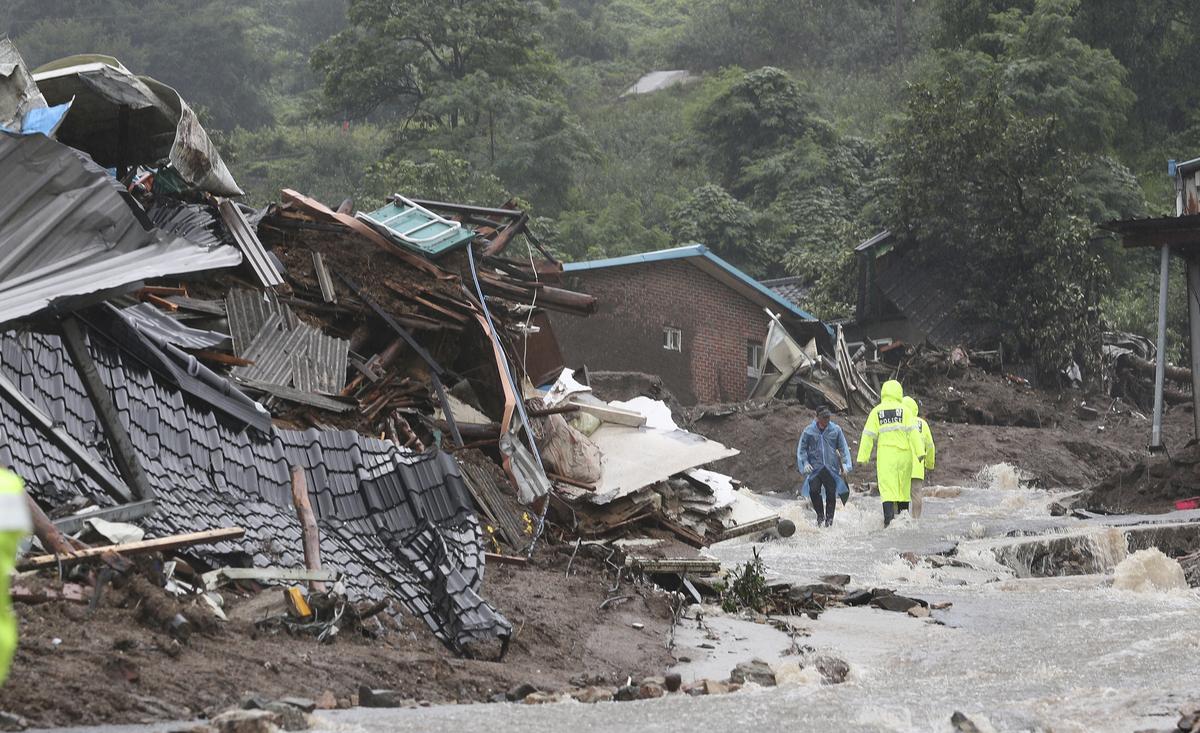
Torrential rains in South Korea caused deadly landslides that killed 19 people, highlighting how a warming climate, altered land use, and limited drainage combine to increase extreme‑weather risk.
Quick Answer
Torrential rain events in South Korea are intense, short‑duration downpours that overwhelm natural and engineered drainage, triggering landslides and flash floods. Warmer sea surface temperatures and a more moisture‑laden atmosphere—trends documented in Intergovernmental Panel on Climate Change (IPCC) assessments—amplify the frequency and intensity of such storms. The immediate impact includes loss of life, damage to infrastructure, and ecosystem disturbance, while the broader implication is a growing vulnerability of densely populated, rapidly urbanizing regions to climate‑driven hazards. Uncertainty remains about the exact contribution of climate change to any single event, but the overall trend toward more extreme precipitation is well supported.
Key Takeaways
- Heavy rainfall over the Korean peninsula is becoming more frequent as atmospheric moisture increases.
- Urban expansion reduces natural infiltration, raising runoff and landslide risk.
- Recent landslides killed 19 people and damaged homes, roads, and agricultural fields.
- Scientific consensus links rising sea‑surface temperatures to intensified precipitation.
- Adaptation measures such as green infrastructure and early‑warning systems can reduce future losses.
What Is Torrential Rains Kill 19 in South Korea Amid Extreme Weather?
The phrase refers to a specific extreme‑weather episode in which unusually heavy rain fell over parts of South Korea, triggering landslides that resulted in 19 fatalities. “Torrential rain” is defined by meteorological agencies as rainfall exceeding 50 mm hour⁻¹, often accompanied by strong convection. The event is not a unique, isolated incident; rather, it exemplifies a pattern of increasingly severe precipitation events observed across the temperate‑monsoon climate zone of the Korean Peninsula.
How Does It Work?
Atmospheric Moisture and Storm Formation
Warmer ocean waters increase evaporation, adding moisture to the lower troposphere. When this moist air encounters the Korean peninsula’s mountainous terrain, it is forced upward, cooling and condensing into heavy rain clouds. The process can be summarized in three steps:
- Sea‑surface temperature rise → higher atmospheric water‑vapor content.
- Moist air lifts over orographic barriers → rapid cooling.
- Condensation releases latent heat → intensifies upward motion, producing heavy downpours.
Runoff, Infiltration, and Landslide Triggering
Intense rain overwhelms soil infiltration capacity, generating surface runoff. In urbanized catchments, impervious surfaces (concrete, asphalt) prevent water from soaking into the ground, accelerating runoff into river channels and steep slopes. When pore‑water pressure within slope soils exceeds the shear strength of the material, the slope fails, resulting in a landslide.
What Does the Evidence Show?
Long‑term climate monitoring by the Korea Meteorological Administration shows a 12 % increase in annual heavy‑rain days (≥50 mm) between 1980 and 2020. The IPCC’s Sixth Assessment Report (2021) cites multiple peer‑reviewed studies confirming that a warmer climate intensifies the hydrological cycle, leading to more extreme precipitation globally, including East Asia. Attribution research using high‑resolution climate models indicates that the probability of a >100 mm hour⁻¹ event in the Korean summer has roughly doubled since the 1970s, a change consistent with observed sea‑surface warming in the western Pacific.
Main Causes or Drivers
Direct Causes
- Short‑duration, high‑intensity rainfall exceeding local drainage capacity.
- Steep topography that accelerates runoff and concentrates erosive forces.
Underlying Drivers
- Rising sea‑surface temperatures in the East China Sea and Yellow Sea.
- Increased atmospheric water‑vapor content as described by the Clausius‑Clapeyron relationship.
Contributing Human Factors
- Urban sprawl that replaces permeable soils with impervious surfaces.
- Insufficient slope‑stabilization measures and outdated drainage infrastructure.
- Deforestation and land‑use change that reduce root reinforcement on hillsides.
Environmental and Human Impacts
Environmental Impacts
Landslides strip vegetation, increase soil erosion, and deposit large sediment loads into rivers, degrading water quality and harming aquatic habitats. Sediment‑laden flows can smother fish spawning grounds and alter river morphology, with downstream effects on biodiversity.
Human Health and Social Impacts
Beyond the 19 confirmed deaths, dozens of residents suffered injuries, displacement, and psychological trauma. Flooded homes increase exposure to water‑borne pathogens, while loss of farmland threatens food security for affected families.
Economic and Infrastructure Impacts
Road closures, damage to bridges, and interruption of power lines resulted in estimated direct economic losses of several hundred million US dollars, according to a post‑event assessment by the Ministry of Land, Infrastructure and Transport (2024). Recovery costs are amplified in low‑income neighborhoods where housing quality is lower and insurance coverage limited.
Regional Differences
The Korean peninsula’s western coast experiences more frequent summer monsoon rains, whereas the eastern side is influenced by winter‑time Siberian cold fronts. The recent deadly event occurred in the southern Gyeongsang region, an area with a combination of steep hills and rapidly expanding cities. Similar mechanisms operate in other temperate‑monsoon regions, such as Japan’s Kanto plain, but local land‑use policies and topography determine the severity of impacts.
What Scientists Know With High Confidence
- Global warming increases atmospheric moisture, leading to more intense precipitation events.
- Urbanization reduces natural infiltration and heightens runoff, raising flood and landslide risk.
- Heavy rainfall is a primary trigger for slope failures in mountainous terrain.
- Climate models consistently project an upward trend in extreme‑rain frequency for East Asia under all Representative Concentration Pathways.
What Remains Uncertain
Attribution of a single landslide event to climate change remains statistically challenging because natural variability and local factors also play roles. Uncertainties include the precise contribution of land‑use change versus atmospheric warming to runoff volumes, and the effectiveness of specific green‑infrastructure interventions under future climate scenarios. Improved high‑resolution monitoring and coupled climate‑hydrology modeling are needed to narrow these gaps.
Common Misconceptions
Misconception: The landslides were caused solely by poor construction.
Reality: While inadequate engineering can exacerbate vulnerability, the immediate trigger was an extreme rain event whose intensity is linked to broader climate trends and natural topography.
Misconception: Heavy rain is a “once‑in‑a‑century” event.
Reality: Statistical analyses show a rising frequency of >50 mm hour⁻¹ rainfalls in South Korea over the past four decades, indicating that such events are becoming more common.
Misconception: Individual actions, such as recycling, can prevent landslides.
Reality: Individual lifestyle changes reduce greenhouse‑gas emissions over the long term but do not directly stop a specific storm; systemic adaptation and mitigation are required.
Solutions and Limitations
Effective responses combine mitigation (reducing greenhouse‑gas emissions) with adaptation (reducing exposure). Key strategies include:
- Green infrastructure: Permeable pavements, rain gardens, and restored wetlands increase infiltration, but require land availability and maintenance funding.
- Slope stabilization: Retaining walls and bio‑engineered vegetation can reduce landslide risk, yet are costly for extensive hill‑side networks.
- Early‑warning systems: Radar‑based precipitation forecasts give communities minutes to hours of lead time; however, warning effectiveness depends on public awareness and evacuation capacity.
- Emission reductions: Transitioning to low‑carbon energy lowers long‑term warming, but benefits accrue over decades, not immediately.
What Individuals, Communities, and Governments Can Do
What Individuals Can Do
- Support local reforestation and watershed restoration projects.
- Adopt water‑saving practices to reduce demand on storm‑water systems.
- Participate in community emergency‑preparedness drills.
What Communities and Organizations Can Do
- Implement zoning regulations that limit construction on high‑risk slopes.
- Invest in permeable surface retrofits for public spaces.
- Develop and maintain real‑time river‑level monitoring networks.
What Governments Can Do
- Integrate climate‑risk assessments into all infrastructure planning.
- Allocate funding for large‑scale green‑infrastructure and slope‑reinforcement programs.
- Enforce building codes that require adequate drainage and landslide‑risk analysis.
- Promote regional climate‑action plans aligned with the Paris Agreement.
Synthesis
The tragic loss of 19 lives in South Korea underscores how intensified rainfall, urban expansion, and vulnerable topography intersect to heighten disaster risk. Scientific evidence firmly links a warming climate to more extreme precipitation, while local land‑use decisions determine the severity of outcomes. High‑confidence findings guide adaptation—such as green infrastructure and early‑warning systems—yet uncertainties about exact attribution and optimal design persist. Coordinated action across individuals, communities, and governments offers the most realistic path to reducing future loss while the world works toward long‑term mitigation of climate change.
Frequently Asked Questions
What caused the landslides that killed 19 people in South Korea?
The landslides were triggered by torrential rain that exceeded local drainage capacity, causing rapid runoff that destabilized steep slopes. The intense precipitation, linked to a warmer, moisture‑rich atmosphere, directly led to slope failure and the resulting casualties.
How does climate change increase the intensity of rain in South Korea?
Climate change raises sea‑surface temperatures, which adds water vapor to the atmosphere. According to the Clausius‑Clapeyron relationship, a 1 °C warming can increase atmospheric moisture by about 7 %, allowing storms to produce heavier downpours such as those observed in recent Korean events.
What are the main environmental impacts of these extreme‑rain events?
Extreme rain strips vegetation, accelerates soil erosion, and deposits large amounts of sediment into rivers. This sedimentation degrades water quality, smothers fish spawning grounds, and alters river morphology, leading to reduced biodiversity and ecosystem function.
Which adaptation measures can reduce landslide risk in urban areas?
Key measures include green infrastructure (permeable pavements, rain gardens, wetlands) to increase infiltration, slope‑stabilization works such as retaining walls and vegetation, and early‑warning systems that provide timely alerts for evacuation and emergency response.
How can individuals contribute to reducing future extreme‑weather risks?
Individuals can support reforestation and watershed projects, conserve water to lessen storm‑water loads, and engage in community emergency‑preparedness activities. While personal actions alone cannot stop a storm, they complement broader mitigation and adaptation efforts.






Leave a Comment