
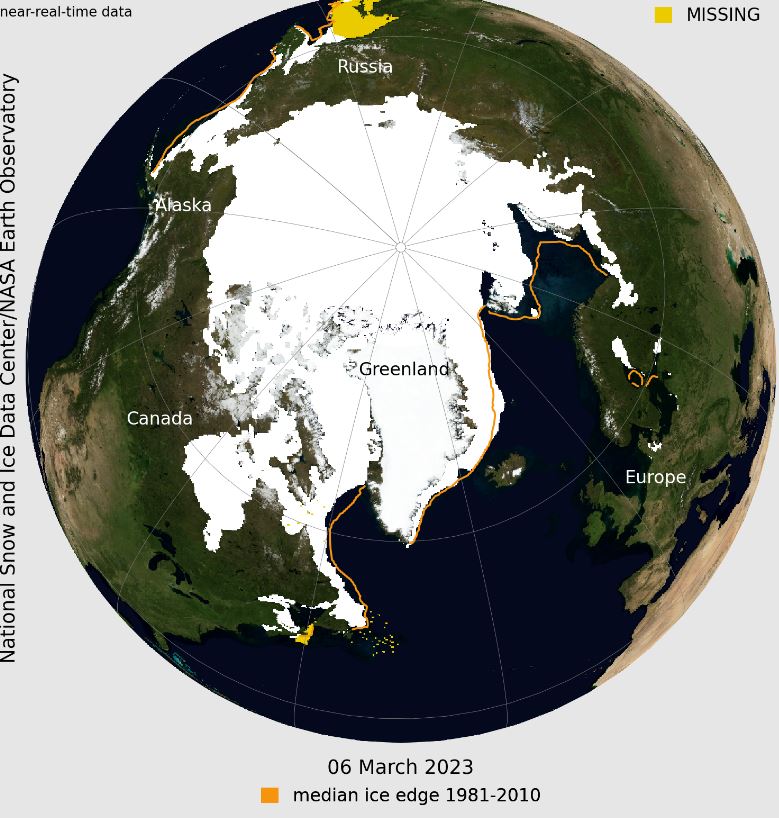
Arctic sea ice reaches its annual maximum each spring, but the 2023 peak was well below long‑term averages, highlighting accelerating loss and its global climate implications.
Quick Answer
The annual maximum of Arctic sea ice is the greatest extent of frozen seawater each spring, measured by satellite. In 2023 the peak covered about 13.2 million km², roughly 1.3 million km² less than the 1981‑2010 average. This shortfall reflects persistent warming, especially Arctic amplification, which thins and fragments the ice. The reduced ice limits the region’s ability to reflect sunlight, reinforcing warming and affecting weather patterns worldwide. While the seasonal cycle still produces a maximum, the long‑term trend is a steady decline, and scientific confidence is high that human‑driven greenhouse gases are the primary driver.
Key Takeaways
- Arctic sea‑ice maximum extent in 2023 was ~13.2 million km², below the multi‑decadal average.
- Greenhouse‑gas‑induced warming, amplified in the Arctic, is the dominant cause of declining ice.
- Loss of ice weakens the Earth’s albedo, accelerates regional warming, and influences mid‑latitude weather.
- Indigenous communities, wildlife, and global climate systems are increasingly vulnerable.
- Mitigation, enhanced monitoring, and community‑led adaptation are essential but face trade‑offs.
What Is Arctic Sea Ice Reaches Annual Maximum as Concerns Grow Over Polar Loss?
Each year the Arctic experiences a seasonal cycle in which sea ice expands during the cold months and contracts in summer. The point of greatest coverage—typically in late February or early March—is called the “annual maximum.” It is recorded using passive‑microwave satellite sensors, most notably by the National Snow and Ice Data Center (NSIDC). The term differs from “minimum extent,” which occurs in September, and from “ice thickness,” which measures the vertical dimension of the ice sheet. Monitoring the maximum provides a baseline for evaluating how much ice is lost each year and for detecting long‑term trends.
How Does It Work?
Seasonal Freeze‑Thaw Cycle
During winter, reduced solar radiation and cold atmospheric temperatures cause seawater to lose heat to the overlying air. When the surface temperature drops below the freezing point of saltwater (≈‑1.8 °C), ice crystals form and coalesce into a continuous cover. The growth continues until the ocean surface reaches a thermal equilibrium, producing the maximum extent.
Energy Balance and Albedo
Sea ice has a high albedo—reflecting 50‑70 % of incoming solar radiation—whereas open water absorbs 80‑90 %. The larger the ice cover, the more sunlight is reflected back to space, helping to cool the planet. When ice shrinks, more heat is absorbed, creating a positive feedback known as the “ice‑albedo feedback.”
Feedback Loops Specific to the Arctic
- Arctic amplification: The Arctic warms twice as fast as the global average because of feedbacks like reduced albedo and changes in atmospheric heat transport.
- Ice‑thickness feedback: Thinner ice melts more quickly, shortening the time needed to reach the maximum extent each year.
- Cloud‑cover changes: Less ice can alter cloud formation, further influencing radiation balance.
What Does the Evidence Show?
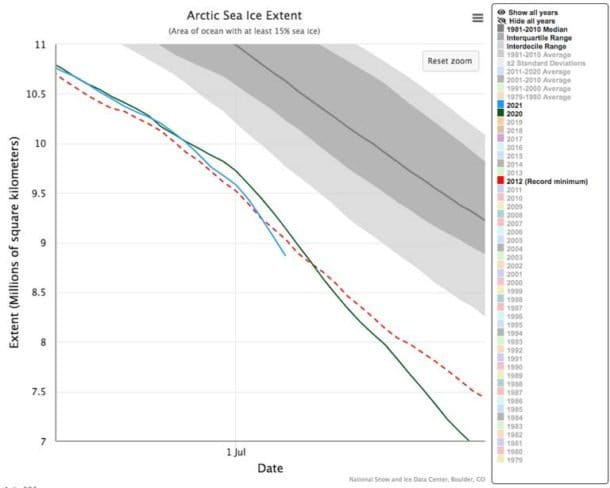
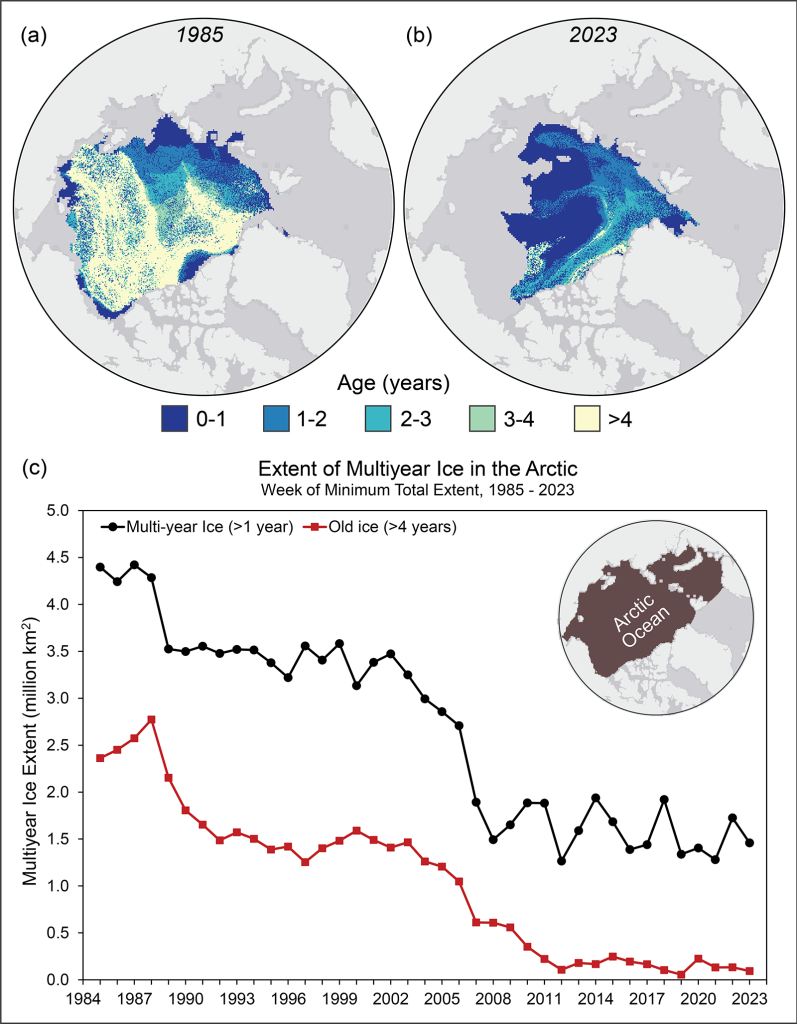
Long‑term satellite records dating back to 1979, compiled by NSIDC, reveal a clear downward trend in both maximum and minimum extents. The 2023 maximum of 13.2 million km² was 9 % lower than the 1981‑2010 average of 14.5 million km² (NSIDC, 2024). Peer‑reviewed assessments from the Intergovernmental Panel on Climate Change (IPCC) AR6 (2021) confirm that the Arctic sea‑ice area has declined at a rate of about 13 % per decade during the satellite era. Field observations in the central Arctic also show a reduction in average ice thickness from ~3 m in the 1980s to <2 m today, indicating a thinner, more vulnerable ice pack.
Main Causes or Drivers
Greenhouse‑Gas Forcing
Rising concentrations of CO₂, CH₄, and N₂O trap long‑wave radiation, raising global temperatures. The Arctic’s climate sensitivity is heightened because a large portion of the incoming energy is absorbed by the ocean once ice retreats.
Arctic Amplification
Feedback mechanisms—especially the ice‑albedo feedback—double the warming rate relative to the global mean. This amplification accelerates sea‑ice loss, making each subsequent maximum smaller.
Natural Variability
Atmospheric patterns such as the Arctic Oscillation can temporarily increase or decrease ice extent, but the long‑term trend remains downward. Natural variability does not explain the persistent multi‑decadal decline.
Environmental and Human Impacts
Environmental Impacts
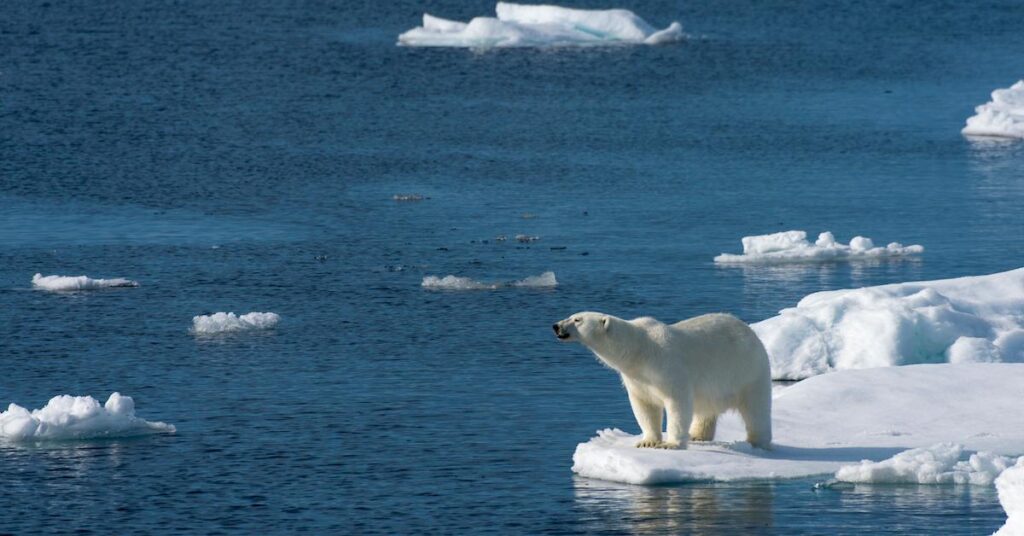
- Marine ecosystems: Species that rely on ice, such as polar bears (Ursus maritimus) and ringed seals (Pusa hispida), face reduced hunting platforms and breeding habitat.
- Permafrost thaw: Less ice leads to warmer coastal waters, which can destabilize permafrost, releasing methane—a potent greenhouse gas.
- Ocean circulation: Freshwater input from melting ice can alter the Atlantic Meridional Overturning Circulation, potentially affecting global heat transport.
Human Health and Social Impacts
Indigenous peoples, including the Inuit, depend on sea‑ice platforms for hunting, travel, and cultural practices. Diminishing ice threatens food security, increases travel risk, and erodes cultural heritage. Changes in Arctic weather also influence extreme events—such as heatwaves—in temperate regions, indirectly affecting public health.
Economic and Infrastructure Impacts
Reduced ice opens new shipping routes (e.g., the Northwest Passage), offering economic opportunities but also raising risks of oil spills, invasive species, and geopolitical tension. Coastal infrastructure built on permafrost may experience accelerated settlement, leading to costly repairs.
Regional Differences
Ice loss is not uniform. The Barents Sea, influenced by warm Atlantic inflow, has experienced the most rapid decline, while the central Arctic basin retains thicker multi‑year ice longer. Coastal communities in Alaska, Canada, and Russia experience differing exposure levels based on local sea‑ice trends and dependence on ice‑based activities.
What Scientists Know With High Confidence
- Arctic sea‑ice extent has been decreasing for more than four decades.
- Human‑induced greenhouse‑gas emissions are the primary driver of the decline.
- Loss of sea ice reduces planetary albedo, reinforcing warming.
- Thinner ice is more susceptible to rapid melt during spring.
What Remains Uncertain
Key uncertainties involve the exact magnitude of future ice loss under different emission pathways, the timing and strength of potential feedbacks from methane release, and how regional oceanic currents will respond to increasing freshwater input. Improved observations and higher‑resolution climate models are needed to narrow these gaps.
Common Misconceptions
Misconception: “The Arctic still reaches a maximum each year, so the ice is not really disappearing.”
Reality: A seasonal maximum still occurs, but the absolute area is now consistently lower than historical averages, indicating a net loss of ice volume over time.
Misconception: “Sea‑ice loss is only a local Arctic problem.”
Reality: Reduced Arctic albedo influences global temperature patterns, weather extremes, and ocean circulation, affecting regions far from the pole.
Misconception: “Melting ice will soon create a completely ice‑free Arctic summer, ending all impacts.”
Reality: Projections show a high likelihood of a largely ice‑free Arctic in summer by mid‑century under high‑emission scenarios, but the transition will be gradual, with impacts already evident during the current multi‑year decline.
Solutions and Limitations
Mitigation—rapidly cutting CO₂ and other greenhouse gases—is the most direct way to curb further ice loss, but political and economic challenges can slow implementation. Adaptation strategies, such as strengthening coastal infrastructure and supporting Indigenous knowledge systems, can reduce vulnerability but do not address the root cause. Conservation measures, including protected marine areas, help preserve critical habitats but are limited by the overarching loss of ice cover. Enhanced monitoring (satellite, autonomous underwater vehicles) improves early‑warning capacity but requires sustained funding.
What Individuals, Communities, and Governments Can Do
What Individuals Can Do
- Reduce personal carbon footprints by using energy‑efficient appliances, minimizing air travel, and supporting renewable energy policies.
- Donate to or volunteer with organizations that aid Arctic Indigenous communities and support scientific monitoring.
What Communities and Organizations Can Do
- Integrate traditional ecological knowledge with scientific data to develop locally appropriate adaptation plans.
- Invest in resilient infrastructure that accounts for permafrost thaw and increased coastal erosion.
What Governments Can Do
- Implement and strengthen nationally determined contributions (NDCs) under the Paris Agreement to limit warming to 1.5 °C.
- Fund long‑term Arctic observation networks and support open‑access data platforms.
- Enforce regulations on shipping, oil exploration, and fisheries to minimize environmental risks in newly accessible waters.
Synthesis
The 2023 Arctic sea‑ice maximum illustrates a clear, measurable symptom of a warming planet: each spring the ice cover is smaller than it was a generation ago. Robust observations and assessments confirm that greenhouse‑gas emissions are the primary driver, while feedbacks such as reduced albedo accelerate the process. Impacts span ecosystems, Indigenous livelihoods, and global climate patterns. Although uncertainties remain regarding the pace of future change, the scientific consensus provides a solid basis for decisive mitigation, targeted adaptation, and sustained monitoring. Collective action now determines whether the Arctic’s icy mantle can be preserved for future generations.
Frequently Asked Questions
What defines the annual maximum of Arctic sea ice?
The annual maximum is the greatest extent of frozen seawater each spring, measured by satellite sensors such as those operated by the National Snow and Ice Data Center. It marks the peak coverage before the summer melt begins.
Why was the 2023 Arctic sea‑ice maximum lower than the long‑term average?
In 2023 the maximum covered about 13.2 million km², roughly 1.3 million km² less than the 1981‑2010 average. The shortfall reflects ongoing warming, especially Arctic amplification, which thins the ice and reduces the area that can form each year.
How does reduced sea ice affect global weather patterns?
Less Arctic ice lowers the planet’s albedo, allowing more solar energy to be absorbed by the ocean. This extra heat can alter atmospheric circulation, influencing jet streams and increasing the likelihood of extreme weather events at mid‑latitudes.
Which species are most threatened by declining Arctic sea ice?
Species that depend on ice for hunting or breeding, such as polar bears, ringed seals, and certain ice‑associated algae, face habitat loss. The reduction of ice also threatens the broader marine food web that relies on these keystone species.
What actions can governments take to protect Arctic sea ice?
Governments can strengthen climate commitments under the Paris Agreement, fund long‑term Arctic monitoring networks, enforce regulations on new shipping routes and resource extraction, and support Indigenous communities in adapting to changing ice conditions.





Leave a Comment