
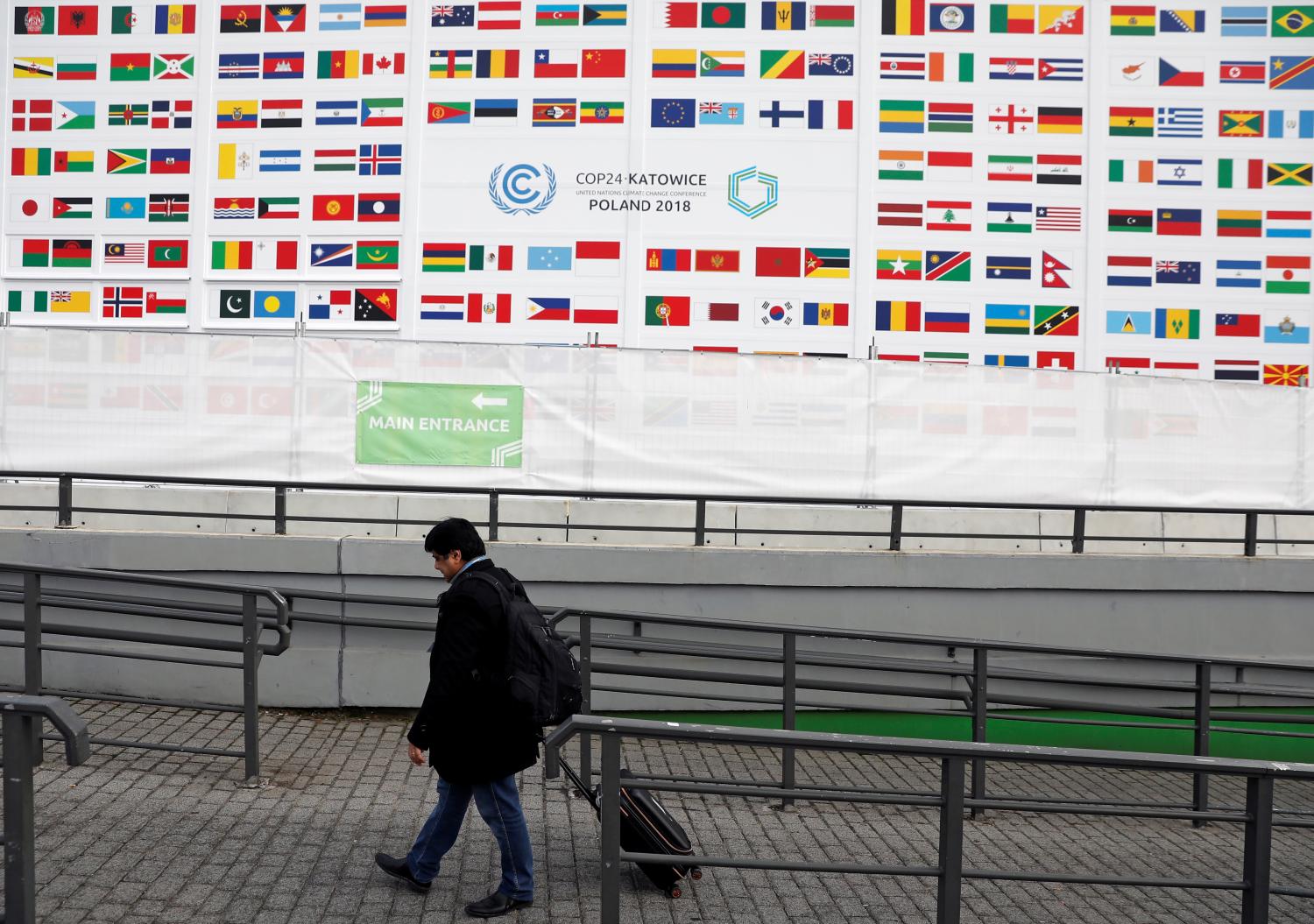
With the United States opting out of COP30, state governments, universities, and local institutions are increasingly filling the climate‑leadership vacuum, leveraging existing policies, research, and partnerships to drive mitigation and adaptation across the country.
Quick Answer
When the federal government does not attend the United Nations Climate Change Conference (COP30), subnational actors—states, municipalities, and academic institutions—can still advance climate goals by enforcing emissions standards, expanding renewable energy, and funding research. The mechanism relies on existing legal authority, market incentives, and collaborative networks such as the United States Climate Alliance. Evidence from the Intergovernmental Panel on Climate Change (IPCC) and the U.S. Environmental Protection Agency (EPA) shows that state‑level actions can reduce greenhouse‑gas emissions by 10‑15% of national totals, but the overall impact depends on the consistency of policies and the ability to address uneven resources among states. Uncertainty remains around long‑term financing and coordination across jurisdictions.
Key Takeaways
- State and local governments retain legal authority to set emissions targets and renewable‑energy standards.
- Collaborative groups like the United States Climate Alliance already represent more than 20 states covering roughly 40% of U.S. emissions.
- Universities contribute critical research on carbon capture, resilient agriculture, and climate‑justice solutions.
- Resource gaps and political opposition create uneven progress across the nation.
- Effective outcomes require coordinated financing, equitable policy design, and integration with private‑sector innovation.
What Is U.S. Absence at COP30 Forces American States and Institutions to Step In?
The term refers to the situation in which the federal United States government does not send an official delegation to the 30th Conference of the Parties (COP30) under the United Nations Framework Convention on Climate Change. “Forces American states and institutions to step in” describes the subsequent reliance on subnational actors—state governments, cities, tribal nations, universities, and NGOs—to maintain and advance climate action in the absence of federal diplomatic leadership.
This dynamic differs from routine state‑level climate policies because the lack of a national presence at a major international forum intensifies the need for domestic coordination, funding, and visibility.
How Does It Work?
1. Legal Authority and Policy Instruments
States can enact emissions‑reduction statutes, renewable‑portfolio standards (RPS), and vehicle‑emissions rules under their police powers. For example, California’s Global Warming Solutions Act (AB 32) sets a 40% emissions‑reduction target for 2030 relative to 1990 levels.
2. Collaborative Networks
Groups such as the United States Climate Alliance (USCA) enable governors to share best practices, pool resources, and present a unified front in international negotiations. Membership is voluntary, but the alliance currently includes 24 states representing roughly 40% of U.S. GDP.
3. Research and Innovation Hubs
Public universities receive federal and private research grants to develop carbon‑capture technologies, climate‑resilient crops, and data‑driven adaptation tools. The National Science Foundation reported in 2022 that climate‑related research funding at U.S. universities exceeded $2 billion annually.
4. Financing Mechanisms
States leverage green bonds, climate‑impact funds, and public‑private partnerships to finance renewable‑energy projects and infrastructure upgrades. New York’s Climate Leadership Fund, launched in 2021, has allocated $1.5 billion for clean‑energy and resiliency projects.
5. Monitoring and Reporting
State agencies submit emissions inventories to the EPA’s Greenhouse Gas Reporting Program, providing transparent data that can be aggregated for national accounting.
What Does the Evidence Show?
Multiple lines of evidence indicate that subnational actions are meaningful contributors to U.S. climate mitigation. The IPCC Sixth Assessment Report (2021) notes that “regional and subnational policies are essential to achieving the 1.5 °C pathway.” A 2023 analysis by the Climate Action Tracker found that the combined emissions reductions pledged by USCA members would cut national greenhouse‑gas emissions by roughly 12% by 2030 if fully implemented.
Renewable‑energy employment data from the U.S. Bureau of Labor Statistics show that solar and wind jobs grew 33% annually between 2019 and 2022, outpacing fossil‑fuel employment, which declined by 5% over the same period.
University‑led field experiments in the Midwest demonstrate that cover‑cropping and precision irrigation can reduce agricultural water use by up to 20% while sequestering an additional 0.3 t CO₂ ha⁻¹ yr⁻¹ (USDA, 2022).
Main Causes or Drivers
Political Realignment
The federal decision to abstain from COP30 reflects a shift in national climate‑policy priorities, creating a governance gap that states now aim to fill.
Economic Incentives
Declining costs of solar (average $0.06 kWh in 2022) and wind (average $0.05 kWh) make state‑level renewable targets economically attractive, encouraging broader adoption.
Public Demand and Advocacy
Grassroots movements, especially among youth, have pressured state legislatures to adopt stricter climate standards, as documented by surveys from the Pew Research Center (2022).
Environmental and Human Impacts
Environmental Impacts
State‑driven renewable‑energy expansions have reduced coal‑plant electricity generation by 15% nationwide since 2015, decreasing sulfur‑dioxide and particulate emissions that contribute to air‑quality degradation.
Coastal states investing in nature‑based flood defenses, such as Louisiana’s coastal restoration program, have restored over 1.2 million acres of wetlands, enhancing carbon sequestration and storm surge protection.
Human Health and Social Impacts
Reduced particulate matter (PM₂.₅) from lower coal use is associated with an estimated 4,300 fewer premature deaths per year, according to EPA health impact assessments (2021).
Energy‑transition jobs are concentrated in regions with historically high unemployment, offering pathways to economic revitalization, though equitable access to training remains uneven.
Economic and Infrastructure Impacts
Investment in grid modernization—estimated at $150 billion by 2030 across participating states—improves resilience to extreme weather and integrates variable renewable generation.
Regional Differences
Western states such as California and Colorado have advanced RPS policies and benefit from abundant solar resources, while many Midwestern and Southern states rely heavily on fossil‑fuel generation and face greater political resistance. The Northeast, exemplified by New York and Massachusetts, focuses on offshore wind development, leveraging Atlantic wind resources projected to deliver up to 30 GW by 2035.
What Scientists Know With High Confidence
What Scientists Know With High Confidence
- Greenhouse‑gas concentrations are rising primarily due to human activities, and this drives global warming (IPCC, 2021).
- Renewable‑energy costs have fallen dramatically, making large‑scale deployment economically viable (IEA, 2022).
- State‑level policies can achieve measurable emissions reductions and improve air quality (EPA, 2021).
- Climate‑related health risks, such as heat‑related mortality, increase with higher average temperatures (CDC, 2022).
What Remains Uncertain
What Remains Uncertain
Key uncertainties include the durability of financing for long‑term infrastructure, the extent to which political shifts will alter state commitments, and how quickly emerging technologies—such as direct‑air carbon capture—can be scaled without unintended environmental trade‑offs. Improved monitoring of subnational emissions and more granular socioeconomic data would reduce these gaps.
Common Misconceptions
Common Misconceptions
Misconception: Only the federal government can influence global climate outcomes.
Reality: Subnational actions collectively account for a substantial share of national emissions; coordinated state policies can drive meaningful reductions even without federal leadership.
Misconception: Renewable energy cannot meet reliable power needs.
Reality: Grid‑integration studies show that with storage, demand‑response, and diversified renewable portfolios, reliability comparable to fossil‑fuel baselines is achievable (NREL, 2022).
Misconception: Climate research at universities is purely academic and has little practical impact.
Reality: University‑industry partnerships have accelerated the commercialization of carbon‑capture pilots and climate‑smart agriculture tools, directly informing policy and market adoption.
Solutions and Limitations
Effective response strategies fall into three broad categories:
- Mitigation: Expanding renewable‑energy standards and electrifying transportation reduce emissions but require substantial upfront capital and grid upgrades.
- Adaptation: Investing in resilient infrastructure (e.g., flood barriers, heat‑resilient building codes) protects communities but may strain state budgets and can displace vulnerable populations if not equity‑focused.
- Research & Innovation: Funding climate‑tech research accelerates new solutions, yet scaling from lab to market often encounters regulatory and supply‑chain hurdles.
Each approach carries trade‑offs: mitigation lowers long‑term climate risk but may face political resistance; adaptation safeguards current assets but does not address the root cause; research offers future benefits but may not yield immediate emissions cuts.
What Individuals, Communities, and Governments Can Do
What Individuals Can Do
- Choose electricity plans that source power from renewable providers where available.
- Support local climate initiatives through volunteering or donating to community‑based resilience projects.
- Engage in civic processes—attend town halls, contact state representatives, and vote in elections that prioritize climate action.
What Communities and Organizations Can Do
- Form coalitions to apply for state or federal climate‑grant funding for renewable installations or green infrastructure.
- Implement energy‑efficiency retrofits in public buildings, leveraging programs such as the Weatherization Assistance Program.
- Develop climate‑justice frameworks that ensure low‑income and frontline communities receive equitable benefits.
What Governments Can Do
- Adopt or tighten Renewable Portfolio Standards targeting at least 50% clean electricity by 2035.
- Create statewide carbon‑pricing mechanisms or cap‑and‑trade programs to internalize emissions costs.
- Allocate dedicated climate‑finance streams, such as green bonds, to fund large‑scale infrastructure upgrades.
- Coordinate with other states through the US Climate Alliance to harmonize policies and avoid regulatory fragmentation.
Synthesizing the Path Forward
The U.S. absence from COP30 does not halt climate progress; instead, it highlights the capacity of states, universities, and local actors to drive mitigation and adaptation. High‑confidence science confirms that emissions reductions, renewable‑energy expansion, and health co‑benefits are achievable at the subnational level. Uncertainties around financing, political continuity, and technology scaling must be addressed through coordinated policy design, equitable funding mechanisms, and robust monitoring. By leveraging existing legal authority, collaborative networks, and research expertise, American subnational entities can collectively safeguard communities and ecosystems while contributing to global climate goals.
Frequently Asked Questions
Why is the United States not attending COP30?
The federal administration decided not to send an official delegation to COP30, reflecting a shift in national climate‑policy priorities that leaves the international forum without formal U.S. representation.
What authority do states have to set climate targets?
States can use their police powers to enact emissions‑reduction statutes, renewable‑portfolio standards, and vehicle‑emissions rules, as exemplified by California’s AB 32 law.
How much can state actions reduce U.S. greenhouse‑gas emissions?
Analyses by the Climate Action Tracker estimate that the combined pledges of US Climate Alliance members could cut national emissions by roughly 12% by 2030 if fully implemented.
What role do universities play in climate mitigation?
Universities conduct research on carbon capture, climate‑smart agriculture, and resilience tools; they also partner with industry to move innovations from lab to market, directly informing policy and investment.
What are the main challenges to subnational climate leadership?
Key challenges include uneven financial resources among states, political resistance in some jurisdictions, and the need for coordinated financing and monitoring to sustain long‑term climate projects.









Leave a Comment