
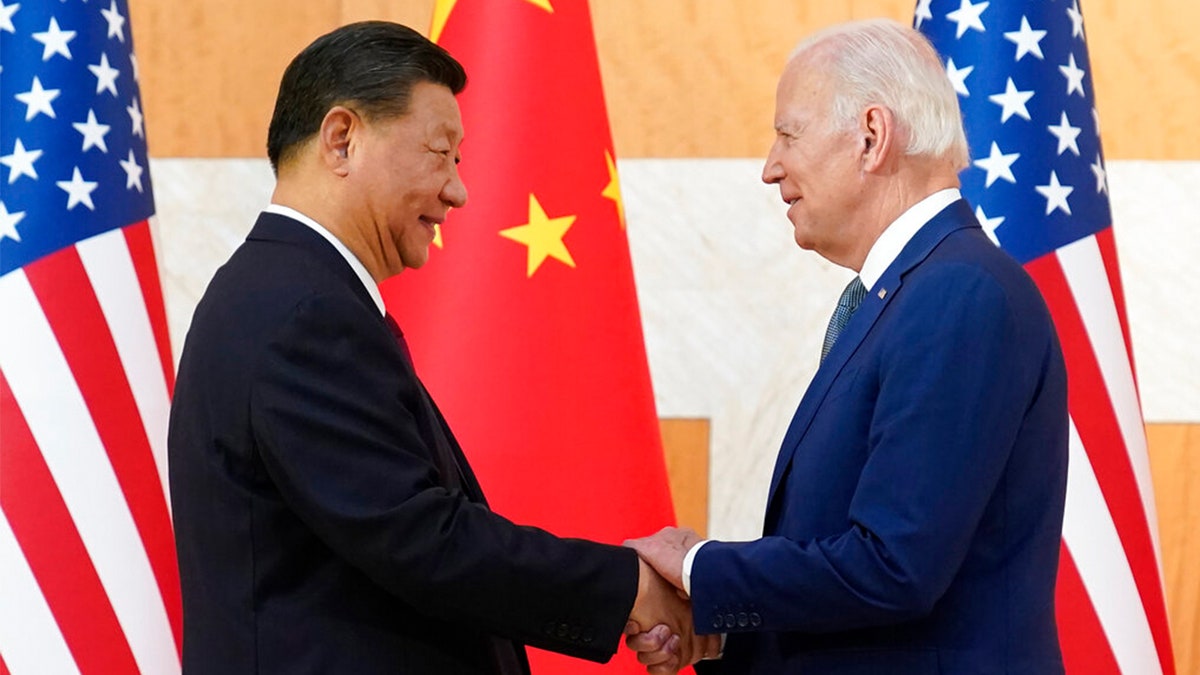
Understanding how U.S. President Joe Biden and Chinese President Xi Jinping can collaborate on climate action reveals the scientific, economic, and diplomatic pathways that could curb over 40% of global emissions.
Quick Answer
Biden–Xi climate cooperation refers to formal and informal joint efforts by the United States and China to reduce greenhouse‑gas emissions, share clean‑energy technology, and finance climate‑resilient development. The mechanism relies on bilateral dialogues, joint research programmes, and coordinated policy signals that encourage both countries to meet or exceed their pledged targets. Evidence from the Intergovernmental Panel on Climate Change (IPCC) and the International Energy Agency (IEA) shows that combined action by the two largest emitters could cut global warming risk by several tenths of a degree Celsius. However, political mistrust and differing economic priorities create uncertainty about the depth and durability of any agreement.
Key Takeaways
- The United States and China together account for roughly 42% of global CO₂ emissions (IEA, 2023).
- Joint technology development – especially in solar PV, wind, and battery storage – can lower renewable‑energy costs worldwide.
- Climate finance cooperation could mobilise tens of billions of dollars for adaptation in vulnerable developing nations.
- Transparency mechanisms, such as shared emissions‑reporting platforms, are essential to build trust.
- Uncertainties remain around policy alignment, intellectual‑property rules, and the impact of geopolitical tensions.
What Is Biden–Xi Climate Cooperation: Can the World’s Two Biggest Emitters Work Together??
Biden–Xi climate cooperation is a diplomatic framework that seeks to align the United States’ and China’s climate‑policy goals, technology roadmaps, and financing strategies. It differs from generic climate talks because it focuses on the two nations that together emit the largest share of carbon dioxide. The cooperation can take the form of high‑level summits, joint scientific workshops, co‑funded research centres, and coordinated statements at multilateral fora such as the United Nations Climate Change Conference (COP). The goal is to turn rivalry into a shared pathway toward the emissions reductions required to keep warming below 1.5 °C.
How Does It Work?
1. Bilateral Dialogue Platforms
Since 2021, the U.S. and China have held annual climate‑leadership meetings, usually hosted by the White House or the Ministry of Ecology and Environment. These meetings set joint priorities, exchange data, and identify pilot projects.
2. Joint Research and Development (R&D)
Both countries fund R&D through national laboratories, universities, and private firms. Collaborative projects focus on improving solar‑cell efficiency, scaling offshore wind, and developing next‑generation lithium‑ion and solid‑state batteries. Shared patents and open‑source data accelerate deployment.
3. Coordinated Climate Finance
A bilateral climate‑finance task force can pool resources from U.S. agencies (e.g., USAID, DOE) and Chinese institutions (e.g., the Green Development Fund) to create a joint adaptation fund for low‑income nations. Such a fund would target flood‑resilient infrastructure, drought‑tolerant agriculture, and early‑warning systems.
4. Transparency and Reporting
Joint monitoring platforms, built on satellite observations from NASA and China’s Gaofen series, enable real‑time verification of emissions inventories. Third‑party auditors from the United Nations Framework Convention on Climate Change (UNFCCC) can certify progress.
What Does the Evidence Show?
Long‑term monitoring by the National Oceanic and Atmospheric Administration (NOAA) and China’s Ministry of Ecology shows that emissions from the two nations have risen faster than any other pair of countries since 2000. Systematic reviews published in *Nature Energy* (2022) indicate that joint R&D could reduce solar‑module costs by up to 30 % within a decade. The IPCC Sixth Assessment Report (2021) states that limiting warming to 1.5 °C requires global net‑zero CO₂ emissions by 2050; the United States and China together would need to achieve net‑zero by 2045 to stay on track. Scenario modelling by the IEA (2023) finds that if the U.S. and China each cut emissions by 50 % relative to 2020 levels, global temperature rise would be limited to about 1.8 °C, a substantial improvement over business‑as‑usual pathways.
Main Causes or Drivers
Direct Causes
- Fossil‑fuel combustion for electricity, industry, and transport.
- Deforestation and land‑use change, especially in China’s inland regions and U.S. forest management practices.
Underlying Drivers
- Economic growth that prioritises energy‑intensive manufacturing.
- Policy incentives that have historically subsidised coal and oil.
- Technological gaps in storage, grid integration, and carbon‑capture deployment.
Environmental and Human Impacts
Environmental Impacts
Combined emissions drive higher concentrations of atmospheric CO₂, intensifying the greenhouse effect. This leads to faster sea‑level rise, more frequent extreme heatwaves, and shifts in precipitation patterns that threaten biodiversity in the Amazon, the Great Barrier Reef, and the Tibetan Plateau.
Human Health and Social Impacts
Air‑quality modeling by the World Health Organization (2022) links particulate matter from coal plants in both countries to an estimated 300,000 premature deaths annually worldwide. Climate‑related disasters disproportionately affect low‑income coastal communities, increasing displacement and food‑security risks.
Economic and Infrastructure Impacts
Infrastructure vulnerable to climate stress—such as ports in the Gulf of Mexico and riverine transport corridors in the Yangtze Delta—faces rising repair costs. Conversely, investment in renewable energy can create millions of jobs; the IEA estimates 11 million new jobs globally by 2030 if clean‑energy deployment accelerates.
Regional Differences
In the United States, emissions are concentrated in the power sector (approximately 30 % of national CO₂) and transportation (about 28 %). In China, heavy industry—including steel and cement—accounts for roughly 45 % of emissions. Climate impacts also differ: the U.S. Midwest experiences increased heat‑related mortality, while northern China faces heightened dust‑storm frequency due to desertification. Nonetheless, both regions share vulnerabilities to coastal flooding and wildfire intensity.
What Scientists Know With High Confidence
- Human activities, principally fossil‑fuel combustion, are the dominant driver of global warming (IPCC, 2021).
- The United States and China together emit over 40 % of global CO₂, making their joint action critical for any 1.5 °C pathway (IEA, 2023).
- Renewable‑energy costs have fallen dramatically; solar PV prices dropped by about 82 % between 2010 and 2020 (IRENA, 2021).
- Transparent, third‑party emissions reporting improves compliance and reduces the risk of “free‑riding.”
What Remains Uncertain
Key uncertainties include the pace at which China will phase out coal, the durability of U.S. policy after the 2024 election cycle, and how geopolitical flashpoints (e.g., Taiwan, the South China Sea) might disrupt cooperation. Data gaps in methane emissions from oil‑and‑gas operations in both countries also limit precise accounting. Further joint monitoring and scenario modelling are needed to narrow these gaps.
Common Misconceptions
Misconception: Climate cooperation between the U.S. and China would instantly solve the climate crisis.
Reality: Joint action can dramatically lower the probability of extreme warming, but it does not eliminate the need for broader global participation and long‑term systemic change.
Misconception: China already leads the world in clean‑energy, so the U.S. has little to learn.
Reality: While China dominates renewable‑manufacturing, the United States excels in high‑efficiency research, grid‑integration software, and venture‑capital‑driven innovation. Mutual learning is essential.
Misconception: Carbon‑capture and storage (CCS) is a silver bullet that makes coal use acceptable.
Reality: CCS remains costly and energy‑intensive; current deployment accounts for less than 0.1 % of global emissions. It should complement, not replace, rapid decarbonisation.
Solutions and Limitations
Effective responses combine mitigation, adaptation, and technology transfer. Mitigation strategies include expanding wind and solar capacity, phasing out unabated coal, and improving energy efficiency in buildings and industry. Adaptation measures focus on resilient infrastructure, climate‑smart agriculture, and early‑warning systems. Technology transfer can lower costs but may be limited by intellectual‑property disputes and supply‑chain constraints. Financial mechanisms such as green bonds can mobilise capital but require robust verification to avoid “green‑washing.”
What Individuals, Communities, and Governments Can Do
What Individuals Can Do
- Choose electricity plans that source from renewable utilities where available.
- Support policies that fund clean‑energy research through voting and civic engagement.
- Reduce personal carbon footprints by using public transit, adopting energy‑efficient appliances, and limiting air travel.
What Communities and Organizations Can Do
- Form city‑to‑city climate partnerships that mirror the bilateral framework, sharing best practices on heat‑wave response.
- Collaborate with local universities to host joint workshops on low‑carbon technologies.
- Develop community‑owned solar projects that benefit low‑income households.
What Governments Can Do
- Institutionalise annual climate dialogues at the ministerial level and bind them with measurable milestones.
- Offer joint grant programmes for clean‑energy pilots that require co‑leadership from U.S. and Chinese firms.
- Adopt compatible carbon‑pricing mechanisms to prevent “carbon leakage” and encourage emissions‑reducing investments.
Closing Synthesis
U.S.–China climate cooperation stands at the intersection of science, technology, and diplomacy. The evidence shows that joint action can shave tenths of a degree off projected warming, lower renewable‑energy costs, and mobilise vital finance for vulnerable nations. High‑confidence findings confirm the outsized impact of the two emitters, while uncertainties—particularly around policy continuity and geopolitical risk—remain. Realistic progress will depend on transparent reporting, shared R&D, and coordinated finance, complemented by strong domestic policies in both countries. If these pillars hold, the partnership could become a cornerstone of global climate governance, offering a pragmatic pathway toward a more stable climate future.
Frequently Asked Questions
What is meant by Biden–Xi climate cooperation?
Biden–Xi climate cooperation refers to formal and informal joint actions by the United States and China to cut greenhouse‑gas emissions, share clean‑energy technology, and coordinate climate finance through bilateral talks, research partnerships, and shared reporting mechanisms.
Why is collaboration between the U.S. and China crucial for global climate goals?
Together the two nations emit roughly 42 % of global CO₂. The Intergovernmental Panel on Climate Change says that limiting warming to 1.5 °C requires rapid reductions from these emitters; joint action can therefore lower the probability of extreme temperature rise by several tenths of a degree.
What evidence shows that joint R&D can lower renewable‑energy costs?
A systematic review in *Nature Energy* (2022) found that collaborative research between the U.S. and China could reduce solar‑module prices by up to 30 % within a decade, accelerating worldwide deployment of clean electricity.
What are the main uncertainties that could hinder U.S.–China climate cooperation?
Key uncertainties include the speed of China’s coal phase‑out, the durability of U.S. climate policy after upcoming elections, geopolitical tensions that could interrupt dialogue, and data gaps in methane emissions from oil‑and‑gas operations.
How can individuals contribute to the goals of U.S.–China climate cooperation?
Individuals can support the partnership by choosing renewable electricity, advocating for clean‑energy legislation, reducing travel emissions, and participating in community solar or energy‑efficiency projects that align with broader bilateral climate objectives.











Leave a Comment