
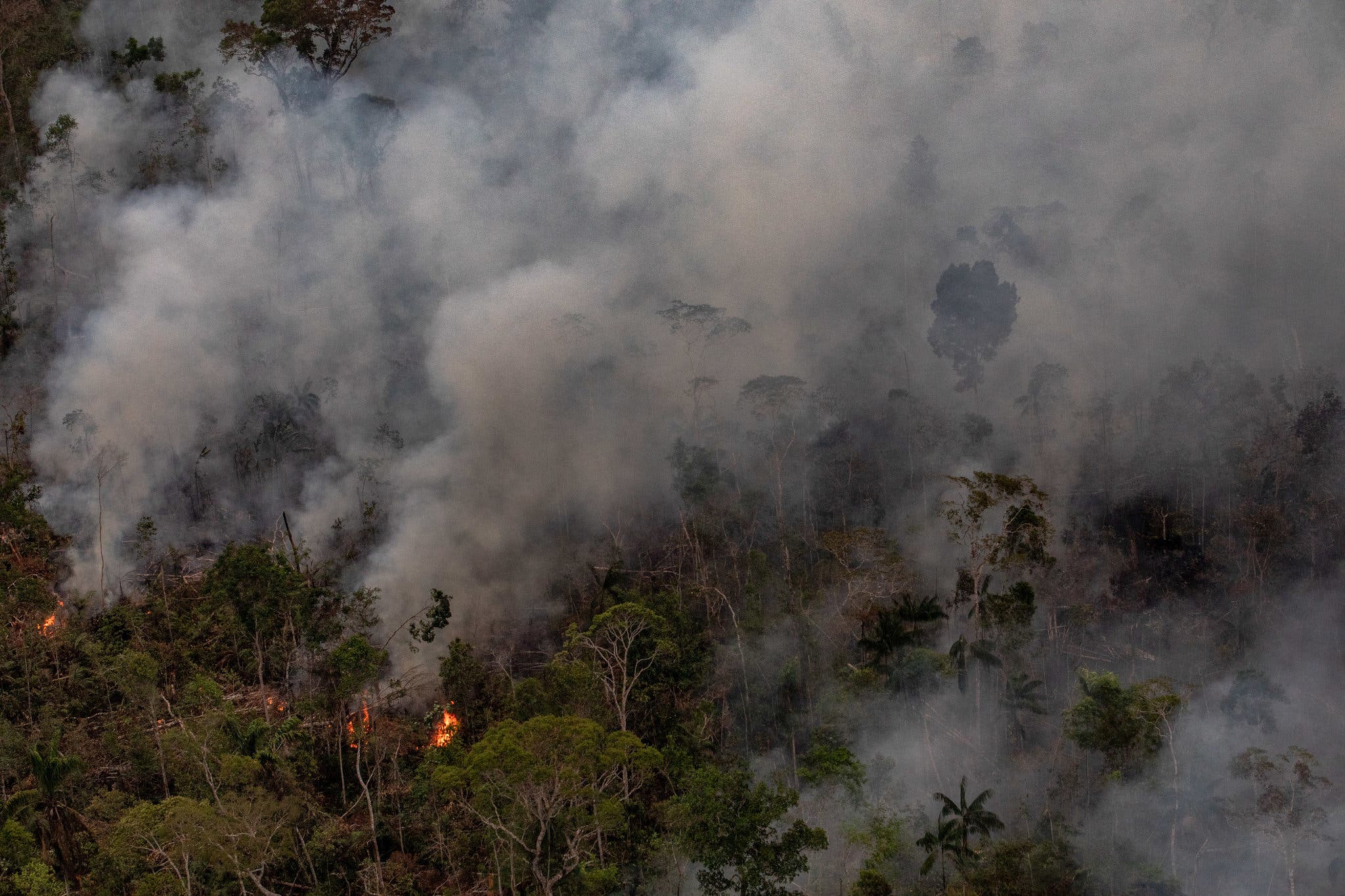
Brazil has formally appealed to Western governments for financial support to protect the Amazon rainforest, emphasizing the global climate benefits and the urgent need for coordinated conservation action.
Quick Answer
The Amazon rainforest stores roughly 100 billion metric tons of carbon and regulates regional rainfall; Brazil’s request seeks international funding to curb deforestation, support indigenous stewardship, and finance restoration projects. Evidence from satellite monitoring and climate models shows that protecting the forest can lower global CO₂ emissions by up to 0.5 gigatons per year. However, the scale of needed investment and political will remain uncertain, making the outcome dependent on sustained Western commitment.
Key Takeaways
- The Amazon provides critical climate regulation and biodiversity services that affect the entire planet.
- Deforestation rates have hovered around 9,000 km² per year in recent years, driven by agriculture, logging, and infrastructure.
- International funding mechanisms such as the Green Climate Fund can leverage billions of dollars for forest protection.
- Indigenous territories account for 60 % of remaining primary forest and are central to effective conservation.
- High‑confidence science links forest loss to increased greenhouse‑gas emissions and altered precipitation patterns.
- Uncertainties remain around the long‑term effectiveness of funding, enforcement capacity, and socio‑economic trade‑offs.
What Is Brazil Calls on Western Nations to Fund Amazon Protection?
The phrase refers to Brazil’s diplomatic outreach, beginning in 2024, urging countries such as the United States, Canada, the European Union members, and Japan to allocate dedicated climate‑finance resources for Amazon conservation. It is not a charitable donation request but a call for multilateral investment in activities that prevent forest loss, restore degraded lands, and strengthen the rights of Indigenous peoples. The initiative differs from broader climate aid by targeting a specific biome and linking payments to measurable outcomes like reduced deforestation rates.
How Does It Work?
Funding Channels
- Western governments contribute to existing multilateral funds (e.g., the Green Climate Fund or the UN‑REDD Programme).
- Funds are earmarked for projects that meet criteria such as carbon‑credit verification, community participation, and biodiversity safeguards.
- Brazil’s Ministry of the Environment oversees disbursement, monitoring, and reporting to donors.
Implementation Steps
- Identify high‑risk forest frontiers using satellite data from Brazil’s National Institute for Space Research (INPE).
- Negotiate contracts with Indigenous NGOs and local cooperatives to manage protected areas.
- Deploy rapid‑response patrols, fire‑suppression teams, and land‑use planning tools.
- Track outcomes through yearly deforestation dashboards and carbon accounting frameworks.
What Does the Evidence Show?
Long‑term monitoring by Brazil’s space agency (INPE) and the European Space Agency demonstrates that annual deforestation peaked at 14,000 km² in 2004 and fell to about 9,000 km² by 2022, coinciding with stricter enforcement and international financing. A 2021 assessment by the Intergovernmental Panel on Climate Change (IPCC) highlighted that forest loss in the Amazon contributes roughly 2 % of global anthropogenic CO₂ emissions. Meta‑analyses of REDD+ projects (published in *Science* in 2022) find that well‑designed funding schemes can reduce deforestation by 30‑50 % within five years, though effectiveness varies with governance quality.
Main Causes or Drivers
Direct Causes
- Commercial cattle ranching, responsible for about 70 % of cleared forest area (FAO, 2020).
- Soybean expansion, especially in the southern Amazon basin.
- Illegal logging and timber extraction.
- Infrastructure development such as roads and hydroelectric dams.
Underlying Drivers
- Global demand for beef and soy, driven by rising consumption in Europe and North America.
- Weak land‑tenure security that incentivizes land grabbing.
- Insufficient financing for law‑enforcement agencies.
- Policy incentives that favor short‑term economic gains over long‑term ecosystem services.
Environmental and Human Impacts
Environmental Impacts
Deforestation releases stored carbon, contributing to atmospheric CO₂ concentrations. It also disrupts the hydrological cycle, reducing regional rainfall and increasing the risk of droughts in downstream agricultural zones. Biodiversity loss is acute: the Amazon harbors an estimated 10 % of known species, many of which are endemic and threatened when habitats fragment.
Human Health and Social Impacts
Indigenous communities lose traditional territories, cultural heritage, and food security. Air quality deteriorates from forest fires, exposing nearby populations to particulate matter linked to respiratory ailments. Moreover, altered rainfall patterns can affect water availability for urban centers such as Manaus.
Economic and Infrastructure Impacts
While short‑term gains accrue to agribusiness, long‑term ecosystem services—such as water regulation, pollination, and tourism—are jeopardized, potentially costing billions of dollars in lost ecosystem value, as estimated by the World Bank (2021).
Regional Differences
Deforestation pressure is highest in the states of Pará and Mato Grosso, where cattle and soy dominate land use. In contrast, the southwestern Amazon (Rondônia, Acre) shows slower rates due to larger Indigenous reserves and stronger local enforcement. Coastal Atlantic forest fragments experience different drivers, primarily urban expansion, illustrating that solutions must be tailored to regional socioeconomic contexts.
What Scientists Know With High Confidence
- The Amazon functions as a major carbon sink, storing billions of tons of CO₂.
- Loss of forest cover directly increases atmospheric greenhouse‑gas concentrations.
- Indigenous-managed lands have lower deforestation rates than adjacent non‑protected areas.
- Satellite observations reliably detect changes in forest cover at a 30‑meter resolution.
What Remains Uncertain
Key uncertainties include the exact magnitude of climate feedbacks if a large portion of the Amazon transitions to savanna, the long‑term durability of financed protection under changing political administrations, and the socio‑economic outcomes for smallholder farmers who may be displaced by stricter land‑use rules. Improved ground‑based monitoring and longitudinal social studies are needed to reduce these gaps.
Common Misconceptions
Misconception: The Amazon can be re‑planted quickly after clearing.
Reality: Natural regeneration of tropical rainforest can take decades to centuries; secondary growth lacks the carbon density and biodiversity of primary forest.
Misconception: Funding the Amazon is a charity that benefits only Brazil.
Reality: Climate regulation, water cycling, and biodiversity services extend far beyond Brazil’s borders, providing global public goods.
Misconception: Only large multinational donors can make a difference.
Reality: Smaller bilateral programs, private‑sector carbon‑offset schemes, and community‑led initiatives have demonstrated measurable reductions in deforestation when integrated with robust verification.
Solutions and Limitations
Effective strategies combine enforcement, economic incentives, and community empowerment:
- Law enforcement and monitoring: Satellite‑based alerts improve rapid response, but require sustained funding and political backing.
- Payments for ecosystem services (PES): Direct payments to landowners can offset opportunity costs, yet scaling PES demands transparent accounting and long‑term finance.
- Indigenous land rights: Legal recognition reduces deforestation, but implementation varies across states.
- Supply‑chain commitments: Corporate zero‑deforestation pledges can shift market demand, but verification challenges persist.
Each approach carries trade‑offs: enforcement may strain local police resources; PES can be vulnerable to funding lapses; and market pledges rely on consumer awareness.
What Individuals, Communities, and Governments Can Do
What Individuals Can Do
- Choose certified sustainable products (e.g., beef, soy, timber) that trace back to deforestation‑free supply chains.
- Support NGOs that fund Amazon conservation through donations or advocacy.
- Raise awareness in local networks about the climate impact of Amazon loss.
What Communities and Organizations Can Do
- Partner with Indigenous groups to develop community‑led monitoring projects.
- Implement local reforestation or agroforestry pilots that combine livelihoods with forest cover.
- Lobby municipal governments to adopt zero‑deforestation procurement policies.
What Governments Can Do
- Increase contributions to the Green Climate Fund earmarked for Amazon protection.
- Strengthen legal frameworks that recognize Indigenous land tenure.
- Provide tax incentives for sustainable agriculture and penalize illegal logging.
- Facilitate transparent reporting mechanisms that link funding to verified emissions reductions.
Closing Synthesis
Brazil’s appeal to Western nations underscores a scientifically grounded reality: protecting the Amazon is essential for global climate stability, biodiversity conservation, and the well‑being of Indigenous peoples. High‑confidence evidence confirms the forest’s role as a carbon sink and the effectiveness of Indigenous stewardship. While uncertainties about long‑term political commitment and ecosystem feedbacks remain, a mix of enforceable policies, targeted financing, and community‑based solutions offers the most credible pathway forward. Coordinated international investment can transform Brazil’s plea into a lasting partnership for planetary health.
Frequently Asked Questions
Why is protecting the Amazon important for global climate?
The Amazon stores roughly 100 billion metric tons of carbon and influences rainfall patterns across South America; protecting it prevents the release of this carbon and helps stabilize global climate systems.
What type of funding is Brazil requesting from Western countries?
Brazil is seeking contributions to multilateral mechanisms such as the Green Climate Fund and UN‑REDD, earmarked for anti‑deforestation patrols, Indigenous stewardship, and forest‑restoration projects.
Which activities drive most deforestation in the Amazon?
Commercial cattle ranching, soybean expansion, illegal logging, and infrastructure development are the primary direct causes of forest loss in the Amazon.
How effective are payments for ecosystem services in reducing forest loss?
Well‑designed PES schemes can lower deforestation rates by 30‑50 % within five years, especially when combined with secure land tenure and transparent monitoring.
What role do Indigenous peoples play in Amazon conservation?
Indigenous territories cover about 60 % of remaining primary forest and consistently show lower deforestation rates, making Indigenous stewardship a key component of effective protection.









Leave a Comment