
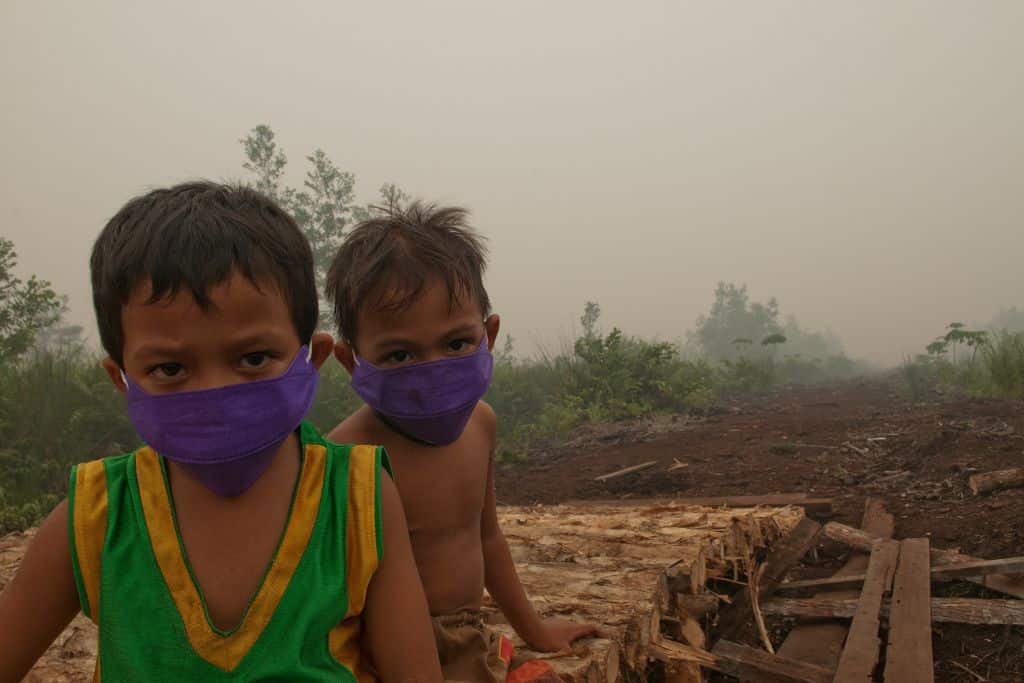
In 2025, only seven countries—Australia, Estonia, Finland, Grenada, Iceland, Mauritius, and New Zealand—kept annual PM2.5 concentrations below the World Health Organization’s 5 µg/m³ guideline, leaving the rest of the world exposed to unsafe air.
Quick Answer
Unsafe air pollution refers to concentrations of fine particulate matter (PM2.5) that exceed the WHO’s 2021 annual guideline of 5 µg/m³. In 2025, monitoring networks and satellite data showed that 190 + countries recorded averages above this limit, meaning most of the global population breathes air linked to premature mortality. The primary mechanism is the inhalation of particles small enough to reach deep lung tissue and enter the bloodstream, triggering cardiovascular and respiratory disease. The implication is a persistent public‑health burden that outweighs current mitigation efforts, although exact numbers may be refined as monitoring improves.
Key Takeaways
- Only seven nations met the WHO PM2.5 guideline in 2025; the rest of the world did not.
- PM2.5 particles penetrate the lungs, causing inflammation, oxidative stress, and systemic health effects.
- Fossil‑fuel combustion, agricultural burning, and climate‑driven wildfires are the dominant sources of excess PM2.5.
- Air‑quality disparities are driven by population density, industrialization level, and geographic conditions.
- High‑confidence evidence links unsafe PM2.5 exposure to roughly 7 million premature deaths each year.
- Solutions require coordinated policy, technology, and community actions; individual steps alone cannot resolve the crisis.
What Is All but Seven Countries Faced Unsafe Air Pollution Levels in 2025?
The phrase summarizes a global assessment of ambient fine particulate matter (PM2.5) for the calendar year 2025. It indicates that, according to the WHO’s Ambient Air Quality Database, only seven sovereign states recorded annual mean concentrations at or below 5 µg/m³. All other nations—whether high‑income, middle‑income, or low‑income—exceeded this threshold, placing their populations at elevated risk of adverse health outcomes. The metric focuses on outdoor, long‑term exposure rather than short‑term spikes, and it excludes indoor air quality considerations.
How Does It Work?
Physical and Chemical Pathways
- Primary emissions of particles and precursor gases (e.g., sulfur dioxide, nitrogen oxides, volatile organic compounds) are released from fossil‑fuel power plants, diesel engines, and industrial processes.
- In the atmosphere, chemical reactions—often driven by sunlight—convert these precursors into secondary PM2.5, such as sulfates, nitrates, and organic aerosols.
- Particle diameters of 2.5 µm or less remain suspended for days to weeks, allowing transport over hundreds of kilometers.
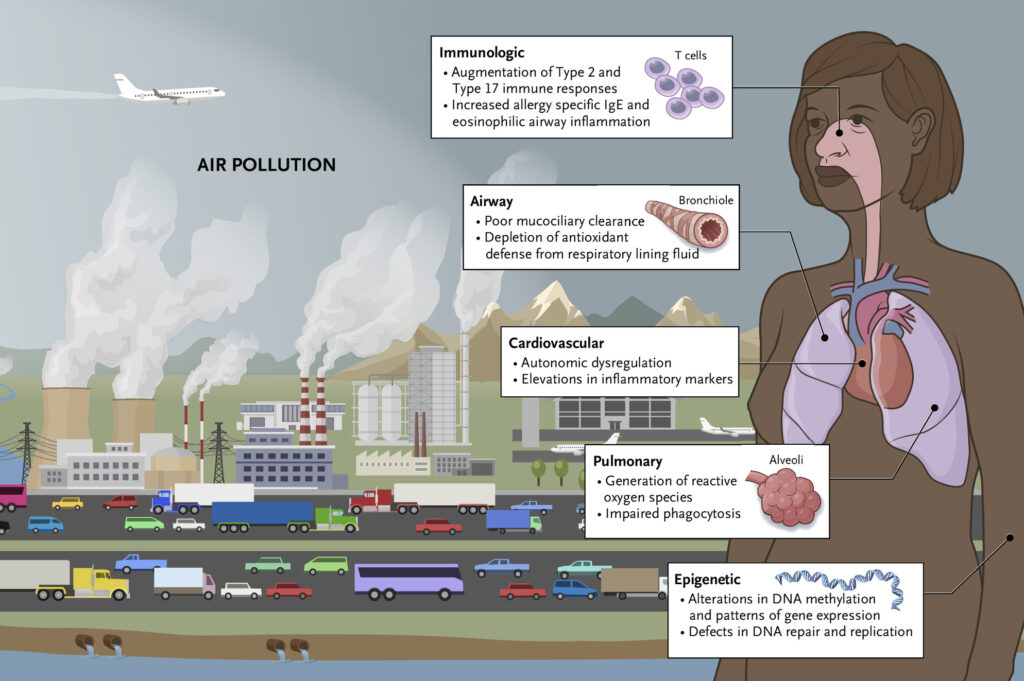
- When inhaled, PM2.5 deposits deep in the alveolar region, where it can cross the lung barrier and enter the circulatory system.
- Inside the body, particles trigger inflammatory pathways, generate reactive oxygen species, and may carry toxic metals or polycyclic aromatic hydrocarbons.
Feedback Loops with Climate
Warmer temperatures and drier conditions—both outcomes of climate change—intensify wildfires and increase biogenic emissions, which in turn raise PM2.5 levels. Higher aerosol concentrations can also affect cloud formation, creating complex climate‑air quality feedbacks.
What Does the Evidence Show?
Long‑term ground‑based monitoring stations, supplemented by satellite‑derived aerosol optical depth, consistently indicate that PM2.5 concentrations in South Asia, parts of Africa, and the Middle East exceed 50 µg/m³ on average. The WHO’s 2021 guideline revision is based on a systematic review of cohort studies that identified a clear exposure‑response relationship for all‑cause mortality at concentrations as low as 10 µg/m³. Recent assessment reports from the International Agency for Research on Cancer (IARC) and the Global Burden of Disease (GBD) project corroborate the estimate of 7 million premature deaths linked to ambient PM2.5 worldwide. While the exact 2025 national rankings are still being validated, the convergence of multiple data streams (ground, satellite, model reanalysis) gives high confidence to the statement that only seven countries met the WHO limit.
Main Causes or Drivers
Direct Sources
- Coal‑fired power generation, especially in South and East Asia.
- Diesel and gasoline vehicle exhaust in rapidly urbanizing regions.
- Industrial processes such as cement, steel, and petrochemical production.
- Open burning of agricultural residues and forest fires.
Underlying Drivers
- Continued reliance on inexpensive fossil fuels for energy and transport.
- Insufficient regulatory frameworks or weak enforcement of emission standards.
- Rapid urban growth without adequate planning for ventilation or green infrastructure.
- Climate‑induced increases in wildfire frequency and intensity.
Environmental and Human Impacts
Environmental Impacts
Elevated PM2.5 reduces photosynthetic efficiency in crops, leading to yield losses of up to 10 % in heavily polluted regions. Particulate deposition on water bodies accelerates eutrophication, while acid‑forming particles harm soil chemistry and forest health. Additionally, aerosols influence regional climate by scattering sunlight and modifying cloud albedo.
Human Health and Social Impacts
Short‑term exposure aggravates asthma and bronchitis, while chronic exposure raises the risk of ischemic heart disease, stroke, lung cancer, and chronic obstructive pulmonary disease. Children experience stunted lung development and may suffer cognitive deficits, and older adults are more susceptible to cardiovascular events. The burden disproportionately falls on low‑income communities that live near industrial zones or lack access to healthcare.
Economic and Infrastructure Impacts
Health‑related productivity losses are estimated at 2–3 % of GDP in the most polluted economies, according to the World Bank’s 2022 report on air quality economics. Damage to buildings from acid deposition and increased maintenance costs for filtration systems add further financial strain.
Regional Differences
In South Asia, seasonal agricultural burning and dense traffic create wintertime PM2.5 peaks exceeding 150 µg/m³. In contrast, the seven clean nations benefit from low population density, limited heavy industry, and strong wind patterns that disperse pollutants. European Union members, despite stringent regulations, still see 90 % of residents breathing air above the WHO guideline, largely due to transboundary pollution and occasional wildfire smoke. North America shows regional variation, with the western United States experiencing episodic spikes from wildfires, while the Midwest benefits from lower industrial emissions.
What Scientists Know With High Confidence
- PM2.5 exposure is causally linked to premature cardiovascular and respiratory mortality.
- Fossil‑fuel combustion is the largest global source of primary PM2.5.
- WHO’s 5 µg/m³ annual guideline is based on robust epidemiological evidence.
- Air‑quality improvements are achievable through emission standards, fuel switching, and urban design.
What Remains Uncertain
Key uncertainties include the precise contribution of secondary organic aerosols in different climate zones, the long‑term health effects of ultrafine particles (<0.1 µm), and the extent to which future climate‑driven wildfire regimes will alter global PM2.5 burdens. Data gaps persist in many low‑income countries where monitoring networks are sparse, making regional estimates less certain.
Common Misconceptions
Misconception: “Only heavily industrialized countries have unsafe air.”
Reality: While industry is a major source, many low‑income regions experience unsafe levels due to biomass burning, dust storms, and transboundary pollution, even without large factories.
Misconception: “If the daily PM2.5 reading is low, the air is safe.”
Reality: WHO guidelines are based on annual averages because health effects accumulate over long periods; short‑term low readings do not offset chronic exposure.
Misconception: “Wearing a mask solves the problem.”
Reality: Masks can reduce personal inhalation during high‑pollution events, but they do not address the source of emissions or protect vulnerable indoor environments.
Misconception: “Air pollution is only a health issue, not an environmental one.”
Reality: Particulate matter harms ecosystems, reduces agricultural productivity, and influences climate dynamics, making it a cross‑cutting environmental challenge.
Misconception: “Renewable energy alone will eliminate unsafe air.”
Reality: Transitioning to renewables reduces primary emissions, but secondary particle formation, agricultural practices, and wildfire smoke will still require targeted controls.
Solutions and Limitations
Effective mitigation combines regulatory, technological, and nature‑based approaches. Stringent vehicle emission standards (e.g., Euro 7) can cut traffic‑related PM2.5 by up to 30 %, but implementation costs and fleet turnover rates limit immediate impact. Coal phase‑out policies have shown rapid air‑quality gains in Europe, yet energy‑security concerns can slow adoption in developing economies. Urban green spaces improve local dispersion and provide co‑benefits for heat stress, yet they cannot offset high regional emissions. Low‑cost sensor networks empower communities to demand action, but data quality varies and requires calibration. Each solution carries trade‑offs: for example, bioenergy may reduce fossil use but increase biomass burning emissions if not managed sustainably.
What Individuals, Communities, and Governments Can Do
What Individuals Can Do
- Monitor local air quality via reputable apps and limit outdoor activity during high‑pollution alerts.
- Use certified high‑efficiency particulate air (HEPA) filters indoors, especially in bedrooms.
- Prefer public transport, walking, or cycling to reduce personal vehicle emissions.
- Support policies and organizations advocating for cleaner energy through voting and civic engagement.
What Communities and Organizations Can Do
- Establish community air‑quality monitoring stations to identify hotspots.
- Implement school‑based programs that educate children about pollution sources and health protection.
- Promote urban tree planting schemes that consider species selection to avoid allergenic pollen.
- Advocate for local ordinances limiting open burning and enforcing industrial emission caps.
What Governments Can Do
- Adopt and enforce WHO‑aligned ambient air quality standards, with transparent reporting.
- Invest in renewable energy infrastructure and phase out coal through just‑transition frameworks.
- Introduce low‑emission zones in high‑traffic urban cores and incentivize electric vehicle adoption.
- Strengthen cross‑border cooperation to address transboundary haze and wildfire smoke.
- Allocate resources for expanding ground‑monitoring networks in data‑sparse regions.
Synthesis
The 2025 assessment that only seven countries met WHO’s PM2.5 guideline underscores a persistent global air‑quality crisis. Robust evidence links fine particulate exposure to millions of premature deaths, ecosystem damage, and economic losses. While the dominant drivers—fossil‑fuel combustion, agricultural burning, and climate‑enhanced wildfires—are well understood, uncertainties remain around secondary aerosol formation and future wildfire trajectories. Solutions must blend strict regulations, clean‑energy transitions, urban design, and community empowerment, recognizing that no single measure can fully resolve the problem. Coordinated action across scales offers the most realistic path toward breathing cleaner air for all.
Frequently Asked Questions
What does it mean when a country meets the WHO PM2.5 guideline?
It means the country's annual average concentration of fine particulate matter (PM2.5) is at or below 5 µg/m³, the level the World Health Organization set in 2021 as safe for long‑term exposure.
Which factors contribute most to high PM2.5 levels in polluted countries?
The main contributors are combustion of coal and oil for electricity, diesel vehicle exhaust, open burning of agricultural residues, and increasingly, smoke from climate‑driven wildfires.
How does long‑term exposure to PM2.5 affect human health?
Chronic exposure is linked to higher rates of cardiovascular disease, stroke, lung cancer, chronic obstructive pulmonary disease, and premature death, with children and older adults being especially vulnerable.
Why do some high‑income regions still exceed WHO air‑quality standards?
Even with strict regulations, transboundary pollution, occasional wildfire smoke, and residual industrial emissions keep annual PM2.5 averages above 5 µg/m³ in many European and North American areas.
What are the most effective actions governments can take to lower PM2.5 concentrations?
Implementing and enforcing WHO‑aligned emission standards, phasing out coal power, expanding renewable energy, creating low‑emission zones, and investing in comprehensive monitoring networks are proven strategies to reduce ambient PM2.5.








Leave a Comment