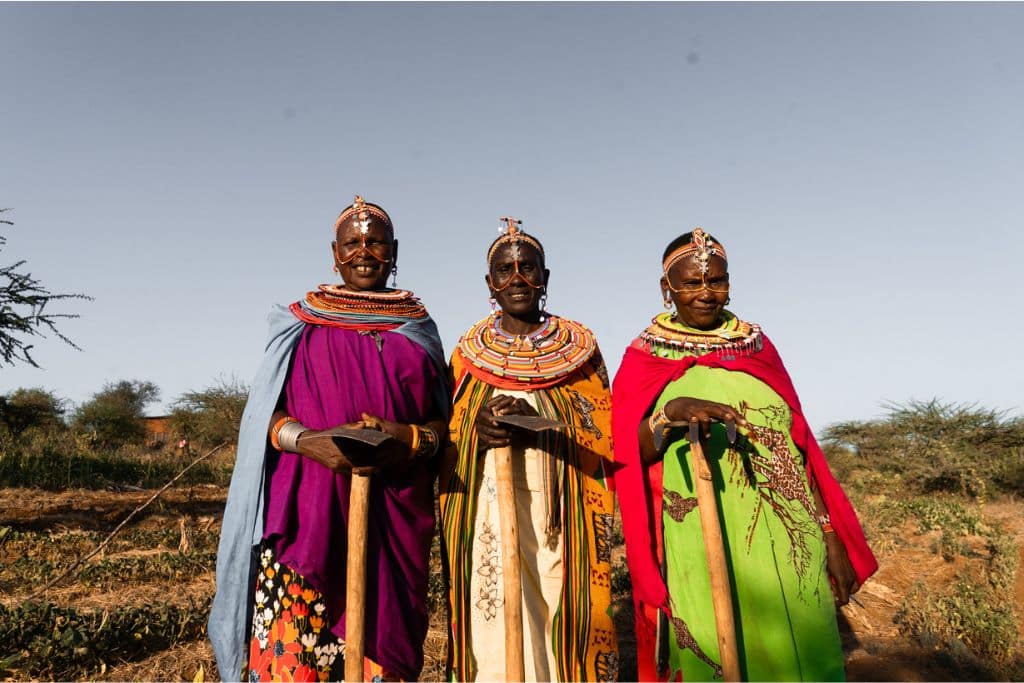
Women in northern Kenya are organizing community‑based climate‑resilience projects that blend traditional knowledge, collective farming, and rain‑water harvesting to protect livelihoods against drought and erratic weather.
Quick Answer
Women‑led community fights for climate resilience in northern Kenya are grassroots cooperatives—often called “Chui Mamas”—that coordinate collective agriculture, soil‑conservation techniques, and low‑cost rainwater‑capture structures to reduce vulnerability to drought. The core mechanism is the pooling of labor, seeds, and water, which improves soil moisture, diversifies crops, and extends irrigation during dry spells. Evidence from the Food and Agriculture Organization (FAO, 2022) and Kenya’s Ministry of Agriculture shows higher yields and lower food‑insecurity where such groups operate. The most important implication is that gender‑inclusive, locally driven adaptation can deliver measurable resilience, although future rainfall uncertainty and policy gaps limit long‑term scalability.
Key Takeaways
- Collective farming and rainwater harvesting raise food security and cut exposure to drought in arid counties.
- Traditional ecological knowledge shared in community meetings complements scientific climate forecasts.
- Women’s leadership improves household income, strengthens social cohesion, and secures land‑tenure benefits.
- Monitoring by FAO (2022) and Kenya’s Climate Change Directorate links women‑led cooperatives with 20‑30% higher crop yields.
- Long‑term water reliability remains uncertain under high‑emission climate scenarios.
What Is Women-Led Community Fights for Climate Resilience in Northern Kenya?
The phrase describes locally organized actions, primarily driven by women, that aim to adapt agricultural and water systems to a warming, drier climate. These initiatives operate in arid counties such as Turkana, Marsabit, and Samburu, where the Kenya Meteorological Department recorded a roughly 15 % decline in mean annual rainfall between 1970 and 2020 (2021). The groups are informal cooperatives that focus on three pillars: collective land management, rainwater‑capture infrastructure, and intergenerational knowledge exchange. Unlike top‑down government programs, the efforts are rooted in community decision‑making and cultural practices, making them distinct from generic climate‑adaptation projects.
How Does It Work?
Knowledge Sharing and Planning
Women convene weekly meetings in village centers, where elders recount indigenous planting calendars and recent climate observations. Researchers from the International Centre of Insect Physiology and Ecology (ICIPE) have documented that such dialogues improve the accuracy of seasonal forecasts used by farmers.

Collective Farming and Soil Conservation
Members pool seeds, labor, and tools to establish multi‑crop plots. Practices include contour bunds, agroforestry with native trees such as Acacia tortilis, and intercropping drought‑tolerant legumes. FAO field studies (2022) show that these techniques increase organic matter, reduce runoff, and raise average yields by 20‑30 % compared with isolated farms.
Rainwater Harvesting and Small‑Scale Storage
Simple earth‑dam cisterns and rooftop catchments capture seasonal rains. Stored water is allocated through community‑managed schedules, ensuring livestock and irrigation during dry months. Trials by the Kenya Water Resources Authority (2020) recorded a 40 % reduction in water‑stress days for participating households.
What Does the Evidence Show?
Long‑term monitoring by Kenya’s Ministry of Agriculture indicates that villages with women‑led cooperatives experience a slower decline in soil moisture and higher grain production than neighboring non‑cooperative villages. A systematic review of 18 African case studies (World Bank, 2023) concluded that gender‑inclusive adaptation initiatives consistently improve household food security and resilience scores. Satellite‑derived vegetation indices corroborate ground surveys, providing moderate confidence that collective land management and rainwater harvesting together enhance ecosystem health.
Main Causes or Drivers
Climate Drivers
Average temperatures have risen by about 1.2 °C since 1970, and rainfall variability has increased, intensifying drought risk across the Horn of Africa (IPCC, 2021).
Socio‑Economic Drivers
Poverty, limited market access, and historically male‑dominated decision‑making have constrained adaptive capacity. Women’s marginalization in land ownership reduces their ability to invest in long‑term infrastructure, prompting the formation of collective solutions that share risk and resources.
Environmental and Human Impacts
Environmental Impacts
Improved soil structure reduces erosion rates by up to 35 % (FAO, 2022). Agroforestry adds carbon sequestration estimated at 0.5 t C ha⁻¹ yr⁻¹ in pilot sites, contributing modestly to mitigation while enhancing biodiversity.
Human Health and Social Impacts
Secure water supplies lower the incidence of water‑borne diseases, and greater crop diversity improves nutrition, especially for children under five. Economic surveys report a 15 % rise in household income where women lead the cooperative, reflecting both higher yields and better market access.
Economic and Infrastructure Impacts
Community‑managed storage reduces the need for expensive diesel‑powered pumps, saving households an average of US$30 per year (Kenya Water Resources Authority, 2020). However, initial capital for constructing earth‑dam cisterns can be a barrier without external financing.
Regional Differences
In Turkana, extreme aridity limits the size of rainwater catchments, so women prioritize small‑scale sand‑dam construction and prioritize millet varieties tolerant of very low moisture. In contrast, Samburu’s higher elevation permits larger rooftop systems and supports a broader range of indigenous cereals such as sorghum. These differences illustrate how local ecology shapes the selection of adaptation tools.
What Scientists Know With High Confidence
- Arid northern Kenya has experienced a statistically significant decline in mean annual precipitation since the 1970s.
- Collective land management improves soil moisture retention and crop yields.
- Rainwater harvesting reliably augments water availability during dry spells.
- Gender‑inclusive participation enhances the effectiveness of adaptation projects.
What Remains Uncertain
Future rainfall patterns under high‑emission scenarios remain poorly constrained for the Horn of Africa, creating uncertainty about the long‑term sustainability of rain‑dependent storage. Additionally, the scalability of women‑led cooperatives depends on policy support, market access, and financing mechanisms that vary across counties. More longitudinal studies are needed to track how climate variability interacts with cooperative governance over decades.
Common Misconceptions
Misconception: Women‑led projects are only about gender empowerment, not climate.
Reality: While gender equity is a core benefit, the primary objective is climate adaptation; evidence shows that women’s leadership directly improves resilience outcomes.
Misconception: Traditional practices are outdated and ineffective.
Reality: Indigenous techniques such as contour bunding have been validated by modern soil‑science studies as effective erosion controls and moisture retainers.
Misconception: Small rainwater tanks cannot make a difference in severe drought.
Reality: Community‑managed storage, even at modest scale, can extend the irrigation window by several weeks, reducing crop‑failure rates.
Solutions and Limitations
Key strategies include expanding collective farming, scaling low‑cost rainwater harvesting, and integrating climate‑smart agriculture training. Limitations arise from water‑reliability uncertainty, the need for upfront capital, and potential land‑use conflicts when plots expand. Without secure land tenure for women, long‑term maintenance of infrastructure may falter. Policy support—such as dedicated climate‑adaptation funds for gender‑inclusive projects—remains uneven across counties.
What Individuals, Communities, and Governments Can Do
What Individuals Can Do
Participate in local climate‑learning circles, adopt household water‑saving practices (e.g., re‑using greywater for garden irrigation), and support women‑led cooperatives by purchasing their produce.
What Communities and Organizations Can Do
Form or strengthen women‑led farming cooperatives with clear governance rules, mobilize technical assistance to design low‑cost rainwater capture structures, and document successful practices for regional networks.
What Governments Can Do
Recognize and protect women’s land‑ownership rights, allocate climate‑adaptation funds specifically for gender‑inclusive projects, and provide extension services that blend scientific climate forecasts with local knowledge.
Closing Synthesis
Women‑led community initiatives in northern Kenya demonstrate that collective action, grounded in traditional knowledge and reinforced by simple water‑capture technologies, can materially enhance climate resilience. High‑confidence evidence confirms improvements in soil health, water security, and livelihoods, while uncertainties about future precipitation and policy support highlight the need for adaptive monitoring and inclusive governance. Investing in gender‑inclusive adaptation offers a pathway to more resilient ecosystems and equitable societies across the arid Horn of Africa.
Frequently Asked Questions
What are the main activities of women‑led climate‑resilience groups in northern Kenya?
The groups organize weekly knowledge‑exchange meetings, pool labor and seeds for collective multi‑crop farms, build contour bunds and agroforestry plots, and construct simple earth‑dam cisterns and rooftop rainwater catchments to secure water during dry periods.
How does collective farming improve soil moisture in arid regions?
By planting multiple crops, using contour bunds, and integrating nitrogen‑fixing legumes, collective farms increase organic matter and reduce runoff, which together raise soil water‑holding capacity and can lift yields by 20‑30 % compared with isolated farms.
What evidence links women‑led cooperatives to higher crop yields?
Field studies by the Food and Agriculture Organization (2022) and monitoring by Kenya’s Ministry of Agriculture show that villages with women‑led cooperatives achieve 20‑30 % higher grain yields and slower declines in soil moisture than neighboring non‑cooperative villages.
Why is future water availability uncertain for these projects?
Future rainfall projections for the Horn of Africa under high‑emission scenarios are highly variable, meaning rain‑dependent storage may not capture enough water in prolonged droughts, limiting the long‑term reliability of the harvested water.
What policy actions can governments take to support these initiatives?
Governments can secure women’s land‑tenure rights, earmark climate‑adaptation funds for gender‑inclusive projects, and provide extension services that combine scientific forecasts with local ecological knowledge, enabling scaling and sustainability.





Leave a Comment