
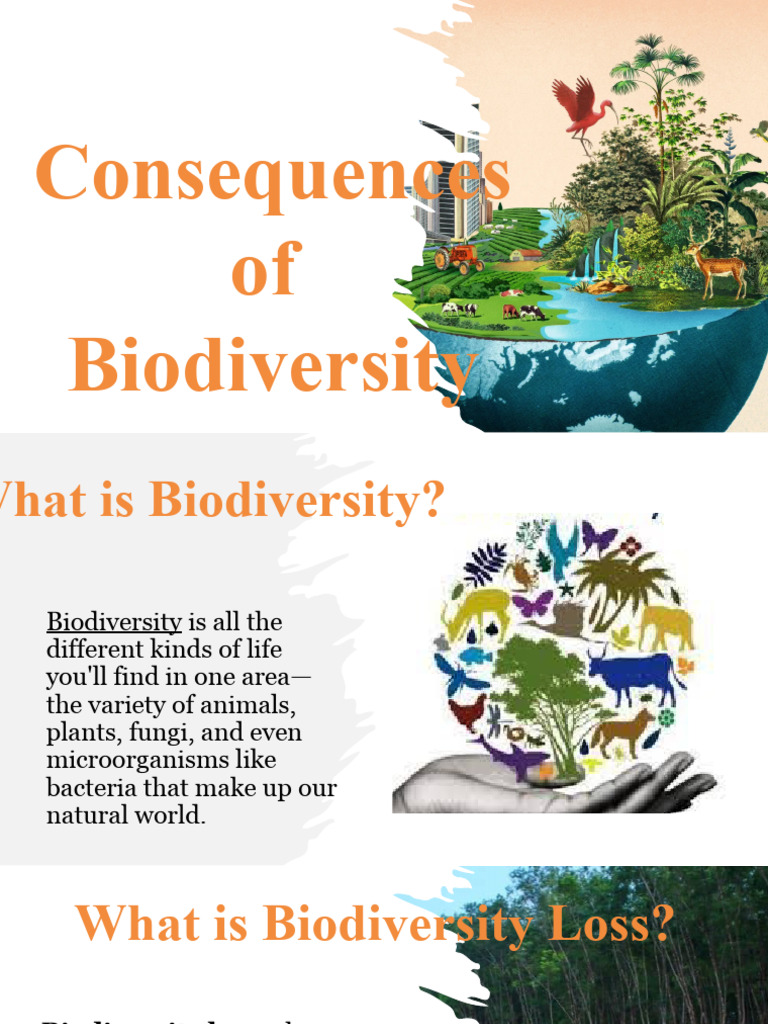
The loss of biodiversity threatens essential ecosystem services, undermining food security, health, climate regulation, and economies, with long‑term costs that far exceed current estimates.
Quick Answer
Biodiversity loss reduces the capacity of ecosystems to provide clean air, water, fertile soil, pollination, disease regulation, and carbon storage, which together underpin global economies and human well‑being. Scientific assessments show that the aggregate value of these services ranges from $125 trillion to $140 trillion per year worldwide, a figure greater than 1.5 times global GDP. As species disappear, the resilience of food systems, health safeguards, and climate buffers erodes, leading to higher costs for agriculture, medicine, disaster response, and social welfare. While exact monetary projections carry uncertainty, the consensus is that continued decline will raise economic losses dramatically over the coming decades.
Key Takeaways
- Ecosystem services generated by biodiversity are valued at over $125 trillion annually (IPBES 2019).
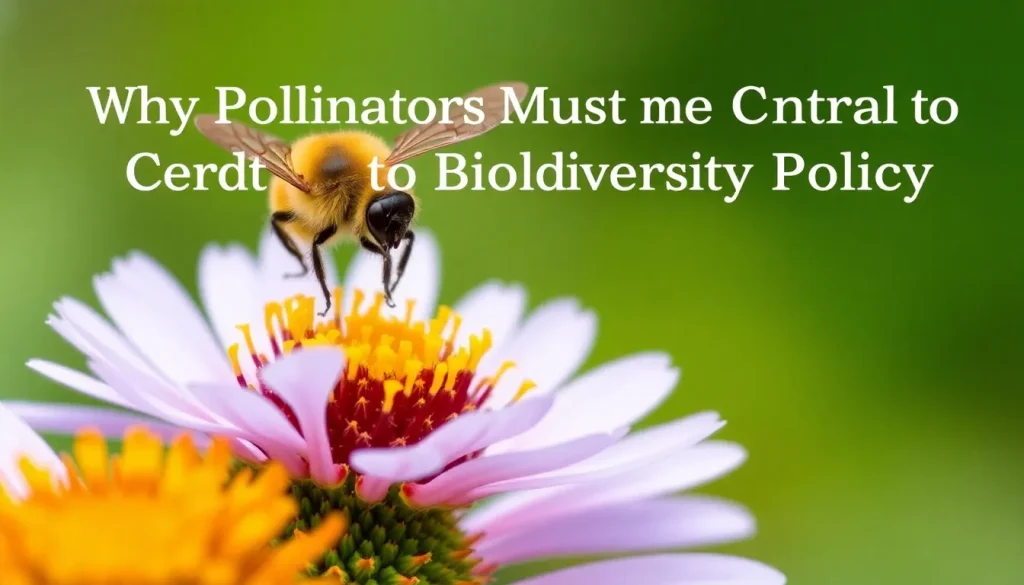
- Loss of pollinators alone could cut global crop yields by up to 40 % in the most vulnerable regions.
- Forests, wetlands, and oceans store roughly 30 % of anthropogenic carbon; degradation weakens climate mitigation.
- Health impacts include reduced access to medicines and increased disease vectors.
- Economic burdens fall disproportionately on low‑income and Indigenous communities.
- Effective solutions combine protection, sustainable use, and restoration, but require strong governance and financing.
What Is What Will the Loss of Biodiversity Really Cost Us in the Long Run?
Biodiversity encompasses the variety of life at genetic, species, and ecosystem levels. It includes everything from microbes in soil to the largest mammals and the habitats that link them. The phrase “what will the loss of biodiversity really cost us” refers to the long‑term economic, health, and societal consequences of declining species richness and ecosystem function.
Unlike a single pollutant, biodiversity loss is a systemic risk: it reduces the redundancy and resilience that allow natural systems to absorb shocks. When a pollinator species disappears, crops that depend on it may experience lower yields; when a keystone predator is removed, prey populations can explode, altering vegetation and water quality. These cascading effects translate into tangible costs for societies.
How Does It Work?
1. Ecosystem Service Generation
Living organisms perform processes that humans monetize as services: photosynthesis produces oxygen, soils filter water, and diverse plant communities support pollination. Each service involves complex interactions among species that create “functional redundancy”—multiple species can fulfill similar roles, buffering the system against loss.
2. Economic Translation
Economists assign monetary values to services by estimating the cost of replacing them with human‑made alternatives. For example, the cost of artificial water filtration is compared to the natural filtration provided by wetlands.
3. Feedback Loops
When biodiversity declines, service provision drops, leading to higher market prices, increased investment in synthetic substitutes, and greater vulnerability to climate extremes. Higher costs feed back into land‑use decisions that may further degrade habitats, creating a reinforcing cycle.
What Does the Evidence Show?
Multiple lines of evidence converge on the high value of biodiversity:
- Global assessments: The Intergovernmental Science‑Policy Platform on Biodiversity and Ecosystem Services (IPBES) 2019 Global Assessment quantified the annual value of ecosystem services at $125–$140 trillion (strong evidence, based on meta‑analyses of 300+ valuation studies).
- Pollination studies: A systematic review in *Nature* (2018) linked the decline of wild pollinators to potential yield losses of up to 40 % for fruit, nut, and vegetable crops in regions with low pollinator diversity (moderate evidence).
- Carbon storage: The IPCC Sixth Assessment Report (2021) attributes roughly 30 % of terrestrial carbon sequestration to forest and peatland ecosystems, which are highly dependent on species diversity for long‑term stability (strong evidence).
- Health links: The World Health Organization notes that 25 % of modern medicines derive from natural compounds, and loss of species reduces the pool of potential drug discoveries (strong evidence).
Overall, the evidence consistently indicates that biodiversity underpins economic productivity, climate mitigation, and public health.
Main Causes or Drivers
Direct Causes
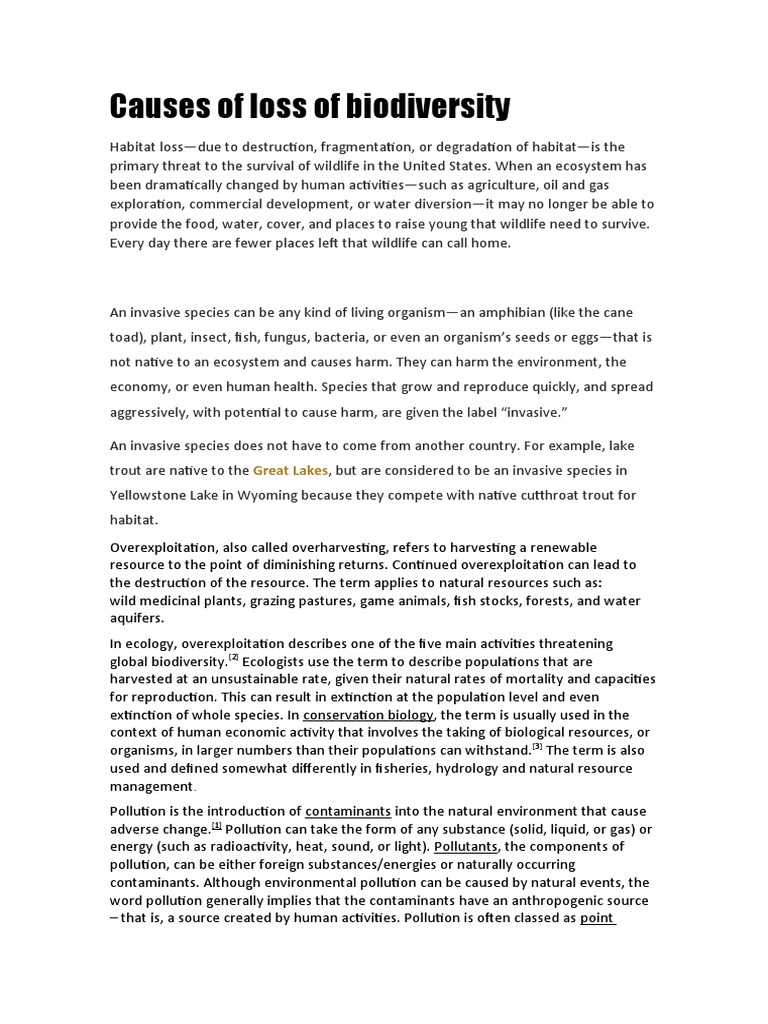
- Habitat conversion for agriculture, urban development, and infrastructure.
- Over‑exploitation of wildlife for food, trade, and pets.
- Pollution, including nutrient runoff, plastics, and chemical contaminants.
- Invasive species that outcompete native flora and fauna.
Underlying Drivers
- Population growth and rising consumption patterns.
- Globalized supply chains that shift environmental pressure across borders.
- Climate change, which alters temperature and precipitation regimes, exacerbating habitat loss.
Environmental and Human Impacts
Environmental Impacts
- Reduced carbon sequestration capacity, accelerating atmospheric CO₂ rise.
- Loss of soil fertility due to diminished microbial diversity.
- Degraded water quality as wetlands and riparian zones lose filtration ability.
- Increased frequency of algal blooms and dead zones from nutrient overload.
Human Health and Social Impacts
- Higher incidence of vector‑borne diseases where predator species that control mosquitoes disappear.
- Limited access to new pharmaceuticals, slowing treatment development.
- Food price volatility and nutrition gaps caused by pollinator loss and reduced crop resilience.
- Disproportionate burden on Indigenous peoples and low‑income farmers who depend directly on ecosystem services.
Economic and Infrastructure Impacts
- Increased costs for water treatment, flood protection, and disaster recovery.
- Higher agricultural input expenses (pesticides, fertilizers) when natural pest control declines.
- Potential loss of tourism revenue from degraded natural attractions such as coral reefs.
Regional Differences
Impacts vary with ecosystem type and development level. In tropical regions, deforestation threatens carbon stocks and Indigenous livelihoods, while in temperate agricultural zones, pollinator decline directly reduces yields of apples, almonds, and berries. Small island states experience heightened vulnerability because coral‑reef loss undermines both fisheries and coastal protection. Conversely, high‑latitude boreal forests, though less biodiverse, still provide critical carbon sinks; their degradation can release large carbon stores.
What Scientists Know With High Confidence
- Biodiversity loss directly reduces the provision of core ecosystem services.
- Functional redundancy buffers ecosystems; loss of redundancy increases risk of service collapse.
- Climate change and habitat destruction act synergistically, accelerating species extinctions.
- Economic valuation studies consistently place the annual value of ecosystem services above $100 trillion.
What Remains Uncertain
Key uncertainties include the precise timing and magnitude of economic losses under different policy scenarios, the extent to which novel species interactions may offset some service losses, and the long‑term effectiveness of large‑scale restoration projects. Improved long‑term monitoring and integrated modelling are needed to narrow these gaps.
Common Misconceptions
Misconception: Biodiversity is only about “charismatic” species like pandas.
Reality: Ecosystem services arise from the collective functions of all species, including microbes, insects, and obscure plants. Loss of any functional group can impair services.
Misconception: One‑off conservation projects can solve the problem.
Reality: Isolated actions help locally but cannot offset global drivers such as climate change and commodity‑linked deforestation without coordinated policy.
Misconception: Economic growth can continue while biodiversity disappears.
Reality: Many growth drivers—agriculture, energy, and manufacturing—depend on natural capital. Diminishing that capital raises production costs and limits long‑term growth.
Solutions and Limitations
Effective responses blend prevention, mitigation, and restoration:
- Protected Areas: Designating 30 % of land and sea by 2030 can safeguard critical habitats, but enforcement and adequate funding remain challenges.
- Sustainable Agriculture: Agroecology and diversified cropping reduce reliance on chemical inputs and support pollinators; transition costs can be high for large‑scale producers.
- Restoration: Reforestation and wetland rehabilitation rebuild carbon sinks and water filters, yet restored ecosystems may take decades to recover full functionality.
- Climate Action: Limiting warming to 1.5 °C reduces stress on species, but requires rapid decarbonization across sectors.
- Economic Incentives: Payments for ecosystem services (PES) can align farmer income with conservation, but scaling PES requires robust monitoring.
Each strategy entails trade‑offs: land set aside for nature may reduce short‑term agricultural output; restoration can compete with food production; and financing mechanisms must avoid creating perverse incentives.
What Individuals, Communities, and Governments Can Do
What Individuals Can Do
- Choose food with certified sustainable labels to support biodiversity‑friendly farms.
- Reduce waste and support local markets, lowering pressure on distant supply chains.
- Participate in citizen‑science monitoring programs that improve data on species trends.
What Communities and Organizations Can Do
- Develop community‑managed protected areas that integrate Indigenous knowledge.
- Implement buffer zones of native vegetation around agricultural fields to enhance pollinator habitats.
- Adopt green infrastructure (e.g., rain gardens) that restores urban biodiversity while managing stormwater.
What Governments Can Do
- Enact and enforce land‑use policies that limit conversion of high‑biodiversity ecosystems.
- Allocate budget for long‑term monitoring and for scaling PES schemes.
- Integrate biodiversity metrics into national accounting and corporate reporting frameworks.
- Support research on climate‑resilient species and restoration techniques.
Synthesis
The long‑run cost of biodiversity loss is not limited to distant ecological curiosity; it translates into measurable economic and health burdens that outstrip current GDP. High‑confidence science shows that ecosystem services are worth over $125 trillion per year, and that their degradation amplifies climate risks, food insecurity, and disease exposure. Uncertainties remain around exact future cost trajectories, but the direction is clear: without decisive, coordinated action, societies will face escalating expenses and reduced resilience. Protecting, sustainably using, and restoring biodiversity offers the most reliable path to safeguard both nature and human prosperity.
Frequently Asked Questions
How does biodiversity loss affect the economy?
Biodiversity loss reduces ecosystem services such as pollination, water purification, and carbon storage, which together are valued at over $125 trillion annually. When these services decline, societies must spend more on artificial substitutes, leading to higher production costs, increased disaster recovery expenses, and reduced economic growth.
Why are pollinators important for global food production?
Pollinators transfer pollen between flowers, enabling the reproduction of many crops. Studies show that losing wild pollinators could cut yields of fruits, nuts, and vegetables by up to 40 % in vulnerable regions, directly threatening food security and raising prices.
What are the main drivers behind the current biodiversity crisis?
The primary drivers include habitat conversion for agriculture and urban development, over‑exploitation of wildlife, pollution, invasive species, and underlying pressures such as population growth, globalized supply chains, and climate change.
Can protected areas alone stop biodiversity loss?
Protected areas are essential for safeguarding habitats, but on their own they cannot halt the crisis. Effective outcomes require strong enforcement, adequate funding, and complementary measures addressing climate change, sustainable land use, and economic incentives.
What actions can governments take to reduce long‑term costs of biodiversity loss?
Governments can implement land‑use policies that limit habitat conversion, fund long‑term monitoring, scale payments for ecosystem services, integrate biodiversity metrics into national accounting, and support research on resilient species and restoration methods.





Leave a Comment