
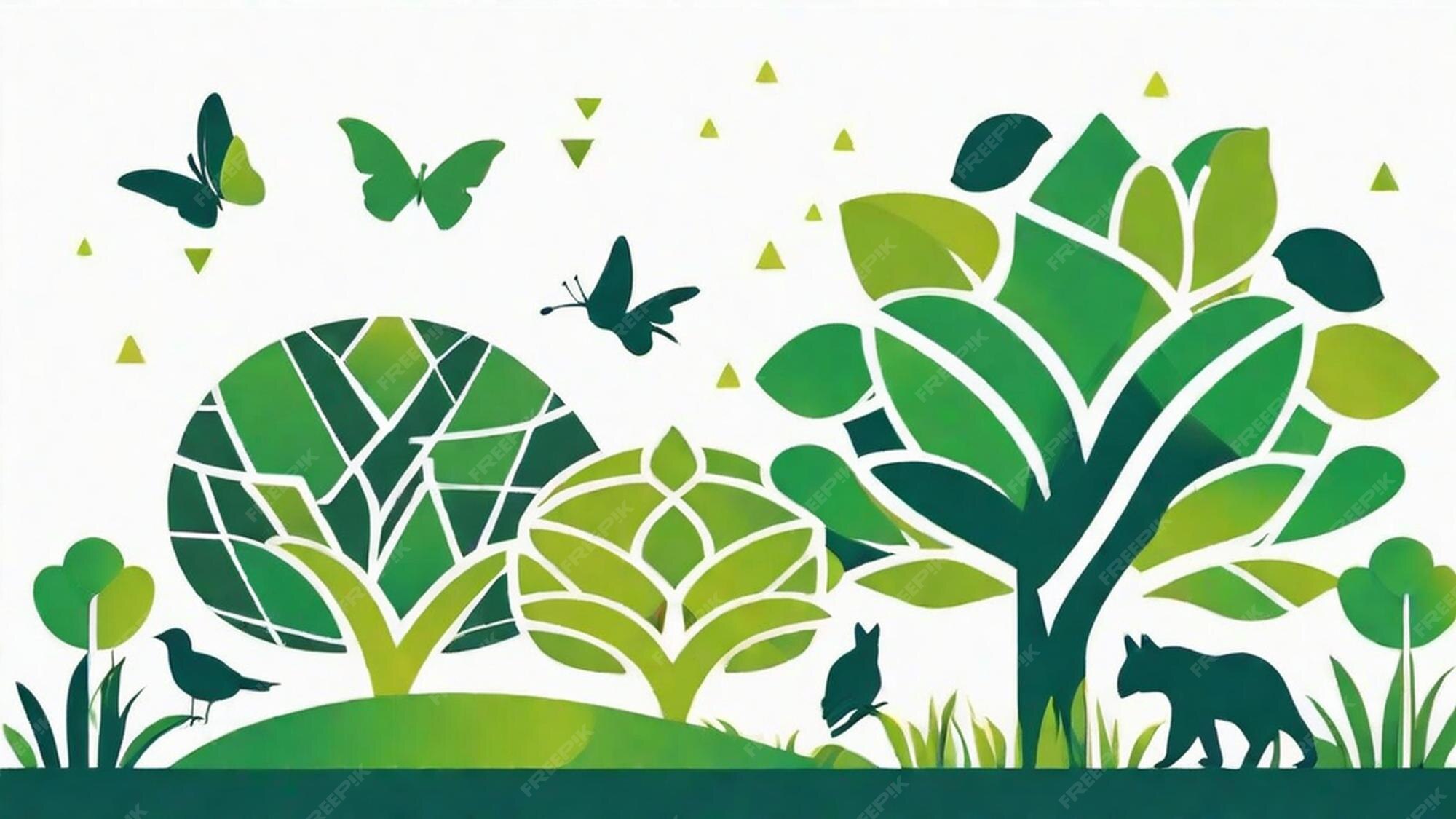
Protecting biodiversity ensures resilient ecosystems, clean air and water, and cultural heritage for the generations to come by combining habitat conservation, sustainable practices, climate action, and inclusive policy.
Quick Answer
Biodiversity protection means preserving the variety of life—genes, species, and ecosystems—through actions that reduce habitat loss, limit overexploitation, curb pollution, and mitigate climate change. Scientific assessments show that intact habitats store carbon, regulate water, and support pollination, while degraded systems amplify climate risks. The most effective approach combines protected areas, sustainable agriculture and fisheries, green urban design, and strong legislation. Uncertainty remains around exact thresholds for ecosystem collapse, but the consensus is that immediate, coordinated actions can avert the worst outcomes.
Key Takeaways
- Habitat loss is the primary driver of species decline; protecting and restoring ecosystems yields the greatest biodiversity gains.
- Sustainable agriculture, fishing, and forestry can maintain food security while conserving species.
- Urban green infrastructure connects fragmented habitats and supports pollinators.
- Climate mitigation and adaptation are essential because warming intensifies biodiversity loss.
- Effective protection requires policies, financing, community engagement, and transparent monitoring.
What Is How We Can Protect Biodiversity for Future Generations?
Protecting biodiversity refers to the deliberate actions that maintain or restore the diversity of life at genetic, species, and ecosystem levels. It encompasses conserving existing natural habitats, rehabilitating degraded lands, and managing human activities so they do not exceed the planet’s ecological limits. The concept differs from general “environmental protection” because it focuses specifically on the living components of the Earth system and the services they provide, such as pollination, carbon sequestration, and cultural values.
How Does It Work?
Effective biodiversity protection follows a series of interconnected steps that address both the causes of loss and the mechanisms that sustain ecosystems.
1. Preserve Core Habitat Areas
Designating protected areas—national parks, wildlife reserves, and marine protected zones—creates safe havens where ecological processes can operate without major human disturbance. These cores act as sources of species dispersal and genetic exchange.
2. Restore Connectivity
Ecological corridors, riparian buffers, and green bridges link isolated habitats, allowing species to migrate in response to climate shifts. Connectivity reduces the risk of local extinctions.
3. Implement Sustainable Resource Use
Agroecological practices (crop rotation, intercropping, organic inputs) and ecosystem‑based fisheries maintain productivity while preserving habitat structure. Sustainable timber and non‑timber forest products limit overharvesting.
4. Reduce Pollution and Invasive Species
Limiting nutrient runoff, plastic waste, and toxic chemicals protects water quality and soil health. Early detection and rapid response programs prevent invasive species from outcompeting natives.
5. Mitigate Climate Change
Reducing greenhouse‑gas emissions slows temperature rise, which in turn lessens stress on temperature‑sensitive species. Climate‑smart restoration (e.g., planting climate‑resilient native trees) prepares ecosystems for future conditions.
6. Monitor, Evaluate, and Adapt
Long‑term biodiversity monitoring—using field surveys, remote sensing, and citizen‑science platforms—provides data to assess progress and adjust management strategies.
What Does the Evidence Show?
Multiple lines of evidence converge on the effectiveness of these strategies. The Intergovernmental Science‑Policy Platform on Biodiversity and Ecosystem Services (IPBES, 2019) reports that protected areas covering 17 % of land and 7 % of oceans have slowed species loss rates compared with unprotected regions. Systematic reviews of agroecology (Altieri et al., 2022) find increased on‑farm biodiversity and comparable yields to conventional systems. Meta‑analyses of urban green space (Tzoulas et al., 2021) demonstrate higher pollinator abundance and reduced urban heat island intensity. Climate‑mitigation studies (IPCC, 2022) consistently link lower warming pathways with reduced extinction risk. Collectively, these data indicate that coordinated habitat protection, sustainable management, and climate action produce measurable biodiversity benefits.
Main Causes or Drivers
Direct Causes
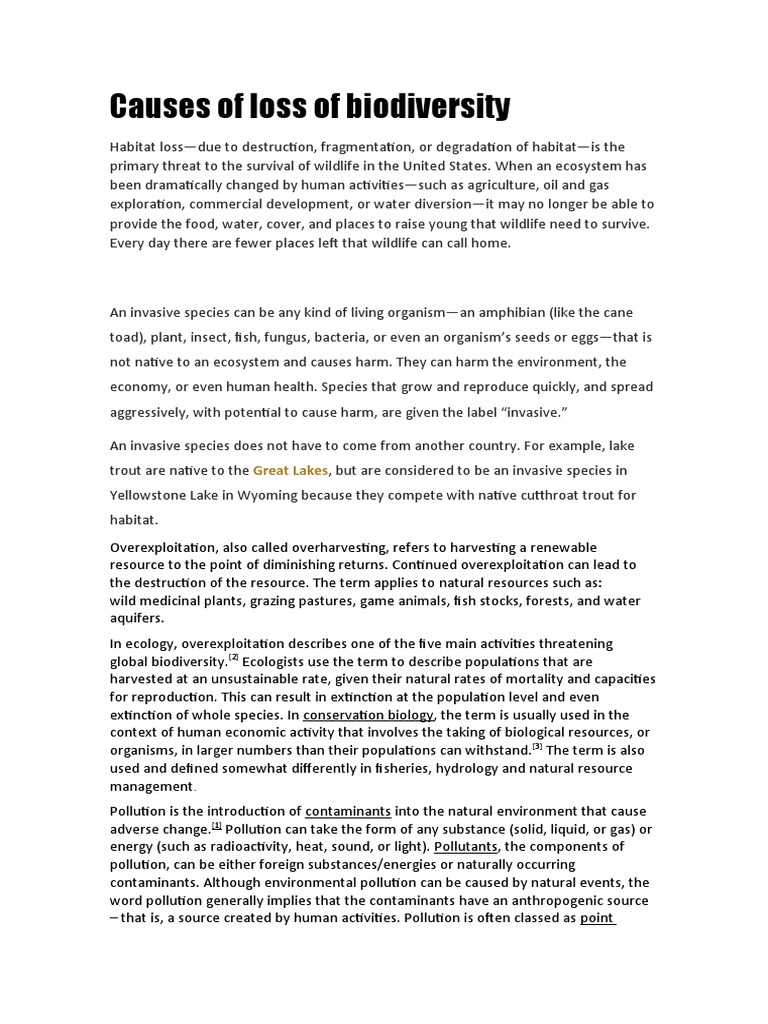
- Habitat conversion for agriculture, infrastructure, and mining.
- Overexploitation of fish, timber, and wildlife.
- Pollution from nutrients, pesticides, plastics, and heavy metals.
- Invasive species that outcompete or prey on natives.
Underlying Drivers
- Population growth and rising consumption patterns.
- Economic incentives that favor short‑term resource extraction.
- Weak governance and insufficient enforcement of environmental laws.
- Climate change, which amplifies habitat loss and species stress.
Environmental and Human Impacts
Environmental Impacts
Loss of biodiversity erodes ecosystem services: pollination declines reduce crop yields; forest degradation diminishes carbon storage; riverine habitat loss impairs water filtration. These feedbacks can accelerate climate change and increase vulnerability to natural disasters.
Human Health and Social Impacts
Reduced biodiversity is linked to higher incidence of vector‑borne diseases, as diverse ecosystems often regulate disease‑carrying species. Cultural identities tied to specific species or landscapes—particularly among Indigenous peoples—are jeopardized when those species disappear.
Economic and Infrastructure Impacts
Fisheries that depend on healthy marine ecosystems lose revenue when overfishing depletes stocks. Soil degradation from monocultures lowers agricultural productivity, raising food‑price volatility.
Regional Differences
Drivers and impacts vary by region. In tropical rainforests of the Amazon and Congo, deforestation for soy and palm oil is the dominant loss mechanism, while in temperate grasslands of North America, conversion to intensive row‑crop agriculture drives decline. Island nations such as the Philippines face acute threats from invasive species and sea‑level rise, whereas Arctic ecosystems are most affected by warming temperatures and permafrost melt. These patterns illustrate that solutions must be tailored to local socioeconomic and ecological contexts.
What Scientists Know With High Confidence
- Habitat loss is the leading cause of global species extinction (IPBES, 2019).
- Protected areas that are adequately managed reduce local extinction rates.
- Climate change amplifies extinction risk for temperature‑sensitive species.
- Ecosystem services such as pollination, water purification, and carbon storage depend on intact biodiversity.
What Remains Uncertain
Key knowledge gaps include the precise thresholds at which ecosystem functions collapse, the long‑term effectiveness of novel restoration techniques (e.g., assisted migration), and the socioeconomic trade‑offs of large‑scale land‑use changes. Better global monitoring networks and long‑duration experiments are needed to narrow these uncertainties.
Common Misconceptions
Misconception: Planting any trees will solve biodiversity loss.
Reality: Tree planting can aid carbon sequestration, but if non‑native species are used or if trees replace natural grasslands, overall biodiversity may decline.
Misconception: Biodiversity is only about charismatic megafauna.
Reality: Micro‑organisms, insects, and plant diversity are equally essential for ecosystem processes such as soil formation and pollination.
Misconception: Individual lifestyle changes alone can halt the biodiversity crisis.
Reality: Personal actions matter, yet systemic policy reforms, corporate responsibility, and large‑scale habitat protection are required for meaningful impact.
Solutions and Limitations
Below are the main response strategies, each with known benefits and trade‑offs.
Protected Areas and Legal Designations
Strength: Directly safeguards critical habitats; proven to reduce local pressures.
Limitation: Requires sufficient funding, effective enforcement, and inclusion of Indigenous rights to avoid social conflict.
Sustainable Agriculture and Fisheries
Strength: Maintains food production while preserving on‑farm biodiversity.
Limitation: Transition costs can be high; yield gaps may exist in regions lacking technical support.
Urban Green Infrastructure
Strength: Provides habitat patches in densely populated areas and improves human well‑being.
Limitation: Space constraints and competing land‑use priorities may limit scale.
Climate Mitigation and Adaptation
Strength: Addresses the root driver that intensifies all other threats.
Limitation: Requires coordinated global policy; benefits accrue over decades.
Invasive Species Management
Strength: Prevents rapid loss of native species in vulnerable islands and freshwater systems.
Limitation: Early detection is resource‑intensive; eradication is often costly.
What Individuals, Communities, and Governments Can Do
What Individuals Can Do
- Choose sustainably sourced food—e.g., certified seafood, shade‑grown coffee, and organic produce.
- Support native‑plant gardening to provide pollinator habitat.
- Participate in citizen‑science projects that track local wildlife.
- Advocate for stronger environmental policies through voting and public comment.
What Communities and Organizations Can Do
- Develop community‑led conservation easements that protect local wetlands or forests.
- Implement school‑based environmental curricula that teach biodiversity value.
- Adopt corporate sustainability standards that include zero‑deforestation commitments.
What Governments Can Do
- Expand and adequately fund protected‑area networks to meet the 30 % by 2030 target.
- Enact and enforce regulations that limit harmful pesticides and control invasive species.
- Provide subsidies or tax incentives for agroecological practices and regenerative agriculture.
- Integrate biodiversity considerations into climate‑adaptation planning.
Closing Synthesis
Protecting biodiversity is a multifaceted challenge that requires preserving habitats, adopting sustainable resource use, curbing climate change, and strengthening governance. High‑confidence science shows that habitat loss drives most extinctions, while well‑managed protected areas and sustainable farming deliver measurable gains. Uncertainties remain around ecosystem thresholds and the long‑term outcomes of emerging restoration tools. By aligning individual choices, community initiatives, corporate responsibility, and robust policy, society can safeguard the living fabric of our planet for the generations that follow.
Frequently Asked Questions
What does protecting biodiversity actually mean?
Protecting biodiversity means preserving the variety of life at genetic, species, and ecosystem levels through actions that prevent habitat loss, overexploitation, pollution, and climate‑driven stress.
Which human activities are the biggest drivers of biodiversity loss?
The biggest drivers are habitat conversion for agriculture and infrastructure, overharvesting of fish and timber, pollution, invasive species, and the amplifying effects of climate change.
How effective are protected areas at stopping species decline?
Protected areas that are properly managed have been shown to reduce local extinction rates and slow species loss, especially when they cover critical habitats and are combined with connectivity corridors.
Can individual consumer choices really help biodiversity?
Individual choices—such as buying sustainably sourced food, planting native gardens, and supporting citizen‑science—contribute to demand‑side shifts and raise awareness, but systemic policy and large‑scale actions are also essential.
What are the main uncertainties remaining in biodiversity conservation?
Key uncertainties include exact ecosystem‑collapse thresholds, long‑term outcomes of novel restoration methods like assisted migration, and the socioeconomic trade‑offs of large‑scale land‑use changes.






Leave a Comment