

Sea‑level rise driven by climate warming is projected to add 0.3–0.6 m to the global average by 2050, flooding low‑lying neighborhoods but not submerging every coastal city; outcomes depend on local elevation, land movement, and adaptation actions.
Quick Answer
Global mean sea level is expected to rise between 0.3 and 0.6 m by 2050, according to the IPCC Sixth Assessment Report (2021). This rise will cause chronic flooding in many low‑lying coastal districts, especially where land is sinking or protective infrastructure is lacking. However, cities built on higher ground, those that invest in flood defenses, or those that implement nature‑based buffers can remain habitable. The precise extent of inundation varies regionally, and uncertainties remain around ice‑sheet dynamics and future emissions pathways.
Key Takeaways
- Sea‑level rise of 0.3–0.6 m by 2050 is robust across emission scenarios.
- Low‑lying, rapidly subsiding, or poorly defended cities face the highest risk of chronic flooding.
- Wealthier municipalities can fund engineered barriers; many developing‑world ports lack such resources.
- Adaptation options—elevated infrastructure, restored wetlands, and managed retreat—can limit exposure.
- Uncertainties include regional sea‑level variability, Antarctic ice‑sheet instability, and future policy choices.
What Is Will All Coastal Cities Be Underwater by 2050? Fact vs. Fear?
The phrase captures a common public question: will every city located on a coast disappear beneath the ocean by the middle of this decade? It blends a factual component (the physical process of sea‑level rise) with a fear‑driven narrative (total inundation). The question differs from “coastal flooding,” which describes episodic events, and from “climate‑change mitigation,” which focuses on reducing greenhouse‑gas emissions. Understanding the scope requires looking at global averages, local topography, land‑movement, and the range of human responses.
How Does It Work?
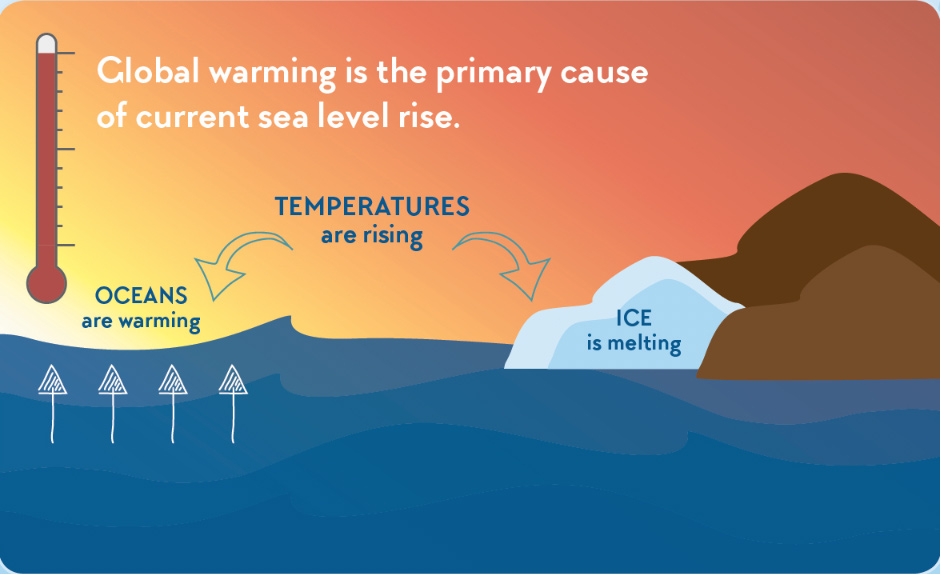
Physical Mechanisms
- Thermal expansion: Warmer ocean water expands, contributing roughly half of observed sea‑level rise since the 1970s.
- Ice‑sheet and glacier melt: Accelerated melt of the Greenland and Antarctic ice sheets adds fresh water to the oceans.
- Land‑water redistribution: Reservoir storage and groundwater extraction can locally raise sea level by altering the water balance.
Human Amplifiers
Urban development on reclaimed land, extensive groundwater pumping that causes subsidence, and the loss of protective ecosystems such as mangroves or dunes increase vulnerability. These actions do not cause sea‑level rise directly, but they raise relative sea level and reduce natural buffers.
What Does the Evidence Show?
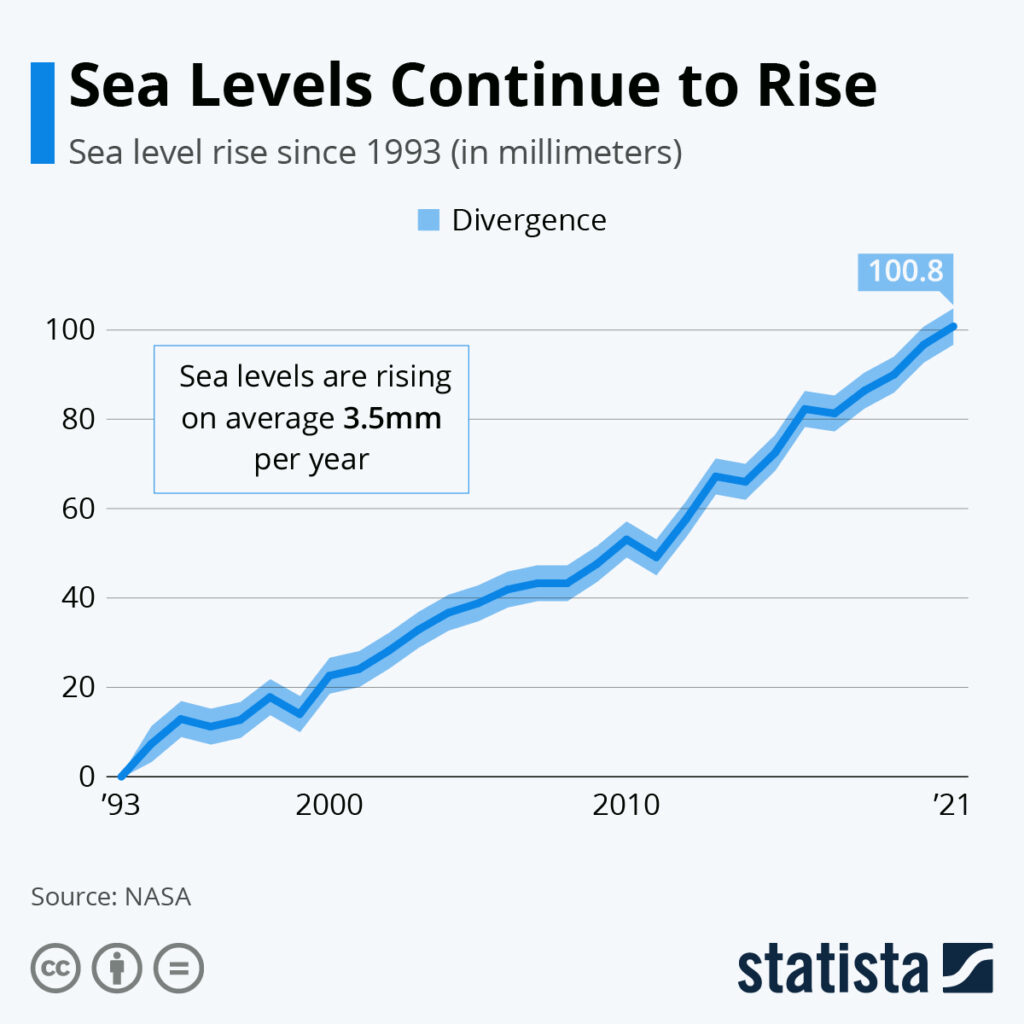
Long‑term tide‑gauge records compiled by the Permanent Service for Mean Sea Level indicate a global rise of about 1.8 mm yr⁻¹ since 1900, accelerating to 3.4 mm yr⁻¹ over the past two decades (NOAA, 2022). Satellite altimetry (e.g., NASA’s Jason‑3) confirms this acceleration. Climate‑model ensembles used by the IPCC (CMIP6) project a median rise of 0.4 m by 2050 under the SSP2‑4.5 scenario, with a plausible range of 0.3–0.6 m. Regional variations arise from ocean dynamics, gravitational effects of melting ice, and land movement; for example, parts of the Gulf Coast may see >0.5 m rise, while some Pacific islands experience slightly less because of local uplift.
Main Causes or Drivers
Direct Causes
- Anthropogenic greenhouse‑gas emissions heating the atmosphere and oceans.
- Accelerated melt of the Greenland and Antarctic ice sheets.
Underlying Drivers
- Fossil‑fuel combustion and deforestation that raise atmospheric CO₂ and methane concentrations.
- Economic patterns that prioritize dense coastal development.
Amplifying Factors
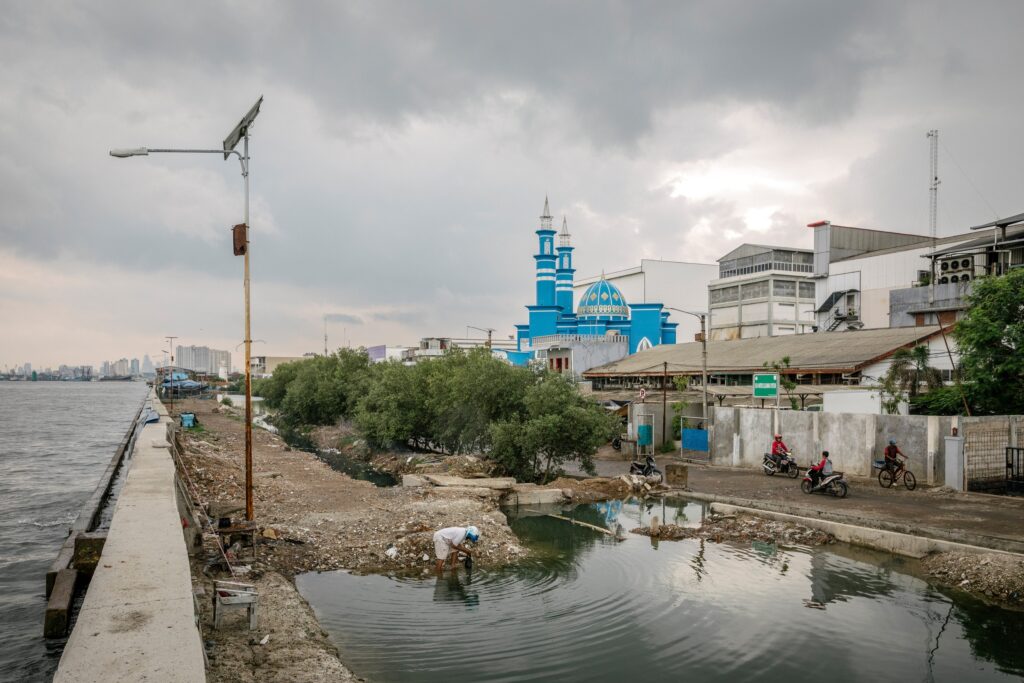
- Coastal subsidence from groundwater extraction (e.g., Jakarta, New Orleans).
- Loss of mangroves, coral reefs, and dunes that normally dissipate wave energy.
Environmental and Human Impacts
Environmental Impacts
Higher sea levels increase the frequency of salt‑water intrusion into estuaries, wetlands, and freshwater aquifers, threatening biodiversity. Coastal habitats such as salt marshes may migrate landward where space permits, but in densely built regions this “coastal squeeze” leads to habitat loss and reduced carbon sequestration.
Human Health and Social Impacts
Chronic flooding raises the risk of water‑borne diseases, mold‑related respiratory problems, and mental‑health stress. Displacement can amplify social inequities because low‑income households often lack resources to relocate or retrofit homes.
Economic and Infrastructure Impacts
Roads, ports, sewage systems, and power lines built at or near current sea level face higher repair costs. The World Bank estimates that, without adaptation, annual global coastal‑city losses could reach $1 trillion by 2050.
Regional Differences
Risk profiles differ dramatically:
- South‑East Asia: Bangkok and Ho Chi Minh City sit less than 2 m above present sea level and experience rapid subsidence, making them among the most vulnerable.
- North America: Miami‑Dade County already experiences “king‑tide” flooding; New York City has invested in large‑scale barriers such as the “Big U.”
- Europe: London’s Thames Barrier protects central areas, yet low‑lying Thames Estuary communities remain at risk.
- Pacific Island Nations: Kiribati and the Marshall Islands face existential threats; some low‑lying atolls could become uninhabitable under higher‑end SLR scenarios.
These examples illustrate that while the global trend is upward, local outcomes span a spectrum from manageable to existential.
What Scientists Know With High Confidence
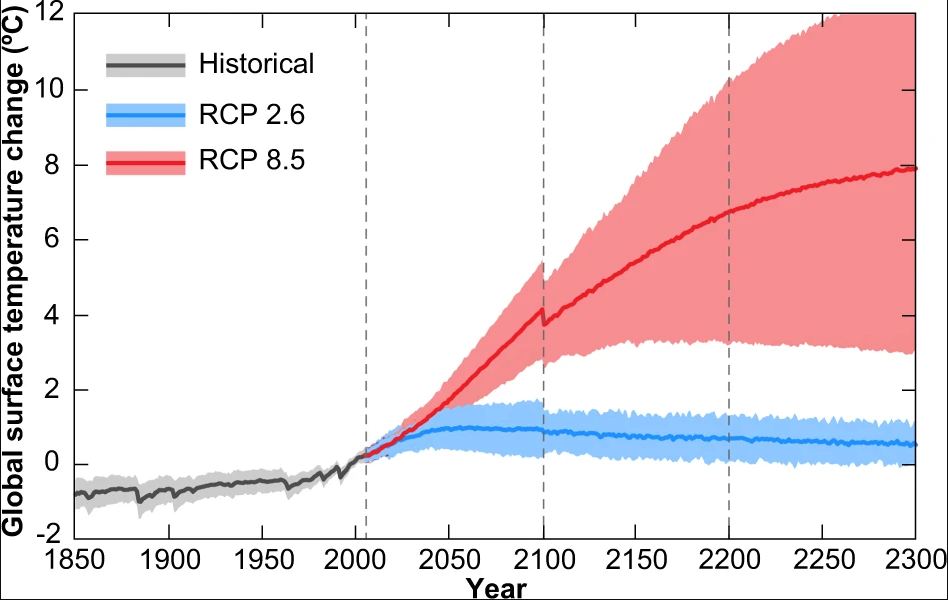
- Human activities are the dominant cause of observed warming since the mid‑20th century (IPCC, 2021).
- Thermal expansion and ice‑sheet melt together account for the majority of global sea‑level rise.
- Sea level is rising faster now than in any comparable period of the past 2,000 years, as shown by proxy records.
- Coastal cities built on subsiding ground experience relative sea‑level rise that exceeds the global mean.
What Remains Uncertain
Key uncertainties include the rate of Antarctic ice‑sheet instability, which could add several centimeters beyond current projections; the precise magnitude of regional land‑movement; and future greenhouse‑gas emission pathways, which depend on policy and technology adoption. These gaps affect local planning but do not overturn the overall expectation of measurable rise.
Common Misconceptions
Misconception: “All coastal cities will disappear by 2050.”
Reality: A global rise of 0.3–0.6 m will inundate low‑lying neighborhoods, but many cities sit higher, have defenses, or can adapt.
Misconception: “Sea‑level rise is the same everywhere.”
Reality: Regional factors such as ocean currents, gravitational redistribution, and land subsidence create a heterogeneous pattern of rise.
Misconception: “Building sea walls solves the problem completely.”
Reality: Hard infrastructure can protect specific assets but is costly, may have ecological side‑effects, and cannot address widespread land loss without complementary measures.
Misconception: “Mitigation alone will keep cities safe.”
Reality: Reducing emissions slows future rise, yet existing rise already threatens many coastal areas; adaptation is required alongside mitigation.
Solutions and Limitations
Responses fall into three broad categories:
- Mitigation: Reducing CO₂ emissions slows future sea‑level rise, but it does not reverse the rise already observed.
- Hard‑engineered adaptation: Dikes, surge barriers, and elevated roadways protect critical infrastructure; they are effective locally but expensive, require maintenance, and can shift risk downstream.
- Nature‑based solutions: Restoring mangroves, wetlands, and dunes offers cost‑effective buffering and co‑benefits for biodiversity, yet space constraints limit their scalability in heavily built environments.
- Managed retreat: Planned relocation of at‑risk neighborhoods reduces long‑term exposure; it is politically challenging, socially disruptive, and requires substantial funding.
Each strategy carries trade‑offs in cost, equity, and environmental impact, and a blended approach is generally recommended.
What Individuals, Communities, and Governments Can Do
What Individuals Can Do
- Support policies that accelerate decarbonization through voting, advocacy, or charitable contributions.
- Implement flood‑resilient home improvements where feasible, such as elevating utilities or installing flood‑proof doors.
- Participate in local planning meetings to ensure equitable adaptation measures.
What Communities and Organizations Can Do
- Develop community‑based early‑warning systems and evacuation plans.
- Invest in living shorelines, restored wetlands, and mangrove planting.
- Conduct vulnerability assessments that integrate socioeconomic data.
What Governments Can Do
- Integrate sea‑level projections into zoning, building codes, and infrastructure budgeting.
- Allocate funding for both hard defenses and nature‑based solutions, prioritizing low‑income neighborhoods.
- Facilitate managed retreat through transparent land‑acquisition programs and fair compensation.
- Commit to ambitious emission‑reduction targets aligned with the Paris Agreement to limit future rise.
Closing Synthesis
The evidence shows that sea level will rise enough by 2050 to flood parts of many coastal cities, especially those that are low‑lying or sinking. The notion that every coastal city will be underwater is not supported by current science. High‑confidence findings confirm warming‑driven mechanisms, while uncertainties remain around regional rates and future emissions. A combination of mitigation, engineered defenses, nature‑based buffers, and managed retreat—tailored to local conditions—offers realistic pathways to protect most urban centers. The ultimate outcome will depend on how quickly societies translate knowledge into coordinated action.
Frequently Asked Questions
How much is sea level expected to rise globally by 2050?
The Intergovernmental Panel on Climate Change projects a global mean sea‑level rise of 0.3 to 0.6 meters by 2050, based on a range of emission scenarios and climate‑model ensembles.
Why do some coastal cities face higher flood risk than others?
Risk depends on local elevation, rates of land subsidence, the presence or absence of protective infrastructure, and how quickly a city implements adaptation measures such as flood barriers or nature‑based buffers.
What are the main physical processes that cause sea‑level rise?
Thermal expansion of warming ocean water, melting of Greenland and Antarctic ice sheets, and changes in land‑water distribution (e.g., groundwater extraction) together drive the observed rise.
Can building sea walls protect a city from future sea‑level rise?
Sea walls can protect specific assets and reduce flood depth locally, but they are costly, require maintenance, may impact ecosystems, and cannot address widespread land loss without complementary measures.
What actions can individuals take to help coastal cities stay safe?
Individuals can support strong climate policies, make flood‑resilient home improvements where possible, and engage in local planning processes to advocate for equitable adaptation strategies.





Leave a Comment