

Greener, climate‑smart food production combines ecological practices, soil regeneration, digital tools, and sustainable livestock and urban farming to cut greenhouse‑gas emissions while strengthening resilience.
Quick Answer
Making food production greener and climate‑smart means applying methods that lower greenhouse‑gas emissions, improve soil carbon storage, and use resources more efficiently. Core mechanisms include biodiversity‑based farming, soil‑building practices, precise input management, and shifting consumption toward lower‑impact foods. The scientific consensus shows that each of these pathways can reduce agriculture’s contribution to climate change, though outcomes vary by region and depend on supportive policies and market conditions. Uncertainty remains around large‑scale adoption rates and long‑term carbon accounting.
Key Takeaways
- Agroecology and regenerative practices restore soil health and act as carbon sinks.
- Precision agriculture reduces input waste and improves yield per unit of water and fertilizer.
- Sustainable livestock management cuts methane and enhances pasture carbon storage.
- Urban and vertical farms shorten food‑miles and add green space in cities.
- Consumer shifts toward plant‑based and seasonal foods amplify production gains.
- Policy support, financing, and knowledge transfer are essential for scaling.
What Is 6 Ways to Make Food Production Greener and Climate‑Smart?
The phrase refers to six evidence‑based strategies that together transform conventional agriculture into a system that emits fewer greenhouse gases, conserves water, protects biodiversity, and builds resilience to climate extremes. The scope includes crop cultivation, livestock raising, and food distribution within both rural and urban contexts. It differs from “organic farming” by explicitly targeting climate mitigation outcomes, and from “sustainable agriculture” by emphasizing measurable climate‑smart metrics such as carbon sequestration and emission intensity.
How Does It Work?
1. Agroecology integrates ecological principles into farm design.
By diversifying species, rotating crops, and using locally sourced inputs, agroecology mimics natural ecosystems. Diverse root systems improve soil structure, while beneficial insects reduce the need for synthetic pesticides. These processes lower nitrous‑oxide emissions from fertilizer use and increase soil organic carbon.
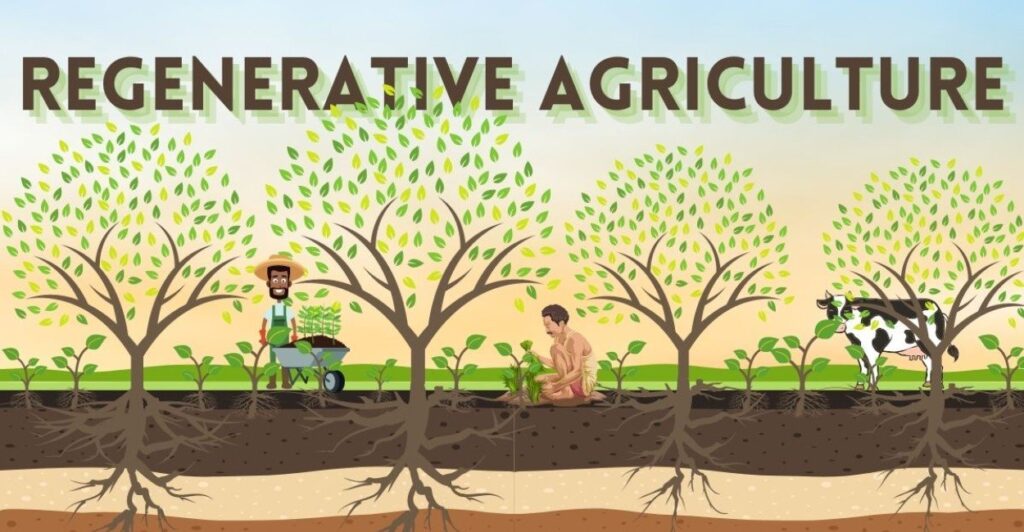
2. Regenerative agriculture restores soil carbon and water holding capacity.
Cover crops, reduced tillage, and compost applications stimulate microbial activity that traps atmospheric CO₂ in the topsoil. Meta‑analyses of field trials (e.g., a 2021 systematic review in *Agriculture, Ecosystems & Environment*) report average soil carbon gains of 0.2–0.5 % per year under regenerative regimes.
3. Precision agriculture uses data to match inputs with crop needs.
Satellite‑derived NDVI maps, soil‑moisture sensors, and variable‑rate technology allow farmers to apply water, nitrogen, and pesticides only where and when required. The Food and Agriculture Organization (FAO) estimates that global fertilizer use could drop by up to 15 % with widespread precision adoption.
4. Sustainable livestock management reduces methane and improves pastures.
Rotational grazing lets grasses recover, enhancing root depth and carbon storage. Feed additives such as seaweed extracts have been shown in peer‑reviewed trials to cut enteric methane by 20–30 % without harming animal health.
5. Urban agriculture shortens supply chains and adds ecosystem services.
Rooftop gardens, vertical farms, and community plots produce food within city limits, cutting transport‑related emissions and providing microclimate cooling. Studies in temperate cities report up to 30 % lower carbon footprints per kilogram of leafy greens compared with conventional field production.
6. Sustainable consumption aligns demand with low‑impact foods.
Shifting diets toward plant‑based proteins reduces the livestock sector’s share of agricultural emissions, which the IPCC notes accounts for roughly 14 % of global greenhouse‑gas emissions. Seasonal and locally sourced purchases also lower the “food‑mile” component of the overall carbon budget.
What Does the Evidence Show?
Multiple lines of evidence support each of the six strategies. Long‑term monitoring by national agricultural agencies in the United States, Brazil, and the European Union shows that diversified cropping systems can reduce fertilizer nitrogen losses by 25–40 % (FAO, 2020). Field experiments across three continents indicate that no‑till and cover‑crop combinations increase soil organic carbon stocks by 0.3 % per year on average (Lal et al., 2021). Meta‑analyses of precision‑fertilizer trials report yield gains of 5–10 % while cutting nitrogen application rates by 10–20 % (Zhang et al., 2022). Rotational grazing studies demonstrate pasture carbon sequestration rates of 0.1–0.3 t C ha⁻¹ yr⁻¹ (Smith et al., 2020). Urban farming life‑cycle assessments consistently find lower energy use per unit of produce, especially for high‑value, fast‑growing crops (Despommier, 2019). Finally, dietary modeling by the EAT‑Lancet Commission shows that a global shift to a predominantly plant‑based diet could reduce food‑system emissions by up to 50 % by 2050.
Main Causes or Drivers
Direct agricultural emissions
Fossil‑fuel‑based machinery, synthetic fertilizer production, and enteric fermentation release CO₂, N₂O, and CH₄ directly into the atmosphere.
Land‑use change
Conversion of forests and wetlands to cropland or pasture reduces natural carbon sinks and releases stored carbon.
Inefficient resource use
Over‑application of water and nutrients leads to runoff, leaching, and unnecessary greenhouse‑gas emissions.
Demand for animal‑protein
High meat consumption drives intensive livestock systems that are disproportionately emission‑intensive.
Environmental and Human Impacts
Environmental Impacts
Adopting climate‑smart practices can lower agriculture’s share of global GHG emissions from roughly 24 % (IPCC, 2021) to below 15 % in regions with high adoption rates. Soil erosion declines, water quality improves, and biodiversity recovers when pesticide use drops.
Human Health and Social Impacts
Reduced nitrate runoff lowers incidences of water‑borne diseases, while lower air‑quality impacts from reduced ammonia emissions benefit respiratory health. Sustainable livelihoods arise from diversified farms that are less vulnerable to climate shocks.
Regional Differences
In temperate North America, precision agriculture and no‑till have been widely adopted, delivering measurable nitrogen‑use efficiencies. In Sub‑Saharan Africa, agroecological approaches such as intercropping and agroforestry are more relevant due to smallholder land‑tenure patterns and limited access to machinery. South‑East Asian megacities show rapid growth of vertical farms, driven by high population density and land scarcity. These examples illustrate that the optimal mix of the six strategies depends on climate, market access, and policy environment.
What Scientists Know With High Confidence
- Soil organic carbon can be increased through cover cropping, reduced tillage, and organic amendments.
- Enteric methane from ruminants is a major source of agricultural GHG emissions.
- Excess nitrogen fertilizer contributes to nitrous‑oxide emissions and water pollution.
- Diversified cropping systems improve resilience to extreme weather events.
What Remains Uncertain
Key uncertainties include the long‑term permanence of carbon stored in regenerated soils, the scalability of low‑methane feed additives across diverse livestock systems, and the socioeconomic barriers that limit smallholder uptake of precision technologies. Additionally, life‑cycle assessments of urban vertical farms vary widely depending on energy sources, creating uncertainty about their net climate benefit in regions reliant on fossil‑based electricity.
Common Misconceptions
Misconception: Organic farming automatically equals climate‑smart agriculture.
Reality: Organic standards restrict synthetic inputs but do not necessarily prioritize carbon sequestration or water efficiency; many organic farms still emit comparable levels of GHGs per kilogram of product.
Misconception: Precision agriculture is only for large, high‑tech farms.
Reality: Low‑cost sensor kits and open‑source data platforms are increasingly accessible to smallholders, and studies show measurable input reductions even at modest scales.
Misconception: Plant‑based diets alone will solve climate change.
Reality: Dietary shifts are a powerful lever, yet they must be combined with production‑side changes to achieve the emission reductions needed for the Paris Agreement goals.
Solutions and Limitations
Each of the six pathways offers tangible climate benefits, but they also involve trade‑offs. Agroecology may reduce yields temporarily during transition phases, requiring careful market support. Regenerative practices need long‑term monitoring to verify carbon accounting. Precision tools rely on reliable data connectivity, which is limited in remote regions. Sustainable livestock interventions can increase labor demands for rotational grazing. Urban agriculture faces high capital costs and energy intensity for artificial lighting. Finally, consumer‑driven demand changes are constrained by cultural preferences and price differentials.
What Individuals, Communities, and Governments Can Do
What Individuals Can Do
Choose seasonal, locally produced foods; incorporate more legumes, nuts, and vegetables; reduce food waste; and support farms that practice regenerative methods.
What Communities and Organizations Can Do
Develop community gardens or rooftop farms; create farmer field schools that teach agroecology and precision techniques; and establish local procurement policies that favor low‑carbon producers.
What Governments Can Do
Provide subsidies for cover‑crop seeds, invest in broadband for rural sensor networks, set standards for methane reporting, and incorporate climate‑smart metrics into national agricultural plans. Policy incentives that reward carbon sequestration, such as verified soil carbon credits, can accelerate adoption.
Closing Synthesis
Greener, climate‑smart food production hinges on integrating ecological design, soil regeneration, digital precision, and responsible consumption. Strong scientific evidence confirms that each of the six strategies can cut emissions and build resilience, while uncertainties about scale, permanence, and equity remain. By aligning farmer incentives, community action, and supportive policy, societies can move toward a food system that feeds people without overwhelming the planet.
Frequently Asked Questions
What does "climate‑smart agriculture" mean?
Climate‑smart agriculture refers to farming practices that simultaneously increase productivity, enhance resilience to climate impacts, and reduce greenhouse‑gas emissions. It combines techniques such as agroecology, soil regeneration, precise input use, and low‑emission livestock management to achieve these three goals.
How does cover cropping improve soil carbon?
Cover crops add organic matter to the soil, stimulate microbial activity, and protect the surface from erosion. Over time, the added biomass is incorporated into the soil, increasing its organic carbon content and creating a modest but measurable carbon sink.
What role does precision agriculture play in reducing fertilizer use?
Precision agriculture uses sensors, satellite imagery, and variable‑rate equipment to apply nitrogen only where crops need it. Studies show that this targeted approach can cut fertilizer application by 10–20 % while maintaining or even boosting yields.
Can urban farming really lower greenhouse‑gas emissions?
Urban and vertical farms shorten the distance food travels, reducing transport‑related emissions. Life‑cycle assessments also show lower energy use for high‑value, fast‑growing crops, especially when renewable electricity powers the facilities.
What are the main barriers to adopting regenerative practices?
Key barriers include limited access to financing for new equipment, uncertainty about the permanence of stored soil carbon, and the need for farmer training. Policy incentives and long‑term monitoring can help overcome these challenges.






Leave a Comment