
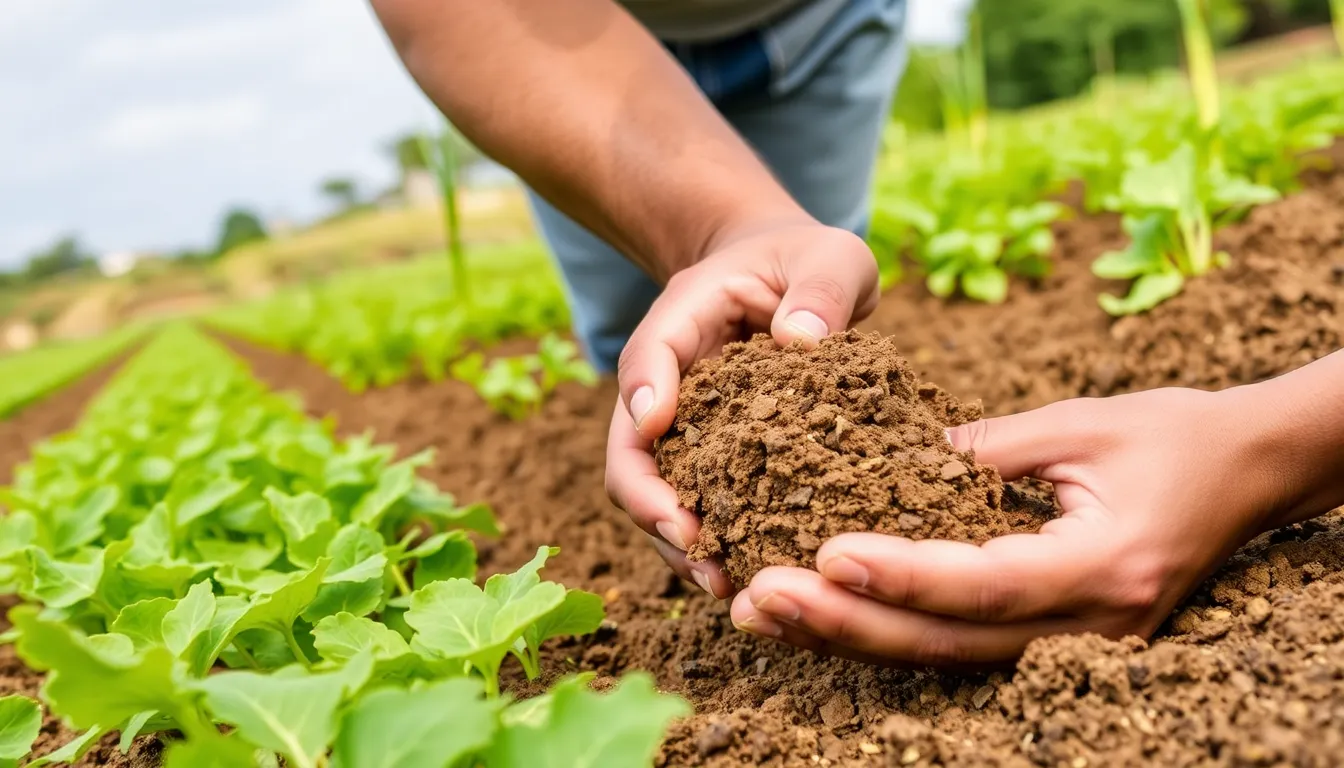
Sustainable agriculture seeks to produce food, fiber, and fuel while preserving ecosystem health, supporting rural livelihoods, and minimizing environmental impacts over the long term.
Quick Answer
Sustainable agriculture is a set of farming practices that aim to meet current food needs without compromising the ability of future generations to meet theirs. It combines ecological principles—such as maintaining soil organic matter, conserving water, and protecting biodiversity—with social and economic goals like fair labor conditions and resilient farm incomes. The scientific consensus, reflected in FAO and IPCC assessments, shows that diversified cropping, reduced synthetic inputs, and ecosystem‑based pest management can lower greenhouse‑gas emissions and nutrient runoff while preserving yields under many climate scenarios. However, outcomes vary by region, climate, and market context, and large‑scale adoption still faces economic and policy barriers.
Key Takeaways
- Sustainable agriculture integrates environmental stewardship, social equity, and economic viability.
- Core practices include crop diversification, conservation tillage, integrated pest management, and efficient water use.
- Peer‑reviewed evidence links these practices to reduced greenhouse‑gas emissions, lower nutrient loss, and enhanced soil health.
- Success depends on local climate, soil type, market access, and supportive policies.
- Uncertainties remain around long‑term yield stability under extreme climate change and the scalability of certain agroecological techniques.
What Is Sustainable Agriculture?
Sustainable agriculture is defined by the Food and Agriculture Organization (FAO) as “agricultural production that meets the needs of the present without compromising the ability of future generations to meet their own needs.” The concept encompasses three pillars:
- Environmental sustainability: protecting soil, water, air, and biodiversity.
- Social sustainability: ensuring fair wages, food security, and cultural continuity for farming communities.
- Economic sustainability: maintaining farm profitability and market resilience.
The term differs from “organic farming,” which focuses mainly on input restrictions, and from “conventional agriculture,” which often prioritizes yield maximisation without explicit environmental safeguards. Sustainable agriculture is a broader systems approach that may incorporate organic methods, agroecology, precision farming, and climate‑smart techniques.
How Does It Work?
Sustainable farming integrates ecological processes into the production system. The main mechanisms are described below.
1. Soil Conservation and Enhancement
- Cover crops and reduced tillage protect soil structure, limit erosion, and increase organic carbon.
- Compost and manure recycle nutrients, reducing dependence on synthetic fertilizers.
- Soil‑microbe interactions improve nutrient cycling and plant resilience.
2. Water‑Efficient Management
- Drip irrigation and soil moisture sensors deliver water where and when it is needed, cutting use by 30‑50% compared with flood irrigation (FAO, 2022).
- Mulching reduces evaporation and protects seeds from extreme temperatures.
3. Biodiversity‑Based Pest Control
Integrated pest management (IPM) combines biological control agents (e.g., predatory insects), crop rotation, and targeted pesticide use. A systematic review of 87 field trials (University of California, 2021) found that IPM reduced pesticide applications by an average of 40% while maintaining yields.
4. Climate‑Smart Practices
Agroforestry, silvopasture, and perennial grain systems sequester carbon in biomass and soils. The Intergovernmental Panel on Climate Change (IPCC, 2021) estimates that such practices could offset up to 10% of global agricultural emissions if widely adopted.
What Does the Evidence Show?
Multiple lines of evidence converge on several robust findings:
- Soil health: Long‑term experiments in the United States (e.g., the Rodale Institute, 30‑year data) demonstrate that reduced tillage and organic amendments increase soil organic carbon by 0.5–1.0% per decade.
- Greenhouse‑gas emissions: Meta‑analyses of life‑cycle assessments (LCA) show that diversified cropping and reduced synthetic fertilizer use cut CO₂‑equivalent emissions by 15–30% relative to conventional monocultures (FAO, 2022).
- Water quality: Monitoring in the Chesapeake Bay watershed links buffer strips and cover crops to a 20% reduction in nitrate runoff (US EPA, 2020).
- Yield stability: Modeling under IPCC Representative Concentration Pathway (RCP) 4.5 indicates that climate‑smart practices can maintain or modestly increase yields in temperate regions, though outcomes are more variable in arid zones.
These findings are supported by peer‑reviewed systematic reviews, national agricultural censuses, and IPCC assessment reports, providing moderate to strong confidence in the environmental benefits of sustainable agriculture.
Main Causes or Drivers
Direct Causes of Unsustainable Practices
- Heavy reliance on synthetic nitrogen fertilizers, which generate nitrous oxide—a potent greenhouse gas.
- Monoculture cropping that depletes soil nutrients and increases pest pressure.
- Excessive tillage that accelerates soil erosion and carbon loss.
Underlying Drivers
- Market incentives that reward high yields over environmental outcomes.
- Policy frameworks that subsidize chemical inputs.
- Limited access to extension services and climate‑resilient technology for smallholder farmers.
Environmental and Human Impacts
Environmental Impacts
- Soil degradation: Conventional tillage can lose up to 24 tonnes of topsoil per hectare per year (UNEP, 2021).
- Water pollution: Nutrient runoff contributes to eutrophication of freshwater and coastal ecosystems.
- Climate change: Agriculture accounts for roughly 24% of global GHG emissions (FAO, 2022); sustainable practices can reduce this share.
- Biodiversity loss: Habitat conversion for monocultures reduces species richness, whereas diversified farms support pollinators and beneficial insects.
Human Health and Social Impacts
- Reduced pesticide exposure improves occupational health for farmworkers.
- Improved soil fertility can enhance micronutrient content of crops, supporting nutrition security.
- Fair‑trade and labor standards embedded in many sustainable models promote better wages and gender equity.
Regional Differences
Adoption and outcomes differ markedly across regions:
- Europe: Strong policy support (EU Common Agricultural Policy) has increased organic and agro‑ecological land share to >10% of total agricultural area (Eurostat, 2023).
- Sub‑Saharan Africa: Smallholder farms benefit from intercropping and agroforestry, yet limited access to credit constrains scaling.
- North America: Large‑scale conservation tillage is widespread, but nutrient runoff remains a challenge in the Mississippi River basin.
- South‑East Asia: Rice‑based systems are adopting system‑of‑rice intensification (SRI) techniques, yielding water savings of up to 30% (IRRI, 2020).
What Scientists Know With High Confidence
What Scientists Know With High Confidence
- Soil organic carbon increases when synthetic inputs are reduced and organic matter is added.
- Cover crops and buffer strips reliably lower nitrate leaching to water bodies.
- Integrated pest management reduces pesticide use without sacrificing yields in many cropping systems.
- Agricultural practices influence greenhouse‑gas emissions; climate‑smart techniques can provide measurable mitigation.
What Remains Uncertain
What Remains Uncertain
Key knowledge gaps include:
- The long‑term yield response of perennial grain varieties under extreme heat and drought.
- Economic viability of large‑scale agroforestry in regions with weak land‑tenure security.
- Quantitative accounting of carbon sequestration in heterogeneous smallholder landscapes.
- Social acceptance and gender dynamics of technology adoption in diverse cultural contexts.
Common Misconceptions
Common Misconceptions
Misconception: Sustainable agriculture means no use of any chemicals.
Reality: Sustainable systems may use pesticides or fertilizers when they are the most efficient option, but they prioritize precision, biological control, and minimisation of inputs.
Misconception: Organic farms always produce more than conventional farms.
Reality: Yield comparisons vary; meta‑analyses show organic yields are on average 19% lower, though gaps narrow with diversified rotations and improved soil health.
Misconception: Switching to sustainable practices instantly eliminates climate impact.
Reality: Soil carbon accrual and emission reductions occur over years; transitional periods may involve temporary yield adjustments.
Solutions and Limitations
Effective responses combine several strategies:
- Policy incentives: Subsidies for cover crops, carbon‑credit schemes, and payments for ecosystem services can lower financial barriers, but require robust monitoring to avoid leakage.
- Research and extension: Demonstration farms and farmer field schools accelerate knowledge transfer, yet limited outreach resources restrict reach in low‑income regions.
- Technology adoption: Precision irrigation and satellite‑based soil monitoring improve efficiency, but high upfront costs can exclude smallholders.
- Market development: Certification and fair‑trade premiums reward sustainable practices, though market volatility can undermine long‑term profitability.
Each solution carries trade‑offs: policy subsidies may distort markets; technology can increase energy demand; and certification schemes sometimes raise costs for producers without guaranteeing environmental gains.
What Individuals, Communities, and Governments Can Do
What Individuals Can Do
- Choose foods with lower embedded carbon footprints, such as legumes and locally sourced produce.
- Support farms that use certified sustainable practices through community‑supported agriculture (CSA) or direct‑purchase programs.
- Reduce food waste; the FAO estimates that one‑third of all food produced is lost, contributing unnecessary resource use.
What Communities and Organizations Can Do
- Develop local composting facilities to recycle organic waste back to farms.
- Organize farmer cooperatives that pool resources for shared equipment like drip‑irrigation kits.
- Implement school‑yard gardens that teach agroecological principles.
What Governments Can Do
- Integrate sustainable agriculture targets into national climate‑action plans (e.g., NDCs under the Paris Agreement).
- Reform subsidy structures to favour ecosystem services rather than synthetic inputs.
- Invest in rural research institutions and ensure open data on soil health, water use, and emissions.
What Businesses and Industries Can Do
- Adopt science‑based targets for supply‑chain emissions and source from farms with verified sustainable practices.
- Provide financing options for smallholders to adopt climate‑smart technologies.
- Collaborate on standards that balance environmental rigor with practical feasibility.
Synthesis
Sustainable agriculture is a holistic approach that aligns food production with the preservation of soils, water, biodiversity, and climate stability. Robust evidence confirms that practices such as cover cropping, integrated pest management, and efficient water use deliver measurable environmental benefits while often supporting farmer livelihoods. Yet uncertainties about long‑term yield resilience, economic scalability, and social dynamics mean that policies, research, and market mechanisms must evolve together. By combining supportive public policies, accessible technologies, and informed consumer choices, societies can transition toward food systems that are productive, equitable, and resilient for generations to come.
Frequently Asked Questions
What defines sustainable agriculture compared to conventional farming?
Sustainable agriculture integrates environmental stewardship, social equity, and economic viability, whereas conventional farming often prioritises maximum yields with less regard for long‑term ecosystem health.
Which farming practices most improve soil health?
Practices such as cover cropping, reduced or no‑till, and the addition of compost or manure increase soil organic carbon and structure, reducing erosion and enhancing nutrient cycling.
How does sustainable agriculture affect greenhouse‑gas emissions?
By reducing synthetic fertilizer use, enhancing carbon sequestration in soils, and adopting agroforestry, sustainable methods can cut agricultural emissions by 15–30% according to FAO and IPCC assessments.
What are the main barriers to adopting sustainable practices worldwide?
Key barriers include limited financial incentives, lack of access to extension services, market structures that favour high‑input monocultures, and policy frameworks that subsidise synthetic inputs.
What actions can individuals take to support sustainable agriculture?
Individuals can choose locally produced, low‑footprint foods, support farms with certified sustainable practices through CSAs or direct purchases, and reduce food waste, which lessens unnecessary resource use.




Leave a Comment