
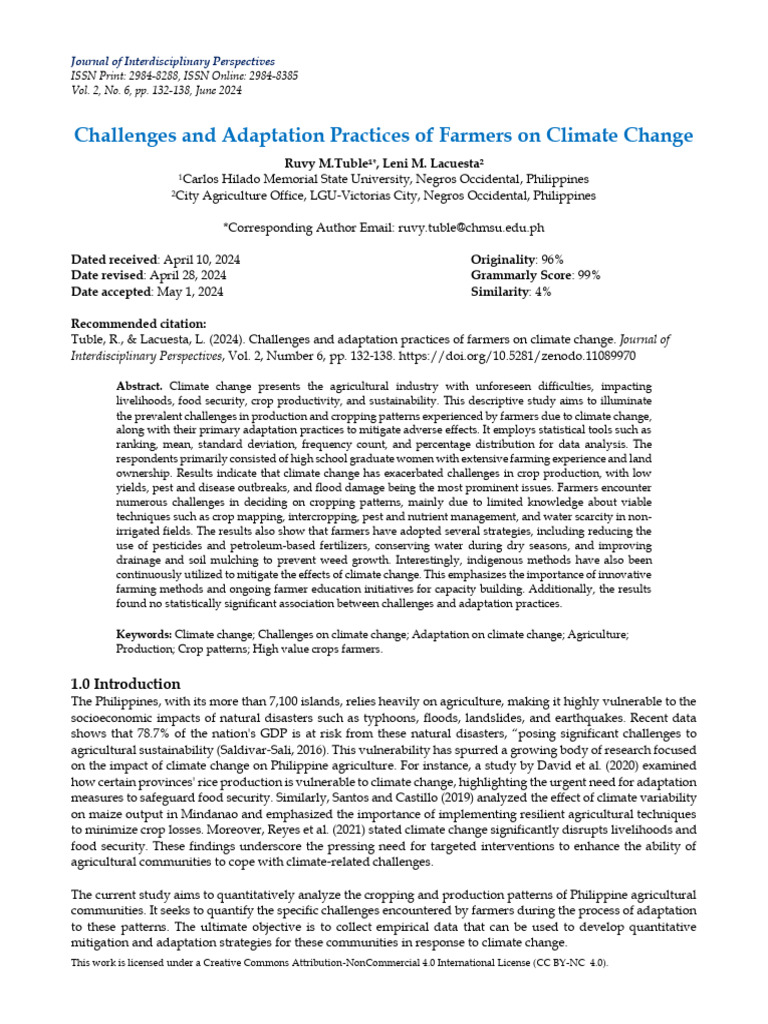
Farmers worldwide are employing a suite of evidence‑based strategies—such as diversified cropping, agroforestry, and precision irrigation—to build resilience against the growing unpredictability of climate change.
Quick Answer
Adapting to climate change means that farmers modify cropping systems, water management, and decision‑driving tools to reduce vulnerability to erratic temperature, precipitation, and pest pressures. Scientific assessments show that diversified farms, improved soil health, and data‑driven management consistently enhance yield stability and reduce resource waste, though the exact outcomes vary by region, crop type, and access to technology. The most important implication is that proactive adaptation can safeguard food security while also delivering co‑benefits such as carbon sequestration and biodiversity conservation, albeit with uncertainties around long‑term effectiveness under extreme climate scenarios.
Key Takeaways
- Diverse cropping and agroforestry spread risk and improve ecosystem services.
- Soil‑health practices increase water retention and nutrient efficiency.
- Precision agriculture and water‑saving technologies boost resource use efficiency.
- Community networks and policy advocacy amplify adaptation capacity.
- Uncertainties remain around the scalability of novel varieties and climate forecasts.
What Is 11 Ways Farmers Are Adapting to the Unpredictability of Climate Change?
The phrase refers to eleven distinct, evidence‑backed practices that farmers adopt to cope with climate‑driven variability in temperature, rainfall, and pest dynamics. These practices span biological, technological, and social dimensions, from planting multiple species to using satellite‑based weather models. Unlike short‑term coping mechanisms (e.g., emergency food aid), these adaptations aim to embed resilience into the agricultural system itself, making farms more capable of sustaining production under a changing climate.
How Does It Work?
1. Diversifying Crop Selection
By growing a mix of cereals, legumes, and root crops, farmers reduce the probability that a single adverse event (e.g., a late frost) will wipe out the entire harvest. Legumes fix atmospheric nitrogen, lowering fertilizer demand and improving soil organic matter.
2. Implementing Agroforestry
Integrating trees and shrubs creates microclimates that moderate temperature extremes, protect soils from erosion, and provide additional products such as fruit or timber. Trees also act as carbon sinks, contributing to mitigation.
3. Investing in Soil Health
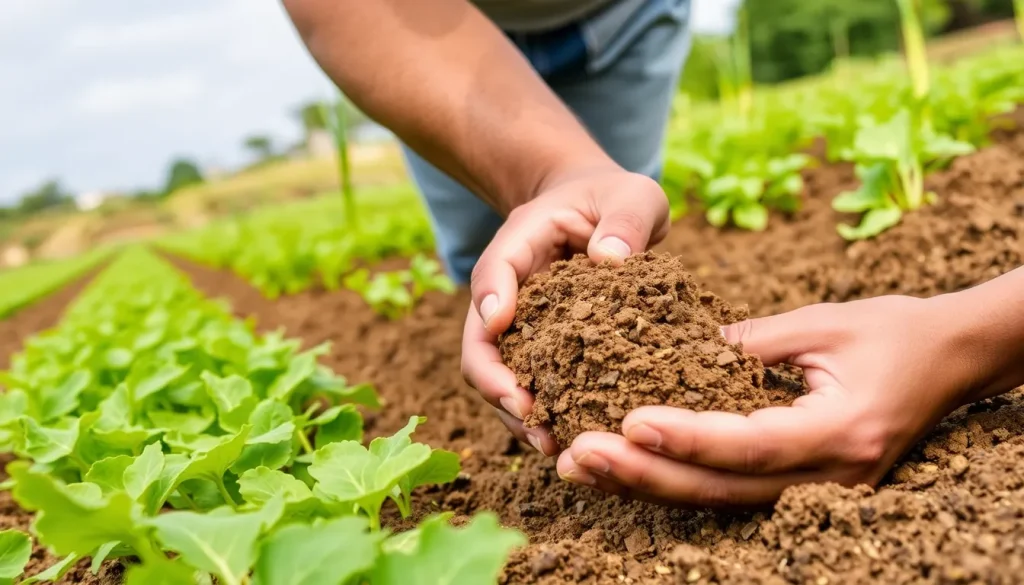
Cover crops, reduced tillage, and organic amendments increase soil structure and porosity, which enhances water infiltration and storage. Healthy soils host diverse microbial communities that support plant nutrition and disease resistance.
4. Using Drought‑Resistant Varieties
Breeding programs and modern gene‑editing techniques have produced cultivars with deeper root systems, reduced transpiration, or altered phenology, allowing crops to survive periods of limited moisture.
5. Employing Precision Agriculture
Sensors, drones, and satellite imagery provide real‑time data on soil moisture, nutrient status, and pest pressure. Variable‑rate irrigation and fertilization apply inputs only where needed, conserving water and reducing runoff.
6. Embracing Water Conservation Techniques
Drip irrigation delivers water directly to the root zone, cutting evaporation losses by up to 50 % in some studies. Rainwater harvesting stores runoff for later use, buffering dry spells.
7. Adopting Integrated Pest Management (IPM)
IPM combines biological control agents, habitat diversification, and targeted pesticide use to keep pest populations below economic thresholds, reducing chemical reliance and preserving beneficial insects.
8. Shifting Farming Calendars
Monitoring long‑term climate trends enables farmers to adjust planting dates, harvest windows, and crop rotations to avoid peak heat or drought periods.
9. Utilizing Climate Forecasting Tools
Advanced seasonal forecasts from agencies such as NOAA and the European Centre for Medium‑Range Weather Forecasts help farmers anticipate rainfall anomalies and plan irrigation or crop choices accordingly.
10. Building Community Resilience
Cooperatives and farmer networks facilitate knowledge exchange, bulk purchasing of climate‑smart inputs, and collective risk‑sharing mechanisms such as index‑based insurance.
11. Engaging in Policy Advocacy
By participating in local and national dialogues, farmers can influence the design of subsidies, research funding, and land‑use regulations that support climate‑adaptive practices.
What Does the Evidence Show?
Multiple lines of evidence confirm the effectiveness of these strategies. A 2022 systematic review of agroecological practices (FAO) found that diversified cropping increased yield stability by 15 % on average across temperate and tropical regions. Long‑term soil‑health trials in the United States and Europe report that reduced tillage and organic amendments raise water‑holding capacity by 10–30 % and lower fertilizer needs. Meta‑analyses of precision irrigation indicate water savings of 20–40 % without compromising yields. Climate‑forecast utilization studies in Kenya and India demonstrate that farmers who incorporate seasonal outlooks reduce crop loss risk by up to 25 %.
Main Causes or Drivers
Direct Climate Drivers
Rising average temperatures, increased frequency of heatwaves, and altered precipitation patterns directly stress crops and soil systems.
Underlying Socio‑Economic Drivers
Global market pressures, land‑use change, and limited access to credit shape the capacity of farmers to invest in adaptive technologies.
Technological and Knowledge Drivers
Advances in remote sensing, plant breeding, and information dissemination enable faster adoption of climate‑smart practices.
Environmental and Human Impacts
Environmental Impacts
Adaptation practices can enhance biodiversity (e.g., agroforestry corridors), improve carbon sequestration in soils, and reduce nutrient runoff, thus mitigating eutrophication of water bodies.
Human Health and Social Impacts
More stable harvests protect food security for rural households, reducing the risk of malnutrition. Reduced pesticide use under IPM lowers occupational exposure for farmworkers.
Economic and Infrastructure Impacts
Yield stability lowers income volatility, enabling better investment in education and health. However, initial costs for precision equipment or drought‑tolerant seeds can be a barrier for smallholders.
Regional Differences
In sub‑Saharan Africa, rainwater harvesting and drought‑tolerant sorghum dominate adaptation, while in the United States Midwest, precision irrigation and cover cropping are more common. Mediterranean regions emphasize agroforestry and shifting planting dates to avoid summer heat. These patterns reflect differences in climate regimes, market access, and institutional support.
What Scientists Know With High Confidence
- Climate change is increasing the frequency of extreme weather events that affect agriculture (IPCC, 2021).
- Soil organic matter improves water retention and nutrient cycling, enhancing resilience (FAO, 2022).
- Diversified cropping systems reduce the probability of total crop failure under variable weather.
- Precision irrigation can substantially cut water use without yield loss.
What Remains Uncertain
Key uncertainties include the long‑term performance of newly bred drought‑resistant varieties under future climate extremes, the scalability of high‑tech precision tools for resource‑poor farmers, and the reliability of seasonal climate forecasts beyond three‑month horizons. Improved long‑term field trials and expanded monitoring networks are needed to reduce these gaps.
Common Misconceptions
Misconception: Adaptation alone can stop climate change.
Reality: Adaptation reduces vulnerability but does not lower greenhouse‑gas concentrations; mitigation remains essential.
Misconception: All climate‑smart practices are expensive.
Reality: Many low‑cost measures—such as crop diversification, cover cropping, and community knowledge sharing—provide resilience benefits with minimal financial outlay.
Misconception: Drought‑resistant crops eliminate the need for irrigation.
Reality: These varieties reduce water demand but still benefit from efficient irrigation, especially during prolonged dry periods.
Solutions and Limitations
Each adaptation strategy addresses specific vulnerabilities but also carries trade‑offs. Agroforestry supplies timber and carbon benefits but may reduce the area available for annual crops, requiring careful land‑use planning. Precision agriculture improves efficiency but depends on reliable electricity and data services, which can be lacking in remote areas. Community cooperatives spread risk but need strong governance to avoid inequitable benefit distribution. Policymakers must therefore pair technical solutions with supportive institutions, financing mechanisms, and equity safeguards.
What Individuals, Communities, and Governments Can Do
What Individuals Can Do
Support local farms that practice crop diversification or agroforestry, choose seasonally appropriate produce, and reduce food waste to lower pressure on agricultural systems.
What Communities and Organizations Can Do
Form or join farmer cooperatives, facilitate shared access to irrigation infrastructure, and organize training workshops on climate‑smart practices.
What Governments Can Do
Provide subsidies for cover crops and drip irrigation, fund research on drought‑resistant varieties, integrate climate forecasts into extension services, and develop insurance schemes that reward proactive adaptation.
What Businesses and Industries Can Do
Invest in supply‑chain transparency to incentivize sustainable farming, offer credit products tailored to climate‑smart technology adoption, and collaborate with NGOs on capacity‑building programs.
Closing Synthesis
Farmers are turning climate uncertainty into an opportunity for innovation. Scientific evidence confirms that diversified cropping, soil‑health improvements, and data‑driven water management enhance resilience, while community organization and supportive policy amplify these gains. Uncertainties remain around the long‑term performance of novel varieties and the reach of high‑tech tools, underscoring the need for continued research and inclusive governance. By aligning technology, ecology, and social structures, agriculture can sustain food production even as the climate becomes less predictable.
Frequently Asked Questions
What does it mean for farmers to adapt to climate change?
Adapting to climate change involves changing cropping systems, water management, and decision‑making tools so farms can withstand more erratic temperatures, rainfall, and pest pressures while maintaining productivity.
How does crop diversification reduce climate risk for farmers?
By planting multiple species, farmers spread the chance of loss across different crops; if one fails due to heat, frost, or drought, others can still produce, improving overall yield stability.
What role does precision agriculture play in conserving water?
Precision agriculture uses sensors, drones, and satellite data to apply irrigation only where soil moisture is low, cutting evaporation losses and often saving 20‑40 % of water compared with uniform watering.
Which adaptation practices are most cost‑effective for smallholder farmers?
Low‑cost measures such as crop diversification, cover cropping, rainwater harvesting, and community knowledge sharing provide resilience benefits without requiring large upfront investments.
How can consumers support climate‑smart farming?
Consumers can buy from farms that use diversified or agroforestry practices, choose seasonal produce, and reduce food waste, thereby encouraging demand for resilient, sustainable agriculture.




Leave a Comment