
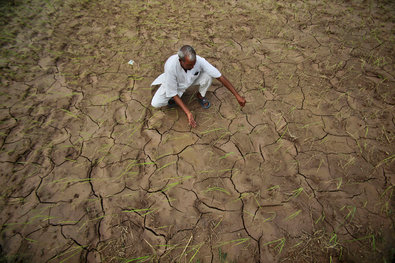
Global warming is expected to both expand and shrink the world’s arable land, with northern regions gaining potential farmland while many tropical and subtropical areas lose productive soils.
Quick Answer
Arable land is land suitable for plowing and crop production. Rising global temperatures lengthen growing seasons in high‑latitude regions, potentially adding new farmland, but they also intensify heat stress, alter precipitation, and increase extreme events in many low‑latitude zones, reducing suitability. The scientific consensus, reflected in IPCC assessment reports, indicates a net global loss of arable land by mid‑century, although regional gains are possible. The most important implication is heightened food‑security risk for populations already vulnerable to climate impacts, with uncertainty driven by future emissions pathways and adaptive capacity.
Key Takeaways
- Higher latitudes may see longer growing seasons as per climate model ensembles (IPCC, 2021).
- Tropical and subtropical regions face higher temperature stress and erratic rainfall, threatening existing croplands.
- Soil degradation and water scarcity can offset any gains from longer seasons.
- Adaptation measures—such as drought‑tolerant varieties and improved irrigation—are unevenly distributed.
- Policy and investment decisions will shape whether net arable land expands or contracts.
- Uncertainty remains around permafrost thaw, pest migration, and socio‑economic responses.
What Is the Question of Whether Global Warming Will Expand or Shrink the World’s Arable Land?
Arable land refers to land that can be tilled and used for growing crops, encompassing soil quality, climate suitability, and water availability. It differs from pasture or forest land, which are not routinely cultivated. Understanding how climate change reshapes this land base is crucial because it directly influences global food production, trade, and livelihoods.
How Does It Work?
Temperature and Growing Seasons
Warmer temperatures raise the thermal threshold for many crops, allowing planting earlier in spring and extending harvest into autumn. In regions north of 50° N, such as parts of Canada, Scandinavia, and Siberia, climate models project an average growing‑season lengthening of 2–4 weeks by 2050 (IPCC, 2021). This can make previously marginal soils viable for cereals and oilseeds.
Precipitation and Water Availability
Crop yields depend on both rainfall amount and timing. Climate change alters global precipitation patterns: high‑latitude areas are expected to become wetter, while many subtropical zones become drier. Water‑stress reduces photosynthesis and can render otherwise fertile soils unproductive, especially where irrigation infrastructure is lacking.
Soil Health and Extreme Events
Higher temperatures accelerate organic‑matter decomposition, potentially depleting soil carbon and nutrients. Simultaneously, the frequency of heatwaves, floods, and droughts is rising. Such events can cause erosion, salinization, and loss of topsoil, undermining the long‑term productivity of newly opened lands.
What Does the Evidence Show?
Observational records from the past four decades reveal modest northward shifts in crop zones, corroborated by satellite‑derived vegetation indices. A systematic review of 27 regional studies (FAO, 2020) concluded that while temperate zones experience modest gains, the net global trend is a reduction of 3–6 % in suitable cropland under a high‑emissions scenario (RCP8.5) by 2100. Model intercomparisons in the CMIP6 ensemble consistently show that water scarcity, not temperature alone, drives most projected losses.
Main Causes or Drivers
Direct Climate Forcing
Increased atmospheric CO₂ and associated greenhouse‑gas warming raise average temperatures and modify atmospheric circulation, directly influencing temperature and precipitation regimes.
Land‑Use Feedbacks
Deforestation, urban expansion, and intensive agriculture can exacerbate local climate effects, such as reduced evapotranspiration, which in turn intensifies heat and moisture stress on remaining arable land.
Socio‑Economic Factors
Access to technology, capital, and policy support determines whether farmers can adopt climate‑resilient practices, influencing the realized extent of arable land.
Environmental and Human Impacts
Environmental Impacts
Shifts in arable land affect biodiversity by altering habitat connectivity. Expansion into boreal forests can increase carbon emissions, while loss of tropical croplands may lead to further deforestation as farmers seek new land.
Human Health and Social Impacts
Reduced crop yields in already food‑insecure regions elevate malnutrition risk, especially for children and the elderly. Heat stress can also diminish labor productivity during critical planting periods.
Economic and Infrastructure Impacts
Changes in land suitability can disrupt supply chains, raise food prices, and necessitate investment in new irrigation or drainage systems, straining public budgets.
Regional Differences
In Canada and northern Russia, permafrost thaw is gradually exposing mineral‑rich soils, offering new opportunities for grain production, though infrastructure remains a barrier. Conversely, Sub‑Saharan Africa faces projected yield declines of up to 30 % for staple cereals under RCP8.5 (World Bank, 2022). South‑Asian river basins may experience intensified flood cycles, threatening rice paddies. These examples illustrate that regional outcomes depend on the interplay of climate trends, soil characteristics, and adaptive capacity.
What Scientists Know With High Confidence
- Global average temperatures will continue to rise under continued greenhouse‑gas emissions.
- Temperature increases will lengthen growing seasons in many high‑latitude regions.
- Changes in precipitation patterns will create water‑stress hotspots in the tropics and subtropics.
- Soil carbon loss accelerates with warming, potentially reducing fertility.
- Without substantial adaptation, global net arable land is projected to decline.
What Remains Uncertain
Key uncertainties include the rate of permafrost thaw and its impact on soil structure, the speed of pest and disease migration into new climate zones, and the effectiveness of large‑scale adaptation strategies such as genetically engineered drought‑tolerant crops. Additionally, future socioeconomic pathways—particularly investment in irrigation and land‑use policies—will heavily influence outcomes, making precise quantitative forecasts challenging.
Common Misconceptions
Misconception: Global warming will uniformly increase farmland everywhere.
Reality: Climate impacts are highly regional; while some high‑latitude areas may gain suitability, many tropical and subtropical zones are projected to lose productive land.
Misconception: More CO₂ automatically boosts crop yields.
Reality: Elevated CO₂ can enhance photosynthesis, but heat stress, nutrient limitations, and water scarcity often negate any fertilization effect.
Misconception: Permafrost thaw only affects the Arctic.
Reality: Thawing can release stored carbon, alter hydrology, and create unstable soils that affect agricultural expansion in adjacent boreal regions.
Misconception: Farmers can simply switch to any crop that tolerates heat.
Reality: Crop suitability also depends on soil type, pest pressure, market demand, and cultural practices; transition requires research, seed access, and policy support.
Solutions and Limitations
Adaptation strategies include developing heat‑ and drought‑tolerant crop varieties, improving water‑use efficiency through drip irrigation, and adopting conservation agriculture to maintain soil health. These measures can offset some climate impacts but require substantial investment, farmer training, and supportive policies. Mitigation—reducing greenhouse‑gas emissions—remains essential to limit the magnitude of warming; however, mitigation alone cannot protect existing arable land from the already committed climate change.
What Individuals, Communities, and Governments Can Do
What Individuals Can Do
- Support and purchase food produced with climate‑smart practices.
- Reduce food waste, lowering pressure on agricultural expansion.
- Advocate for policies that fund research into resilient crops.
What Communities and Organizations Can Do
- Implement local water‑harvesting and storage projects.
- Promote farmer field schools that teach climate‑adaptive techniques.
- Invest in community seed banks to preserve diverse, resilient varieties.
What Governments Can Do
- Integrate climate risk assessments into national land‑use planning.
- Provide subsidies or low‑interest loans for climate‑smart irrigation and soil‑management equipment.
- Support international research collaborations to share resilient germplasm.
Closing Synthesis
Global warming will reshape the world’s arable land in a complex, region‑specific manner: northern latitudes may see modest gains, while many tropical and subtropical regions risk substantial losses. High‑confidence science points to temperature‑driven season lengthening and water‑stress‑driven declines as the dominant mechanisms. Uncertainties around soil dynamics, pest migration, and socioeconomic responses mean precise projections remain tentative. Mitigation, combined with targeted adaptation—such as resilient crops, efficient water use, and supportive policies—offers the most viable path to preserve food security in a warming world.
Frequently Asked Questions
What defines arable land and why is it important for food security?
Arable land is land suitable for plowing and growing crops, encompassing soil quality, climate conditions, and water availability. It forms the foundation of global food production, so changes in its extent directly affect the ability to feed the growing population.
How does rising temperature affect the length of growing seasons in high‑latitude regions?
Higher temperatures raise the thermal threshold for many crops, allowing earlier planting and later harvesting. Climate models project that regions north of 50° N could see growing seasons lengthen by 2–4 weeks by mid‑century, potentially opening new areas for cereal and oilseed production.
Why are tropical regions expected to lose more arable land under climate change?
Tropical areas face increased heat stress, more erratic rainfall, and heightened risk of droughts and floods. These conditions reduce crop yields, degrade soils, and can make previously productive land unsuitable for agriculture, leading to net losses of arable land.
What are the main uncertainties in projecting future arable land distribution?
Key uncertainties include the rate of permafrost thaw, how quickly pests and diseases will shift into new zones, and the effectiveness of large‑scale adaptation measures. Socio‑economic pathways, such as investment in irrigation and land‑use policies, also introduce variability into projections.
What actions can governments take to protect arable land from climate impacts?
Governments can integrate climate risk into land‑use planning, provide financial incentives for climate‑smart irrigation and soil‑management technologies, and fund research collaborations that develop and distribute heat‑ and drought‑tolerant crop varieties.





Leave a Comment