
The United Nations cannot instantly halt global warming because climate action depends on sovereign nations, economic interests, technology gaps, and societal change, making coordinated, equitable solutions a complex, long‑term process.
Quick Answer
Global warming is driven by greenhouse‑gas emissions that accumulate in the atmosphere, raising Earth’s average temperature. The UN, as an intergovernmental forum, can set targets, share knowledge, and mobilise finance, but it cannot enforce policy within sovereign states. Political disagreements, unequal historic responsibility, reliance on fossil‑fuel economies, and uneven access to clean‑energy technology all limit the UN’s ability to unilaterally stop warming. Consequently, while the UN is essential for coordination, real mitigation requires national action, private‑sector transformation, and public‑wide behavioural shifts, all of which operate under substantial uncertainty.
Key Takeaways
- The UN can negotiate agreements but lacks enforcement power over sovereign nations.
- Climate justice creates tension between high‑emitting historic polluters and vulnerable low‑income countries.
- Economic dependence on fossil fuels and lobbying by powerful industries slow policy implementation.
- Technological diffusion is uneven, limiting rapid global decarbonisation.
- Effective mitigation demands coordinated action across governments, businesses, and societies, not a single institution.
What Is the Question “Why the UN Can’t Simply Stop Global Warming?”
The phrase asks why the United Nations, despite its global mandate, cannot instantly halt the rise in Earth’s average temperature. It refers to the limits of an international organisation that relies on voluntary commitments from 193 member states, each with distinct political systems, economic priorities, and levels of development. Understanding this question requires grasping the UN’s role in climate governance, the nature of sovereign authority, and the structural drivers of emissions.
How Does It Work?
1. International Negotiations and Treaties
Through the United Nations Framework Convention on Climate Change (UNFCCC), the UN facilitates negotiations such as the Kyoto Protocol (1997) and the Paris Agreement (2015). These treaties set collective goals (e.g., limiting warming to well below 2 °C) and nationally determined contributions (NDCs). However, the agreements are legally non‑binding; compliance depends on political will and domestic legislation.
2. Financing and Technology Transfer
The Green Climate Fund and other UN‑linked mechanisms mobilise climate finance from developed to developing countries. Funding supports renewable‑energy projects, adaptation measures, and capacity building, but disbursement is often slower than the pace required to match emission trajectories.
3. Monitoring, Reporting, and Verification (MRV)
UN bodies such as the Intergovernmental Panel on Climate Change (IPCC) compile scientific assessments that inform policy. National inventories report emissions, yet data quality varies, creating gaps that hinder accurate global accounting.
4. Consensus‑Based Decision Making
UN resolutions typically require broad consensus. Divergent national interests—especially among major emitters—can stall ambitious language or lead to watered‑down commitments.
What Does the Evidence Show?
Long‑term observations from NASA and NOAA demonstrate that atmospheric CO₂ increased from 280 ppm pre‑industrial to 421 ppm in 2023, driving a 1.2 °C rise in global mean surface temperature (IPCC AR6, 2021). The IPCC also notes that collective action under the Paris framework is insufficient to meet the 1.5 °C pathway without rapid, deep emissions cuts across all sectors.
Analyses of UN climate finance reveal that, as of 2022, only about 30 % of pledged funds had been delivered, highlighting implementation bottlenecks (UNFCCC Finance Report, 2023). Studies of treaty compliance show that many countries fall short of their own NDC targets, with the Global Commission on Adaptation (2021) estimating a cumulative emissions gap of roughly 10 GtCO₂e per year.
Main Causes or Drivers
Political Sovereignty and Consensus
Each nation retains the right to set its own environmental regulations. Countries reliant on coal, oil, or gas often resist stringent mitigation to protect employment and energy security.
Economic Interests and Fossil‑Fuel Lobbying
Global fossil‑fuel revenue reached US$5.3 trillion in 2022 (IEA, 2023). Industry lobbying can dilute climate policies, as documented in multiple parliamentary investigations.
Climate Justice and Historical Responsibility
Developed economies contributed roughly 79 % of cumulative CO₂ emissions from 1751‑2019 (WRI, 2020), while low‑income nations bear disproportionate climate impacts. Negotiations must balance mitigation duties with adaptation financing, creating persistent stalemates.
Technological and Infrastructure Gaps
Renewable‑energy capacity grew by 9 % annually between 2010‑2020, yet many low‑income regions lack grid infrastructure, storage, or skilled labour to deploy these technologies at scale.
Social Behaviour and Cultural Norms
Consumer preferences for inexpensive, high‑carbon products, and the inertia of existing urban designs, slow the transition to low‑emission lifestyles.
Environmental and Human Impacts
Environmental Impacts
Rising temperatures intensify heatwaves, melt glaciers, and shift precipitation patterns, leading to sea‑level rise of about 3.4 mm per year since 1993 (IPCC AR6). Ecosystem disruptions include coral bleaching events that have affected 75 % of the world’s reefs since 1980.
Human Health and Social Impacts
Heat‑related mortality increases by an estimated 0.4 % per 0.1 °C rise in temperature (WHO, 2021). Food security is threatened as staple yields decline by 5‑10 % in tropical regions under high‑emission scenarios.
Economic and Infrastructure Impacts
Climate‑related disasters cost the global economy over US$650 billion annually (World Bank, 2022). Coastal infrastructure in low‑lying nations faces chronic inundation, prompting climate‑driven migration.
Regional Differences
In sub‑Saharan Africa, limited adaptive capacity and high exposure to drought amplify food insecurity, whereas Europe’s comparatively robust infrastructure allows faster renewable‑energy integration. Small island developing states experience existential threats from sea‑level rise, while North America’s large energy‑intensive industries create distinct mitigation challenges.
What Scientists Know With High Confidence
What Scientists Know With High Confidence
- Human activities, especially fossil‑fuel combustion, are the dominant cause of observed warming since the mid‑20th century (IPCC AR6, 2021).
- Global average temperature has risen about 1.2 °C above pre‑industrial levels.
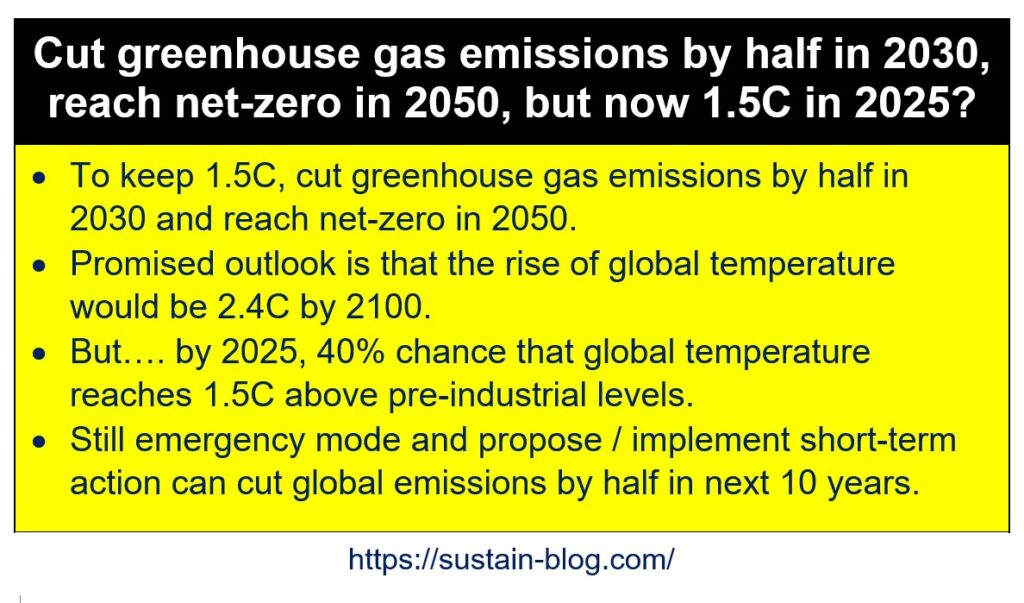
- Continued emissions at current rates will likely exceed 1.5 °C warming within the next two decades.
- International cooperation through the UNFCCC improves data sharing, finance mobilisation, and policy coordination, but cannot compel national law‑making.
What Remains Uncertain
What Remains Uncertain
Key uncertainties include the exact timing and magnitude of climate‑feedback loops such as permafrost carbon release, the speed at which emerging technologies (e.g., large‑scale carbon capture) will become cost‑competitive, and how political shifts will affect future NDC ambition levels. These gaps affect long‑term scenario projections but do not overturn the fundamental conclusion that emissions must fall sharply.
Common Misconceptions
Common Misconceptions
Misconception: The UN can dictate emissions cuts for every country.
Reality: The UN can only negotiate agreements; implementation rests with national governments, which retain sovereign authority over legislation and enforcement.
Misconception: All nations emit the same amount of greenhouse gases.
Reality: A small group of high‑income countries account for the majority of historic emissions, while many low‑income nations contribute minimally but experience severe climate impacts.
Misconception: Renewable energy is already cheap enough to replace all fossil fuels immediately.
Reality: While costs have fallen dramatically, large‑scale deployment still faces grid integration challenges, storage needs, and capital constraints, especially in developing regions.
Misconception: Individual lifestyle changes alone can stop global warming.
Reality: Personal actions matter but must be coupled with systemic policy shifts and industrial transformation to achieve the emission reductions required.
Misconception: Climate change is a future problem; current impacts are negligible.
Reality: Observable impacts—heatwaves, extreme precipitation, and sea‑level rise—are already affecting millions worldwide.
Solutions and Limitations
Effective responses combine mitigation, adaptation, and finance. Mitigation strategies such as rapid renewable‑energy rollout, energy‑efficiency standards, and phase‑out of coal can cut emissions, yet they require massive capital, political will, and reliable supply chains. Adaptation measures—including climate‑resilient infrastructure, early‑warning systems, and ecosystem restoration—protect vulnerable communities but do not reduce atmospheric greenhouse gases.
Nature‑based solutions (e.g., reforestation) sequester carbon but are limited by land availability and may compete with food production. Carbon‑capture and storage (CCS) offers theoretical potential but remains expensive and unproven at gigaton scales. Financial mechanisms, such as the Green Climate Fund, are essential but face funding gaps and complex governance.
What Individuals, Communities, and Governments Can Do
What Individuals Can Do
- Reduce personal energy use (e.g., switch to LED lighting, improve home insulation).
- Choose low‑carbon transportation options, such as public transit, cycling, or electric vehicles when affordable.
- Support policies and politicians that prioritize climate action through voting and civic engagement.
- Participate in community renewable projects or local climate‑justice initiatives.
What Communities and Organizations Can Do
- Develop local climate‑action plans that align with national NDCs.
- Invest in district‑scale solar or wind installations to lower reliance on centralized fossil fuels.
- Implement climate‑resilient land‑use practices, such as urban greening and flood‑plain restoration.
- Facilitate climate education programs to build public awareness and capacity.
What Governments Can Do
- Enact binding emissions‑reduction legislation aligned with the Paris 1.5 °C pathway.
- Phase out fossil‑fuel subsidies and redirect funds toward clean‑energy research and deployment.
- Scale up climate finance to meet the UNFCCC goal of $100 billion per year for developing nations.
- Strengthen MRV systems to ensure transparent reporting and accountability.
- Promote just‑transition policies that protect workers in carbon‑intensive sectors.
Putting It All Together
The United Nations plays a pivotal coordinating role but cannot alone stop global warming because climate mitigation hinges on national sovereignty, economic realities, technology diffusion, and societal change. High‑confidence science confirms that human‑driven emissions are warming the planet, while uncertainties remain around feedback mechanisms and future policy ambition. Addressing the challenge requires a layered approach: strong international agreements, ambitious national policies, equitable finance, rapid technology deployment, and widespread public participation. Recognising the UN’s limits helps focus effort where it matters most—on collective action that respects equity and drives systemic transformation.
Frequently Asked Questions
What is the United Nations' role in global climate governance?
The UN, primarily through the UNFCCC, negotiates international agreements like the Paris Agreement, mobilises climate finance, and provides a platform for data sharing, but it cannot enforce laws within sovereign nations.
Why can't the UN unilaterally halt greenhouse‑gas emissions?
Because emission reductions depend on national policies, economic structures, and private‑sector actions; the UN lacks legal authority to compel countries to adopt or enforce specific climate measures.
What are the main barriers that limit UN climate action?
Key barriers include divergent national interests, historic responsibility and climate‑justice disputes, fossil‑fuel industry lobbying, uneven access to clean‑energy technology, and the need for consensus among 193 member states.
What high‑confidence scientific findings support the need for urgent climate action?
Scientists are confident that human activities are the dominant cause of warming, the planet has already warmed about 1.2 °C above pre‑industrial levels, and continued emissions will likely exceed the 1.5 °C threshold within two decades.
What actions can individuals take that meaningfully contribute to climate mitigation?
Individuals can lower personal energy use, choose low‑carbon transport, support climate‑friendly policies through voting, and engage in community renewable projects, all of which complement larger systemic efforts.






Leave a Comment