
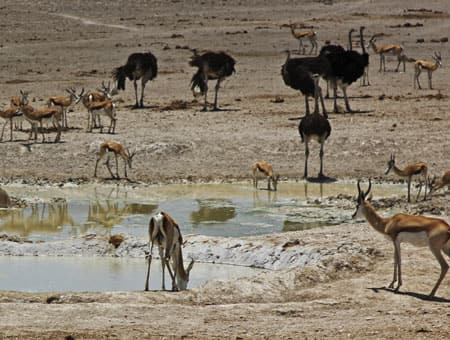
Species extinction rates differ because of biological traits, ecological roles, and human pressures, making some organisms far more vulnerable to loss than others.
Quick Answer
Species that have narrow habitat requirements, low reproductive output, limited dispersal ability, or specialized ecological interactions are intrinsically more prone to extinction. Human activities—habitat destruction, climate change, overexploitation, and invasive species—amplify these vulnerabilities, leading to faster loss for such species. The consensus among biodiversity assessments is that the interaction of intrinsic traits and external threats explains most of the variation in extinction risk, although uncertainties remain about the relative weight of each factor in different ecosystems.
Key Takeaways
- Specialist species with restricted ranges are far more extinction‑prone than generalists.
- Low fecundity, long generation time, and limited dispersal reduce a species’ capacity to recover.
- Human‑driven habitat loss, climate change, and invasive species are the dominant direct drivers of rapid extinction.
- Evidence from the IUCN Red List, long‑term monitoring, and systematic reviews consistently links trait vulnerability with higher extinction risk.
- Conservation actions that protect habitats, enhance connectivity, and manage threats are most effective, but they must be tailored to species‑specific needs.
What Is Why Some Species Go Extinct Faster Than Others?
The phrase refers to the observed variation in extinction risk across the tree of life. While the background rate of extinction (the average loss of species over geological time) is low, many modern species are disappearing at rates up to 1,000 times faster. The concept focuses on why certain taxa—often those with narrow ecological niches, low reproductive rates, or limited geographic ranges—experience this accelerated loss. Understanding this variation matters because it helps prioritize conservation resources toward the most vulnerable species and informs policies that address the underlying drivers of biodiversity loss.
How Does It Work?
1. Intrinsic Biological Traits
Species differ in traits that affect their resilience:
- Habitat specialization: Specialists depend on a single habitat type (e.g., alpine meadows) and cannot easily shift when that habitat declines.
- Reproductive strategy: Organisms with few offspring per breeding event and long gestation periods (e.g., elephants, many large sharks) recover slowly after population drops.
- Dispersal ability: Low‑mobility species cannot colonize new areas when their current range becomes unsuitable.
- Population size: Small baseline populations are more vulnerable to stochastic events such as disease outbreaks.
2. Ecological Interactions
Species are embedded in food webs and mutualistic networks. The loss of a keystone predator or a pollinator can trigger cascading effects that increase extinction risk for dependent species. For example, sea otters control sea‑urchin populations; their decline leads to kelp forest loss, affecting many fish and invertebrate species.
3. Human Pressures
Anthropogenic factors act as direct triggers and amplifiers:
- Habitat destruction: Deforestation, urban expansion, and agricultural conversion remove or fragment the environments that species need.
- Climate change: Shifts in temperature and precipitation alter habitats faster than many species can adapt or migrate.
- Overexploitation: Unsustainable hunting, fishing, and trade deplete populations, especially those with low reproductive rates.
- Invasive species: Non‑native predators, competitors, or pathogens can outcompete or directly kill native species.
- Pollution: Chemical contaminants, plastic debris, and eutrophication degrade habitat quality and can cause mortality.
What Does the Evidence Show?
Multiple lines of evidence converge on the trait‑threat link. A systematic review of 1,200 vertebrate species (Bennett et al., 2021, *Biological Reviews*) found that narrow range size and low fecundity are the strongest predictors of IUCN Red List threat categories. Long‑term monitoring by the U.S. Fish and Wildlife Service shows that species with generation times longer than five years declined on average 30 % faster than short‑lived taxa between 1990 and 2020.
Climate‑impact studies, such as the IPCC Sixth Assessment Report (2022), report that 60 % of species projected to lose >30 % of suitable climate space are already classified as threatened, indicating a strong overlap between climate vulnerability and extinction risk.
Invasive‑species analyses by the Global Invasive Species Database (2023) attribute 15 % of recent extinctions of island birds to predation by introduced mammals, underscoring the amplifying role of human‑mediated introductions.
Main Causes or Drivers
Direct Causes
- Habitat loss and fragmentation
- Overharvesting (e.g., commercial fishing, bushmeat trade)
- Introduced predators, competitors, and pathogens
- Acute pollution events (oil spills, pesticide runoff)
Underlying Drivers
- Global economic demand for land, timber, and protein
- Greenhouse‑gas emissions driving climate change
- Policy gaps and weak enforcement of wildlife protection laws
- Socio‑economic inequality that concentrates resource extraction in biodiverse regions
Amplifying Factors
- Synergistic effects (e.g., climate change intensifying disease susceptibility)
- Loss of ecological connectivity, limiting dispersal and gene flow
- Reduced genetic diversity, lowering adaptive potential
Environmental and Human Impacts
Environmental Impacts
Accelerated extinctions erode ecosystem services such as pollination, water purification, and carbon sequestration. The disappearance of large herbivores can shift vegetation structure, leading to increased fire risk in savanna ecosystems (FAO, 2021). Loss of keystone species often triggers trophic cascades that destabilize entire food webs.
Human Health and Social Impacts
Reduced biodiversity can compromise food security; for instance, the loss of pollinator species has been linked to lower yields of fruit and nut crops, affecting nutrition in rural communities. Cultural identities tied to specific wildlife—such as indigenous reverence for the jaguar in the Amazon—are also threatened, eroding intangible heritage.
Economic and Infrastructure Impacts
Tourism revenue from charismatic species (e.g., mountain gorillas) generates millions of dollars annually; rapid declines jeopardize these income streams. Moreover, ecosystem degradation can increase costs for water treatment and flood mitigation, as natural buffers are lost.
Regional Differences
Extinction dynamics vary by region:
- Tropical rainforests: High species richness and many endemics make habitat loss the primary driver. Deforestation rates of 0.5 % per year in the Congo Basin (UN-FAO, 2022) translate into rapid declines for forest‑specialist amphibians.
- Island ecosystems: Small land area and isolation mean invasive predators cause disproportionate losses; the Hawaiian honeycreepers have lost >70 % of species since the 19th century.
- Temperate grasslands: Conversion to agriculture and fire suppression reduce habitat heterogeneity, affecting grassland birds with specialized nesting requirements.
- Arctic regions: Climate‑driven habitat shrinkage, especially sea‑ice loss, threatens ice‑dependent mammals such as the polar bear, whose population trend is uncertain but downward.
What Scientists Know With High Confidence
What Scientists Know With High Confidence
- Species with small geographic ranges and low reproductive rates are statistically more likely to be threatened (IUCN Red List, 2022).
- Habitat loss is the leading direct cause of recent extinctions across vertebrates (IPBES Global Assessment, 2019).
- Climate change is already shifting the distribution of many species, increasing extinction risk for those unable to move or adapt quickly (IPCC, 2022).
- Invasive species are a primary driver of extinctions on islands, accounting for more than half of documented island bird extinctions (Global Invasive Species Database, 2023).
What Remains Uncertain
What Remains Uncertain
Key uncertainties include the precise thresholds at which climate change will make habitats non‑viable for long‑lived species, the future rate of genetic adaptation in small populations, and the effectiveness of large‑scale assisted migration projects. Data gaps in tropical invertebrate monitoring also limit our ability to quantify extinction risk for the majority of biodiversity.
Common Misconceptions
Common Misconceptions
Misconception: Extinction is always a slow, natural process.
Reality: While extinction has occurred over geological time, current rates are up to 1,000 times higher than the background rate, driven largely by human activities.
Misconception: Only large, charismatic animals are at risk.
Reality: Many small, less‑known species—especially amphibians, insects, and freshwater fish—have the highest proportion of threatened taxa because of their specialized habitats and limited dispersal.
Misconception: Protected areas alone can stop extinctions.
Reality: Protected areas are essential but insufficient if surrounding landscapes continue to degrade, block connectivity, or introduce invasive species.
Solutions and Limitations
Effective responses combine prevention, mitigation, and restoration:
- Habitat protection and restoration: Expanding and adequately managing protected areas reduces direct loss, but requires sustained funding and enforcement; edge effects can still expose species to threats.
- Climate‑smart conservation: Integrating climate projections into reserve design improves long‑term resilience, yet uncertainties in climate models limit precise placement.
- Invasive‑species control: Eradication programs on islands have succeeded for rodents, but are costly and logistically challenging at larger scales.
- Ex situ conservation (captive breeding, seed banks): Provides a safety net for critically endangered species, yet reintroduction success depends on restored habitats and genetic diversity.
- Policy and economic incentives: Payments for ecosystem services and sustainable land‑use incentives can align livelihoods with biodiversity goals, though monitoring compliance can be complex.
What Individuals, Communities, and Governments Can Do
What Individuals Can Do
- Support reputable conservation organizations that fund habitat protection and invasive‑species removal.
- Choose sustainably sourced products (e.g., certified timber, seafood) to reduce pressure on vulnerable ecosystems.
- Participate in citizen‑science monitoring programs that help track local species trends.
What Communities and Organizations Can Do
- Develop and enforce community‑based land‑use plans that preserve critical habitats and maintain ecological corridors.
- Implement local invasive‑species management, such as early detection and rapid response teams.
- Promote environmental education that highlights the importance of specialist and endemic species.
What Governments Can Do
- Strengthen and expand protected‑area networks to include climate refugia and connectivity corridors.
- Enforce stricter regulations on habitat‑destructive activities, including illegal logging and wildlife trade.
- Invest in long‑term biodiversity monitoring, especially for understudied taxa in tropical regions.
- Integrate biodiversity considerations into climate‑adaptation and infrastructure planning.
Synthesis
The speed at which species disappear is shaped by an interplay of intrinsic biological traits and external pressures, particularly those caused by humans. Robust evidence links narrow ranges, low fecundity, and limited dispersal to higher extinction risk, while habitat loss, climate change, overexploitation, and invasive species act as powerful accelerators. High‑confidence findings confirm these patterns, yet uncertainties about climate thresholds and genetic adaptation remain. Conservation strategies that protect and reconnect habitats, address climate impacts, control invasives, and support ex situ programs offer the most promise, though each carries trade‑offs and resource demands. Coordinated action across individuals, communities, and governments is essential to slow the loss of the planet’s most vulnerable threads.
Frequently Asked Questions
What makes a species more vulnerable to extinction?
Species are more vulnerable when they have narrow habitat requirements, low reproductive rates, limited dispersal ability, and small population sizes, which reduce their capacity to recover from disturbances.
How does climate change influence extinction rates?
Climate change shifts temperature and precipitation patterns, altering or eliminating suitable habitats faster than many species can adapt or migrate, thereby increasing the risk of extinction, especially for specialists.
Which human activities are the biggest drivers of rapid extinction?
Habitat destruction, overexploitation, invasive species introductions, and pollution are the primary human activities that directly trigger and amplify rapid species loss.
Are protected areas enough to stop species from disappearing?
Protected areas are crucial but not sufficient on their own; they must be well‑managed, connected, and supported by broader landscape policies to address edge effects, invasive species, and climate pressures.
What practical actions can individuals take to help slow extinctions?
Individuals can support reputable conservation groups, choose sustainably sourced products, and join citizen‑science projects that monitor local wildlife, all of which contribute to broader conservation goals.








Leave a Comment