
These changes do not occur independently. Warmer water expands, raising sea level. Melting land ice adds additional water to the ocean. Heat and freshwater can alter circulation, while warming and acidification place simultaneous pressure on coral reefs, shell-forming organisms, fisheries and coastal habitats. Understanding these connections is essential for managing climate risks and developing effective mitigation and adaptation strategies.
Why the Ocean Is Central to Earth’s Climate
The ocean is one of the most important regulators of Earth’s climate. It absorbs solar energy, stores heat and redistributes that heat through currents. Warm surface currents carry tropical heat toward higher latitudes, while colder and denser water moves through deeper parts of the ocean. These movements influence regional temperatures, rainfall patterns, storms, nutrient availability and seasonal weather.
The ocean also exchanges carbon dioxide with the atmosphere. Some atmospheric carbon dioxide dissolves into seawater, while microscopic marine plants absorb carbon through photosynthesis. Ocean organisms, particles and circulation then transport some of that carbon into deeper waters and sediments.
Human greenhouse gas emissions have disturbed these natural exchanges. The Intergovernmental Panel on Climate Change has concluded that human influence has unequivocally warmed the atmosphere, ocean and land, producing widespread changes in the ocean and cryosphere.
Readers can explore this connected system through the broader Oceans & Ice collection.
The ocean as a climate buffer
The ocean has absorbed about 90 percent of the excess heat associated with human-caused greenhouse gas emissions. That absorption has reduced the amount of immediate atmospheric warming, but it has not eliminated the energy. It has transferred much of the warming into the ocean, where it can persist and affect climate for decades or centuries.
This long-term heat storage creates a form of climate inertia. Even when atmospheric temperatures fluctuate from year to year, accumulated ocean heat can continue affecting sea level, ice shelves, marine ecosystems and weather patterns.
Ocean Warming: Where Most of the Extra Heat Goes
Ocean warming refers to the long-term increase in heat stored throughout the ocean. Sea-surface temperature is the most visible measurement, but scientists also measure ocean heat content at different depths. Ocean heat content provides a particularly important climate indicator because it captures energy stored below the surface rather than only the temperature of a thin upper layer.
The World Meteorological Organization reported that ocean heat content down to 2,000 metres reached its highest level in the observational record in 2025.
What causes ocean warming?
Greenhouse gases slow the escape of heat from Earth to space. The resulting energy imbalance adds heat to the climate system. Because water has a high heat capacity and the ocean covers such a large area, it absorbs most of that excess energy.
Heat does not enter or spread through the ocean uniformly. Winds, currents, mixing, salinity and natural climate patterns such as El Niño and La Niña affect where heat accumulates. Some regions warm more rapidly than others, and changes can occur at the surface, along continental shelves or in deeper waters.
Marine heatwaves
A marine heatwave is a prolonged period of unusually warm ocean conditions in a particular area. Like heatwaves on land, marine heatwaves vary in duration, intensity and geographic extent. They can stress kelp forests, seagrass beds, coral reefs, fish populations and aquaculture operations.
Marine heatwaves may cause species to migrate toward cooler waters, disrupt feeding or spawning cycles and increase the risk of coral bleaching. When extreme heat occurs alongside pollution, low oxygen or acidification, organisms may have fewer opportunities to recover.
Consequences of ocean warming
- Thermal expansion raises sea level as warming water occupies more space.
- Coral bleaching becomes more frequent during prolonged heat stress.
- Species distributions shift as organisms seek suitable temperatures.
- Oxygen concentrations can decline because warmer water holds less dissolved oxygen.
- Stratification can strengthen, reducing mixing between surface and deeper water.
- Ice shelves may melt from below when warmer water reaches their grounding zones.
- Storm rainfall and intensity risks can increase under favorable atmospheric conditions.
Not every impact occurs everywhere, and regional results depend on currents, depth, geography and ecosystem conditions. Nevertheless, continued ocean warming increases the probability that marine environments will experience conditions outside the ranges to which many species and coastal economies are adapted.
Ocean Acidification: How Carbon Dioxide Changes Seawater
Ocean acidification is the long-term reduction in seawater pH caused mainly by the ocean’s absorption of atmospheric carbon dioxide. It does not mean the entire ocean will become acidic in the everyday sense. Seawater remains alkaline, but it is becoming less alkaline as its chemistry changes.
How ocean acidification works
When carbon dioxide dissolves in seawater, it reacts with water to form carbonic acid. This compound releases hydrogen ions, lowering pH. Some hydrogen ions also combine with carbonate ions. As carbonate becomes less available, organisms may find it more difficult to build and maintain calcium carbonate shells and skeletons.
NOAA explains that increasing dissolved carbon dioxide creates more hydrogen ions and lowers ocean pH. It also reduces the carbonate ions needed by many shell-forming organisms.
Which organisms are vulnerable?
Potentially vulnerable organisms include corals, oysters, clams, mussels, pteropods and some plankton. Sensitivity differs between species and life stages. Larvae may respond differently from adults, and local conditions such as temperature, oxygen, nutrients and natural upwelling can intensify or moderate the effects.
Acidification may affect more than shell formation. Research investigates possible changes in growth, reproduction, metabolism, behavior and food-web relationships. The resulting ecological effects can extend to fisheries, aquaculture, tourism and shoreline protection.
Warming and acidification as combined stressors
Marine organisms rarely encounter one environmental change in isolation. A coral reef may face warmer water, greater acidity, stronger storms, sediment runoff and local pollution simultaneously. A shellfish farm may experience acidified water alongside harmful algal blooms and low oxygen.
This interaction matters because an organism that could tolerate one stress may struggle when several occur together. Effective marine conservation must therefore address local pressures while global emissions are reduced.
Ocean Circulation in a Changing Climate
Ocean circulation moves heat, freshwater, nutrients, oxygen and carbon around the planet. Surface currents are largely driven by winds, while deep circulation is influenced by differences in water density. Density depends mainly on temperature and salinity: colder or saltier water tends to be denser and more likely to sink.
Thermohaline circulation
The global system of density-driven currents is often called thermohaline circulation. One part of this system is the Atlantic Meridional Overturning Circulation, or AMOC, which transports warm water northward in the Atlantic and returns colder deep water southward.
Warming and increased freshwater from rainfall, river runoff or ice melt can change the density of surface waters. That can influence sinking and circulation. Scientists study these processes because major circulation changes could affect regional temperature, rainfall, sea level, storms and marine productivity.
It is important to communicate the issue carefully. A circulation slowdown is not the same as an immediate total shutdown, and scientific projections include uncertainty about timing and magnitude. Dramatic claims based on one study should not be treated as settled forecasts. The robust conclusion is that continued warming increases the risk of significant ocean-circulation changes.
Why circulation changes matter for marine ecosystems
Currents transport nutrients and marine organisms. They influence where fish larvae travel, where plankton blooms form and how oxygen reaches deeper water. When circulation or stratification changes, the timing and location of biological productivity may change as well.
Circulation also influences regional sea level. Changes in winds, currents and gravity mean sea-level rise is not identical along every coastline. Local planning therefore requires regional observations and projections rather than relying only on a global average.
Sea-Level Rise: An Expanding Ocean and Melting Land Ice
Sea-level rise is one of the clearest long-term consequences of ocean warming and ice loss. It is primarily driven by two processes:
- Thermal expansion: seawater expands as it warms.
- Land-ice loss: meltwater from glaciers and ice sheets enters the ocean.
Changes in land-water storage, groundwater use, reservoirs and natural climate variability can also influence sea level. NASA explains that most observed global sea-level rise comes from melting land ice and thermal expansion.
Global versus relative sea level
Global mean sea level describes the average height of the ocean worldwide. Relative sea level describes the height of the sea compared with the land at a particular location.
Relative sea level can rise faster where land is sinking because of groundwater extraction, sediment compaction or geological processes. It can rise more slowly, or even fall temporarily, where land is moving upward. Ocean currents and gravitational changes associated with ice loss also create regional differences.
Why a small average rise matters
A few millimetres per year may sound minor, but the effects accumulate. A higher baseline allows tides and storm surges to reach farther inland. Floods that were once rare can become more frequent even without stronger storms.
Sea-level rise can produce:
- More frequent high-tide flooding
- Deeper storm-surge inundation
- Accelerated shoreline erosion
- Saltwater intrusion into groundwater and soils
- Damage to roads, ports, drainage and wastewater systems
- Loss of beaches, wetlands and coastal habitats
- Pressure on housing, insurance and property values
- Displacement where protection or accommodation is no longer feasible
Glaciers: Sensitive Indicators of a Warming Climate
Glaciers are long-lasting masses of land ice formed from compacted snow. They flow slowly under their own weight and respond to changes in snowfall, air temperature, sunlight and surrounding ocean conditions.
A glacier gains mass through snowfall and loses mass through melting, evaporation, sublimation and the breaking of ice into lakes or the ocean. When losses consistently exceed gains, the glacier retreats or becomes thinner.
Why glacier loss matters
Mountain glaciers store freshwater and release it seasonally. Their meltwater supports rivers used by households, agriculture, hydropower and ecosystems. Initial warming can increase meltwater flow, but continued shrinkage eventually reduces the amount of ice available to melt.
Glacier loss also contributes to sea-level rise. NASA notes that mountain glaciers are a major contributor to observed sea-level change.
Additional risks include unstable slopes, changing tourism landscapes and glacial lake outburst floods. These floods can occur when water stored behind ice or unstable natural dams is suddenly released.
Ice Sheets: Greenland, Antarctica and Long-Term Sea Level
Ice sheets are vast bodies of land ice covering Greenland and Antarctica. Unlike floating sea ice, their loss adds water to the ocean and raises sea level.
Ice sheets lose mass through surface melting, runoff, iceberg calving and the accelerated movement of ice toward the sea. In Antarctica, relatively little surface melting occurs across the cold interior, but warmer ocean water can thin floating ice shelves from below.
Why ice shelves matter
Floating ice shelves already displace seawater, so their direct melting has little effect on sea level. However, they can act as barriers that slow the flow of land-based ice behind them. When an ice shelf thins or collapses, glaciers feeding it may accelerate, adding more land ice to the ocean.
NASA satellite observations indicate that both Greenland and Antarctica are losing substantial amounts of ice each year.
Ice-sheet tipping risks
Some parts of the ice sheets may respond nonlinearly to sustained warming. Once certain retreat processes begin, they may continue for long periods even if temperatures later stabilize. This possibility creates uncertainty in long-term sea-level projections, especially over centuries.
Uncertainty does not mean there is no risk. It means the exact speed and magnitude depend on future emissions and complex ice dynamics. Coastal planning should therefore consider a range of plausible sea-level outcomes rather than one precise number.
Sea Ice: Frozen Ocean with Global Importance
Sea ice forms when ocean water freezes. It expands and contracts seasonally around the Arctic and Antarctica. Because it already floats, melting sea ice does not directly raise sea level in the same way as melting glaciers or ice sheets.
However, sea-ice loss has major climate and ecological effects.
The albedo feedback
Bright ice reflects a large portion of incoming sunlight. Darker ocean water absorbs more solar energy. When sea ice retreats, more open water is exposed, more heat is absorbed and additional warming can occur. This reinforcing process is known as the ice-albedo feedback.
Sea ice as habitat
Sea ice supports food webs from microscopic algae to fish, seabirds and marine mammals. Some organisms feed, breed, rest or hunt on and beneath the ice. Changes in ice timing, thickness and extent can disrupt these relationships.
Sea-ice decline can also affect coastal communities, shipping routes, waves and shoreline erosion. Reduced protective ice leaves some Arctic coasts more exposed to open-water storms.
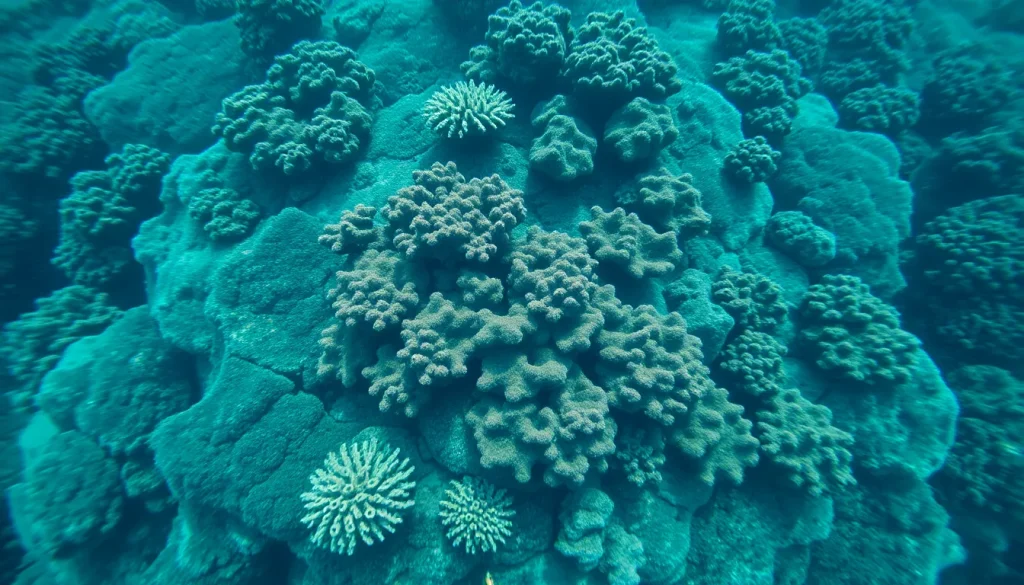
Coral Reefs Under Heat and Chemical Stress
Coral reefs are among the most biologically diverse marine ecosystems. They provide habitat, support fisheries, attract tourism and help reduce wave energy before it reaches shore.
What is coral bleaching?
Reef-building corals live in partnership with microscopic algae that provide much of their energy and colour. During prolonged heat stress, corals may expel these algae and turn pale or white. This response is known as bleaching.
A bleached coral is not necessarily dead, but it is weakened. If temperatures return to tolerable levels, some corals can recover. If heat is intense or prolonged, mortality can rise.
Additional threats to reefs
Climate change interacts with several other pressures:
- Ocean acidification can reduce coral growth and structural strength.
- Stronger wave events can break reef structures.
- Sea-level change can alter light and habitat conditions.
- Sediment and pollution can reduce water quality.
- Overfishing can disturb ecological relationships.
- Disease outbreaks may become more damaging under heat stress.
NOAA identifies ocean warming, acidification, sea-level change, altered precipitation and changing currents among the climate-related pressures affecting coral reefs.
Can coral reefs adapt?
Some coral populations show greater heat tolerance than others, and adaptation, acclimatization and assisted restoration may improve resilience in selected locations. Local measures such as protecting herbivorous fish, improving water quality and reducing physical damage can also help.
However, restoration cannot substitute for limiting greenhouse gas emissions. Replanting corals into water that repeatedly exceeds their thermal limits will not provide a durable global solution.
Marine Ecosystems and Changing Ocean Conditions
Marine ecosystems include estuaries, mangroves, salt marshes, seagrass meadows, kelp forests, coral reefs, the open ocean, the deep sea and polar habitats. Climate change affects each environment differently, but several broad patterns are emerging.
Species movement
Many marine species respond to warming by shifting toward cooler latitudes, moving deeper or changing seasonal behavior. These shifts can create new fishing opportunities in some regions while undermining established fisheries elsewhere.
Mobile species may move, but corals, shellfish beds and other fixed organisms cannot relocate easily. Even mobile species may encounter barriers, unsuitable habitats or mismatches with prey and breeding conditions.
Deoxygenation
Warmer water generally holds less dissolved oxygen. Stronger stratification can also reduce the movement of oxygen into deeper layers. Nutrient pollution can worsen the problem by stimulating algal growth and decomposition.
Low-oxygen conditions compress habitat, stress marine life and contribute to coastal dead zones. Warming, acidification and deoxygenation are sometimes described as a triple threat because they alter temperature, chemistry and respiration conditions simultaneously.
Food-web disruption
Climate change may alter the timing and location of plankton blooms, fish spawning and animal migration. If predators and prey respond differently, seasonal mismatches can occur.
Changes at the base of the food web can spread upward, affecting commercially important fish, seabirds and marine mammals. Ocean acidification could also alter food chains and human food supplies through its effects on vulnerable organisms.
Blue-carbon ecosystems
Mangroves, salt marshes and seagrass meadows capture and store carbon in vegetation and sediments. They also support fisheries, filter water and reduce wave energy. Protecting these ecosystems can provide both climate mitigation and adaptation benefits.
Yet blue-carbon habitats are threatened by coastal development, pollution, sea-level rise and warming. Their ability to move inland may be blocked by roads, seawalls or buildings, a process sometimes called coastal squeeze.
Coastal Flooding in a Rising-Sea World
Coastal flooding occurs when seawater covers normally dry coastal land. It may result from storm surge, high tides, large waves, heavy rainfall, poor drainage or a combination of factors.
Types of coastal flooding
| Flooding type | Main driver | Typical characteristics |
|---|---|---|
| High-tide flooding | Elevated tides and rising relative sea level | May occur without a major storm and become increasingly frequent over time |
| Storm-surge flooding | Strong winds and low pressure push water toward shore | Can be deep, fast and highly destructive |
| Wave-driven flooding | Large waves and wave run-up | Can overtop dunes, reefs and coastal defenses |
| Compound flooding | Coastal water, rainfall and river discharge occur together | Drainage is blocked while water arrives from multiple directions |
Why climate change increases coastal risk
Sea-level rise raises the starting point from which tides, waves and storm surges operate. Ocean warming may also influence tropical cyclone rainfall and intensity, while heavier rainfall can increase compound flooding in estuaries and coastal cities.
Risk depends on more than physical hazards. Exposure and vulnerability matter. Informal settlements, aging drainage, degraded wetlands, limited evacuation access and poverty can turn the same water level into a much greater disaster.
Coastal Adaptation: Protect, Accommodate or Retreat
Coastal adaptation includes actions that reduce present and future harm from sea-level rise, erosion, flooding, saltwater intrusion and storms.
No single approach is suitable everywhere. Effective planning usually combines engineering, ecosystem protection, land-use decisions, emergency preparedness and social policy.
1. Protection
Protective measures attempt to keep water away from people and infrastructure. Examples include seawalls, levees, surge barriers, dunes, elevated embankments, reefs and restored wetlands.
Hard structures can protect valuable urban areas but may be expensive, require maintenance and transfer erosion elsewhere. Nature-based defenses can provide habitat and recreation, although they also require sufficient space and may have physical limits during extreme events.
2. Accommodation
Accommodation allows people and infrastructure to remain in exposed areas while reducing damage. Measures may include:
- Elevating buildings and electrical systems
- Flood-proofing ground floors
- Improving pumps and drainage
- Using flood-resistant materials
- Updating building codes
- Creating warning and evacuation systems
- Changing insurance and disclosure rules
3. Managed retreat
Managed retreat moves buildings, infrastructure or communities away from locations where long-term protection is impractical or unsafe. It may involve voluntary buyouts, land swaps, development restrictions or planned relocation.
Retreat is socially and politically difficult. Homes and land carry financial, cultural and emotional value. Poorly designed relocation can break community networks or shift burdens onto vulnerable residents. Fair adaptation must therefore include meaningful participation, compensation, livelihood planning and protection of cultural heritage.
4. Avoiding new risk
One of the most cost-effective strategies is to stop placing new development in areas likely to face repeated flooding. Governments can use hazard maps, setbacks, zoning, updated construction standards and long-term infrastructure planning.
Maps must be updated as conditions change. Designing only for historical sea levels and storms can lock communities into decades of increasing exposure.
What Can Be Done to Protect Oceans and Communities?
Adaptation can reduce harm, but it cannot prevent all ocean changes. The scale of future warming, acidification, ice loss and sea-level rise depends heavily on cumulative greenhouse gas emissions.
Reduce greenhouse gas emissions
Rapid reductions in carbon dioxide, methane and other greenhouse gases remain the most important long-term response. This includes replacing high-emission energy sources, improving efficiency, electrifying transport and buildings, reducing methane leakage and protecting natural carbon stores.
Reduce local ecosystem pressures
Marine ecosystems have a better chance of coping with climate stress when pollution, overfishing and physical habitat destruction are reduced. Better wastewater treatment, sustainable fishing, protected areas and watershed management can strengthen resilience.
Expand observation and early warning systems
Satellites, tide gauges, ocean buoys, autonomous instruments and ecological monitoring help scientists identify trends and warn communities about marine heatwaves, storms, harmful algal blooms and flooding.
Monitoring should be paired with communication systems that reach fishers, coastal residents, emergency managers and public-health officials.
Plan for ranges, not one forecast
Climate projections contain uncertainty because future emissions, ice dynamics, local land movement and socioeconomic change are not known precisely. Good planning does not ignore uncertainty. It uses multiple scenarios and favors flexible measures that can be strengthened or adjusted over time.
Center equity and local knowledge
Coastal and marine risks are not distributed equally. Small-island communities, Indigenous peoples, low-income coastal residents and households dependent on fisheries may face high exposure despite contributing relatively little to global emissions.
Adaptation decisions are more durable when affected communities participate from the beginning. Scientific data, local experience and Indigenous knowledge can complement one another in identifying risks and practical responses.
Common Misconceptions About Oceans and Climate Change
“The ocean is too large for human activity to change it.”
The ocean is enormous, but human emissions are also enormous and cumulative. Observations show rising ocean heat, declining pH, changing ice and increasing sea level across multiple independent measurement systems.
“Melting sea ice is the main cause of sea-level rise.”
Floating sea ice has already displaced approximately its own weight in water. Its melting has little direct effect on sea level. Melting glaciers and ice sheets raise sea level because they transfer water from land to the ocean.
“Ocean acidification means the ocean will become acidic.”
The term refers to movement toward lower pH. Average seawater remains alkaline, but even modest chemical changes can matter to organisms adapted to particular carbonate conditions.
“Every coastline will experience the same sea-level rise.”
Regional currents, land movement, gravity, sediment supply and ice-loss patterns produce local differences. Coastal planning must consider relative sea level at the location being protected.
“Seawalls can solve coastal flooding everywhere.”
Seawalls may be valuable in selected locations, but they can be costly, require upgrades and shift erosion. Some locations need a combination of defenses, ecosystem restoration, accommodation and retreat.
The Future of Oceans and Climate Change
The future ocean will be shaped by choices made on land. Lower emissions can limit ocean warming, acidification, ice loss and long-term sea-level rise. Higher emissions increase the likelihood of severe and potentially irreversible changes.
Some ocean changes will continue for long periods because heat penetrates slowly into deep water and large ice sheets respond over decades to centuries. This makes early action especially important. Delayed mitigation commits future generations to greater adaptation costs and more difficult decisions.
At the same time, communities are not powerless. Clean energy, ecosystem restoration, resilient infrastructure, improved forecasting and inclusive coastal planning can reduce risks. The most effective strategy combines global emissions reductions with local actions tailored to specific ecosystems and communities.
Frequently Asked Questions
How does climate change affect the ocean?
Climate change warms ocean water, alters circulation, raises sea level, reduces oxygen in some regions and contributes to acidification as the ocean absorbs carbon dioxide. These changes affect marine ecosystems, fisheries, coral reefs, ice and coastal communities.
Why is ocean warming important?
The ocean absorbs most of the excess heat trapped by greenhouse gases. That heat contributes to thermal expansion, marine heatwaves, coral bleaching, habitat shifts, ice-shelf melting and changes in weather and circulation.
What is the difference between ocean warming and ocean acidification?
Ocean warming is an increase in ocean temperature. Ocean acidification is a change in seawater chemistry caused mainly by absorbed carbon dioxide. Both are driven by human emissions but affect marine organisms through different processes.
Does melting sea ice raise sea level?
Melting floating sea ice has little direct effect on sea level. Melting land-based glaciers and ice sheets adds water to the ocean and is a major cause of sea-level rise.
Why are coral reefs sensitive to climate change?
Corals are vulnerable to prolonged heat, which can cause bleaching. Acidification can also make reef-building more difficult, while storms, pollution, sediment and overfishing reduce their ability to recover.
Can ocean circulation stop because of climate change?
Climate change can weaken or alter major circulation systems by changing temperature, rainfall, ice melt and salinity. The timing and magnitude remain uncertain, and weakening should not automatically be described as an imminent total shutdown.
How does sea-level rise increase coastal flooding?
A higher average sea level allows tides, waves and storm surges to reach farther inland. Flooding can therefore become more frequent and damaging even without a change in storm frequency.
What is the best form of coastal adaptation?
The best approach depends on local geography, population, ecosystems, finances and expected sea-level rise. Many areas require a combination of protection, accommodation, nature-based defenses, development restrictions and, in some cases, managed retreat.
Can marine ecosystems adapt to warmer oceans?
Some organisms can acclimatize, migrate or adapt over generations, but their capacity is limited by the rate of change, habitat availability and additional pressures such as pollution, acidification, overfishing and low oxygen.
What can individuals do to help protect the ocean?
Individuals can reduce energy waste, support low-carbon transport, limit plastic and nutrient pollution, choose responsibly sourced seafood, support habitat restoration and advocate for effective climate and coastal policies. System-level action remains essential.
Conclusion
Oceans and climate change are linked through heat, carbon, water and ice. The ocean absorbs most excess climate heat and part of humanity’s carbon dioxide, but this buffering service comes with growing costs: warming water, acidification, ice loss, rising seas, coral bleaching, ecosystem disruption and more frequent coastal flooding. Glaciers, ice sheets, sea ice, circulation and marine food webs are parts of one connected system. Protecting that system requires rapid emissions reductions alongside stronger marine conservation and locally appropriate coastal adaptation. The sooner these measures are implemented, the more options communities will retain for protecting ecosystems, livelihoods and coastlines.





Leave a Comment