
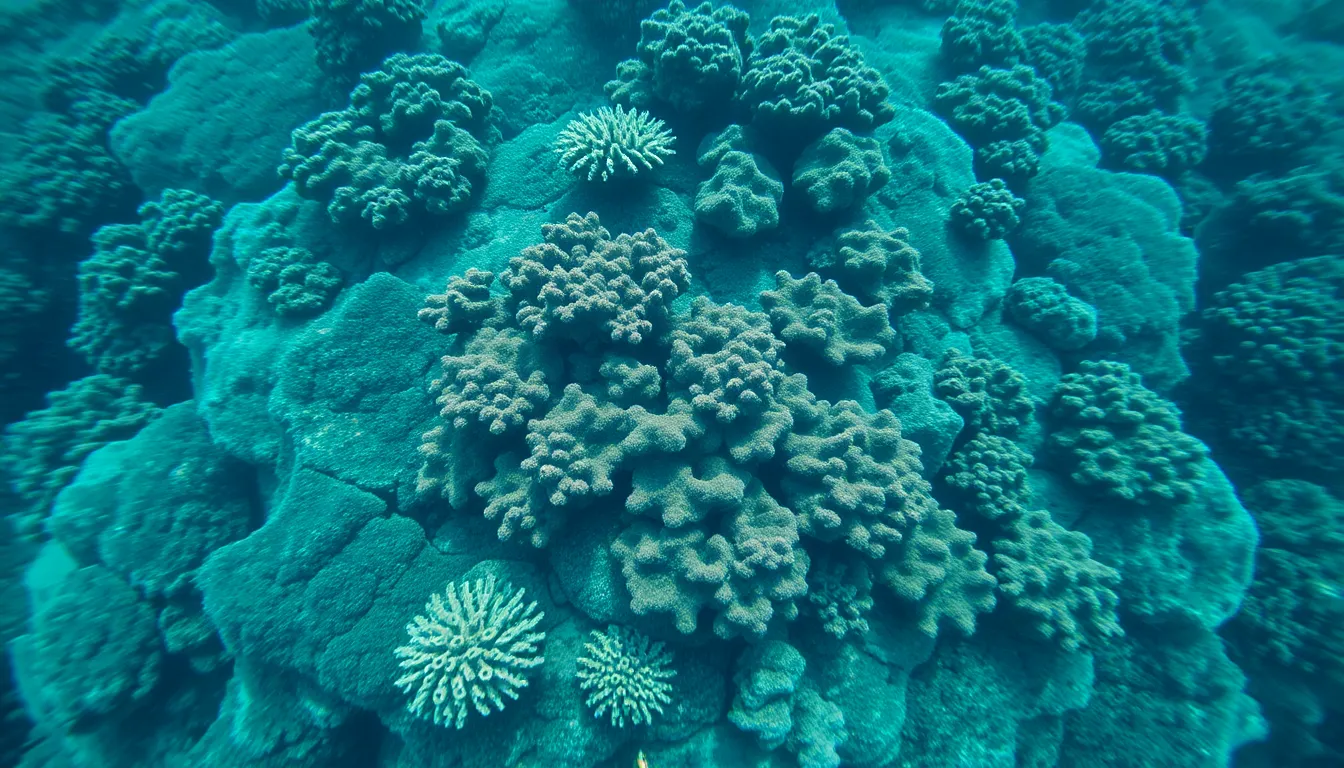
Understanding Coral Reefs and Their Global Importance
Coral reefs are built by tiny colonial animals called polyps that secrete calcium carbonate skeletons. Over thousands of years, these skeletons accumulate to form complex structures that support thousands of fish, invertebrates, and algae. Reefs provide essential services:
- Biodiversity hotspots – they host an estimated 25% of all marine species despite covering less than 1% of the ocean floor.
- Coastal protection – reef structures absorb wave energy, reducing erosion and buffering communities from storm surges.
- Livelihoods – millions of people depend on reefs for food, tourism, and cultural identity.
- Scientific value – reefs serve as natural laboratories for studying symbiosis, adaptation, and climate response.
For a broader view of how reefs fit into the planet’s marine ecosystems, explore our dedicated category.
How Climate Change Puts Coral Reefs Under Pressure
Climate change impacts reefs through several interconnected mechanisms. The most direct drivers are ocean warming and ocean acidification. Both are consequences of rising atmospheric carbon dioxide.
Rising Sea Temperatures
Even a 1°C increase above the long‑term summer maximum can stress corals. Warmer water disrupts the delicate balance between coral polyps and the photosynthetic algae (zooxanthellae) that live inside them. When temperatures stay high for weeks, the symbiosis breaks down, leading to bleaching.
Ocean Acidification
More CO₂ dissolves in seawater, forming carbonic acid and lowering pH. Acidic conditions reduce the availability of carbonate ions, which corals need to build and maintain their calcium carbonate skeletons. Slower growth makes reefs more vulnerable to erosion and physical damage.
Sea‑Level Rise and Storm Intensity
Higher sea levels can alter light availability for shallow‑water corals, while more intense storms increase breakage and sedimentation. Both factors compound the stress from warming and acidification.
Additional Stressors
Local pressures such as overfishing, coastal development, and pollution can weaken reef resilience, making them less able to cope with climate‑related changes. For information on how coastal communities adapt, see our coastal adaptation resources.
Coral Bleaching Explained
Bleaching is the visible loss of colour that occurs when corals expel their symbiotic algae. Without zooxanthellae, corals lose their primary source of nutrition and turn white, making them more susceptible to disease and death.
The Biological Process
- Thermal stress triggers production of reactive oxygen species within the algae.
- Oxidative damage signals the coral to expel the algae to protect its own cells.
- Energy deficit follows, as the coral must rely on limited heterotrophic feeding.
If stressful conditions subside within weeks, many corals can re‑acquire algae and recover. Prolonged stress, however, leads to mortality.
Thresholds and Species Variation
Different coral species have varying thermal tolerances. For example, branching corals such as Acropora bleach more readily than massive boulder corals like Porites. Local adaptation and historical exposure to temperature fluctuations can also influence resilience.
Recent Bleaching Events and Their Scale
Since the early 2000s, the world has witnessed several mass bleaching episodes, each linked to unusually warm ocean periods known as “heatwaves.”
2005–2006: The First Global Alert
Warming waters across the Indo‑Pacific caused bleaching on more than 60% of surveyed reefs. The event highlighted the global nature of the threat.
2014–2017: The “Global Bleaching” Period
Three consecutive years of elevated sea surface temperatures led to bleaching on over 70% of the world’s reefs, with the Great Barrier Reef experiencing its most extensive loss of coral cover on record.
2020–2022: A New Wave of Stress
Record‑breaking temperatures in the Caribbean, Red Sea, and Western Pacific triggered fresh bleaching events. Some reefs showed signs of recovery, while others continued to decline.
These events underscore the urgency of addressing coral reef vulnerability within the broader context of climate change.
Pathways to Recovery: Natural Resilience and Human Intervention
Recovery can occur naturally when stressors ease, but human‑assisted actions can accelerate or enhance this process.
Natural Recovery Mechanisms
- Recruitment – surviving coral larvae settle on available substrate and grow.
- Growth of surviving colonies – healthy corals expand and fill gaps.
- Shift in species composition – more tolerant species become dominant, altering community structure.
Assisted Restoration Techniques
Restoration projects employ several methods:
- Coral gardening – fragments are grown in nurseries and later transplanted onto degraded reefs.
- Larval seeding – coral larvae are cultured and released to boost genetic diversity.
- Heat‑tolerant breeding – selecting and propagating strains that survive higher temperatures.
These interventions aim to increase resilience, but they must be combined with broader climate mitigation to be effective.
Key Strategies for Protecting and Restoring Reefs
Effective reef conservation requires a suite of actions at local, regional, and global scales.
Establish and Enforce Marine Protected Areas (MPAs)
Well‑managed MPAs reduce fishing pressure, limit destructive activities, and provide refuges where ecosystems can recover. Success is higher when MPAs are networked and include enforcement mechanisms.
Reduce Local Stressors
Improving water quality by controlling runoff, sewage, and sedimentation directly benefits coral health. Sustainable tourism practices and responsible coastal development also play a role.
Mitigate Global Climate Change
The most critical long‑term solution is reducing greenhouse‑gas emissions to limit further warming. International agreements, renewable energy adoption, and carbon‑pricing policies are essential components.
Promote Climate‑Smart Coastal Adaptation
Communities can adopt nature‑based solutions such as mangrove restoration and reef‑aligned breakwaters, which enhance resilience while protecting livelihoods. See our coastal flooding guide for more details.
What Individuals and Communities Can Do
While systemic change is vital, everyday actions matter too.
- Support organizations that fund reef research and restoration.
- Choose sustainable seafood to reduce overfishing pressure.
- Reduce carbon footprint through energy efficiency, public transport, and plant‑based diets.
- Participate in citizen‑science programs that monitor reef health.
- Advocate for stronger environmental policies at local and national levels.
Future Outlook and Research Priorities
Scientists are focusing on several promising avenues:
- Genomic studies to identify heat‑tolerant genes and guide assisted evolution.
- Remote sensing for real‑time monitoring of sea‑surface temperature and bleaching hotspots.
- Socio‑economic research to understand how reef loss impacts coastal communities and to design equitable adaptation strategies.
- Integrated modeling that combines climate projections with local stressor scenarios to prioritize intervention sites.
Continued investment in these areas will improve our ability to predict, prevent, and respond to future bleaching events.
Conclusion
Coral reefs are undeniably under pressure from climate change, with warming, acidification, and sea‑level rise driving widespread bleaching. Yet reefs possess remarkable capacity for recovery when stressors subside and when humans apply targeted restoration and protection measures. By understanding the mechanisms behind bleaching, supporting resilient practices, and demanding decisive climate action, we can help safeguard these irreplaceable ecosystems for future generations.
Frequently Asked Questions
What causes coral bleaching?
Coral bleaching occurs when elevated sea temperatures or other stressors cause corals to expel their symbiotic algae, losing color and essential nutrients. Prolonged stress can lead to coral death.
How does ocean acidification affect coral growth?
Ocean acidification reduces the availability of carbonate ions, making it harder for corals to build their calcium carbonate skeletons, which slows growth and weakens reef structures.
Can damaged reefs recover naturally?
Yes, reefs can recover naturally if stressors lessen. Recovery involves larval recruitment, growth of surviving colonies, and sometimes a shift toward more tolerant species.
What are the most effective ways to protect coral reefs?
Key actions include establishing well‑managed marine protected areas, reducing local pollution and overfishing, and tackling global greenhouse‑gas emissions to limit warming.
How can individuals help reduce coral reef decline?
Individuals can support reef‑focused NGOs, choose sustainable seafood, lower their carbon footprint, join citizen‑science monitoring, and advocate for stronger environmental policies.






Leave a Comment