

Quick Answer
Writing a single, compelling paragraph on global warming means blending a vivid image of climate impacts with a clear statement of the greenhouse‑gas mechanism, citing the IPCC’s finding that human activities have raised average global temperature by about 1.1 °C since pre‑industrial times, and ending with a concrete, hopeful call to action. The paragraph should convey urgency, acknowledge scientific confidence, and hint at solutions while noting that exact regional outcomes remain uncertain.
Key Takeaways
- Global warming is driven primarily by the accumulation of carbon dioxide, methane, and other greenhouse gases from fossil‑fuel use, deforestation, and agriculture.
- Long‑term observations show a consistent rise in global average surface temperature and an increase in the frequency of extreme weather events.
- Impacts span ecosystems, human health, food security, and infrastructure, with low‑income regions facing the greatest vulnerability.
- High‑confidence science supports mitigation through renewable energy, energy efficiency, and nature‑based solutions, but implementation speed and equity remain challenges.
- Effective paragraph writing balances emotional resonance, factual precision, and an actionable closing line.
What Is How to Write About Global Warming in One Powerful Paragraph?
The task is a communication technique: distilling the complex, multi‑decadal phenomenon of global warming into a single, stand‑alone paragraph that can inform, persuade, and motivate readers. It is not a scientific abstract; rather it is a concise narrative that includes (1) a hook that humanizes climate data, (2) a brief explanation of the greenhouse‑gas effect, (3) a snapshot of key impacts, and (4) a forward‑looking statement about solutions or personal agency. The approach differs from longer essays by demanding extreme focus and a tight logical flow.
How Does It Work?
Step‑by‑Step Process for Crafting the Paragraph
- Choose an evocative image. Start with a concrete scene—e.g., a polar bear on a diminishing ice floe or a coastal neighborhood under rising tides.
- State the core scientific fact. Mention that greenhouse gases trap infrared radiation, referencing the IPCC Fifth Assessment Report (2014) which quantifies a 1.1 °C warming since 1850‑1900.
- Highlight a key impact. Cite a specific, high‑confidence effect such as increased heat‑related mortality or reduced crop yields in the tropics.
- Introduce a hopeful element. Briefly note renewable energy growth (e.g., solar PV capacity increased by 22 % annually from 2010‑2020, according to IEA) or community‑led adaptation.
- End with a call to action. Pose a question or directive that invites the reader to consider their role.
What Does the Evidence Show?
Multiple lines of evidence converge on a clear picture of anthropogenic warming. Surface‑temperature records from NASA’s GISTEMP dataset indicate a global mean increase of 0.18 °C per decade over the past 40 years. Satellite observations confirm a rise in atmospheric carbon dioxide to 421 ppm in 2023, the highest in at least 800,000 years (NOAA). Attribution studies published in *Nature Climate Change* (2022) assign over 95 % of the warming since 1950 to human emissions. Moreover, the IPCC’s 2021 Sixth Assessment Report states with high confidence that extreme heat events have become more frequent across all land regions.
Main Causes or Drivers
Direct Human Sources
Burning of coal, oil, and natural gas releases roughly 36 Gt of CO₂ annually (IEA, 2023). Methane emissions from livestock, rice paddies, and fossil‑fuel extraction add about 0.4 Gt CH₄ per year, a gas with a 28‑fold greater warming potential over 100 years.
Underlying Socio‑Economic Drivers
Rapid urbanization, rising per‑capita energy demand, and insufficient climate policies amplify emissions. Deforestation, especially in the Amazon and Southeast Asia, reduces carbon sinks, contributing an estimated 3 Gt CO₂ yr⁻¹ of net loss.
Environmental and Human Impacts
Environmental Impacts
Warming drives sea‑level rise (0.20 m since 1900), coral bleaching, and shifts in species’ geographic ranges. The World Wildlife Fund reports that 31 % of monitored species have moved toward higher latitudes or elevations between 1970‑2020.
Human Health and Social Impacts
Heat stress increases mortality risk, particularly for older adults; the WHO estimates 250 000 additional deaths per year linked to heatwaves (2021). Food security is threatened as staple yields in sub‑Saharan Africa could fall 10‑20 % under a 2 °C scenario (FAO, 2022).
Economic and Infrastructure Impacts
Climate‑related disasters cost the global economy roughly US$210 billion annually (World Bank, 2022), with infrastructure in low‑lying Asian megacities facing the highest exposure.
Regional Differences
Impacts are not uniform. The Arctic is warming at twice the global average, leading to permafrost thaw and feedbacks that release additional greenhouse gases. In contrast, some high‑latitude regions experience longer growing seasons, yet this does not offset losses elsewhere. Tropical islands such as the Maldives confront sea‑level rise that threatens entire nations, while inland areas of the United States see amplified drought frequency linked to altered jet‑stream patterns.
What Scientists Know With High Confidence
- Human activities are the dominant cause of observed global warming since the mid‑20th century.
- The greenhouse‑gas effect of CO₂, CH₄, and N₂O is well quantified and matches measured temperature trends.
- Extreme heat events, heavy precipitation, and ocean heat content have increased globally.
- Renewable energy technologies can reduce emissions rapidly when supported by policy and investment.
What Remains Uncertain
Key uncertainties involve climate sensitivity to future emissions (the exact temperature rise per doubling of CO₂), the magnitude of carbon‑cycle feedbacks from permafrost thaw, and regional precipitation patterns in the tropics. These gaps affect long‑term projections but do not undermine the overall conclusion that continued emissions will intensify risks.
Common Misconceptions
Misconception: “Global warming is just a short‑term weather fluctuation.”
Reality: Climate refers to long‑term averages; the IPCC defines climate change as a statistically significant alteration lasting decades or longer.
Misconception: “Only polar bears are affected.”
Reality: While iconic, species across ecosystems—from coral reefs to temperate forests—experience habitat shifts, altered phenology, and increased extinction risk.
Misconception: “Individual lifestyle changes alone can stop warming.”
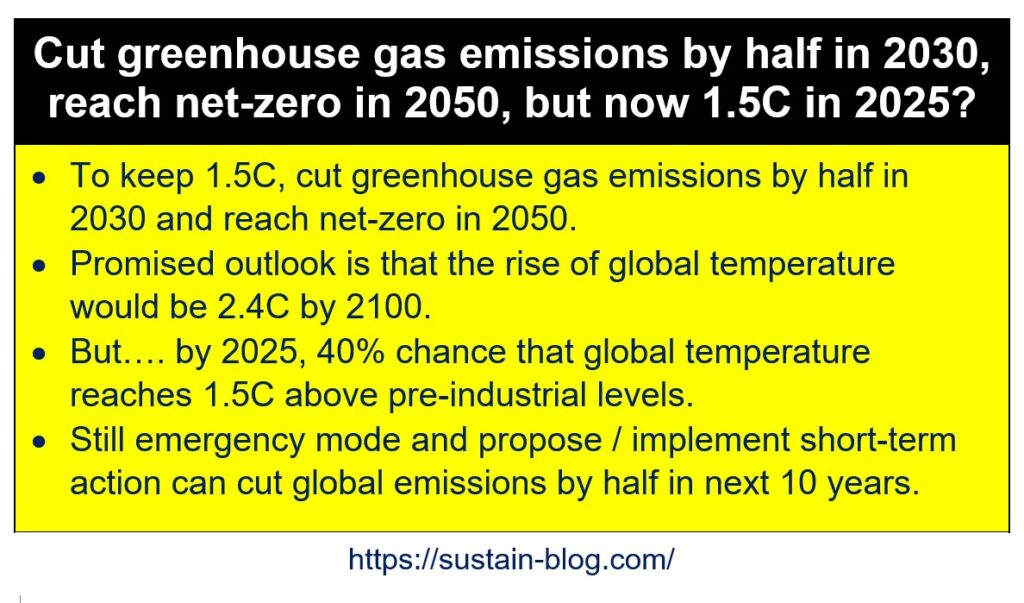
Reality: Personal actions matter, but systemic change through energy policy, industrial regulation, and large‑scale infrastructure is essential for meeting the Paris Agreement’s 1.5 °C goal.
Solutions and Limitations
Mitigation strategies include rapidly scaling solar and wind power, improving energy efficiency in buildings, and protecting or restoring forests. Renewable‑energy deployment is technically feasible, yet challenges remain in grid integration, storage costs, and ensuring equitable access. Nature‑based solutions such as mangrove restoration enhance coastal resilience but cannot offset continued high‑emission pathways on their own. Adaptation measures—climate‑resilient crops, flood‑defense infrastructure, and early‑warning systems—reduce vulnerability but require substantial financing and governance capacity.
What Individuals, Communities, and Governments Can Do
What Individuals Can Do
Choose low‑carbon transportation (public transit, cycling), reduce meat consumption, and support renewable‑energy tariffs. While personal footprints are a fraction of national totals, collective consumer demand can shift markets.
What Communities and Organizations Can Do
Implement district‑level energy retrofits, develop community solar projects, and adopt climate‑risk assessments in local planning. Grassroots advocacy can accelerate policy adoption.
What Governments Can Do
Set ambitious, enforceable emissions targets, subsidize clean‑energy technologies, and invest in resilient infrastructure. Policies such as carbon pricing have demonstrated emissions reductions in multiple jurisdictions (e.g., EU Emissions Trading System).
Closing Synthesis
Crafting a powerful paragraph about global warming requires a tight blend of vivid storytelling, solid scientific grounding, and a forward‑looking invitation to act. The science—anchored by high‑confidence findings from the IPCC and decades of monitoring—shows that human‑driven greenhouse‑gas emissions are warming the planet, reshaping ecosystems, and threatening human wellbeing, especially for the most vulnerable. Uncertainties persist around feedback loops and regional climate nuances, but they do not diminish the imperative for rapid mitigation and equitable adaptation. By weaving emotion, evidence, and hope into a single paragraph, writers can turn abstract data into a catalyst for meaningful change.
Frequently Asked Questions
What is the main purpose of a single paragraph on global warming?
The purpose is to combine an emotional hook, a brief explanation of the greenhouse‑gas effect, a snapshot of key impacts, and a hopeful call to action in a concise format that can inform and motivate readers.
Which greenhouse gases are most responsible for recent warming?
Carbon dioxide (CO₂) and methane (CH₄) are the primary drivers, accounting for the majority of human‑induced warming since the mid‑20th century.
What high‑confidence finding does the IPCC report about extreme weather?
The IPCC states with high confidence that extreme heat events and heavy precipitation have become more frequent across all land regions.
Why are individual actions alone insufficient to stop global warming?
Individual lifestyle changes reduce personal emissions, but systemic transformations in energy production, industry, and policy are required to achieve the deep cuts needed to meet the Paris Agreement targets.
What are the biggest uncertainties in climate projections?
Key uncertainties include the exact climate sensitivity to CO₂ doubling, the magnitude of carbon‑cycle feedbacks from permafrost thaw, and regional precipitation changes in the tropics.





Leave a Comment