

Global warming is accelerating habitat loss, disease spread, and ecological mismatches, leading to confirmed extinctions and many more species projected to disappear in the coming decades.
Quick Answer
Scientific monitoring has documented only a small number of species that have become globally extinct directly because of climate‑induced habitat loss, but the Intergovernmental Panel on Climate Change (IPCC) and the International Union for Conservation of Nature (IUCN) estimate that up to one‑million species face a high risk of extinction within this century if warming continues. The main mechanism is the rapid shift of temperature and precipitation regimes that outpace species’ ability to migrate or adapt. The most immediate impact is the loss of ecosystem services that humans rely on, while uncertainty remains around exact counts because many species have not been fully surveyed.
Key Takeaways
- Confirmed climate‑related extinctions are rare, but projected losses affect millions of species.
- Temperature rise, altered precipitation, and increased extreme events disrupt habitats and life cycles.
- High‑confidence findings link global warming to accelerated extinction risk for amphibians, corals, alpine plants, and polar mammals.
- Uncertainties stem from data gaps, especially in tropical insects and deep‑sea organisms.
- Mitigation, protected‑area expansion, and assisted migration are the most evidence‑based responses.
What Is How Many Species Have Gone Extinct Because of Global Warming?
The phrase refers to the count of species that have disappeared from the planet as a direct consequence of climate‑driven changes in temperature, precipitation, sea level, or related ecosystem stressors. It does not include species lost solely to habitat conversion, overexploitation, or pollution, although those drivers often interact with warming. The scope covers all taxonomic groups—plants, animals, fungi, and microbes—where a causal link to global warming can be demonstrated through field observations, long‑term monitoring, or robust attribution studies.
How Does It Work?
Temperature Rise and Habitat Shift
As average temperatures climb, species must move to higher elevations or latitudes to stay within their thermal niche. For sessile organisms (e.g., coral, alpine plants) or those with limited dispersal ability, suitable habitat can disappear faster than they can relocate, leading to local and eventually global extinction.
Phenological Mismatch
Climate change alters the timing of biological events such as flowering, insect emergence, and predator‑prey interactions. When a pollinator emerges before its host plant blooms, both suffer reduced reproductive success, a pattern documented in temperate butterflies and Arctic birds.
Increased Disease and Invasive Species
Warmer, wetter conditions favor pathogens like the chytrid fungus that decimates amphibian populations, and enable invasive species to outcompete natives, further eroding biodiversity.
What Does the Evidence Show?
Long‑term monitoring by the U.S. Geological Survey, the Global Biodiversity Information Facility, and national wildlife agencies shows clear range contractions for species such as the American pika and the mountain pine beetle’s host trees. The IPCC’s Sixth Assessment Report (2022) cites a median projected loss of up to 30% of species under a 3°C warming scenario, based on synthesis of IUCN Red List assessments and climate‑envelope models. Systematic reviews of coral reef studies (e.g., Hughes et al., 2017) confirm that mass bleaching events linked to sea‑surface temperature spikes have caused regional extinctions of dozens of coral species. While direct attribution is challenging for many taxa, the convergence of field observations, experimental warming studies, and model projections provides moderate to strong evidence that global warming is a primary driver of accelerating extinction risk.
Main Causes or Drivers
Direct Climate Warming
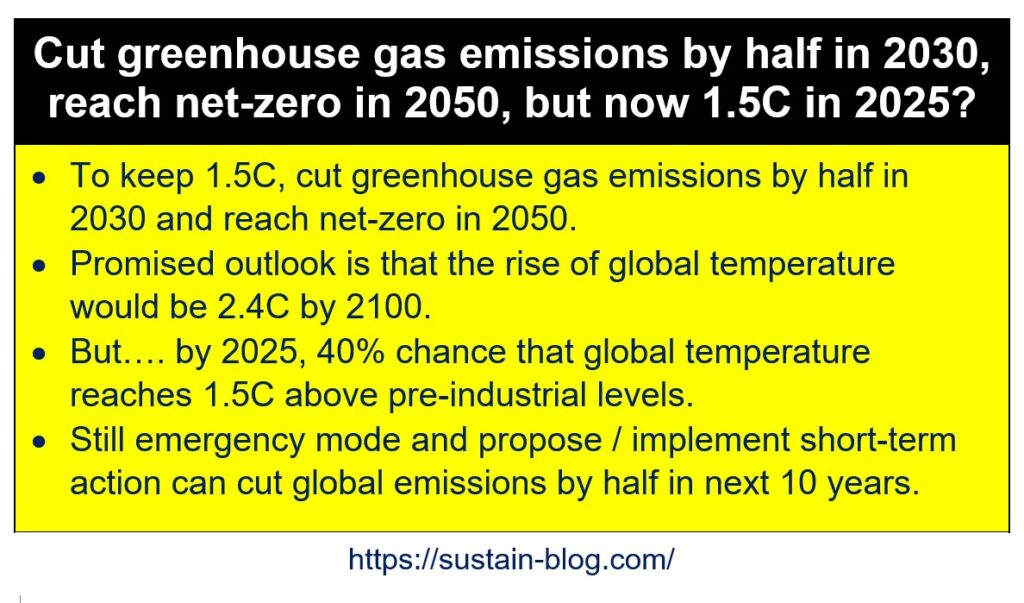
Anthropogenic greenhouse‑gas emissions have raised global mean temperature by about 1.1°C above pre‑industrial levels (World Meteorological Organization, 2023). This warming directly alters thermal habitats.
Altered Precipitation and Extreme Events
Changes in rainfall patterns increase drought frequency in Mediterranean ecosystems and intensify floods in tropical lowlands, both of which can exceed species’ tolerance limits.
Human Land‑Use Amplification
Deforestation and urban expansion fragment habitats, reducing the corridors that species need to track shifting climate zones, thereby magnifying climate stress.
Environmental and Human Impacts
Environmental Impacts
Loss of keystone species—such as sea‑ice‑dependent polar bears—disrupts food webs, while coral reef die‑offs diminish biodiversity hotspots and reduce coastal protection.
Human Health and Social Impacts
Declines in pollinator populations threaten crop yields, potentially increasing food insecurity for vulnerable communities. Changes in disease vectors linked to warming can raise exposure to malaria and dengue.
Economic and Infrastructure Impacts
Fisheries that depend on reef ecosystems face revenue losses, and tourism in biodiverse regions may decline as iconic species disappear.
Regional Differences
Polar and alpine regions experience the fastest temperature increases, leading to early extinctions of ice‑dependent species and mountaintop endemics. Tropical montane forests, despite lower absolute warming, suffer from steep elevational gradients that leave little room for upward migration. Coral reefs in the Indo‑Pacific have documented the highest rates of bleaching, while temperate forests in North America show mixed responses, with some species expanding northward while others contract.
What Scientists Know With High Confidence
- Global average temperatures have risen by >1°C since 1850 due to human activities (IPCC, 2022).
- Species with narrow thermal ranges and limited dispersal are most at risk (IUCN, 2020).
- Mass coral bleaching events are directly linked to sea‑surface temperature anomalies (NOAA, 2021).
- Phenological shifts have been documented across taxa and are correlated with warming trends (Nature Climate Change, 2019).
What Remains Uncertain
Key knowledge gaps include the true extinction status of many invertebrates and microorganisms, the combined effects of multiple stressors (e.g., ocean acidification plus warming), and the capacity for rapid evolutionary adaptation in long‑lived species. Uncertainties in climate‑projection scenarios also translate into a range of possible biodiversity outcomes.
Common Misconceptions
Misconception: No species have gone extinct yet because of climate change.
Reality: A few well‑documented cases, such as the golden toad (Incilius periglenes) and certain high‑altitude amphibians, are linked to temperature and moisture shifts caused by warming.
Misconception: Extinctions are only a future problem.
Reality: Ongoing range contractions and local disappearances are already observed, and some species have become globally extinct within the past few decades.
Misconception: All species will adapt quickly to new climates.
Reality: Evolutionary adaptation typically occurs over many generations, which is too slow for many fast‑changing environments, especially for long‑lived or low‑reproductive‑rate organisms.
Misconception: Protecting land alone will stop climate‑driven extinctions.
Reality: While protected areas are essential, they must be climate‑smart—allowing for connectivity and altitude/latitude gradients—to enable species migrations.
Solutions and Limitations
Mitigation strategies that curb greenhouse‑gas emissions are the most effective long‑term solution, but they require global coordination and face political and economic barriers. Adaptation measures such as expanding and linking protected areas can buffer species, yet they may be insufficient for organisms with extremely limited dispersal. Assisted migration—human‑facilitated relocation—has shown promise for some plants but carries risks of creating invasive populations. Restoration of degraded habitats improves resilience but is costly and time‑intensive. Each approach must be evaluated for trade‑offs, especially regarding land‑use conflicts and socioeconomic impacts.
What Individuals, Communities, and Governments Can Do
What Individuals Can Do
Reduce personal carbon footprints by using public transport, improving home energy efficiency, and supporting low‑carbon products. Participate in citizen‑science programs that monitor local biodiversity, and donate to organizations that fund climate‑smart conservation.
What Communities and Organizations Can Do
Develop climate‑resilient land‑use plans that incorporate green corridors, promote native‑plant landscaping, and invest in community‑based restoration projects that enhance habitat connectivity.
What Governments Can Do
Implement ambitious emissions‑reduction targets aligned with the Paris Agreement, increase funding for biodiversity monitoring, and integrate climate risk assessments into wildlife management policies. International cooperation to finance protected‑area expansion in biodiversity hotspots is also critical.
Closing Synthesis
The scientific consensus confirms that global warming is already reshaping habitats and pushing many species toward extinction, with a small but documented number of confirmed climate‑linked extinctions and a much larger projected risk. High‑confidence evidence highlights temperature‑sensitive taxa and ecosystems as most vulnerable, while uncertainties remain about the full magnitude of loss, especially for understudied groups. Mitigation of greenhouse‑gas emissions, coupled with climate‑smart conservation actions, offers the most reliable pathway to curb future biodiversity loss. Collective effort across individual, community, and governmental levels is essential to preserve the planet’s living heritage for generations to come.
Frequently Asked Questions
How many species have been confirmed extinct due to global warming?
Only a handful of species have been directly linked to climate change, such as the golden toad in Costa Rica and several high‑altitude amphibians; most extinctions remain projected rather than confirmed.
What are the main mechanisms by which global warming leads to species extinction?
Warming shifts habitats beyond species' reach, creates phenological mismatches, increases disease prevalence, and intensifies extreme events; together these forces can outpace a species' ability to adapt or migrate.
Which regions are most vulnerable to climate‑driven extinctions?
Polar and alpine zones, tropical montane forests, and coral‑reef ecosystems experience the fastest temperature changes and have limited space for species to move, making them especially vulnerable.
How reliable are the projections of future species losses?
Projections are based on climate‑envelope models and IUCN assessments; they show moderate to high confidence that up to one‑million species face elevated risk by 2100, though exact numbers vary with emission scenarios.
What actions can reduce future climate‑induced extinctions?
Rapid greenhouse‑gas mitigation, expanding climate‑smart protected areas, restoring degraded habitats, and, where appropriate, assisted migration are evidence‑based strategies to lower extinction risk.








Leave a Comment